CARAF Books: Caribbean and African Literature Translated from the French – serie
Visar alla böcker i serien CARAF Books: Caribbean and African Literature Translated from the French. Handla med fri frakt och snabb leverans.
18 produkter
18 produkter
438 kr
Skickas inom 5-8 vardagar
346 kr
Skickas inom 10-15 vardagar
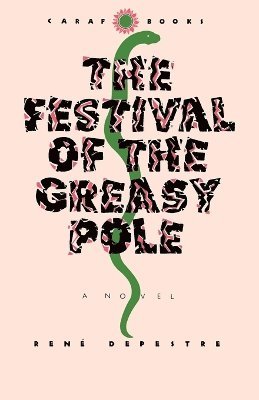
This novel, winner of the coveted Grand Prix de Littérature d'Afrique Noire, has been seen as a story about the struggles of nation-building in Africa, as a fierce depiction of dictatorships in the Third World, and as a profound meditation on the nature of pwer everywhere.
331 kr
Skickas inom 10-15 vardagar
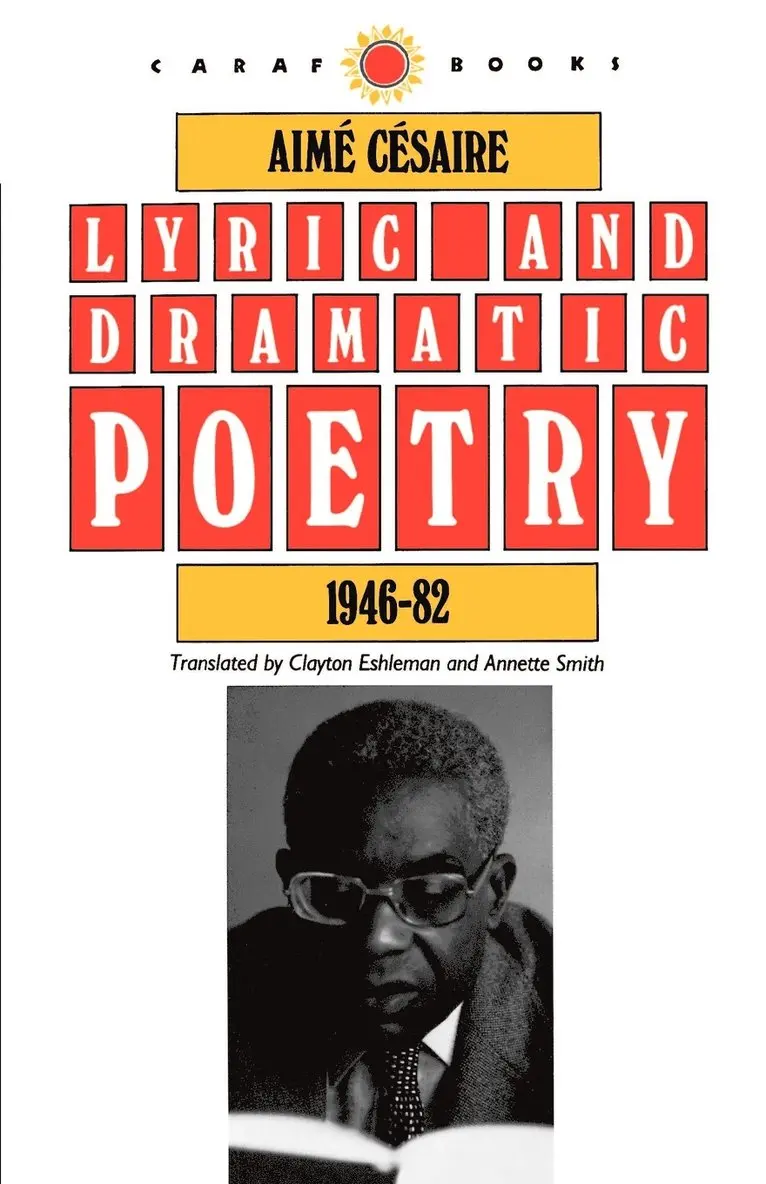
A collection of poems by the Martinician poet Aime Cesaire, who was read as a poet of revolutionary zeal during the Black Power movement of the 1960s. This collection is the first English edition to include "And the Dogs Were Silent" and "i, laminaria". There is a critical introduction.
377 kr
Skickas inom 10-15 vardagar
346 kr
Skickas inom 10-15 vardagar
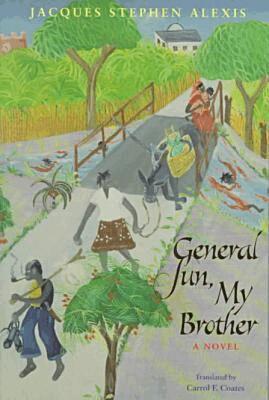
An English translation of "Compere General Soleil", published in France in 1955. This novel depicts the nightmarish journey of a labourer and his wife from the slums of Port-au-Prince to the cane fields of the Dominican Republic, and personifies the sun as friend and leader of the workers.
315 kr
Skickas inom 10-15 vardagar
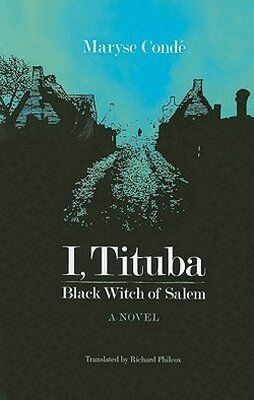
This wild and entertaining novel expands on the true story of the West Indian slave Tituba, who was accused of witchcraft in Salem, Massachusetts, arrested in 1692, and forgotten in jail until the general amnesty for witches two years later. Maryse Condé brings Tituba out of historical silence and creates for her a fictional childhood, adolescence, and old age. She turns her into what she calls "a sort of female hero, an epic heroine, like the legendary ‘Nanny of the maroons,’" who, schooled in the sorcery and magical ritual of obeah, is arrested for healing members of the family that owns her.This book has been supported by a grant from the National Endowment for the Humanities, an independent federal agencY.
854 kr
Skickas inom 10-15 vardagar
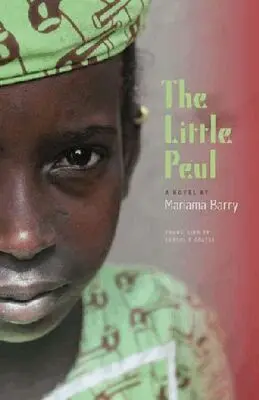
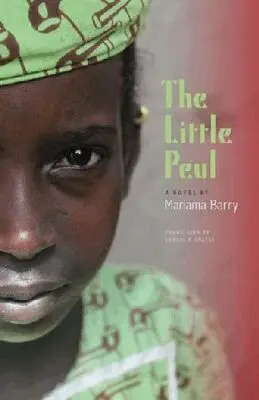
Born in Dakar but of Guinean origin, Mariama Barry claims both Senegal and Guinea as 'her' countries. This dual background lends her significant and widespread visibility not only because she is the first woman writer of Guinea to have gained extensive international recognition but also because Senegalese women novelists were the first African women writing in French to win international acclaim. Barry's autobiographical novel, ""La petite Peule (2000)"", is the story of an early Peul childhood spent in Senegal. The Peul are a primarily nomadic people of western Africa. The book opens with a description of the violence and trauma of a young girl's excision at age six. This is but the first of many trials. After a younger brother is almost killed by a truck, the family moves to La Medina, a Dakar neighborhood where rats gnaw on children's toes at night and where children must struggle with adults in order to fetch water or use the communal toilet. Attending school is the one high point in the girl's life, but even there she must stand up to older bullies. Her family life is completely upset when her mother walks out, leaving her to clean, cook, and care for her younger brothers. Then when her father finds it impossible to cope with the children and with his failing business, he withdraws the little Peul from school and relocates the family once again, this time to his mother's village in the mountains of northern Guinea. Indignant that children have no rights and are lied to and deserted by their own parents, the young protagonist rebels against the idea that women should accept suffering and subjugation to men. She is determined to direct her own life and assert her right to do so.
931 kr
Skickas inom 10-15 vardagar
315 kr
Skickas inom 10-15 vardagar
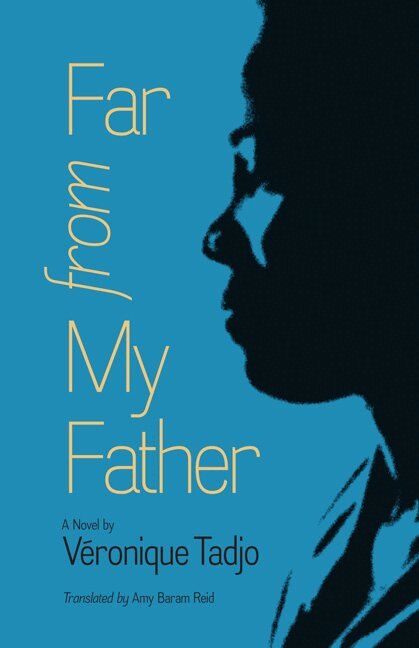
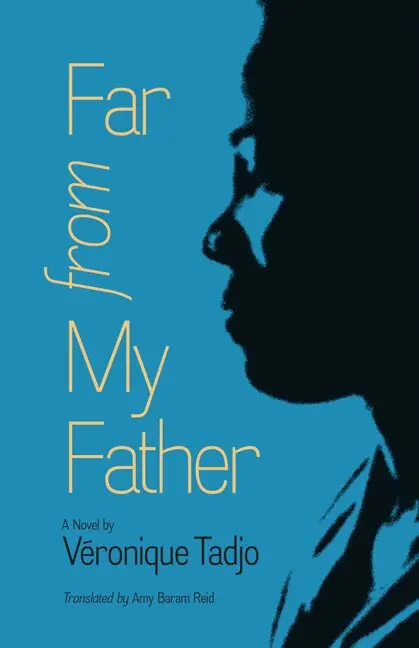
To attain some sort of universal value,"" Véronique Tadjo has said, ""a piece of work has to go deep into the particular in order to reveal our shared humanity."" In Far from My Father, the latest novel from this internationally acclaimed author, a woman returns to the Côte d'Ivoire after her father’s death. She confronts not only unresolved family issues that she had left behind but also questions about her own identity that arise amidst the tensions between traditional and modern worlds. The drama that unfolds tells us much about the evolving role of women, the legacy of polygamy, and the economic challenges of daily life in Abidjan. On a more autobiographical level, the author depicts a daughter’s efforts to come to terms with what she knew and did not know about her father. Set against the backdrop of civil strife that has wracked the Côte d'Ivoire since the turn of the century, this story shows Tadjo’s remarkable ability to inhabit a character’s inner world and emotional landscape while creating a narrative of great historic and cultural dimensions.
398 kr
Skickas inom 3-6 vardagar
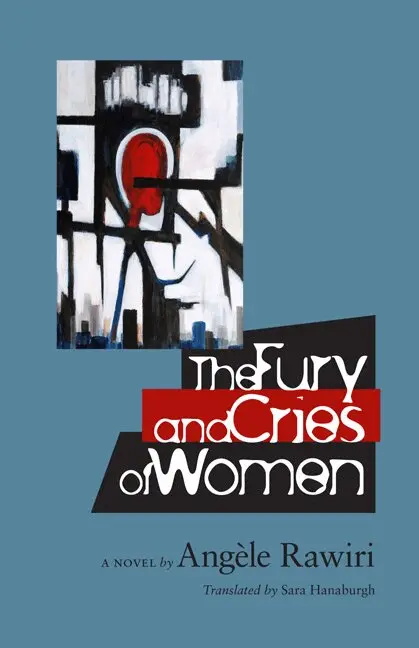
Gabon’s first female novelist, Angèle Rawiri probed deeper into the issues that writers a generation before her—Mariama Bâ and Aminata Sow Fall—had begun to address. Translated by Sara Hanaburgh, this third novel of the three Rawiri published is considered the richest of her fictional prose. It offers a gripping account of a modern woman, Emilienne, who questions traditional values and seeks emancipation from them. Emilienne’s active search for feminism on her own terms is tangled up with cultural expectations and taboos of motherhood, marriage, polygamy, divorce, and passion. She completes her university studies in Paris; marries a man from a rival ethnic group; becomes a leader in women’s liberation; enjoys professional success, even earning more than her husband; and eventually takes a female lover. Yet still she remains unsatisfied. Those closest to her, and even she herself, constantly question her role as woman, wife, mother, and lover. The tragic death of her only child—her daughter Rékia—accentuates Emilienne’s anguish, all the more so because of her subsequent barrenness and the pressure that she concede to her husband’s taking a second wife. In her forceful portrayal of one woman’s life in Central Africa in the late 1980s, Rawiri prompts us not only to reconsider our notions of African feminism and the canon of francophone African women’s writing but also to expand our awareness of the issues women face across the world today in the workforce, in the bedroom, and among family and peers.
854 kr
Skickas inom 10-15 vardagar
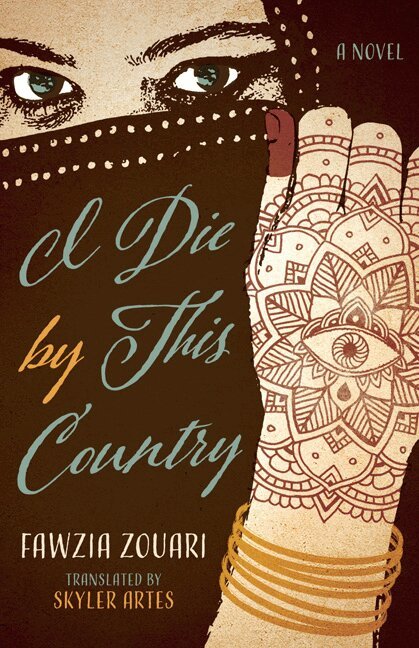
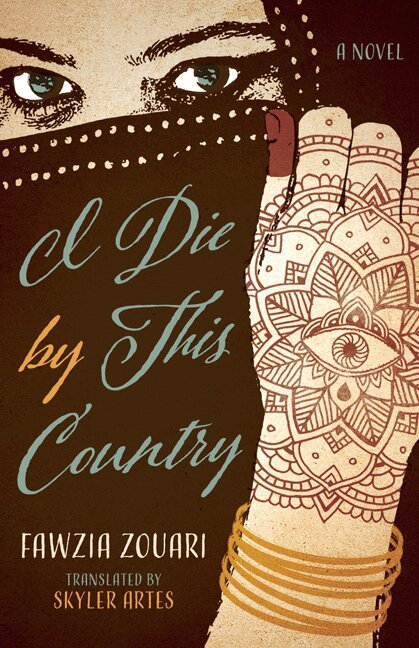
The first novel available to English readers by Fawzia Zouari, one of the most important North African authors writing today, begins with an emergency crew’s arrival at a Parisian apartment. Two emaciated young women, sisters, are brought out on stretchers. To the crowd of onlookers the women’s condition is mystifying; for the two sisters, this is the inescapable end to a tragic series of events.Inspired by an actual news story from the French headlines, I Die by This Country introduces us to Nacéra and Amira. Casting her mind back in the midst of the opening pages’ upheaval, Nacéra pieces together her fragmentary knowledge of her parents’ lives in rural French Algeria and their immigration to Paris in the years following Algeria’s war for independence. Her memories of how both she and Amira struggled to find their place as children of immigrants reveals the enormous stress of social exclusion and identity conflicts facing immigrant youth. Nacéra and her family yearn for acceptance, but the reader sees this dream becoming increasingly unattainable.Zouari’s frank prose and penetrating storytelling deftly relates the multigenerational experience of Franco-Algerian immigration during the last quarter of the twentieth century. As France continues, like so many western countries, to struggle with questions regarding national identity, immigration, and its colonial past, the experiences depicted in this novel resonate more than ever.
346 kr
Skickas inom 10-15 vardagar
The first novel available to English readers by Fawzia Zouari, one of the most important North African authors writing today, begins with an emergency crew’s arrival at a Parisian apartment. Two emaciated young women, sisters, are brought out on stretchers. To the crowd of onlookers the women’s condition is mystifying; for the two sisters, this is the inescapable end to a tragic series of events.Inspired by an actual news story from the French headlines, I Die by This Country introduces us to Nacéra and Amira. Casting her mind back in the midst of the opening pages’ upheaval, Nacéra pieces together her fragmentary knowledge of her parents’ lives in rural French Algeria and their immigration to Paris in the years following Algeria’s war for independence. Her memories of how both she and Amira struggled to find their place as children of immigrants reveals the enormous stress of social exclusion and identity conflicts facing immigrant youth. Nacéra and her family yearn for acceptance, but the reader sees this dream becoming increasingly unattainable.Zouari’s frank prose and penetrating storytelling deftly relates the multigenerational experience of Franco-Algerian immigration during the last quarter of the twentieth century. As France continues, like so many western countries, to struggle with questions regarding national identity, immigration, and its colonial past, the experiences depicted in this novel resonate more than ever.
931 kr
Skickas inom 10-15 vardagar
This new translation brings together two of Algerian author Maïssa Bey’s important works for the first time in English. Do You Hear in the Mountains... is a compelling piece of autofiction in which three destinies meet dramatically on a train moving through France. We meet an Algerian refugee, whom recognize as Bey herself. She has escaped the civil war and cannot forget her father’s commitment to independence nor his death under the torture of the French soldiers. Sitting near her is a retired doctor whose military service in Algeria coincidentally took him to the same area at the time of that tragedy. Their neighbor is a girl who would like to understand this past that is so painful to discuss. The eleven diverse tales that follow, presented under the title ""Under the Jasmin, at Night,"" exemplify some of Bey’s recurring themes—the Franco-Algerian colonial legacy and the feminine condition. Together, these works provide an unforgettable picture of a turbulent history that reaches across generations and continents.
346 kr
Skickas inom 10-15 vardagar
This new translation brings together two of Algerian author Maïssa Bey’s important works for the first time in English. Do You Hear in the Mountains... is a compelling piece of autofiction in which three destinies meet dramatically on a train moving through France. We meet an Algerian refugee, whom recognize as Bey herself. She has escaped the civil war and cannot forget her father’s commitment to independence nor his death under the torture of the French soldiers. Sitting near her is a retired doctor whose military service in Algeria coincidentally took him to the same area at the time of that tragedy. Their neighbor is a girl who would like to understand this past that is so painful to discuss. The eleven diverse tales that follow, presented under the title ""Under the Jasmin, at Night,"" exemplify some of Bey’s recurring themes—the Franco-Algerian colonial legacy and the feminine condition. Together, these works provide an unforgettable picture of a turbulent history that reaches across generations and continents.
854 kr
Skickas inom 10-15 vardagar
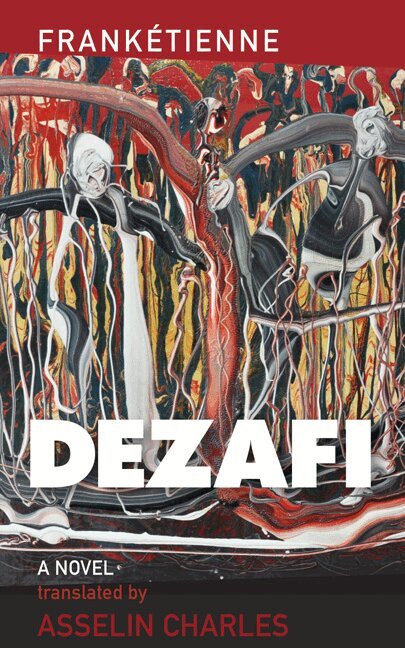
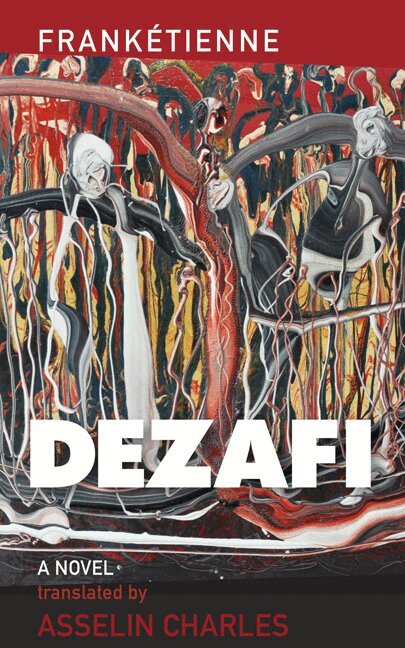
Dézafi is no ordinary zombie novel. In the hands of the great Haitian author known simply as Frankétienne, zombification takes on a symbolic dimension that stands as a potent commentary on a country haunted by a history of slavery. Now this dynamic new translation brings this touchstone in Haitian literature to English-language readers for the first time.Written in a provocative experimental style, with a myriad of voices and combining myth, poetry, allegory, magical realism, and social realism, Dézafi tells the tale of a plantation that is run and worked by zombies for the financial benefit of the living owner. The owner's daughter falls in love with the zombie overseer and facilitates his transformation back into fully human form, leading to a rebellion that challenges the oppressive imbalance that had robbed the workers of their spirit. With the walking dead and bloody cockfights (the ""dézafi"" of the title) as cultural metaphors for Haitian existence, Frankétienne’s novel is ultimately a powerful allegory of political and social liberation.
346 kr
Skickas inom 10-15 vardagar
Dézafi is no ordinary zombie novel. In the hands of the great Haitian author known simply as Frankétienne, zombification takes on a symbolic dimension that stands as a potent commentary on a country haunted by a history of slavery. Now this dynamic new translation brings this touchstone in Haitian literature to English-language readers for the first time.Written in a provocative experimental style, with a myriad of voices and combining myth, poetry, allegory, magical realism, and social realism, Dézafi tells the tale of a plantation that is run and worked by zombies for the financial benefit of the living owner. The owner's daughter falls in love with the zombie overseer and facilitates his transformation back into fully human form, leading to a rebellion that challenges the oppressive imbalance that had robbed the workers of their spirit. With the walking dead and bloody cockfights (the ""dézafi"" of the title) as cultural metaphors for Haitian existence, Frankétienne’s novel is ultimately a powerful allegory of political and social liberation.
738 kr
Skickas inom 5-8 vardagar
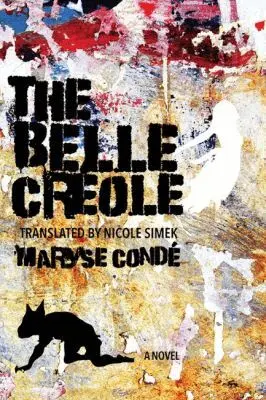
Possessing one of the most vital voices in international letters, Maryse Condé added to an already acclaimed career the New Academy Prize in Literature in 2018. The fourteenth novel by this celebrated author revolves around an enigmatic crime and the young man at its center. Dieudonné Sabrina, a gardener, aged twenty-two and black, is accused of murdering his employer--and lover--Loraine, a wealthy white woman descended from plantation owners. His only refuge is a sailboat, La Belle Créole, a relic of times gone by. Condé follows Dieudonné's desperate wanderings through the city of Port-Mahault the night of his acquittal, the narrative unfolding through a series of multivoiced flashbacks set against a forbidding backdrop of social disintegration and tumultuous labor strikes in turn-of-the-twenty-first-century Guadeloupe. Twenty-four hours later, Dieudonné's fate becomes suggestively intertwined with that of the French island itself, though the future of both remains uncertain in the end.Echoes of Faulkner and Lawrence, and even Shakespeare's Othello, resonate in this tale, yet the drama's uniquely modern dynamics set it apart from any model in its exploration of love and hate, politics and stereotype, and the attempt to find connections with others across barriers. Through her vividly and intimately drawn characters, Condé paints a rich portrait of a contemporary society grappling with the heritage of slavery, racism, and colonization.
233 kr
Skickas inom 5-8 vardagar
Possessing one of the most vital voices in international letters, Maryse Condé added to an already acclaimed career the New Academy Prize in Literature in 2018. The fourteenth novel by this celebrated author revolves around an enigmatic crime and the young man at its center. Dieudonné Sabrina, a gardener, aged twenty-two and black, is accused of murdering his employer--and lover--Loraine, a wealthy white woman descended from plantation owners. His only refuge is a sailboat, La Belle Créole, a relic of times gone by. Condé follows Dieudonné's desperate wanderings through the city of Port-Mahault the night of his acquittal, the narrative unfolding through a series of multivoiced flashbacks set against a forbidding backdrop of social disintegration and tumultuous labor strikes in turn-of-the-twenty-first-century Guadeloupe. Twenty-four hours later, Dieudonné's fate becomes suggestively intertwined with that of the French island itself, though the future of both remains uncertain in the end.Echoes of Faulkner and Lawrence, and even Shakespeare's Othello, resonate in this tale, yet the drama's uniquely modern dynamics set it apart from any model in its exploration of love and hate, politics and stereotype, and the attempt to find connections with others across barriers. Through her vividly and intimately drawn characters, Condé paints a rich portrait of a contemporary society grappling with the heritage of slavery, racism, and colonization.