Casemate Illustrated Special – Serie
Visar alla böcker i serien Casemate Illustrated Special. Handla med fri frakt och snabb leverans.
6 produkter
6 produkter
318 kr
Skickas
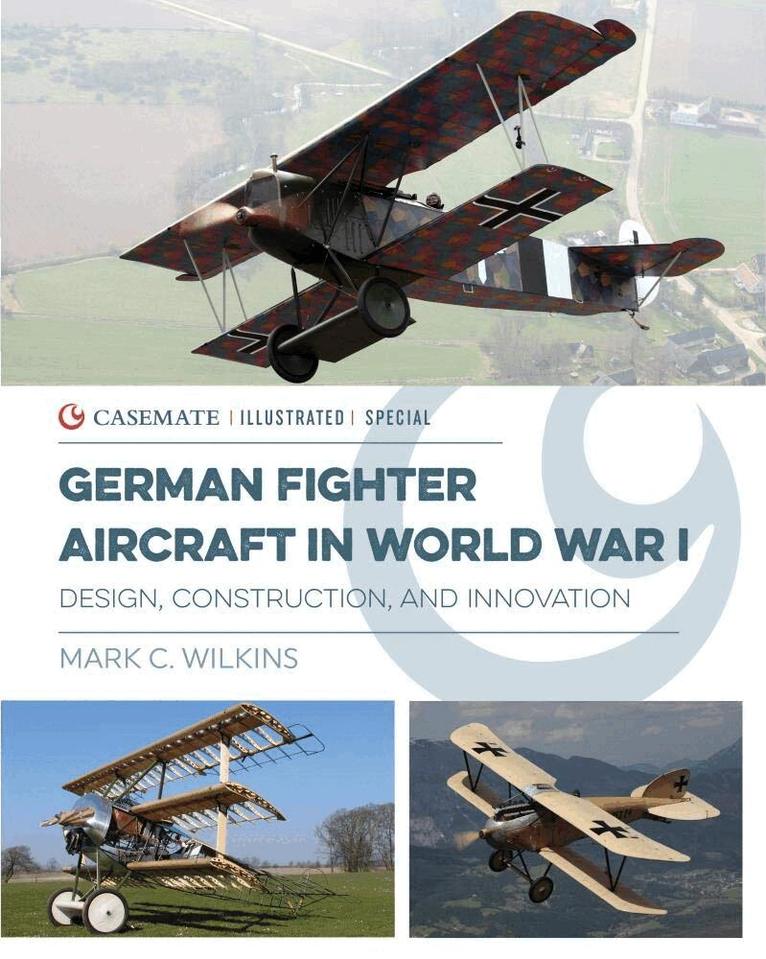
Fighter aircraft were developed by during World War I at an unprecedented rate, as nascent air forces sought to achieve and maintain air supremacy. German manufacturers innovated at top speed, while constantly scrutinizing the development of new enemy aircraft. The Germans also utilized the concept of systematic production or modular engineering during the war—Fokker capitalized on this aspect with all his aircraft built in a similar fashion—wooden wings with welded steel fuselages. This meant that they could be disassembled or reassembled quickly in the field—unlike many Allied aircraft. Pfalz and Albatros were the first to realize the importance of a streamlined fuselage—the precursor to all that would follow. Both of these companies built semi-monocoque fuselages using plywood to develop semi-stressed skin—the Allies had nothing like this. The Germans also perfect powerful inline engines, as exemplified by the Albatros fighters. These engines did not have the gyroscopic effect of the rotary engines and as such were easier and more stable to fly. Fokker was slow to give up his rotary engines but once he did, the result was the iconic Fokker D VII—years ahead of its time and the only aircraft specifically mentioned in the Treaty of Versailles that Germany could not build after the war. German Fighter Aircraft in World War I explores how German fighter aircraft were developed during the war, the innovations and trials that made the Fokker D VII possible, and the different makes and types of aircraft. Using unpublished images including photographs of surviving aircraft, archive images, and models and replicas, it shows details of aircraft that were kept top secret during the war. Extensively illustrated with 140 photos and ten color profiles, this is will be essential reading for all WWI aviation enthusiasts and modellers.
318 kr
Skickas
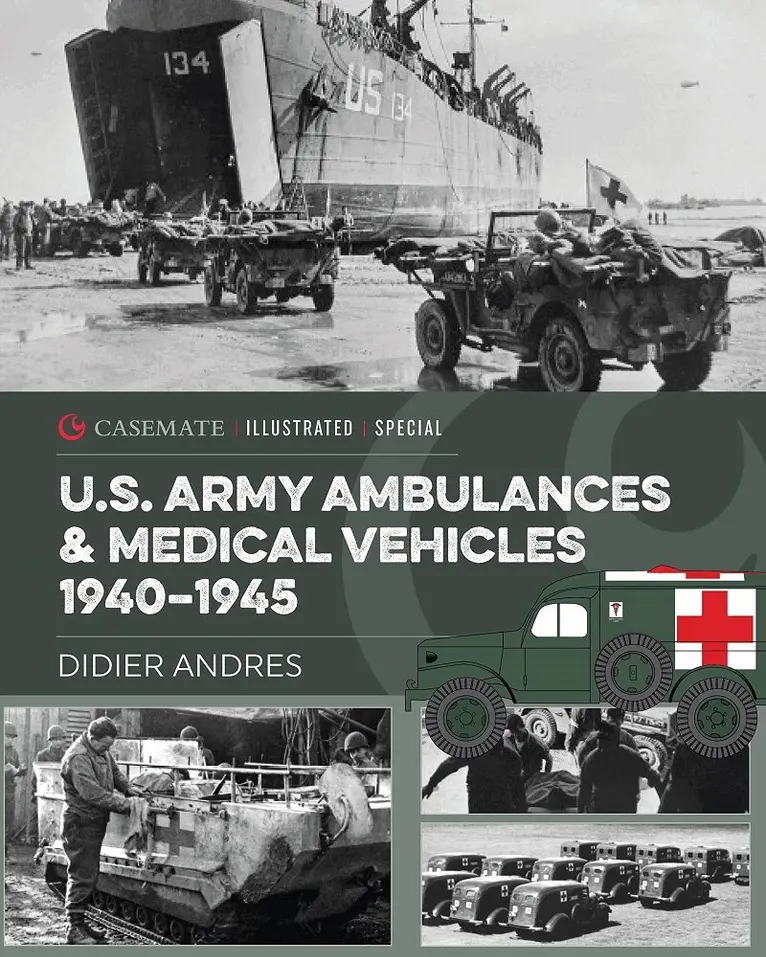
Of all the armies involved in World War II, the U.S. Army developed the most sophisticated system for the transport and treatment of injured and sick soldiers, pushing the boundaries of available technology to give their men the best chance of not only survival but a full recovery. Each infantry regiment had a medical detachment that was tasked with conserving the strength of the regiment by not only providing medical and dental treatment but also undertaking all possible measures to keep the regiment healthy. In combat they would provide emergency medical treatment on the battlefield, then move casualties to aid stations they had established. At aid stations casualties would be triaged, stabilized and treated before being moved on for further treatment. Vehicles formed a crucial part of the Medical Detachment’s equipment. This fully illustrated, comprehensive books covers all types of medical vehicles used both in-theater and in the United States, including ambulances and technical support vehicles. It details vehicle markings and the equipment modified for use in the evacuation of troops from the battlefield; and the other uses these vehicles were adapted for during the war including their use as “Clubmobiles” and “Chuck Wagons” by the American Red Cross.
370 kr
Skickas
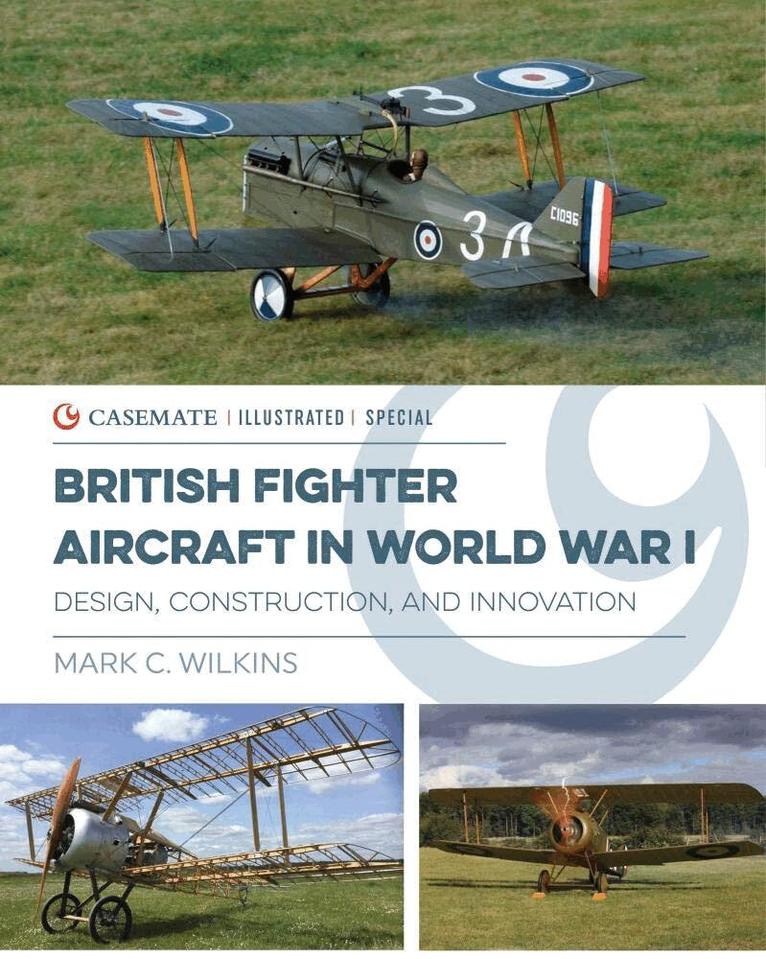
World War I witnessed unprecedented growth and innovation in aircraft design, construction, and as the war progressed - mass production. Each country generated its own innovations sometimes in surprising ways - Albatros Fokker, Pfalz, and Junkers in Germany and Nieuport, Spad, Sopwith and Bristol in France and Britain. This book focuses on the British approach to fighter design, construction, and mass production. Initially the French led the way in Allied fighter development with their Bleriot trainers then nimble Nieuport Scouts - culminating with the powerful, fast gun platforms as exemplified by the Spads. The Spads had a major drawback however, in that they were difficult and counter-intuitive to fix in the field. The British developed fighters in a very different way; Tommy Sopwith had a distinctive approach to fighter design that relied on lightly loaded wings and simple functional box-girder fuselages. His Camel was revolutionary as it combined all the weight well forward; enabling the Camel to turn very quickly - but also making it an unforgiving fighter for the inexperienced. The Royal Aircraft Factory's SE5a represented another leap forward with its comfortable cockpit, modern instrumentation, and inline engine - clearly influenced by both Spads and German aircraft. Each manufacturer and design team vied for the upper hand and deftly and quickly appropriated good ideas from other companies – be they friend or foe. Developments in tactics and deployment also influenced design - from the early reconnaissance planes, to turn fighters, finally planes that relied upon formation tactics, speed, and firepower. Advances were so great that the postwar industry seemed bland by comparison.
421 kr
Skickas
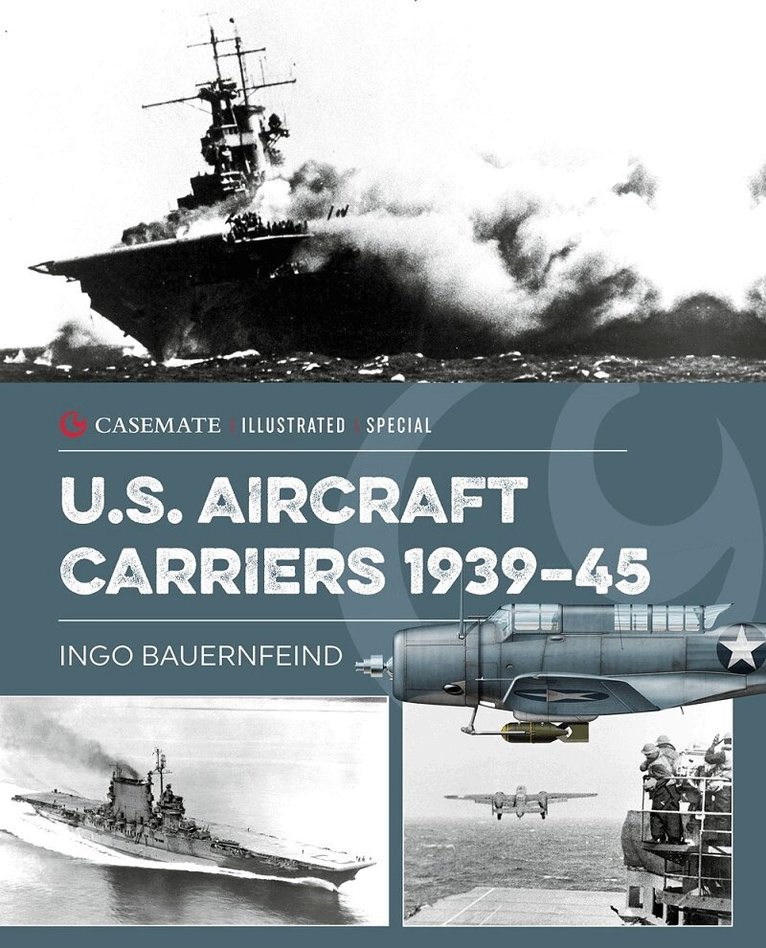
This extensively illustrated volume tells the dramatic yet successful story of US aircraft carriers in World War II by class, ranging from early pre-war designs to escort carriers built from destroyer hulls, to the gigantic fleet carriers serving as the predecessors of modern-day super carriers. Besides covering the famous great carrier battles in the Pacific, this book also tells of the equally important actions of US flat tops hunting and destroying German U-boats in the Atlantic, making an enormous contribution to the elimination of the U-boat dangers and the safe arrival of transatlantic supplies, so desperately needed for the launch of D-Day. Including profiles and explanatory text boxes, the concise text gives a clear overview of each ship’s career, its fate and its significance in American naval history. Moreover, the reader learns about the technical evolution of US carriers throughout the war, and the various aircraft launched from these magnificent vessels to engage their Japanese or German foes. This volume provides an overview of preserved World War II flat tops serving as floating museums for future generations as well as a dive to the sunken USS Saratoga at Bikini Atoll.
318 kr
Skickas
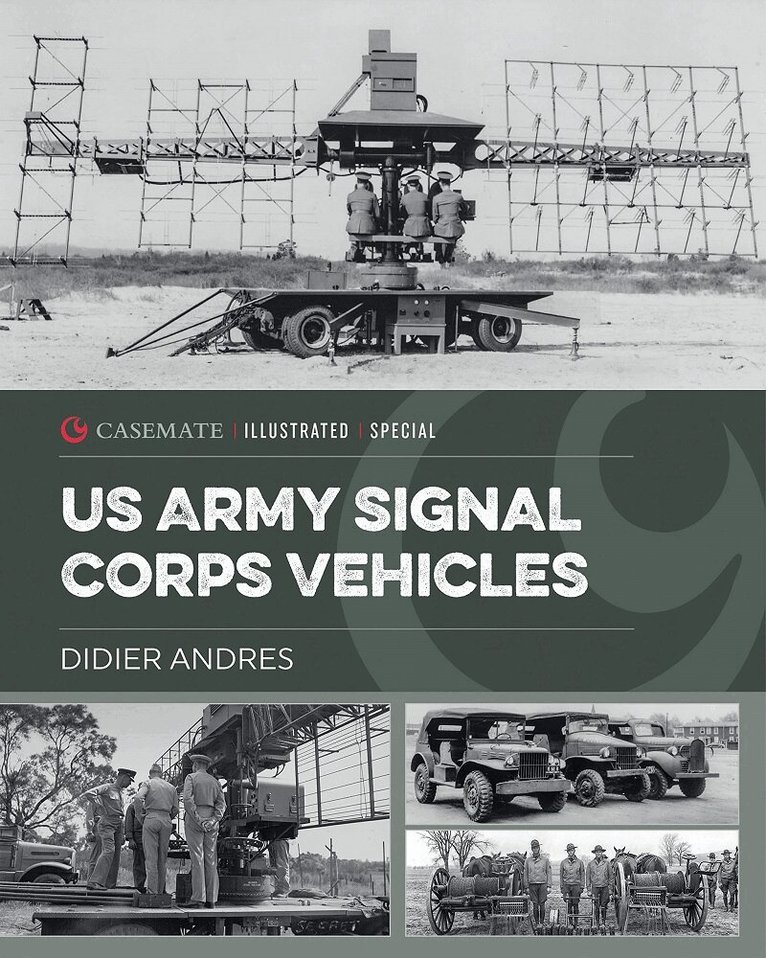
A comprehensive and fully illustrated account of all the vehicles needed to move, use, and maintain communications equipment vital to the success of the U.S. Army during World War II, including trucks, workshop trucks, vans and trailers all designed by the Signal Corps, described in technical detail and illustrated by hundreds of period photos. The Signal Corps was at the forefront of the technological development of communications throughout World War II. Tasked with coordinating all American military activities, the Signal Corps initially had to rely on a communications landline network covering some 1 300 000 km. This was soon overtaken by radio communications. however adaptation remained a priority within the US Army Signal Corps for when landline networks were unavailable or radio silence had to be observed.Almost every large piece of Signal Corps equipment required wheeled transport, and over a hundred vehicles and trailers would be specially designed, many associated with one particular radio or radar installation. This comprehensive and fully illustrated account covers radar and radio vehicles, plus specialised vehicles such as telephone repair trucks, mobile telephone switchboards and homing pigeon units, all described in technical detail and illustrated by hundreds of period photos.
370 kr
Skickas
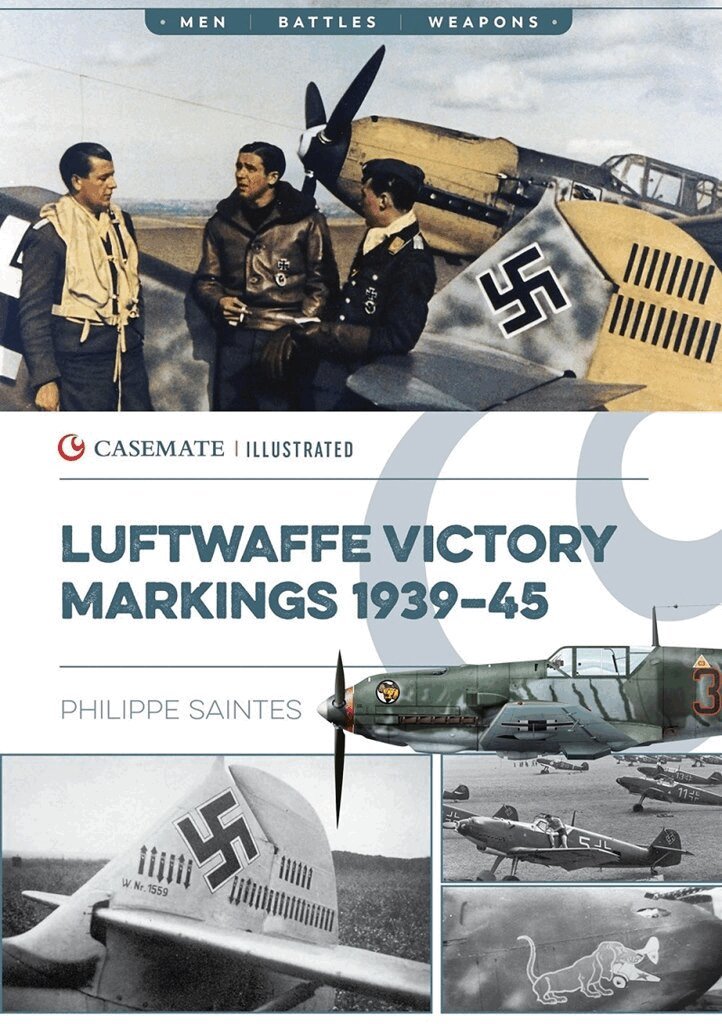
This book provides an overview of the victory markings painted on the fins and rudders of the planes of the German day fighter and night fighter aircraft between 1939 and 1945, and demonstrates how these were applied in reality through the profiles of nineteen pilots, including some of the most emblematic pilots of the Luftwaffe: Hans Troitzsch, Johannes Gentzen, Frank Liesendahl, Wilhelm Balthasar, Otto Bertram, Joachim Müncheberg, Karl-Heinz Koch, Kurt “Kuddel” Ubben, Felix-Maria Brandis, "Fiffi" Stahlschmidt, Franz-Josef Beerenbrock, Heinrich Setz, Walter "Gulle" Oesau, Max-Hellmuth Ostermann, Heinrich Bartels, "Fritz" Dinger, Martin Drewes, Egmont zur Lippe-Weissenfeld and Ludwig Meister.