Century Foundation Book - Böcker
Visar alla böcker i serien Century Foundation Book. Handla med fri frakt och snabb leverans.
10 produkter
10 produkter
282 kr
Skickas inom 7-10 vardagar
With the ending of the Cold War, the search for a new international and economic order has begun. This text examines the role of key economic power brokers, particularly the USA, in the reconstruction and reconfiguration of an international economy after World War II. The author argues that the US policy efforts were so successsful that they led to an unprecendented renewal of economic growth, living standards and education levels in postwar Europe and Japan. Ironically, those same policy successes unintentionally fostered the relative decline of US dominance on the world trade scene as the reduction of trade and investment barriers prompted friction and conflict between different kinds of capitalist systems. Identifying the historical and legal issues in postwar trade policy, Ostrey attempts to chart our economic course through the last half of the 20th century and into the next.
693 kr
Skickas inom 10-15 vardagar
Today, nearly all public services—schools, hospitals, prisons, fire departments, sanitation—are considered fair game for privatization. Proponents of privatization argue that private firms will respond to competitive market pressures and provide better service at lower cost. While this assertion has caused much controversy, the debate between both sides has consisted mainly of impassioned defenses of entrenched positions. In You Don't Always Get What You Pay For, Elliott D. Sclar offers a balanced look at the pitfalls and promises of public sector privatization in the United States. By describing the underlying economic dynamics of how public agencies and private organizations actually work together, he provides a rigorous analysis of the assumptions behind the case for privatization.The competitive-market model may seem appealing, but Sclar warns that it does not address the complex reality of contracting for government services. Using specific examples, such as mail service and urban transportation, he shows that ironically privatization does not shrink government—the broader goal of many of its own champions. He also demonstrates that there is more to consider in providing public services than trying to achieve efficiency; there are issues of equity and access that cannot be ignored.Sclar believes that public officials and voters will soon realize the limitations of "contracting out" just as private corporations have come to understand the drawbacks of outsourcing. After examining the effectiveness of alternatives to privatization, he offers suggestions for improving public sector performance—advice he hopes will be heeded before it is too late.
699 kr
Skickas inom 10-15 vardagar
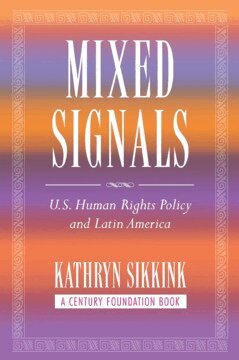
"Nowhere did two understandings of U.S. identity—human rights and anticommunism—come more in conflict with each other than they did in Latin America. To refocus U.S. policy on human rights and democracy required a rethinking of U.S. policy as a whole. It required policy makers to choose between policies designed to defeat communism at any cost and those that remain within the bounds of the rule of law."—from the IntroductionKathryn Sikkink believes that the adoption of human rights policy represents a positive change in the relationship between the United States and Latin America. In Mixed Signals she traces a gradual but remarkable shift in U.S. foreign policy over the last generation. By the 1970s, an unthinking anticommunist stance had tarnished the reputation of the U.S. government throughout Latin America, associating Washington with tyrannical and often brutally murderous regimes. Sikkink recounts the reemergence of human rights as a substantive concern, showing how external pressures from activist groups and the institution of a human rights bureau inside the State Department have combined to remake Washington's agenda, and its image, in Latin America. The current war against terrorism, Sikkink warns, could repeat the mistakes of the past unless we insist that the struggle against terrorism be conducted with respect for human rights and the rule of law.
524 kr
Skickas inom 10-15 vardagar
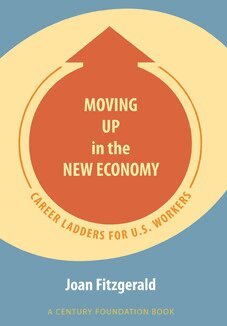
"The United States used to be a country where ordinary people could expect to improve their economic condition as they moved through life. For millions of us, this is no longer the case. Many Americans today have a lower standard of living as adults than they had in their parents' homes as children.... This book is about restoring the upward mobility of U.S. workers. Specifically, it addresses the workforce-development strategy of creating not just jobs, but career ladders."—from Moving Up in the New EconomyCareer-ladder strategies create opportunities for low-wage workers to learn new skills and advance through a progression of higher-skilled and better-paid jobs. For example, nurses' aides can become licensed practical nurses, administrative assistants can become information technology workers, and bank tellers can become loan officers.Career-ladder programs could provide opportunities for upward mobility and also stave off impending national shortages of skilled workers. But there are a variety of obstacles that must be faced candidly if career-ladder programs are to succeed. In Moving Up in the New Economy, Joan Fitzgerald explores specific programs in different sectors of the economy—health care, child care, education, manufacturing, and biotechnology—to offer a comprehensive analysis of this innovative approach to job training. Addressing the successes achieved—and the problems faced—by career-ladder programs, this timely book will be of interest to anyone interested in career development, workforce training, and employment issues, especially those that affect low-wage workers.
706 kr
Skickas inom 10-15 vardagar
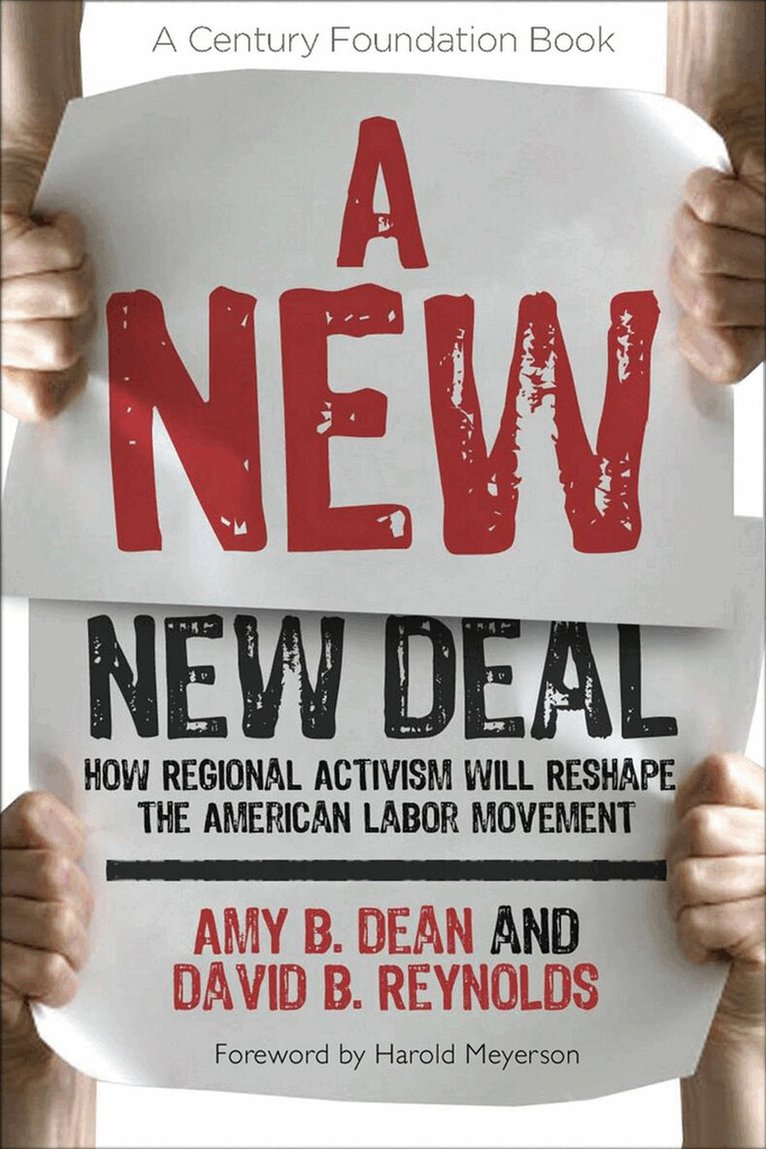
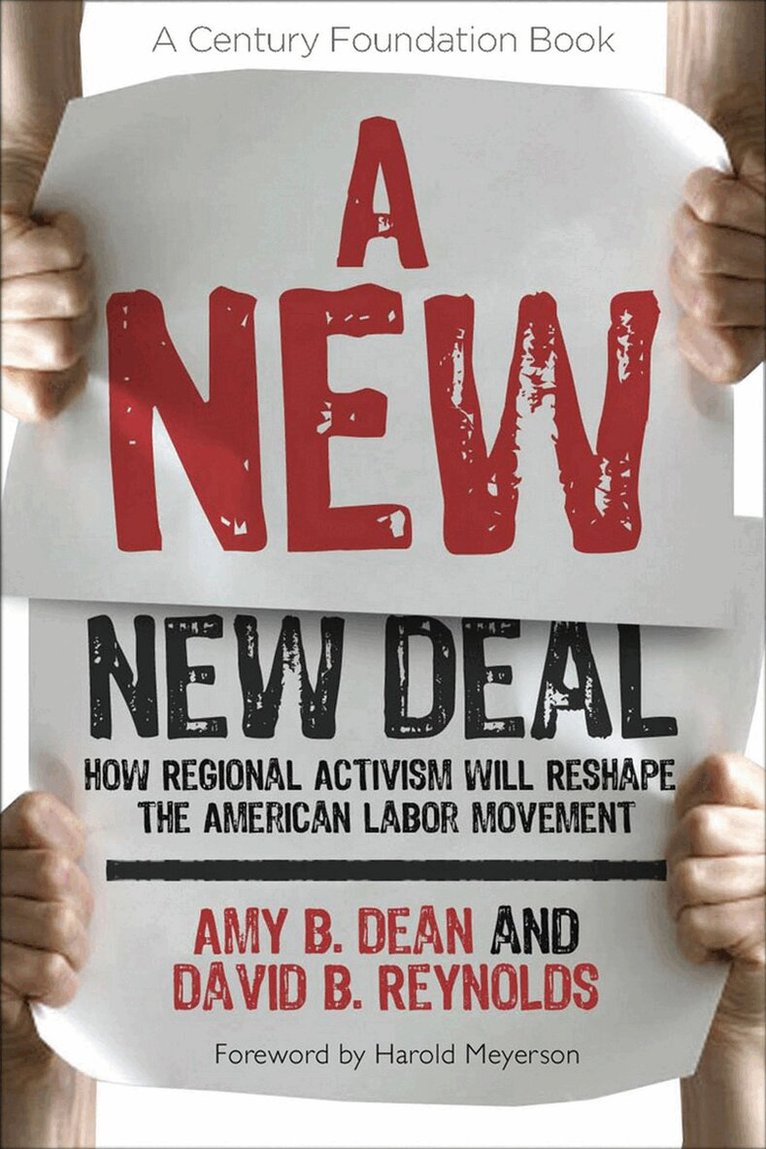
A Century Foundation BookIn A New New Deal, the labor movement leaders Amy B. Dean and David B. Reynolds offer a bold new plan to revitalize American labor activism and build a sense of common purpose between labor and community organizations. Dean and Reynolds demonstrate how alliances organized at the regional level are the most effective tool to build a voice for working people in the workplace, community, and halls of government. The authors draw on their own successes to offer in-depth, contemporary case studies of effective labor-community coalitions. They also outline a concrete strategy for building power at the regional level. This pioneering model presents the regional building blocks for national change. A diverse audience—both within the labor movement and among its allies—will welcome this clear, detailed, and inspiring presentation of regional power-building tactics, which include deep coalition-building, leadership development, policy research, and aggressive political action.A New New Deal explores successful coalitions forged in Los Angeles, Boston, Denver, San Jose, New Haven, and Atlanta toward goals such as universal health insurance for children and sensible redevelopment efforts that benefit workers as well as businesses. The authors view partnerships between labor and grassroots organizations as a mutually beneficial strategy based on shared goals, resulting in a broadened membership base and increased organizational capacity. They make the innovative argument that the labor movement can steward both industry and community and make manifest the ways in which workplace battles are not the parochial concerns of isolated workers, but a fundamental struggle for America's future. Drawing on historical parallels, the authors illustrate how long-term collaborations between labor and community organizations are sowing the seeds of a new New Deal.
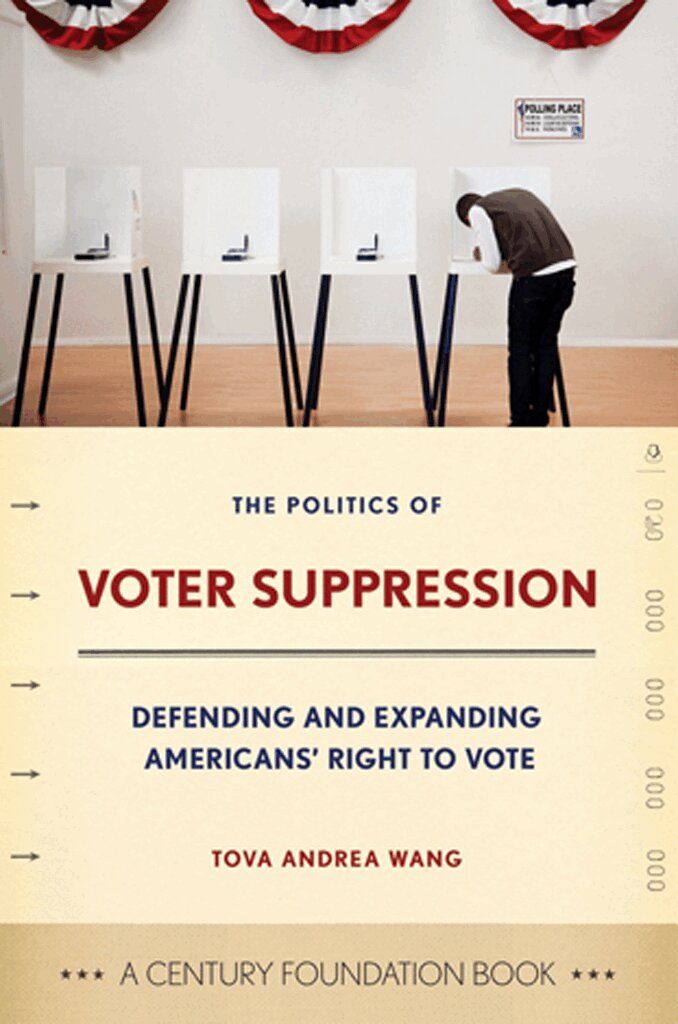
Politics of Voter Suppression
Defending and Expanding Americans' Right to Vote
Inbunden, Engelska, 2012
281 kr
Skickas inom 10-15 vardagar
The Politics of Voter Suppression arrives in time to assess actual practices at the polls this fall and to reengage with debates about voter suppression tactics such as requiring specific forms of identification. Tova Andrea Wang examines the history of how U.S. election reforms have been manipulated for partisan advantage and establishes a new framework for analyzing current laws and policies. The tactics that have been employed to suppress voting in recent elections are not novel, she finds, but rather build upon the strategies used by a variety of actors going back nearly a century and a half. This continuity, along with the shift to a Republican domination of voter suppression efforts for the past fifty years, should inform what we think about reform policy today. Wang argues that activities that suppress voting are almost always illegitimate, while reforms that increase participation are nearly always legitimate. In short, use and abuse of election laws and policies to suppress votes has obvious detrimental impacts on democracy itself. Such activities are also harmful because of their direct impacts on actual election outcomes. Wang regards as beneficial any legal effort to increase the number of Americans involved in the electoral system. This includes efforts that are focused on improving voter turnout among certain populations typically regarded as supporting one party, as long as the methods and means for boosting participation are open to all. Wang identifies and describes a number of specific legitimate and positive reforms that will increase voter turnout.
393 kr
Skickas inom 10-15 vardagar
"Nowhere did two understandings of U.S. identity—human rights and anticommunism—come more in conflict with each other than they did in Latin America. To refocus U.S. policy on human rights and democracy required a rethinking of U.S. policy as a whole. It required policy makers to choose between policies designed to defeat communism at any cost and those that remain within the bounds of the rule of law."—from the IntroductionKathryn Sikkink believes that the adoption of human rights policy represents a positive change in the relationship between the United States and Latin America. In Mixed Signals she traces a gradual but remarkable shift in U.S. foreign policy over the last generation. By the 1970s, an unthinking anticommunist stance had tarnished the reputation of the U.S. government throughout Latin America, associating Washington with tyrannical and often brutally murderous regimes. Sikkink recounts the reemergence of human rights as a substantive concern, showing how external pressures from activist groups and the institution of a human rights bureau inside the State Department have combined to remake Washington's agenda, and its image, in Latin America. The current war against terrorism, Sikkink warns, could repeat the mistakes of the past unless we insist that the struggle against terrorism be conducted with respect for human rights and the rule of law.
281 kr
Skickas inom 10-15 vardagar
A Century Foundation BookIn A New New Deal, the labor movement leaders Amy B. Dean and David B. Reynolds offer a bold new plan to revitalize American labor activism and build a sense of common purpose between labor and community organizations. Dean and Reynolds demonstrate how alliances organized at the regional level are the most effective tool to build a voice for working people in the workplace, community, and halls of government. The authors draw on their own successes to offer in-depth, contemporary case studies of effective labor-community coalitions. They also outline a concrete strategy for building power at the regional level. This pioneering model presents the regional building blocks for national change. A diverse audience—both within the labor movement and among its allies—will welcome this clear, detailed, and inspiring presentation of regional power-building tactics, which include deep coalition-building, leadership development, policy research, and aggressive political action.A New New Deal explores successful coalitions forged in Los Angeles, Boston, Denver, San Jose, New Haven, and Atlanta toward goals such as universal health insurance for children and sensible redevelopment efforts that benefit workers as well as businesses. The authors view partnerships between labor and grassroots organizations as a mutually beneficial strategy based on shared goals, resulting in a broadened membership base and increased organizational capacity. They make the innovative argument that the labor movement can steward both industry and community and make manifest the ways in which workplace battles are not the parochial concerns of isolated workers, but a fundamental struggle for America's future. Drawing on historical parallels, the authors illustrate how long-term collaborations between labor and community organizations are sowing the seeds of a new New Deal.
New Unionism
Employee Involvement in the Changing Corporation with a New Introduction
Häftad, Engelska, 1996
377 kr
Skickas inom 10-15 vardagar
In his visionary analysis, Charles Heckscher argues for "associational unionism," a model outside the tradition of American labor law. Rejecting the usual boundary between workers and management, Heckscher defines a genuinely new system of representation that encourages multilateral negotiation involving management, different groups of employees, and other interested parties, such as consumers or environmentalists. The New Unionism, a Twentieth Century Fund Book, was first published in 1988. This edition includes a new introduction by the author in which he reviews the significance of recent economic and political trends and addresses some of the criticisms of the concept of an associational union.
281 kr
Skickas inom 10-15 vardagar
Today, nearly all public services—schools, hospitals, prisons, fire departments, sanitation—are considered fair game for privatization. Proponents of privatization argue that private firms will respond to competitive market pressures and provide better service at lower cost. While this assertion has caused much controversy, the debate between both sides has consisted mainly of impassioned defenses of entrenched positions. In You Don't Always Get What You Pay For, Elliott D. Sclar offers a balanced look at the pitfalls and promises of public sector privatization in the United States. By describing the underlying economic dynamics of how public agencies and private organizations actually work together, he provides a rigorous analysis of the assumptions behind the case for privatization.The competitive-market model may seem appealing, but Sclar warns that it does not address the complex reality of contracting for government services. Using specific examples, such as mail service and urban transportation, he shows that ironically privatization does not shrink government—the broader goal of many of its own champions. He also demonstrates that there is more to consider in providing public services than trying to achieve efficiency; there are issues of equity and access that cannot be ignored.Sclar believes that public officials and voters will soon realize the limitations of "contracting out" just as private corporations have come to understand the drawbacks of outsourcing. After examining the effectiveness of alternatives to privatization, he offers suggestions for improving public sector performance—advice he hopes will be heeded before it is too late.