Chapman & Hall Ecotoxicology Series - Böcker
Visar alla böcker i serien Chapman & Hall Ecotoxicology Series. Handla med fri frakt och snabb leverans.
7 produkter
7 produkter
2 117 kr
Skickas inom 10-15 vardagar
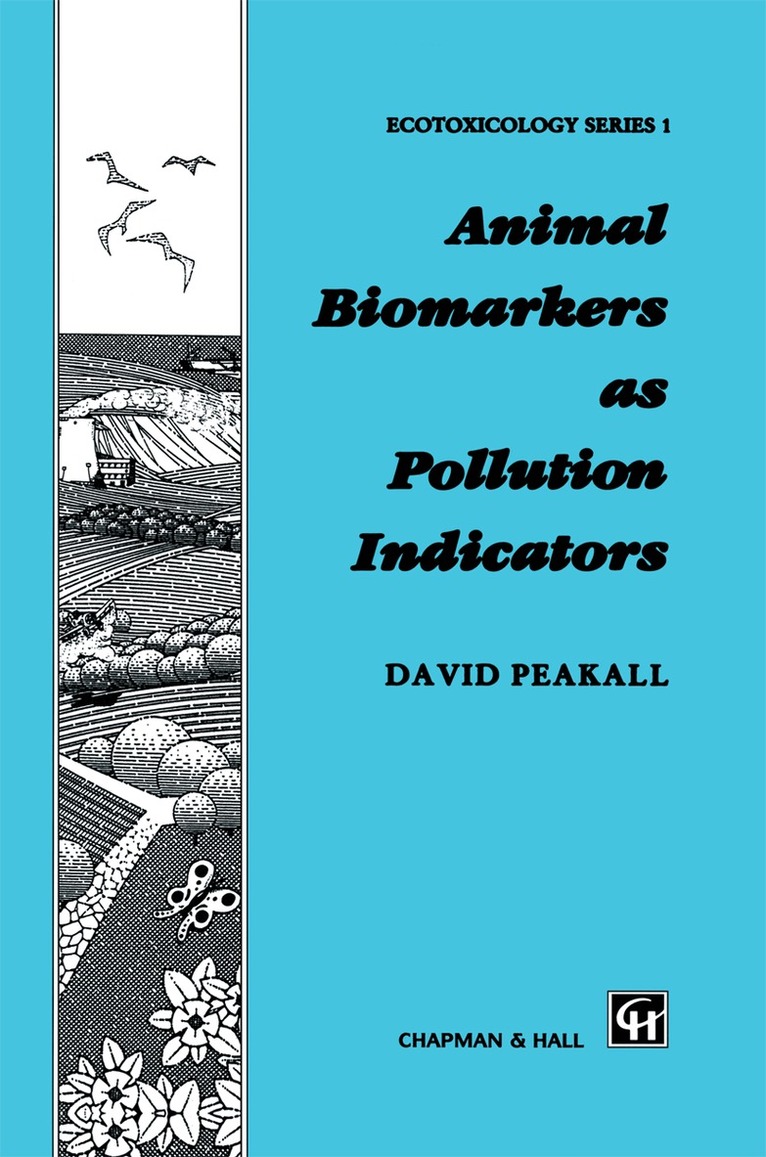
One of the most difficult decisions facing those responsible for the enforcement of environmental regulations and laws is how much clean-up is necessary. A decision to do too little may cause irreversible damage to the environment, while a decision to do more than is necessary may waste resources better spent elsewhere. Using an approach similar to clinical biochemistry in human medicine, this book is a critical examination of the use of biomarkers (the physiological or biochemical changes caused by chemicals) to indicate the state of health of wildlife in the environment. Because of the increasing concern over the effects of toxic chemicals on the biosphere, the choice of reliable indicators to measure the effect of them in animals is therefore absolutely crucial. David Peakall has been involved in researching biomarkers for many years and has been active in a number of international advisory bodies dealing with pollution problems. His book looks at the range of biomarkers, their usefulness in monitoring pollution and the prediction of the biotoxic effects of the release of toxic chemicals.He concludes that basing decisions on the physiological function of organisms, using the biomarkers and the concept of "exclusion zones", is a more rational and successful approach to pollution problems compared with the classical toxicological approach of setting pollution "levels".
1 589 kr
Skickas inom 10-15 vardagar
The second in a series of books on ecotoxicology, this book presents a discussion of a variety of theoretical and practical issues involved in the study of ecotoxicology. By concentrating on the key (and often controversial) issues, the book provides an introduction for those new to ecotoxicology while stimulating veterans in the field into lively debate. Ecotoxicologists are faced with many challenges that range from the theoretical and practical limitations in the detection of pollutant effects on ecosystems, to deciding on adequate definitions for "pollutant impact" and "environmental quality", to the effective design, performance and interpretation of toxicity tests. This book addresses such issues and provides an in depth critique of current methodologies in ecotoxicology and a discussion of how the results of this science can best be applied to risk assessment and management decisions. Recent developments in ecotoxicology are assessed, promising approaches highlighted and future directions outlined.By focusing on the key issues in toxicity testing, this book challenges those working in the field of ecotoxicology to bridge the gap between two important processes - scientific understanding and decision making. Its aim is to spur debate and encourage a reassessment of current methodology. This book should be of interest to Ecotoxicologists (i.e. ecologists and toxicologists); pollution experts; Environmental Protection Agency personnel; and environmental scientists.
Del 6 - Chapman & Hall Ecotoxicology Series
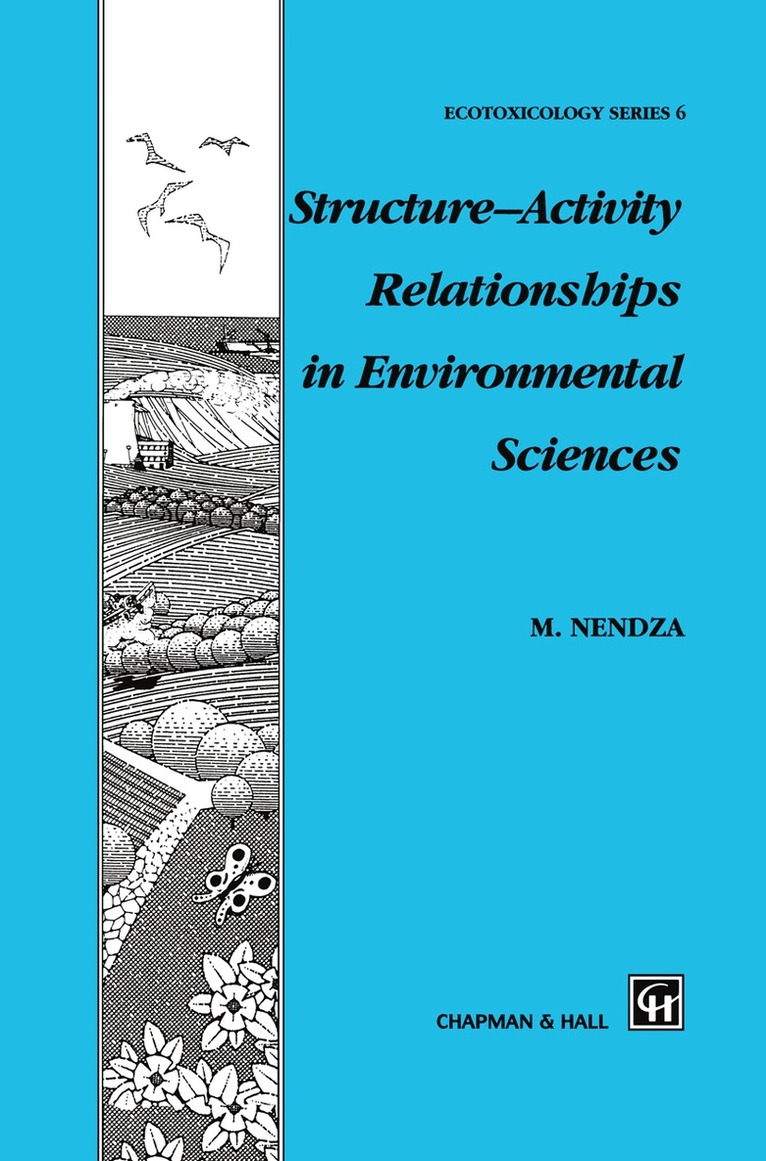
Structure—Activity Relationships in Environmental Sciences
Inbunden, Engelska, 1997
1 094 kr
Skickas inom 10-15 vardagar
This is a handbook for researchers and professional ecotoxicologists working on problems where there is sparse information on environmental toxins. It explains predictive mechanisms for obtaining information on likely outcomes based on the chemical structure of the compounds involved. Since Structure-Activity Relationships can be used as a predictive means to obtain information on chemicals if these are not available from experiments, these data can then be used for environmental fate and effects predictions and eventually for risk assessments. The multidisciplinary approach combines chemistry, biology, ecology, statistics and further related sciences, providing the reader with a theoretical basis as well as practical applications. This book should be of interest to environmental chemists, ecotoxicologists, environmental health workers, environmental risk assessors, chemists, and ecologists.
1 589 kr
Skickas inom 10-15 vardagar
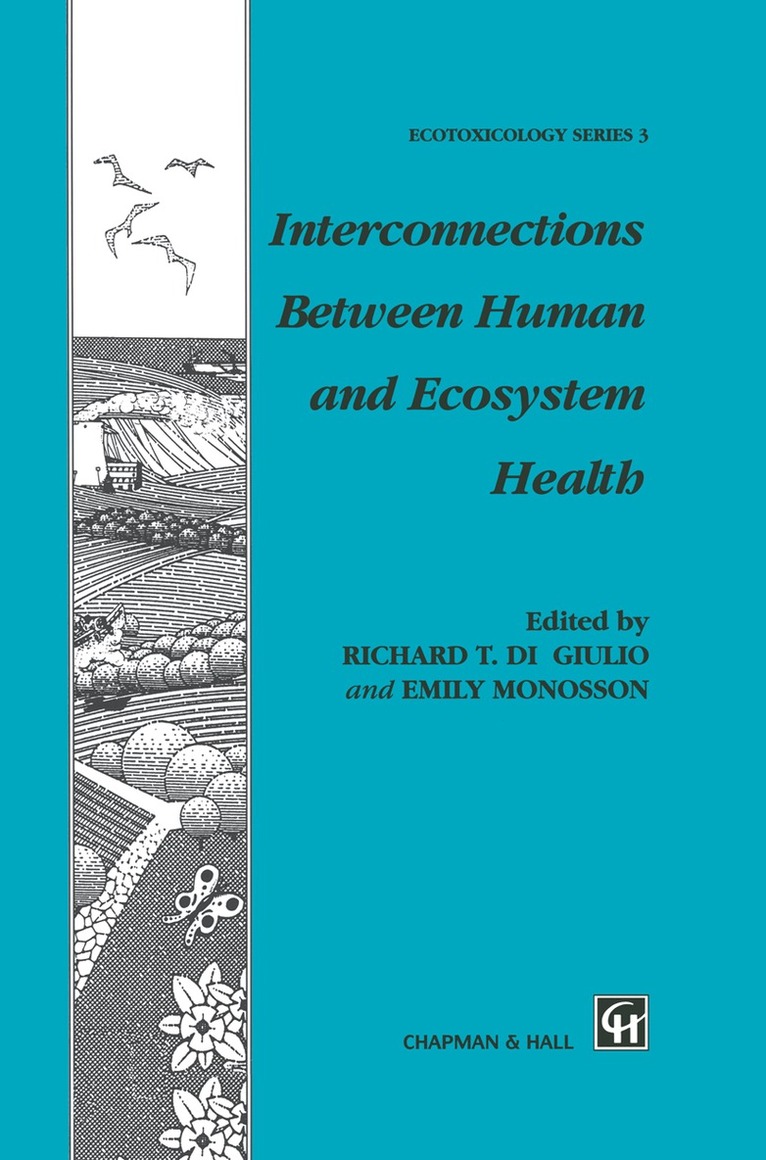
This text discusses the growing recognition that there are fundamental connections between the health of ecosystems and the health of humans in the context of environmental pollutants. Despite this, there has been a comparative isolation of scientists between the two areas of expertise, even though the insights of the one group are of potential help to the other. A key purpose for the book is to initiate broad discussion of mechanisms for society to effectively and efficiently understand and deal with environmental perturbations that have an impact simultaneously on human and ecosystem "health". The nascent field of risk assessment of environmental hazards, and the interconnections between human health and the health of the biotic environment, is therefore addressed in this book. Its interdisciplinary approach fills a previously unoccupied void in the literature.
Del 6 - Chapman & Hall Ecotoxicology Series
Structure—Activity Relationships in Environmental Sciences
Häftad, Engelska, 2013
1 062 kr
Skickas inom 10-15 vardagar
Structure-Activity Relationships in Environmental Science is the first book of its kind that brings together information from a variety of sources into one document. It provides a comprehensive overview of the entire field of quantitative structure-activity relationships (QSARs) as well as being a reference for SAR experts. The book comprises three parts. Part One covers the theoretical background of structure-activity studies and Part Two deals with the practical applications of such methods in the environmental sciences. Part Three critically discusses SAR models with respect to their reliability and their aptness in environmental hazard and risk assessment. Recommendations are made as to which model to use and the case is presented for using QSARs in hazard assessment. The use of QSARs is becoming increasingly important since there is little experimental data available on environmentally relevant chemicals. Structure-Activity Relationships in Environmental Sciences will thus serve as an invaluable guide to both postgraduate and research scientists as well as professional ecologists.
2 117 kr
Skickas inom 10-15 vardagar
Ecotoxicology is a relatively new scientific discipline. Indeed, it might be argued that it is only during the last 5-10 years that it has come to merit being regarded as a true science, rather than a collection of procedures for protecting the environment through management and monitoring of pollutant discharges into the environment. The term 'ecotoxicology' was first coined in the late sixties by Prof. Truhaut, a toxicologist who had the vision to recognize the importance of investigating the fate and effects of chemicals in ecosystems. At that time, ecotoxicology was considered a sub-discipline of medical toxicology. Subsequently, several attempts have been made to portray ecotoxicology in a more realistic light. Notably, both F. Moriarty (1988) and F. Ramade (1987) emphasized in their books the broad basis of ecotoxicology, encompassing chemical and radiation effects on all components of ecosystems. In doing so, they and others have shifted concern from direct chemical toxicity to man, to the far more subtle effects that pollutant chemicals exert on natural biota. Such effects potentially threaten the existence of all life on Earth. Although I have identified the sixties as the era when ecotoxicology was first conceived as a coherent subject area, it is important to acknowledge that studies that would now be regarded as ecotoxicological are much older. Wherever people's ingenuity has led them to change the face of nature significantly, it has not escaped them that a number of biological con sequences, often unfavourable, ensue.
1 637 kr
Skickas inom 10-15 vardagar
Ecotoxicology is a relatively new scientific discipline. Indeed, it might be argued that it is only during the last 5-10 years that it has come to merit being regarded as a true science, rather than a collection of procedures for protecting the environment through management and monitoring of pollutant discharges into the environment. The term 'ecotoxicology' was first coined in the late sixties by Prof. Truhaut, a toxicologist who had the vision to recognize the importance of investigating the fate and effects of chemicals in ecosystems. At that time, ecotoxicology was considered a sub-discipline of medical toxicology. Subsequently, several attempts have been made to portray ecotoxicology in a more realistic light. Notably, both Moriarty (1988) and F. Ramade (1987) emphasized in their books the broad basis of ecotoxicology, encompassing chemical and radiation effects on all components of ecosystems. In doing so, they and others have shifted concern from direct chemical toxicity to humans, to the far more subtle effects that pollutant chemicals exert on natural biota. Such effects potentially threaten the existence of all life on earth. Although I have identified the sixties as the era when ecotoxicology was first conceived as a coherent subject area, it is important to acknowledge that studies that would now be regarded as ecotoxicological are much older.