Chicago Series on International and Domestic Institutions – serie
Visar alla böcker i serien Chicago Series on International and Domestic Institutions. Handla med fri frakt och snabb leverans.
15 produkter
15 produkter
Häftad, Engelska, 2013
288 kr
Skickas inom 5-8 vardagar
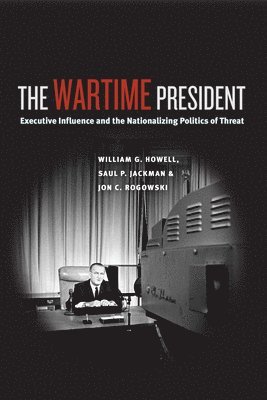
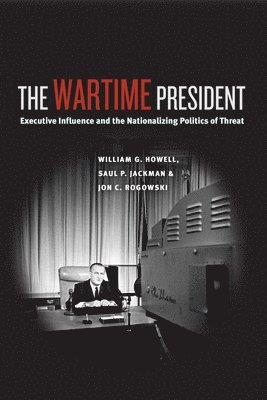
"It is the nature of war to increase the executive at the expense of the legislative authority," wrote Alexander Hamilton in the Federalist Papers. The balance of power between Congress and the president has been a powerful thread throughout American political thought since the time of the Founding Fathers. And yet, for all that has been written on the topic, we still lack a solid empirical or theoretical justification for Hamilton's proposition. For the first time, William G. Howell, Saul P. Jackman, and Jon C. Rogowski systematically analyze the question. Congress, they show, is more likely to defer to the president's policy preferences when political debates center on national rather than local considerations. Thus, World War II and the post-9/11 wars in Afghanistan and Iraq significantly augmented presidential power, allowing the president to enact foreign and domestic policies that would have been unattainable in times of peace. But, contrary to popular belief, there are also times when war has little effect on a president's influence in Congress.The Vietnam and Gulf Wars, for instance, did not nationalize our politics nearly so much, and presidential influence expanded only moderately. Built on groundbreaking research, The Wartime President offers one of the most significant works ever written on the wartime powers presidents wield at home.
Inbunden, Engelska, 2014
825 kr
Skickas inom 5-8 vardagar
How is it that the United States - a country founded on a distrust of standing armies and strong centralized power - came to have the most powerful military in history? Long after World War II and the end of the Cold War, in times of rising national debt and reduced need for high levels of military readiness, why does Congress still continue to support massive defense budgets? In The American Warfare State, Rebecca U. Thorpe argues that there are profound relationships among the size and persistence of the American military complex, the growth in presidential power to launch military actions, and the decline of congressional willingness to check this power. The public costs of military mobilization and war, including the need for conscription and higher tax rates, served as political constraints on warfare for most of American history. But the vast defense industry that emerged from World War II also created new political interests that the framers of the Constitution did not anticipate.Many rural and semirural areas became economically reliant on defense-sector jobs and capital, which gave the legislators representing them powerful incentives to press for ongoing defense spending regardless of national security circumstances or goals. At the same time, the costs of war are now borne overwhelmingly by a minority of soldiers who volunteer to fight, future generations of taxpayers, and foreign populations in whose lands wars often take place. Drawing on an impressive cache of data, Thorpe reveals how this new incentive structure has profoundly reshaped the balance of wartime powers between Congress and the president, resulting in a defense industry perennially poised for war and an executive branch that enjoys unprecedented discretion to take military action.
Häftad, Engelska, 2014
263 kr
Skickas inom 5-8 vardagar
How is it that the United States-a country founded on a distrust of standing armies and strong centralized power-came to have the most powerful military in history? Long after World War II and the end of the Cold War, in times of rising national debt and reduced need for high levels of military readiness, why does Congress still continue to support massive defense budgets? In The American Warfare State, Rebecca U. Thorpe argues that there are profound relationships among the size and persistence of the American military complex, the growth in presidential power to launch military actions, and the decline of congressional willingness to check this power. The public costs of military mobilization and war, including the need for conscription and higher tax rates, served as political constraints on warfare for most of American history. But the vast defense industry that emerged from World War II also created new political interests that the framers of the Constitution did not anticipate.Many rural and semirural areas became economically reliant on defense-sector jobs and capital, which gave the legislators representing them powerful incentives to press for ongoing defense spending regardless of national security circumstances or goals. At the same time, the costs of war are now borne overwhelmingly by a minority of soldiers who volunteer to fight, future generations of taxpayers, and foreign populations in whose lands wars often take place. Drawing on an impressive cache of data, Thorpe reveals how this new incentive structure has profoundly reshaped the balance of wartime powers between Congress and the president, resulting in a defense industry perennially poised for war and an executive branch that enjoys unprecedented discretion to take military action.
Häftad, Engelska, 2016
271 kr
Skickas inom 5-8 vardagar
Since the 1970s, two major trends have emerged among developing countries: the rise of new democracies and the rush to free trade. For some, the confluence of these events suggests that a free-market economy complements a fledgling democracy. Others argue that the two are inherently incompatible and that exposure to economic globalization actually jeopardizes new democracies. Which view is correct? Bumba Mukherjee argues that the reality of how democracy and trade policy unravel in developing countries is more nuanced than either account.Mukherjee offers the first comprehensive cross-national framework for identifying the specific economic conditions that influence trade policy in developing countries. Laying out the causes of variation in trade policy in four developing or recently developed countries—Brazil, India, Indonesia, and South Africa—he argues persuasively that changing political interactions among parties, party leaders, and the labor market are often key to trade policy outcome. For instance, if workers are in a position to benefit from opening up to trade, party leaders in turn support trade reforms by decreasing tariffs and other trade barriers.At a time when discussions about the stability of new democracies are at the forefront, Democracy and Trade Policy in Developing Countries provides invaluable insight into the conditions needed for a democracy to survive in the developing world in the context of globalization.
Inbunden, Engelska, 2010
999 kr
Skickas inom 5-8 vardagar
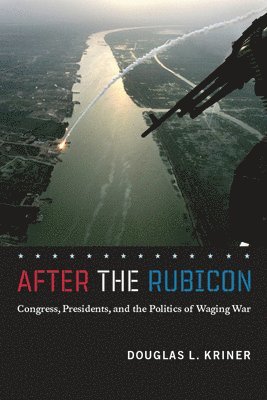
When the United States goes to war, the nation's attention focuses on the president. As commander in chief, a president reaches the zenith of power, while Congress is supposedly shunted to the sidelines once troops have been deployed abroad. Because of Congress' repeated failure to exercise its legislative powers to rein in presidents, many have proclaimed its irrelevance in military matters. After the Rubicon challenges this conventional wisdom by illuminating the diverse ways in which legislators influence the conduct of military affairs. Douglas L. Kriner reveals that even in politically sensitive wartime environments, individual members of Congress frequently propose legislation, hold investigative hearings, and engage in national policy debates in the public sphere. These actions influence the president's strategic decisions as he weighs the political costs of pursuing his preferred military course. Marshalling a wealth of quantitative and historical evidence, Kriner expertly demonstrates the full extent to which Congress materially shapes the initiation, scope, and duration of major military actions and sheds new light on the timely issue of interbranch relations.
Häftad, Engelska, 2010
338 kr
Skickas inom 5-8 vardagar
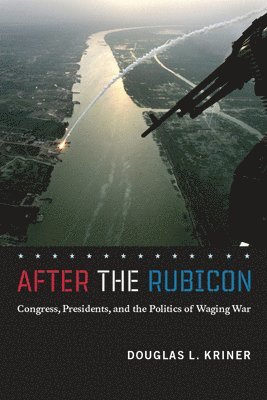
When the United States goes to war, the nation's attention focuses on the president. As commander in chief, a president reaches the zenith of power, while Congress is supposedly shunted to the sidelines once troops have been deployed abroad. Because of Congress's repeated failure to exercise its legislative powers to rein in presidents, many have proclaimed its irrelevance in military matters. After the Rubicon challenges this conventional wisdom by illuminating the diverse ways in which legislators influence the conduct of military affairs. Douglas L. Kriner reveals that even in politically sensitive wartime environments, individual members of Congress frequently propose legislation, hold investigative hearings, and engage in national policy debates in the public sphere. These actions influence the president's strategic decisions as he weighs the political costs of pursuing his preferred military course. Marshalling a wealth of quantitative and historical evidence, Kriner expertly demonstrates the full extent to which Congress materially shapes the initiation, scope, and duration of major military actions and sheds new light on the timely issue of interbranch relations.
Häftad, Engelska, 2018
271 kr
Skickas inom 5-8 vardagar
In the past twenty-five years, a number of countries have made the transition to democracy. The support of international organizations is essential to success on this difficult path. Yet, despite extensive research into the relationship between democratic transitions and membership in international organizations, the mechanisms underlying the relationship remain unclear. With Organizing Democracy, Paul Poast and Johannes Urpelainen argue that leaders of transitional democracies often have to draw on the support of international organizations to provide the public goods and expertise needed to consolidate democratic rule. Looking at the Baltic states' accession to NATO, Poast and Urpelainen provide a compelling and statistically rigorous account of the sorts of support transitional democracies draw from international institutions. They also show that, in many cases, the leaders of new democracies must actually create new international organizations to better serve their needs, since they may not qualify for help from existing ones.
Häftad, Engelska, 2020
273 kr
Skickas inom 5-8 vardagar
While large, multinational corporations have supported the removal of tariffs, behind the scenes these firms have fought for protection in the form of product regulations, including testing, labeling, and registration requirements. Unlike tariffs, these regulations can raise fixed costs, excluding smaller firms from the market and shifting profits toward global giants.Narrowing the Channel demonstrates that globalization and globalized firms can paradoxically hinder rather than foster economic cooperation as larger firms seek to protect their markets through often unnecessarily strict product regulations. To illustrate the problem of regulatory protectionism, Robert Gulotty offers an in-depth analysis of contemporary rulemaking in the United States and the European Union in the areas of health, safety, and environmental standards. He shows how large firms seek regulatory schemes that disproportionately disadvantage small firms. When multinationals are embedded in the local economy, governments too have an incentive to use these regulations to shift profits back home. Today, the key challenge to governing global trade is not how much trade occurs but who is allowed to participate, and this book shows that new rules will be needed to allow governments to widen the benefits of global commerce and avoid further inequality and market concentration.
Inbunden, Engelska, 2011
919 kr
Skickas inom 5-8 vardagar
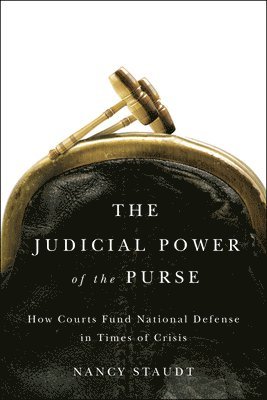
Congress and the president are not the only branches that deal with fiscal issues in times of war. In this innovative book, Nancy Staudt focuses on the role of federal courts in fiscal matters during warfare and high-cost national defense emergencies. There is, she argues, a judicial power of the purse that becomes evident upon examining the budgetary effects of judicial decision making. The book provides substantial evidence that judges are willing - maybe even eager - to redirect private monies into government hands when the country is in peril. But when the judges receive convincing cues that ongoing wartime activities undermine the nation's interests, they are more likely to withhold funds from the government by deciding cases in favor of private individuals and entities who show up in court. In stark contrast with conventional legal, political, and institutional thought that privileges factors associated with individual preferences, "The Judicial Power of the Purse" sheds light on environmental factors in judicial decision making and will be an excellent read for students of judicial behavior in political science and law.
Häftad, Engelska, 2011
273 kr
Skickas inom 5-8 vardagar
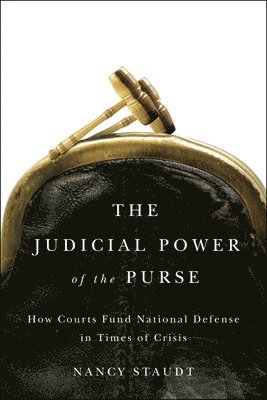
Congress and the president are not the only branches that deal with fiscal issues in times of war. In this innovative book, Nancy Staudt focuses on the role of federal courts in fiscal matters during warfare and high-cost national defense emergencies. There is, she argues, a judicial power of the purse that becomes evident upon examining the budgetary effects of judicial decision making. The book provides substantial evidence that judges are willing - maybe even eager - to redirect private monies into government hands when the country is in peril. But when the judges receive convincing cues that ongoing wartime activities undermine the nation's interests, they are more likely to withhold funds from the government by deciding cases in favor of private individuals and entities who show up in court. In stark contrast with conventional legal, political, and institutional thought that privileges factors associated with individual preferences, "The Judicial Power of the Purse" sheds light on environmental factors in judicial decision making and will be an excellent read for students of judicial behavior in political science and law.
Inbunden, Engelska, 2022
957 kr
Skickas inom 5-8 vardagar
A timely investigation into the conditions that make international agreements—and the institutions that enforce them—vulnerable.When do international institutions effectively promote economic cooperation among countries and help them resolve conflict? Although the international system lacks any central governing authority, states have created rules, particularly around international economic relations, and empowered international tribunals to enforce those rules. Just how successful are these institutions? In Delivering on Promises Lauren J. Peritz demonstrates that these international courts do indeed deliver results—but they are only effective under certain conditions. As Peritz shows, states are less likely to comply with international rules and international court decisions when domestic industries have the political ability to obstruct compliance in particular cases. The author evaluates the argument with an extensive empirical analysis that traces the domestic politics of compliance with the decisions of two international economic courts: the World Trade Organization’s dispute settlement mechanism and the Court of Justice of the European Union. At a time when international agreements are under attack, this book sheds light on the complex relationship between domestic politics and international economic cooperation, offering detailed evidence that international economic courts are effective at promoting interstate cooperation.
Häftad, Engelska, 2022
273 kr
Skickas inom 5-8 vardagar
A timely investigation into the conditions that make international agreements—and the institutions that enforce them—vulnerable.When do international institutions effectively promote economic cooperation among countries and help them resolve conflict? Although the international system lacks any central governing authority, states have created rules, particularly around international economic relations, and empowered international tribunals to enforce those rules. Just how successful are these institutions? In Delivering on Promises Lauren J. Peritz demonstrates that these international courts do indeed deliver results—but they are only effective under certain conditions. As Peritz shows, states are less likely to comply with international rules and international court decisions when domestic industries have the political ability to obstruct compliance in particular cases. The author evaluates the argument with an extensive empirical analysis that traces the domestic politics of compliance with the decisions of two international economic courts: the World Trade Organization’s dispute settlement mechanism and the Court of Justice of the European Union. At a time when international agreements are under attack, this book sheds light on the complex relationship between domestic politics and international economic cooperation, offering detailed evidence that international economic courts are effective at promoting interstate cooperation.
Inbunden, Engelska, 2024
999 kr
Skickas inom 5-8 vardagar
A deep dive into the mechanics of national human rights institutions and the forces that make or break their success.In the years since World War II, the endeavor to promote human rights has gained momentum and become increasingly important within international relations. Yet these efforts often run into serious problems of enforcement. Many countries formed national human rights institutions (NHRIs) with independent mandates to support and monitor government compliance with international human rights law. Be they commissions, ombudsmen, or tribunals, these institutions vary in their power and impact. For this book, Corina Lacatus surveyed NHRIs in Europe and around the world to determine their effectiveness and explain why some succeed while others fail. The Strength of Our Commitments explores the relationship between the domestic and international support an institution receives and its ability to secure resources, credibility, and tangibly improve human rights conditions. Lacatus shows that NHRIs can be models of resilience, even in the face of opposition from political elites. Although their impact on human rights is difficult to measure, The Strength of Our Commitments shows how NHRIs’ strength comes from clearly defined formal powers, strong institutional leadership, and independence from political interference.
Häftad, Engelska, 2024
329 kr
Skickas inom 5-8 vardagar
A deep dive into the mechanics of national human rights institutions and the forces that make or break their success.In the years since World War II, the endeavor to promote human rights has gained momentum and become increasingly important within international relations. Yet these efforts often run into serious problems of enforcement. Many countries formed national human rights institutions (NHRIs) with independent mandates to support and monitor government compliance with international human rights law. Be they commissions, ombudsmen, or tribunals, these institutions vary in their power and impact. For this book, Corina Lacatus surveyed NHRIs in Europe and around the world to determine their effectiveness and explain why some succeed while others fail. The Strength of Our Commitments explores the relationship between the domestic and international support an institution receives and its ability to secure resources, credibility, and tangibly improve human rights conditions. Lacatus shows that NHRIs can be models of resilience, even in the face of opposition from political elites. Although their impact on human rights is difficult to measure, The Strength of Our Commitments shows how NHRIs’ strength comes from clearly defined formal powers, strong institutional leadership, and independence from political interference.
Inbunden, Engelska, 2018
819 kr
Tillfälligt slut
In the past twenty-five years, a number of countries have made the transition to democracy. The support of international organizations is essential to success on this difficult path. Yet, despite extensive research into the relationship between democratic transitions and membership in international organizations, the mechanisms underlying the relationship remain unclear. With Organizing Democracy, Paul Poast and Johannes Urpelainen argue that leaders of transitional democracies often have to draw on the support of international organizations to provide the public goods and expertise needed to consolidate democratic rule. Looking at the Baltic states' accession to NATO, Poast and Urpelainen provide a compelling and statistically rigorous account of the sorts of support transitional democracies draw from international institutions. They also show that, in many cases, the leaders of new democracies must actually create new international organizations to better serve their needs, since they may not qualify for help from existing ones.