Chicago Studies in Ethnomusicology CSE (CHUP) – serie
Visar alla böcker i serien Chicago Studies in Ethnomusicology CSE (CHUP). Handla med fri frakt och snabb leverans.
3 produkter
3 produkter
268 kr
Skickas inom 7-10 vardagar
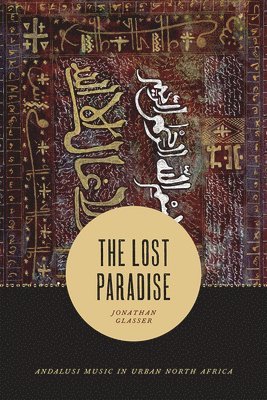
For more than a century, urban North Africans have sought to protect and revive Andalusi music, a prestigious Arabic-language performance tradition said to originate in the “lost paradise” of medieval Islamic Spain. Yet despite the Andalusi repertoire’s enshrinement as the national classical music of postcolonial North Africa, its devotees continue to describe it as being in danger of disappearance. In The Lost Paradise, Jonathan Glasser explores the close connection between the paradox of patrimony and the questions of embodiment, genealogy, secrecy, and social class that have long been central to Andalusi musical practice. Through a historical and ethnographic account of the Andalusi music of Algiers, Tlemcen, and their Algerian and Moroccan borderlands since the end of the nineteenth century, Glasser shows how anxiety about Andalusi music’s disappearance has emerged from within the practice itself and come to be central to its ethos. The result is a sophisticated examination of musical survival and transformation that is also a meditation on temporality, labor, colonialism and nationalism, and the relationship of the living to the dead.
406 kr
Skickas inom 7-10 vardagar
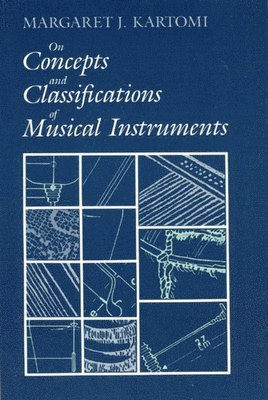
Kartomi first moves through a culture-specific inspection of several societies in Europe, Asia, and Africa, and then, synthesizing current ethnomusicological trends, proceeds to make a large-scale comparative study of classification schemes and the concepts which govern them.
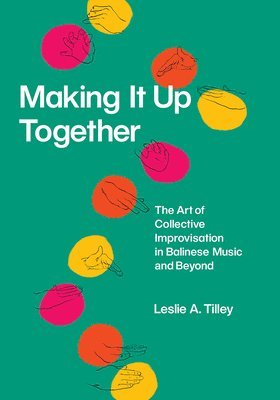
Making It Up Together – The Art of Collective Improvisation in Balinese Music and Beyond
Inbunden, Engelska, 2020
1 025 kr
Skickas inom 7-10 vardagar
Most studies of musical improvisation focus on individual musicians. But that is not the whole story. From jazz to flamenco, Shona mbira to Javanese gamelan, improvised practices thrive on group creativity, relying on the close interaction of multiple simultaneously improvising performers. In Making It Up Together, Leslie A. Tilley explores the practice of collective musical improvisation cross-culturally, making a case for placing collectivity at the center of improvisation discourse and advocating ethnographically informed music analysis as a powerful tool for investigating improvisational processes.Through two contrasting Balinese case studies—of the reyong gong chime’s melodic norot practice and the interlocking drumming tradition kendang arja—Tilley proposes and tests analytical frameworks for examining collectively improvised performance. At the micro-level, Tilley’s analyses offer insight into the note-by-note decisions of improvising performers; at the macro-level, they illuminate larger musical, discursive, structural, and cultural factors shaping those decisions. This multi-tiered inquiry reveals that unpacking how performers play and imagine as a collective is crucial to understanding improvisation and demonstrates how music analysis can elucidate these complex musical and interactional relationships.Highlighting connections with diverse genres from various music cultures, Tilley’s examinations of collective improvisation also suggest rich potential for cross-genre exploration. The surrounding discussions point to larger theories of communication and interaction, creativity and cognition that will be of interest to a range of readers—from ethnomusicologists and music theorists to cognitive psychologists, jazz studies scholars, and improvising performers. Setting new parameters for the study of improvisation, Making It Up Together opens up fresh possibilities for understanding the creative process, in music and beyond.