Cinema Aesthetics - Böcker
Visar alla böcker i serien Cinema Aesthetics. Handla med fri frakt och snabb leverans.
5 produkter
5 produkter
275 kr
Skickas inom 7-10 vardagar
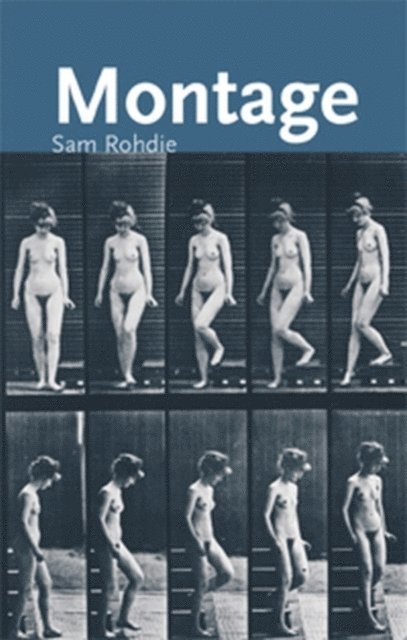
Montage enters into a dialogue with the cinema, probing and playing with its language of motion and stillness, continuity and discontinuity, constraint and openness, time and duration. Comprised of a series of elegantly-written and intellectually vibrant essays, Sam Rohdie’s book carefully expresses his ideas and arguments in a manner free from the complexities of contemporary theory and cultural criticism. As much a book written with the cinema as about it, Montage explores associative and comparative possibilities in the films of directors such as Takeshi Kitano, Jean Renoir, D.W. Griffith, Howard Hawks, Lev Kulsehov, Sergei Eisenstein and Alfred Hitchcock. It offers new and fascinating perspectives on mise en scène, framing, shots, and narrative variation. In combining the sensitive analysis of film forms and structures with an awareness of their historical and artistic relation to other art forms, it also elucidates an appreciation of montage aesthetics that is attentive to the influences of photography, painting and other arts. Montage is a book that will enrich our ways of seeing, understanding, and enjoying the cinema.
1 134 kr
Tillfälligt slut
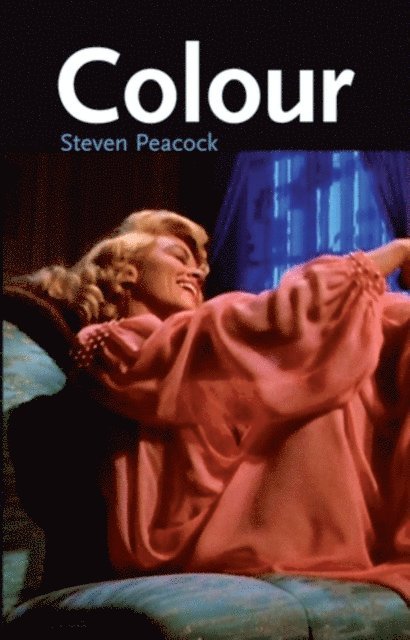
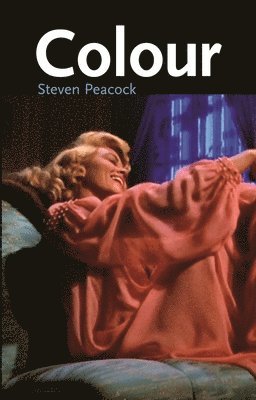
Colour remains one of the few uncharted territories in writing about film style. Colour is the first monograph to deal with the close criticism of film colour across decades and countries. Through detailed explorations of films such as Three Colours: White and The Green Ray, this study offers a way of approaching, interpreting, and appreciating cinematic colour. The book also considers film’s ability to place colour in a shifting relationship with all other points of style including camerawork, editing, performance, music, and lighting. Accessible and inventive in its approach, Colour invites the reader to see films differently, providing a fresh perspective of this overlooked element of cinema aesthetics.
342 kr
Skickas inom 7-10 vardagar
Colour remains one of the few uncharted territories in writing about film style. Colour is the first monograph to deal with the close criticism of film colour across decades and countries. Through detailed explorations of films such as Three Colours: White and The Green Ray, this study offers a way of approaching, interpreting, and appreciating cinematic colour. The book also considers film’s ability to place colour in a shifting relationship with all other points of style including camerawork, editing, performance, music, and lighting. Accessible and inventive in its approach, Colour invites the reader to see films differently, providing a fresh perspective of this overlooked element of cinema aesthetics.
1 239 kr
Skickas inom 5-8 vardagar
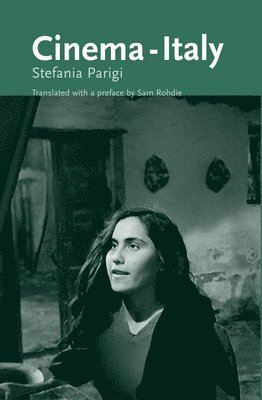
A journey to the Italian cinema that overturns established views and opens up new perspectives and interpretations. Its itinerary is organized in four stages. The first is an analysis of the theories of Cesare Zavattini on neorealism which overturns widely accepted positions both on Zavattini and on neorealism. The second confronts a key film of the post-war Italian cinema, Roberto Rossellini’s Paisà, by examining the nature of its realism. The third is dedicated to Luchino Visconti: to questions of the use of language exemplified in his La terra trema, the use of settings, costume and light as agents of meaning in his Il Gattopardo and Vaghe stelle dell’Orsa. The final voyage of the film is to the physical and symbolic construction of heaven and earth in the work of Pasolini. Particular attention is given to the representation of the body in his last four films: the grotesque and mythical bodies in popular tradition in his Trilogia di vita and the tortured bodies destroyed by the mass media in Salò.
375 kr
Skickas inom 5-8 vardagar
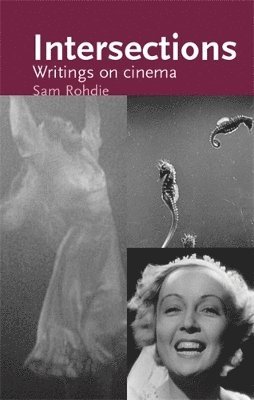
Comprised of fourteen chapters, the book opens with studies of Louis Feuillade, Jean Painlevé, Jean Vigo and Georges Franju. In each case the author finds original points of reference and cross-reference to other film-makers, and visual artists, particularly within modernism. Successful as free-standing short essays on their subject, the chapters also situate the work of these film-makers less within the context of French cinema history, than within other cinema histories and intellectual traditions. This is an important gesture both in terms of the general architecture of the book, and in terms of its commitment to reclaiming the work of these figures for a wide community of film and cinema studies teachers, students, and enthusiasts, particularly those interested in developing (or disagreeing with!) alternative approaches to the history and language of cinema. Undoubtedly, Intersections is a provocative and challenging read, but that does not make it any less urgent or necessary.