Cinema and Modernity - Böcker
Visar alla böcker i serien Cinema and Modernity. Handla med fri frakt och snabb leverans.
12 produkter
12 produkter
418 kr
Skickas inom 7-10 vardagar
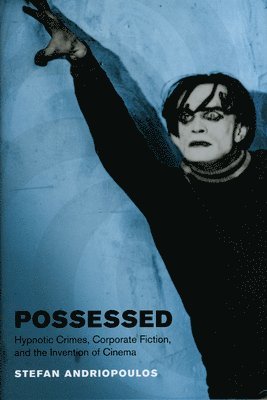
Silent cinema and contemporaneous literature explored themes of mesmerism, possession, and the ominous agency of corporate bodies that subsumed individual identities. At the same time, critics accused film itself of exerting a hypnotic influence over spellbound audiences. Stefan Andriopoulos shows that all this anxiety over being governed by an outside force was no marginal oddity, but rather a pervasive concern in the late nineteenth and early twentieth centuries.Tracing this preoccupation through the period's films - as well as its legal, medical, and literary texts - Andriopoulos pays particular attention to the terrifying notion of murder committed against one's will. He returns us to a time when medical researchers described the hypnotized subject as a medium who could be compelled to carry out violent crimes, and when films like "The Cabinet of Dr. Caligari" and "Dr. Mabuse, the Gambler" famously portrayed the hypnotist's seemingly unlimited power on the movie screen.Combining theoretical sophistication with scrupulous archival research and insightful film analysis, "Possessed" adds a new dimension to our understanding of today's anxieties about the onslaught of visual media and the expanding reach of vast corporations that seem to absorb our own identities.
301 kr
Skickas inom 7-10 vardagar
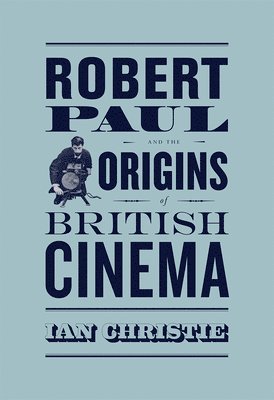
The early years of film were dominated by competition between inventors in America and France, especially Thomas Edison and the Lumiere brothers . But while these have generally been considered the foremost pioneers of film, they were not the only crucial figures in its inception. Telling the story of the white-hot years of filmmaking in the 1890s, Robert Paul and the Origins of British Cinema seeks to restore Robert Paul, Britain's most important early innovator in film, to his rightful place. From improving upon Edison's Kinetoscope to cocreating the first movie camera in Britain to building England's first film studio and launching the country's motion-picture industry, Paul played a key part in the history of cinema worldwide. It's not only Paul's story, however, that historian Ian Christie tells here. Robert Paul and the Origins of British Cinema also details the race among inventors to develop lucrative technologies and the jumbled culture of patent-snatching, showmanship, and music halls that prevailed in the last decade of the nineteenth century. Both an in-depth biography and a magnificent look at early cinema and fin-de-siecle Britain, Robert Paul and the Origins of British Cinema is a first-rate cultural history of a fascinating era of global invention, and the revelation of one of its undervalued contributors.
1 056 kr
Skickas inom 7-10 vardagar
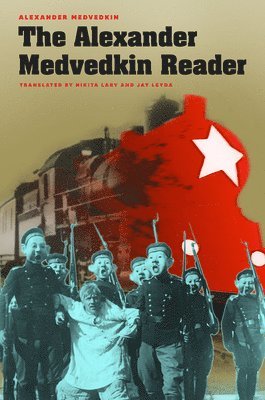
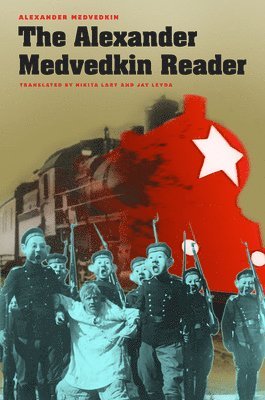
Filmmaker Alexander Medvedkin (1900 89), a contemporary of Sergei Eisenstein and Alexander Dovzhenko, is celebrated today for his unique form of "total" documentary cinema, which aimed to bridge the distance between film and life, and for his use of satire during a period when the Soviet authorities preferred that laughter be confined to narrowly prescribed channels. This collection of selected writings by Medvedkin is the first of its kind and reveals how his work is a crucial link in the history of documentary film. Although he was a dedicated communist, Medvedkin's satirical approach and social critiques ultimately led to his suppression by the Soviet regime. State institutions held back or marginalized his work, and for many years, his films were assumed to have been lost or destroyed. These texts, many assembled for this volume by Medvedkin himself, document for the first time his considerable achievements, experiments in film and theater, and attempts to develop satire as a major Soviet film genre. Through scripts, letters, autobiographical writings, and more, we see a Medvedkin supported and admired by figures like Eisenstein, Dovzhenko, and Maxim Gorky.This is a rich testimony to the talent and inventiveness of one of the Soviet era's most revolutionary filmmakers.
326 kr
Skickas inom 7-10 vardagar
Filmmaker Alexander Medvedkin (1900 89), a contemporary of Sergei Eisenstein and Alexander Dovzhenko, is celebrated today for his unique form of "total" documentary cinema, which aimed to bridge the distance between film and life, and for his use of satire during a period when the Soviet authorities preferred that laughter be confined to narrowly prescribed channels. This collection of selected writings by Medvedkin is the first of its kind and reveals how his work is a crucial link in the history of documentary film. Although he was a dedicated communist, Medvedkin's satirical approach and social critiques ultimately led to his suppression by the Soviet regime. State institutions held back or marginalized his work, and for many years, his films were assumed to have been lost or destroyed. These texts, many assembled for this volume by Medvedkin himself, document for the first time his considerable achievements, experiments in film and theater, and attempts to develop satire as a major Soviet film genre. Through scripts, letters, autobiographical writings, and more, we see a Medvedkin supported and admired by figures like Eisenstein, Dovzhenko, and Maxim Gorky.This is a rich testimony to the talent and inventiveness of one of the Soviet era's most revolutionary filmmakers.
685 kr
Tillfälligt slut
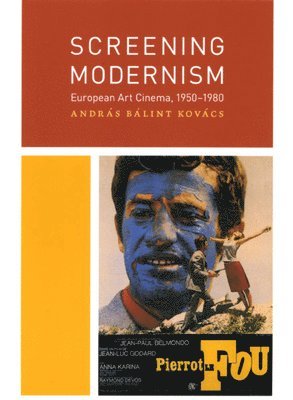
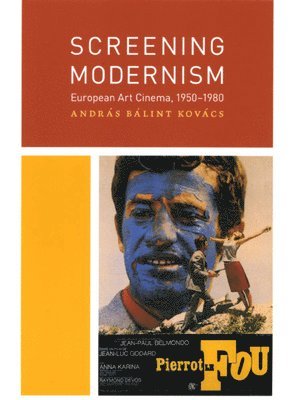
Casting fresh light on the renowned productions of auteurs such as Antonioni, Fellini, and Bresson and drawing out from the shadows a range of important but lesser-known works, "Screening Modernism" is the first comprehensive study of European art cinema's postwar heyday. Spanning from the 1950s to the 1970s, Andras Balint Kovacs' encyclopedic work argues that cinematic modernism was not a unified movement with a handful of styles and themes but rather a stunning range of variations on the core principles of modern art. Illustrating how the concepts of modernism and the avant-garde variously manifest themselves in film, Kovacs begins by tracing the emergence of art cinema as a historical category. He then explains the main formal characteristics of modern styles and forms as well as their intellectual foundation. Finally, drawing on modernist theory and philosophy along the way, he provides an innovative history of the evolution of modern European art cinema.Exploring not only modernism's origins but also its stylistic, thematic, and cultural avatars, "Screening Modernism" ultimately lays out creative new ways to think about the historical periods that comprise this golden age of film.
301 kr
Skickas inom 7-10 vardagar
Casting fresh light on the renowned productions of auteurs such as Antonioni, Fellini, and Bresson and drawing out from the shadows a range of important but lesser-known works, "Screening Modernism" is the first comprehensive study of European art cinema's postwar heyday. Spanning from the 1950s to the 1970s, Andras Balint Kovacs' encyclopedic work argues that cinematic modernism was not a unified movement with a handful of styles and themes but rather a stunning range of variations on the core principles of modern art. Illustrating how the concepts of modernism and the avant-garde variously manifest themselves in film, Kovacs begins by tracing the emergence of art cinema as a historical category. He then explains the main formal characteristics of modern styles and forms as well as their intellectual foundation. Finally, drawing on modernist theory and philosophy along the way, he provides an innovative history of the evolution of modern European art cinema.Exploring not only modernism's origins but also its stylistic, thematic, and cultural avatars, "Screening Modernism" ultimately lays out creative new ways to think about the historical periods that comprise this golden age of film.
1 057 kr
Skickas inom 7-10 vardagar
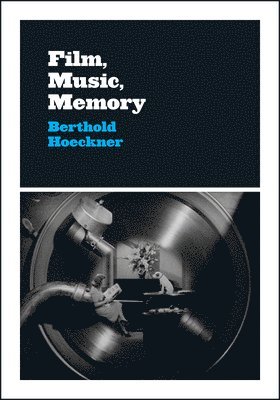
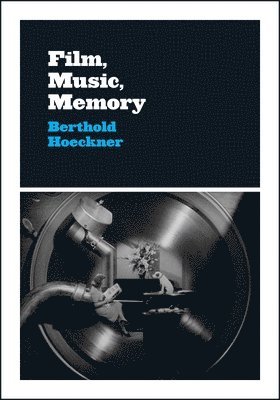
Film has shaped modern society in part by changing its cultures of memory. Film, Music, Memory reveals that this change has rested in no small measure on the mnemonic powers of music. As films were consumed by growing American and European audiences, their soundtracks became an integral part of individual and collective memory. Berthold Hoeckner analyzes three critical processes through which music influenced this new culture of memory: storage, retrieval, and affect. This book shows that films store memory through an archive of cinematic scores. In turn, a few bars from a soundtrack instantly recall the image that accompanied them, and along with it the affective experience of the movie.Hoeckner examines films that reflect directly on memory, whether by featuring an amnesic character, a traumatic event, or a surge of nostalgia. As the history of cinema unfolded, movies even began to recall their own history through quotations, remakes, and stories about how cinema contributed to the soundtrack of people's lives. Ultimately, Film, Music, Memory demonstrates that music has transformed not only what we remember about the cinematic experience, but also how we relate to memory itself.
357 kr
Skickas inom 7-10 vardagar
Film has shaped modern society in part by changing its cultures of memory. Film, Music, Memory reveals that this change has rested in no small measure on the mnemonic powers of music. As films were consumed by growing American and European audiences, their soundtracks became an integral part of individual and collective memory. Berthold Hoeckner analyzes three critical processes through which music influenced this new culture of memory: storage, retrieval, and affect. This book shows that films store memory through an archive of cinematic scores. In turn, a few bars from a soundtrack instantly recall the image that accompanied them, and along with it the affective experience of the movie.Hoeckner examines films that reflect directly on memory, whether by featuring an amnesic character, a traumatic event, or a surge of nostalgia. As the history of cinema unfolded, movies even began to recall their own history through quotations, remakes, and stories about how cinema contributed to the soundtrack of people's lives. Ultimately, Film, Music, Memory demonstrates that music has transformed not only what we remember about the cinematic experience, but also how we relate to memory itself.
581 kr
Skickas inom 7-10 vardagar
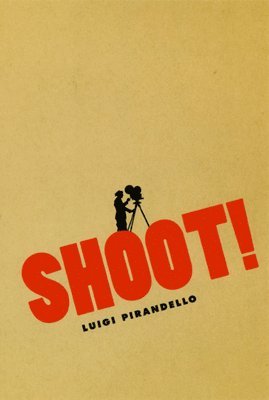
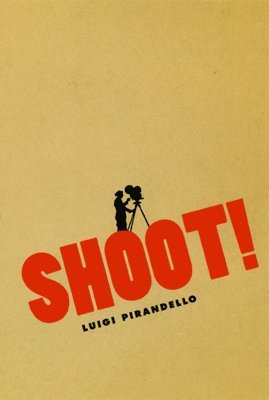
Originally published in Italian in 1915, "Shoot!" is one of the first novels to take as its subject the heady world of early motion pictures. Based on the absurdist journals of fictional Italian camera operator Serafino Gubbio, "Shoot!" documents the infancy of film in Europe - complete with proto-divas, laughable production schedules, and cost-cutting measures with priceless effects - and offers a glimpse of the modern world through the camera's lens. "Shoot!", presented here in its 1927 English translation, is a classic example of Nobel Prize - winning Sicilian playwright Luigi Pirandello's (1867-1936) literary talent and genius for blurring the line between art and reality. From the film studio Kosmograph, Pirandello's Gubbio steadily winds the crank of his camera by day and scribbles with his pen by night, revealing the world, both mundane and melodramatic, that unfolds in front of his camera. Through Gubbio's narrative - saturated with fantasy and folly - Pirandello grapples with the philosophical implications of modernity. Like much of Pirandello's work, "Shoot!" parodies human weaknesses, drawing attention to the themes of isolation and madness as emerging tendencies in the modern world.Enhanced by new critical commentaries, "Shoot!" is an entertaining caricature, capturing early twentieth-century Italian filmmaking and revealing its truths as only a parody can.
208 kr
Skickas inom 7-10 vardagar
Originally published in Italian in 1915, "Shoot!" is one of the first novels to take as its subject the heady world of early motion pictures. Based on the absurdist journals of fictional Italian camera operator Serafino Gubbio, "Shoot!" documents the infancy of film in Europe - complete with proto-divas, laughable production schedules, and cost-cutting measures with priceless effects - and offers a glimpse of the modern world through the camera's lens. "Shoot!", presented here in its 1927 English translation, is a classic example of Nobel Prize - winning Sicilian playwright Luigi Pirandello's (1867-1936) literary talent and genius for blurring the line between art and reality. From the film studio Kosmograph, Pirandello's Gubbio steadily winds the crank of his camera by day and scribbles with his pen by night, revealing the world, both mundane and melodramatic, that unfolds in front of his camera. Through Gubbio's narrative - saturated with fantasy and folly - Pirandello grapples with the philosophical implications of modernity. Like much of Pirandello's work, "Shoot!" parodies human weaknesses, drawing attention to the themes of isolation and madness as emerging tendencies in the modern world.Enhanced by new critical commentaries, "Shoot!" is an entertaining caricature, capturing early twentieth-century Italian filmmaking and revealing its truths as only a parody can.
450 kr
Skickas inom 7-10 vardagar
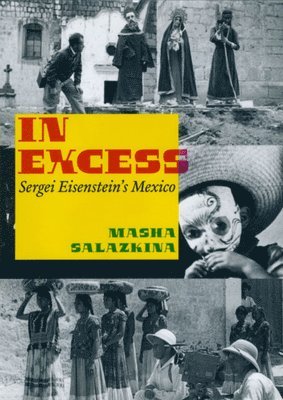
During the 1920s and '30s, Mexico attracted an international roster of artists and intellectuals - including Orson Welles, Katherine Anne Porter, and Leon Trotsky - who were drawn to the heady tumult engendered by battling cultural ideologies in an emerging center for the avant-garde. Against the backdrop of this cosmopolitan milieu, "In Excess" reconstructs the years that the renowned Soviet director Sergei Eisenstein spent in the country to work on his controversial film "Que Viva Mexico!" Illuminating the inextricability of Eisenstein's oeuvre from the global cultures of modernity and film, Masha Salazkina situates this unfinished project within the twin contexts of postrevolutionary Mexico and the ideas of such contemporaneous thinkers as Walter Benjamin. In doing so, Salazkina explains how Eisenstein's engagement with Mexican mythology, politics, and art deeply influenced his ideas, particularly about sexuality. She also uncovers the role Eisenstein's bisexuality played in his creative thinking and identifies his use of the baroque as an important turn toward excess and hybrid forms.Beautifully illustrated with rare photographs, "In Excess" provides the most complete genealogy available of major shifts in this modern master's theories and aesthetics.
418 kr
Skickas inom 7-10 vardagar
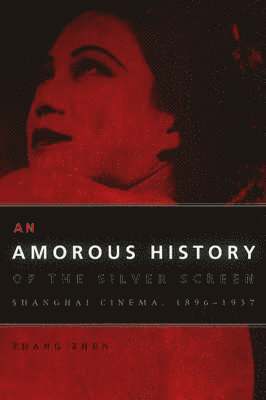
Shanghai in the early twentieth century was alive with art and culture. With the proliferation of popular genres such as the martial arts film, the contest among various modernist filmmakers, and the advent of sound, Chinese cinema was transforming urban life. But with the Japanese invasion in 1937, all of this came to a screeching halt. Until recently, the political establishment has discouraged comprehensive studies of the cultural phenomenon of early Chinese film, and this momentous chapter in China's history has remained largely unexamined. The first sustained historical study of the emergence of cinema in China, "An Amorous History of the Silver Screen" is a fascinating narrative that illustrates the immense cultural significance of film and its power as a vehicle for social change. Named after a major feature film on the making of Chinese cinema, only part of which survives, "An Amorous History of the Silver Screen" reveals the intricacies of this cultural movement and explores its connections to other art forms such as photography, architecture, drama, and literature.In light of original archival research, Zhang Zhen examines previously unstudied films and expands the important discussion of how they modeled modern social structures and gender roles in early twentieth-century China. The first volume in the new and groundbreaking series "Cinema and Modernity", "An Amorous History of the Silver Screen" is an innovative - and well illustrated - look at the cultural history of Chinese modernity through the lens of this seminal moment in Shanghai cinema.