Cities and Planning - Böcker
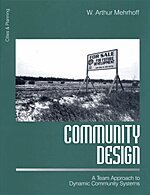
Community Design
A Team Approach to Dynamic Community Systems
2 699 kr
Skickas inom 3-6 vardagar
Arthur Mehrhoff's Community Design represents a unique way of analyzing a community and the steps needed to help design a sustainable community. In this important contribution, Mehrhoff, through his work with the Minnesota Design Team, seeks to "help communities take control of shaping a sustainable future of their own by means of information, insight, and civic dialogue." He urges readers to rethink the shape and shaping of their communities by looking at "community" in a more holistic and multidisciplinary manner. Mehrhoff tackles such topics as defining community, understanding the history of a community, understanding the issues and problems affecting a community, examining the visual aspects of a community, and obtaining citizen opinion throughout the process of becoming a sustainable community. Small communities everywhere can replicate the process discussed in this book. Community Design is well written and thought-provoking and provides a nice blend of theory and practice.
This book should be useful to all students, academics, local policy makers, and citizens who are interested in creating a common sustainable vision for their communities.
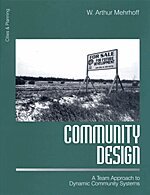
Community Design
A Team Approach to Dynamic Community Systems
1 738 kr
Skickas inom 3-6 vardagar
Arthur Mehrhoff's Community Design represents a unique way of analyzing a community and the steps needed to help design a sustainable community. In this important contribution, Mehrhoff, through his work with the Minnesota Design Team, seeks to "help communities take control of shaping a sustainable future of their own by means of information, insight, and civic dialogue." He urges readers to rethink the shape and shaping of their communities by looking at "community" in a more holistic and multidisciplinary manner. Mehrhoff tackles such topics as defining community, understanding the history of a community, understanding the issues and problems affecting a community, examining the visual aspects of a community, and obtaining citizen opinion throughout the process of becoming a sustainable community. Small communities everywhere can replicate the process discussed in this book. Community Design is well written and thought-provoking and provides a nice blend of theory and practice.
This book should be useful to all students, academics, local policy makers, and citizens who are interested in creating a common sustainable vision for their communities.
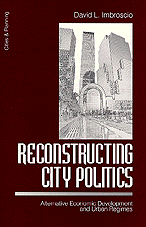
Reconstructing City Politics
Alternative Economic Development and Urban Regimes
2 699 kr
Skickas inom 3-6 vardagar
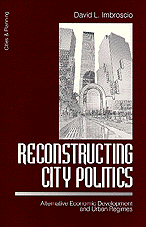
Reconstructing City Politics
Alternative Economic Development and Urban Regimes
1 738 kr
Skickas inom 3-6 vardagar
The New Regional Economies
The US Common Market and the Global Economy
1 738 kr
Skickas inom 3-6 vardagar
Cities and Complexity
Making Intergovernmental Decisions
1 738 kr
Skickas inom 3-6 vardagar
Neighborhood Planning and Community-Based Development
The Potential and Limits of Grassroots Action
2 699 kr
Skickas inom 3-6 vardagar
"Finally a book that contextualizes community and neighborhood development and planning in a progressive but realist fashion. Peterman provides community and neighborhood planners with preassessment criteria and a methodological tool-kit to help ensure future success. This book is invaluable to neighborhood and community development planning courses and will provide a useful adjunct to social planning and social work courses."
--Mickey Lauria, University of New Orleans
"Bill Peterman has written a passionate treatise on neighborhood planning tempered by more than 20 years of front line experience. The result is a powerful praxis that can guide planners, community activists, and theoreticians who are concerned with making community-building a reality."
--Barbara Ferman, Professor of Political Science, Temple University
"Bill Peterman's critical analysis of the strengths and weaknesses of America's expanding community development movement should be required reading for all community activists, urban planners, policy analysts and municipal officials! Peterman's rich insights and thoughtful recommendations regarding how community-based planning and development can lead to a broader popular movement for greater social equality deserve the immediate attention of all those concerned about the future of U. S. cities."
--Kenneth M. Reardon, Associate Professor in Urban and Regional Planning,
University of Illinois at Urbana-Champaign
" Bill Peterman offers important insights from his long experience in Chicago on neighborhood planning and community-based development. His case studies offer very useful lessons on success and failure. This is a valuable addition to the literature on urban neighborhoods."
--W. Dennis Keating Professor and Associate Dean College of Urban Affairs,
Cleveland State University
This book explores the promise and limits of bottom-up, grass-roots strategies of community organizing, development, and planning as blueprints for successful revitalization and maintenance of urban neighborhoods. Peterman proposes conditions that need to be met for bottom-up strategies to succeed. Successful neighborhood development depends not only on local actions, but also on the ability of local groups to marshal resources and political will at levels above that of the neighborhood itself. While he supports community-based initiatives, he argues that there are limits to what can be accomplished exclusively at the grass-roots level, where most efforts fail.
Neighborhood Planning and Community-Based Development should be of special interest to individuals who are directly involved in neighborhood planning and development activities. With case studies that include the issues of gentrification, public housing, government-sponsored development of sports facilities, housing management control and racial diversity, the book takes a look at accomplishing successful neighborhood-based planning and development.
Neighborhood Planning and Community-Based Development
The Potential and Limits of Grassroots Action
1 738 kr
Skickas inom 3-6 vardagar
"Finally a book that contextualizes community and neighborhood development and planning in a progressive but realist fashion. Peterman provides community and neighborhood planners with preassessment criteria and a methodological tool-kit to help ensure future success. This book is invaluable to neighborhood and community development planning courses and will provide a useful adjunct to social planning and social work courses."
--Mickey Lauria, University of New Orleans
"Bill Peterman has written a passionate treatise on neighborhood planning tempered by more than 20 years of front line experience. The result is a powerful praxis that can guide planners, community activists, and theoreticians who are concerned with making community-building a reality."
--Barbara Ferman, Professor of Political Science, Temple University
"Bill Peterman's critical analysis of the strengths and weaknesses of America's expanding community development movement should be required reading for all community activists, urban planners, policy analysts and municipal officials! Peterman's rich insights and thoughtful recommendations regarding how community-based planning and development can lead to a broader popular movement for greater social equality deserve the immediate attention of all those concerned about the future of U. S. cities."
--Kenneth M. Reardon, Associate Professor in Urban and Regional Planning,
University of Illinois at Urbana-Champaign
" Bill Peterman offers important insights from his long experience in Chicago on neighborhood planning and community-based development. His case studies offer very useful lessons on success and failure. This is a valuable addition to the literature on urban neighborhoods."
--W. Dennis Keating Professor and Associate Dean College of Urban Affairs,
Cleveland State University
This book explores the promise and limits of bottom-up, grass-roots strategies of community organizing, development, and planning as blueprints for successful revitalization and maintenance of urban neighborhoods. Peterman proposes conditions that need to be met for bottom-up strategies to succeed. Successful neighborhood development depends not only on local actions, but also on the ability of local groups to marshal resources and political will at levels above that of the neighborhood itself. While he supports community-based initiatives, he argues that there are limits to what can be accomplished exclusively at the grass-roots level, where most efforts fail.
Neighborhood Planning and Community-Based Development should be of special interest to individuals who are directly involved in neighborhood planning and development activities. With case studies that include the issues of gentrification, public housing, government-sponsored development of sports facilities, housing management control and racial diversity, the book takes a look at accomplishing successful neighborhood-based planning and development.