Citizenship & the Law S. - Böcker
Visar alla böcker i serien Citizenship & the Law S.. Handla med fri frakt och snabb leverans.
4 produkter
4 produkter
2 047 kr
Skickas inom 10-15 vardagar
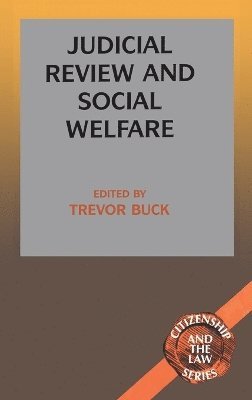
Comprises a collection of essays by academics and practitioners who have an interest in the operation, impact and future development of judicial review in a number of social welfare areas: homelessness; housing benefit; mental health; health care; social security; the discretionary social fund; immigration; prisoners; education; and gypsy site provision. Two contributions address issues relating to the supervisory jurisdiction in the Scottish Court of Session and thee High Court of Justice in Northern Ireland. Each contributor outlines the background and development of judicial review in their particular field, followed by a commentary on the operation of the judicial review remedy and various theoretical and practical concerns such as the impact of judicial review on organizational behaviour and its effects on the exercise of discretionary powers. The essays deal with the political and policy context of judicial review challenge and the shifting balanxce of advantage offered to social welfare campaigners. The limitations of judicial review and the comparative merits of statutory appellate schemes are also examined.The contributors attempt to identify future areas for research, and a concluding chapter by the editor draws together the common themes.
1 235 kr
Skickas inom 10-15 vardagar
Crucial decisions are often made under the royal prerogative in relation to defence, foreign policy, immigration, the secret services and the management of the Civil Service without prior Parliamentary approval, adequate political accountability or effective judicial review. On this basis, ministers withhold passports, override statutes and legislate in the Council of Ministers of the European Community. This text examines the historical development and the legal and political scope of prerogative powers and Crown immunities as they affect the exercise of rights by citizens and non-citizens. It traces the changing relationship between individual and state, from subjecthood and allegiance to the Crown in a secretive state, to participating in legal and political citizenship in an open society and a widening British and European context. It addresses issues of key importance in the current constitutional debate about political and legal accountability, citizenship and human rights.
2 407 kr
Skickas inom 10-15 vardagar
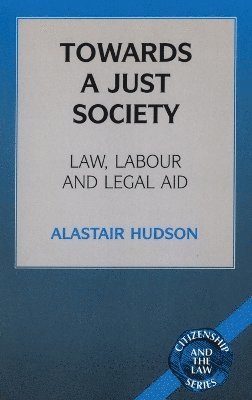
This work analyzes the weaknesses in the established political approaches to reform of the provision of justice, judging them as being either too overtly concerned with inappropriate free market structures, or too wedded to legal procedural rules. It argues that the most efficient solution is an adapted version of legal aid as a kind of welfare state benefit and more integrated public services aimed at providing justice for the citizen. The discussion traces the history of the Labour Party's legal affairs policy and examines some of the fault lines in the programme put forward by Lord Irvine, in particular, the tension between combatting social exclusion with a rights-based rhetoric and a policy based on crude cost management initiatives. The analysis applies emerging political concepts of globalization, hegemony and a closed legal system to this debate, while considering the conflicting principles of community, individual autonomy and public service accountability, to conceive both of the nature of the Blair project and the feasibility of creating the "just society" set out in Labour's new constitution.A model for an integrated justice is proposed, centred on a Ministry of Justice administering legal aid through a community legal service, activating technological and structural reforms through a law foundation, and providing advice to citizens through a national advisory service.
1 113 kr
Skickas inom 10-15 vardagar
This work analyzes the weaknesses in the established political approaches to reform of the provision of justice, judging them as being either too overtly concerned with inappropriate free market structures, or too wedded to legal procedural rules. It argues that the most efficient solution is an adapted version of legal aid as a kind of welfare state benefit and more integrated public services aimed at providing justice for the citizen. The discussion traces the history of the Labour Party's legal affairs policy and examines some of the fault lines in the programme put forward by Lord Irvine, in particular, the tension between combatting social exclusion with a rights-based rhetoric and a policy based on crude cost management initiatives. The analysis applies emerging political concepts of globalization, hegemony and a closed legal system to this debate, while considering the conflicting principles of community, individual autonomy and public service accountability, to conceive both of the nature of the Blair project and the feasibility of creating the "just society" set out in Labour's new constitution.A model for an integrated justice is proposed, centred on a Ministry of Justice administering legal aid through a community legal service, activating technological and structural reforms through a law foundation, and providing advice to citizens through a national advisory service.