Classics in Black Studies - Böcker
Visar alla böcker i serien Classics in Black Studies. Handla med fri frakt och snabb leverans.
4 produkter
4 produkter
461 kr
Skickas inom 10-15 vardagar
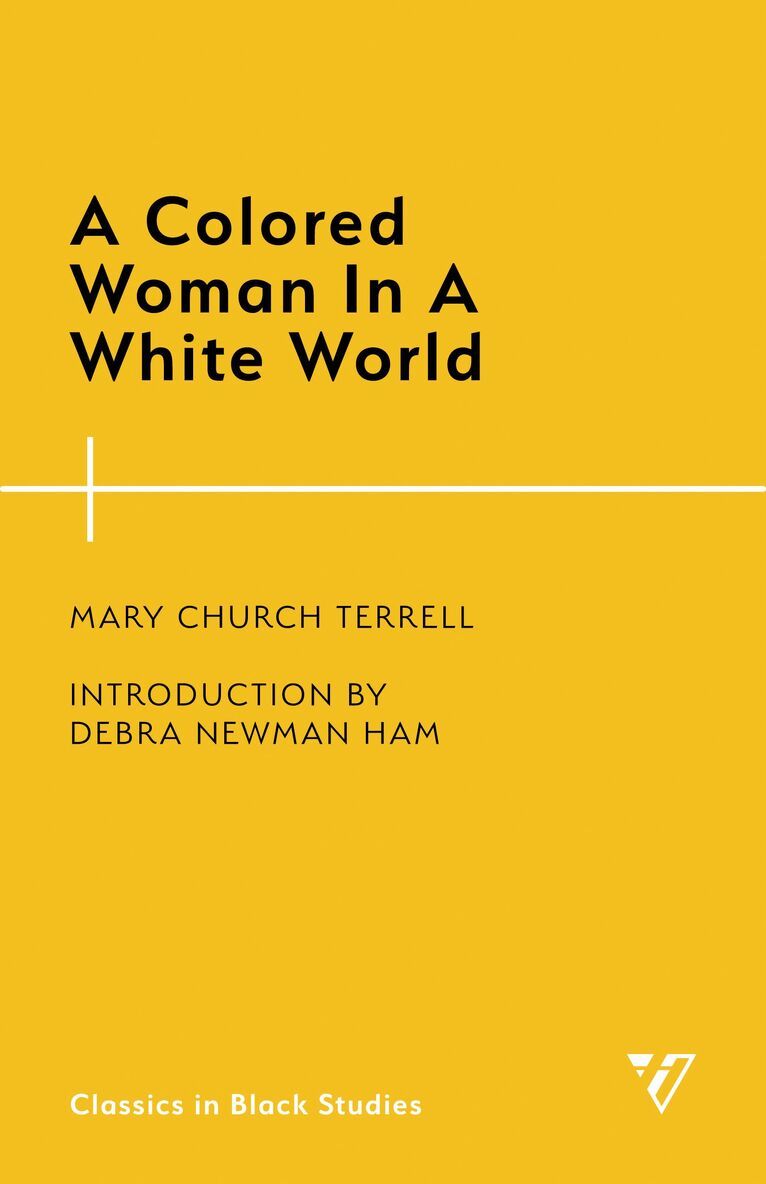
Mary Church Terrell (1863-1954) was one of the most remarkable women of the late nineteenth and early twentieth centuries. Active in both the civil rights movement and the campaign for women's suffrage, Terrell was a leading spokesperson for the National American Woman Suffrage Association, the first president of the National Association of Colored Women, and the first black woman appointed to the District of Columbia Board of Education and the American Association of University Women. She was also a charter member of the National Association for the Advancement of Colored People.In this autobiography, originally published in 1940, Terrell describes the important events and people in her life.Terrell began her career as a teacher, first at Wilberforce College and then at a high school in Washington, D.C., where she met her future husband, Robert Heberton Terrell. After marriage, the women's suffrage movement attracted her interests and before long she became a prominent lecturer at both national and international forums on women's rights. A gifted speaker, she went on to pursue a career on the lecture circuit for close to thirty years, delivering addresses on the critical social issues of the day, including segregation, lynching, women's rights, the progress of black women, and various aspects of black history and culture. Her talents and many leadership positions brought her into close contact with influential black and white leaders, including Frederick Douglass, Booker T. Washington, Paul Laurence Dunbar, Robert Ingersoll, Elizabeth Cady Stanton, Susan B. Anthony, Jane Addams, and others.With an introduction by Debra Newman Ham, professor of history at Morgan State University, this edition of Mary Church Terrell's autobiography will be of interest to students and scholars of both women's studies and African American history.
354 kr
Skickas inom 10-15 vardagar
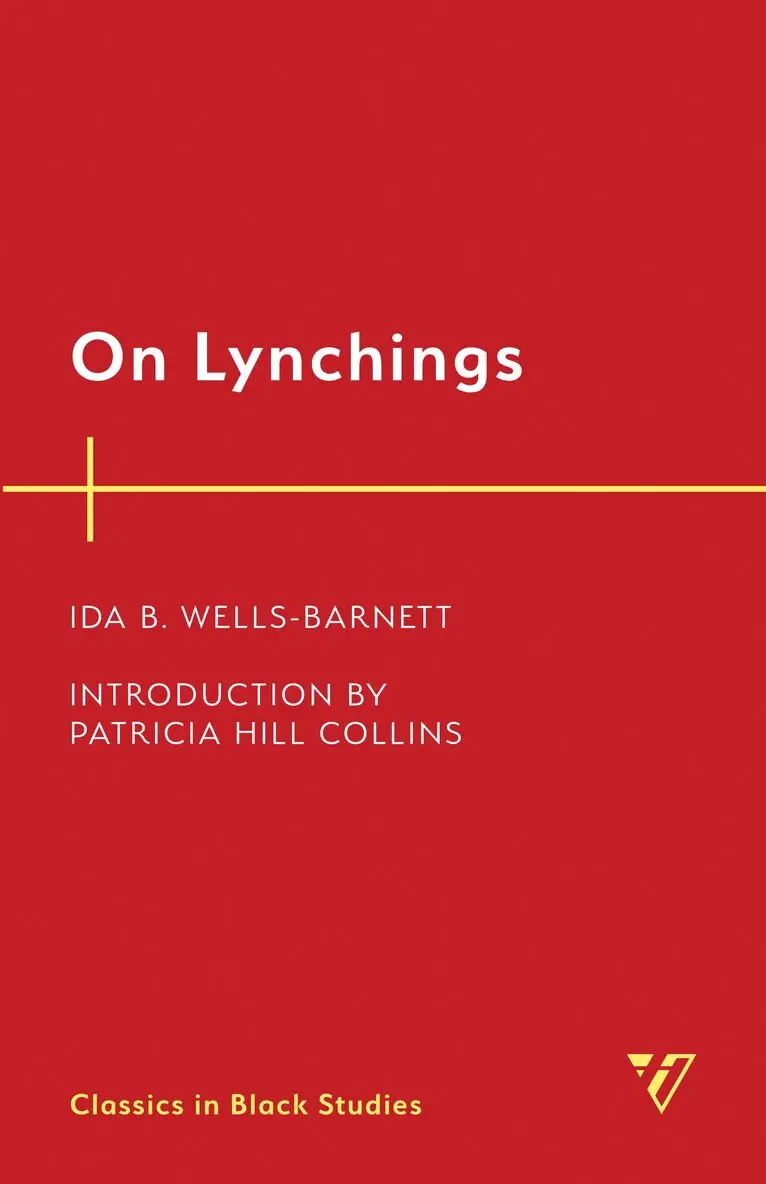
Though the end of the Civil War brought legal emancipation to African-American people, it is a fact of history that their social oppression continued long after. The most virulent form of this ongoing persecution was the practice of lynching carried out by mob rule, often as local law enforcement officials looked the other way. During the 1880s and 1890s, more than 100 African Americans per year were lynched, and in 1892 alone the toll of murdered men and women reached a peak of 161. In that awful year, the twenty-three-year-old Ida B. Wells, the editor of a small newspaper for blacks in Memphis, Tennessee, raised one lone voice of protest. In her paper she charged that white businessmen had instigated three local lynchings against their black competitors. In retaliation for her outspoken courage a goon-squad of angry whites destroyed her editorial office and print shop, and she was forced to flee the South and move to New York City. So began a crusade against lynching which became the focus of her long, active, and very courageous life. In New York she began lecturing against the abhorrent vigilante practice and published her first pamphlet on the subject called "Southern Horrors". After moving to Chicago and marrying lawyer Ferdinand Barnett, she continued her campaign, publishing A Red Record in 1895 and Mob Rule in New Orleans, about the race riots in that city, in 1900. All three of these documents are here collected in this work, a shocking testament to cruelty and the dark American legacy of racial prejudice. Anticipating possible accusations of distortion, Wells-Barnett was careful to present factually accurate evidence and she deliberately relied on southern white sources as well as statistics gathered by the Chicago Tribune. Using the words of white journalists, she created a damning indictment of unpunished crimes that was difficult to dispute since southern white men who had witnessed the appalling incidents had written the descriptions. Along with her husband she played an active role in the founding of the National Association for the Advancement of Colored People (NAACP). Due to her efforts, the NAACP launched an intensive campaign against lynching after World War I. Her work remains important to this day not only as a cry of protest against injustice but also as valuable historical documentation of terrible crimes that must never be forgotten. This edition is enhanced by an introduction by Patricia Hill Collins is an American academic specialising in race, class and gender. She is a Distinguished University Professor of Sociology at the University of Maryland, College Park.She is also the former head of the Department of African-American Studies at the University of Cincinnati, and a past President of the American Sociological Association.
287 kr
Skickas inom 10-15 vardagar
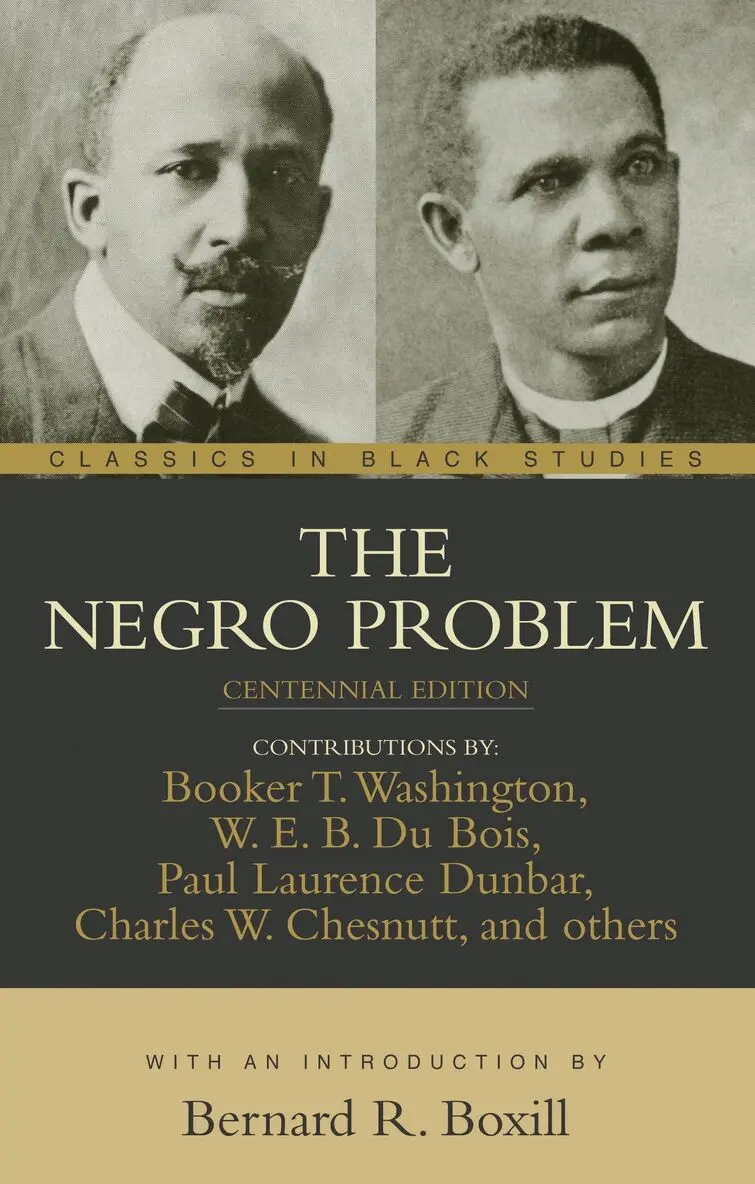
One hundred years ago, African Americans looked forward to the new twentieth century with mixed feelings of pride and discouragement. On the one hand, they could point to the tremendous progress many of them had made since the end of slavery under the dynamic leadership of Booker T. Washington, whose thriving vocational school, the Tuskegee Institute, was famous throughout the nation. Washington had become the confidant of powerful and influential white Americans, and in 1901 he even dined with President Theodore Roosevelt at the White House. But on the other hand, the majority of white Americans showed little willingness to accept blacks as equals, and in the South segregation was practically institutionalized through the recently enacted Jim Crow laws. It was at this uncertain time that this interesting collection of articles by leading African American citizens was published to address what was then commonly known as "the Negro problem."Looking back at this synopsis of African American affairs one can get a good sense of both the progress made and the problems yet to be overcome, some of which have still not been fully addressed. Predictably, the collection begins with a piece by Booker T. Washington on the value and purpose of stressing industrial education for black Americans. This is followed by a now-famous article by W. E. B. Du Bois called "The Talented Tenth," in which he argued for the cultivation of an elite corps of black intellectuals who would then work to uplift the African American masses. Though Du Bois later changed his approach, one can see in this article how different his philosophy was from Washington's, a difference that later led to a complete break between the two men. The other contributors are Charles W. Chesnutt, Wilford H. Smith, H. T. Kealing, Paul Laurence Dunbar, and T. Thomas Fortune, who discuss the disenfranchisement of blacks; the broader subject of the law and the rights of African Americans; real versus perceived characteristics of people of color; and outstanding representative black Americans, some famous, others little-known. The collection concludes with a sober assessment of "the Negro's place in American life."Issued in the centennial year of its original publication, this new edition of a valuable classic is complemented by an informative introduction by Bernard R. Boxill, professor of philosophy at the University of North Carolina, Chapel Hill.
Condition, Elevation, Emigration, and Destiny of the Colored People of the United States
Häftad, Engelska, 2004
274 kr
Skickas inom 10-15 vardagar
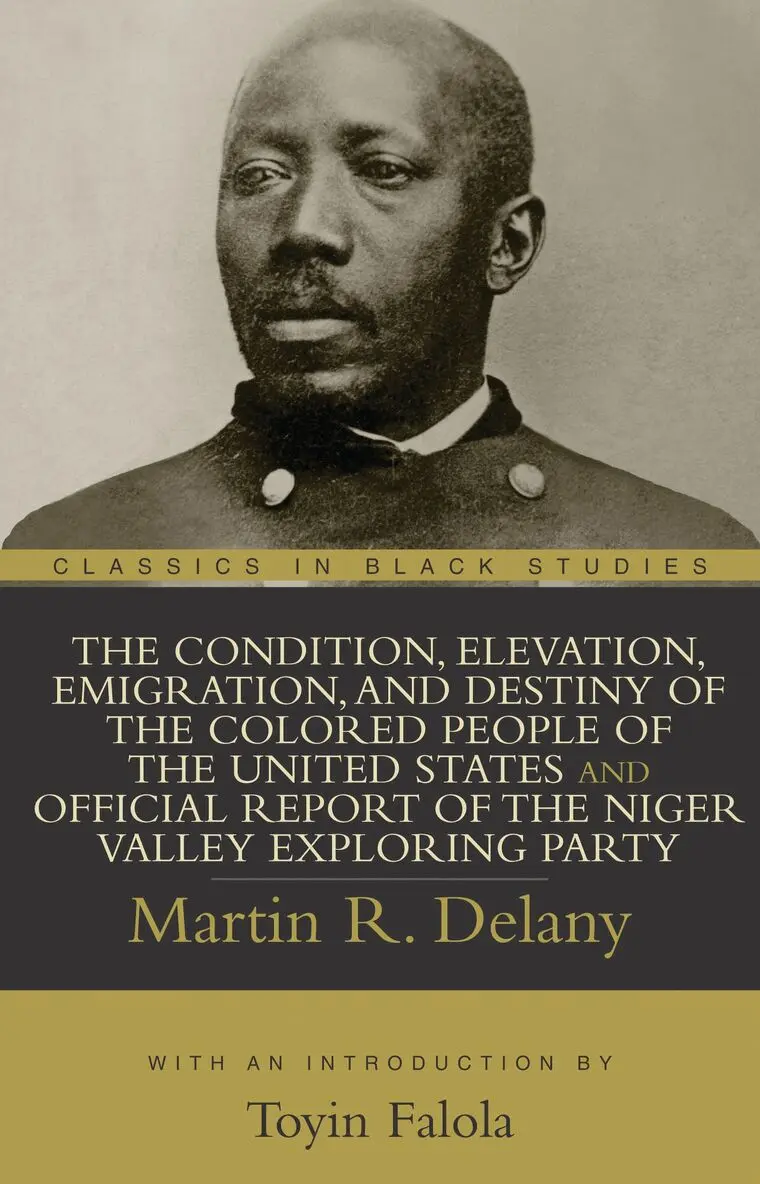
A preeminent African American abolitionist, author, public intellectual, physician, the highest ranking black officer during the Civil War, and a notable activist for the emigration of blacks to Africa, Martin Robison Delany has left an enduring legacy in his writings, the power of his ideas, and his political activism. So influential was he during the nineteenth century that a number of people now refer to him as the "Father of Black Nationalism." He spent most of his career working toward the goal of seeking black emancipation through practical projects aimed toward returning African Americans to Africa, where he hoped his people would make a new beginning within the context of political freedom and a society devoid of racism. Two of his most influential works on black nationalism are presented in this volume. The Condition, Elevation, and Destiny of the Colored People of the United States (1852) presents Delany's separatist views. To many scholars of African American political thought, this book marks the origin of black nationalism in print. However, its scope is much broader than this single focus might suggest. It is the first book-length study to present an account of the economic and political status of blacks in the United States. Because of the intractable nature of U.S. racism and the deplorable living conditions of most African Americans, Delany concluded by recommending emigration of African Americans to Central America. Some years later Delany turned to Africa as the better choice for relocation of black Americans. Based on an exploratory journey he took to West Africa in 1859, he wrote Official Report of the Niger Valley Exploring Party. The report provides clear information on the conditions in West Africa of that time to give immigrants an idea of what they would encounter. He also provides an impressive amount of data on how to improve agriculture, land, ventilation, and housing to promote better living standards. With an introduction by Toyin Falola, the Frances Higginbothom Nalle Centennial Professor in History at the University of Texas at Austin, this new edition of these two provocative and intriguing nineteenth-century documents sheds much light on the black nationalism movement in the context of African American history.