Classics in Ethnographic Theory - Böcker
Visar alla böcker i serien Classics in Ethnographic Theory. Handla med fri frakt och snabb leverans.
3 produkter
3 produkter
356 kr
Skickas
In engaging essays, celebrated anthropologist Marilyn Strathern reflects on the complexities of social life. Property, Substance, and Effect draws on Marilyn Strathern’s longstanding interest in the reification of social relations. If the world is shrinking in terms of resources and access to them, it is expanding in terms of new candidates for proprietorship. How new relations are brought into being is among the many questions about property, ownership, and knowledge that these essays bring together.Twenty years have not diminished the interest in the book’s opening challenge: if one were inventing a method of enquiry by which to configure the complexity of social life, one might wish to invent something like the anthropologist’s ethnographic practice. A wide range of studies deliberately brings into conversation claims people make on one another through relations imagined in the form of body-substance along with the increasing visibility of conceptual or intellectual work as property. Whether one lives in Papua New Guinea or Great Britain, categories of knowledge are being dissolved and reformed at a tempo that calls for reflection—and for the kind of lateral reflection afforded through the “ethnographic effect.”
188 kr
Skickas inom 7-10 vardagar
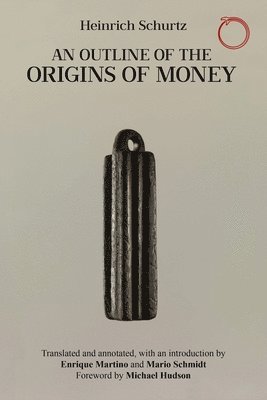
A new English translation of a forgotten German text that influenced cultural understanding of money in the early twentieth century.“On this subject, I only knew the excellent little book by the late Schurtz”—Marcel Mauss, 1914, Les origines de la notion de monnaie.Heinrich Schurtz’s 1898 book has been a touchstone for economic historians, anthropologists, and philosophers interested in the nature and origins of money in various societies, including Georg Simmel, Max Weber, Marcel Mauss, and Karl Polanyi. In his brief book, Schurtz experimented with concepts about money, going beyond traditional economic paradigms. Drawing on an extensive range of archaeological and ethnographic sources, he reframed a theory of money to include its materiality, symbolic nature, relationship to forms of property, and its dual origin in “outside money” and “inside money.” While it is not well known today, it was important to the theorization of money in the first half of the 20th century and its innovative synthesis offers galvanizing questions and insights into how value relations are formed and how currency systems are interrelated.
367 kr
Skickas inom 7-10 vardagar
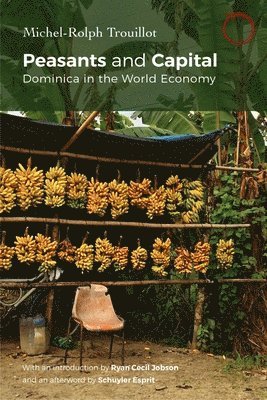
A new edition of Michel-Rolph Trouillot’s influential ethnography of a village in Dominica.Over thirty-five years ago, Michel-Rolph Trouillot’s debut ethnography, Peasants and Capital: Dominica in the World Economy, dared to regard peasants not as vestiges of premodern economies but as instrumental to, and integrated in, a capitalist world system. Combining historical ethnography with an intimate portrait of a banana-producing eastern Caribbean village, this multi-sited study demonstrates how multinational capital thrives on the surplus production of peasant cultivators. At the same time, it investigates how peasantries generate independent conceptions of value and subsistence in the process of building a new postcolonial state in Dominica. This new edition of Peasants and Capital invites anthropologists to revisit the methodological innovations of this multi-scalar study and readers to meditate on the continued vitality of peasant livelihoods in the Caribbean today.Ryan Cecil Jobson’s new introduction situates this edition in the context of Trouillot’s remarkable life and career. Jobson reminds us of the book’s enduring theoretical and ethnographic significance and asks us to consider how the entanglement of peasants from Dominica in national and world affairs has been impacted by more recent histories, such as the end of preferential markets for Caribbean bananas, the migration of “banana children” to regional and metropolitan urban centers, and the devastation of Dominica by Hurricane Maria.