Clinical Medical Ethics - Böcker
Visar alla böcker i serien Clinical Medical Ethics. Handla med fri frakt och snabb leverans.
8 produkter
8 produkter
1 062 kr
Skickas inom 10-15 vardagar
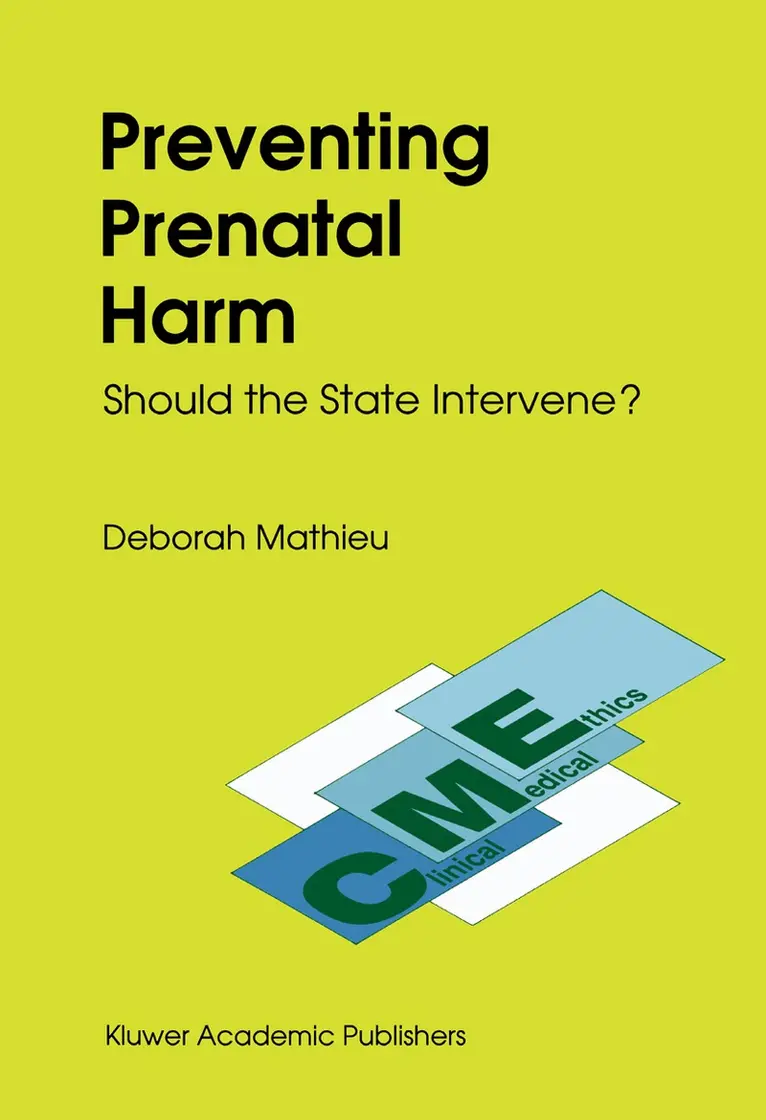
The issues explored in this book have unfortunately come to be known as 'maternal-fetal conflicts'. The phrase is unsatisfactory because it is misleading: It places the emphasis on the well-being of the fetus instead of on the born child (who will bear the burden of any harm done prenatally); it assumes a conflict between a pregnant women and her offspring (while the issue is usually more complex and more broadly based); and it incorrectly implies that all pregnant women are appropriately regarded as mothers. For these reasons, I have chosen to avoid the phrase 'matern- fetal conflict' altogether, and will instead speak in terms of 'preventable prenatal harm'. I mention this at the outset, for those of you familiar with 'maternal-fetal conflicts' who might be wondering if I am addressing the same issues. Yes. But I am trying to look at them in a new - and I hope more fruitful - way. I would like to thank the other participants in the Hastings Center's maternal-fetal project - especially those who disageed with me - for being so thought-provoking. And I owe a lasting debt of gratitude to Henry Ruth and Allen Buchanan for their invaluable counsel.
876 kr
Skickas inom 10-15 vardagar
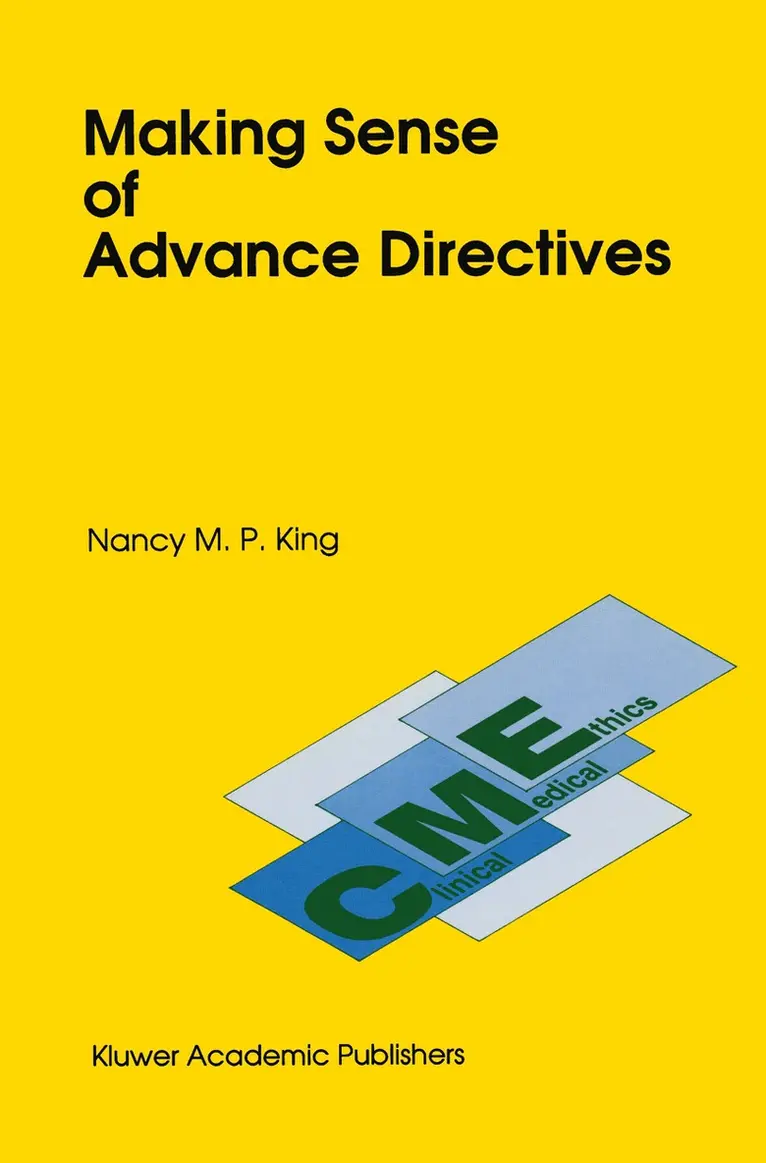
This is a handbook of ethics for a diverse audience of health care providers. Its subject is the moral and legal force of 'advance directives', which are documents, intended to declare and preserve the values, choices, and preferences of patients in the event that they become unable to make decisions about their own health care. The posture of the work is one of strong support for patients' individual health care choices, and encouragement of thoughtful use of advance directives to that end. The work presents a historical and conceptual examination of the patient's role in medical decision-making and the refusal of treatment, with special attention to the problems of advance decision-making. It examines the types and models of advance directives currently in common use and gives suggestions both about helping patients to write directives and about interpreting and making use of directives prepared by patients and encountered by clinicians. Finally, the implications of the suggested policy are examined in light of growing concerns about the scarcity of funds and resources for health care.
1 094 kr
Skickas inom 10-15 vardagar
Del 4 - Clinical Medical Ethics
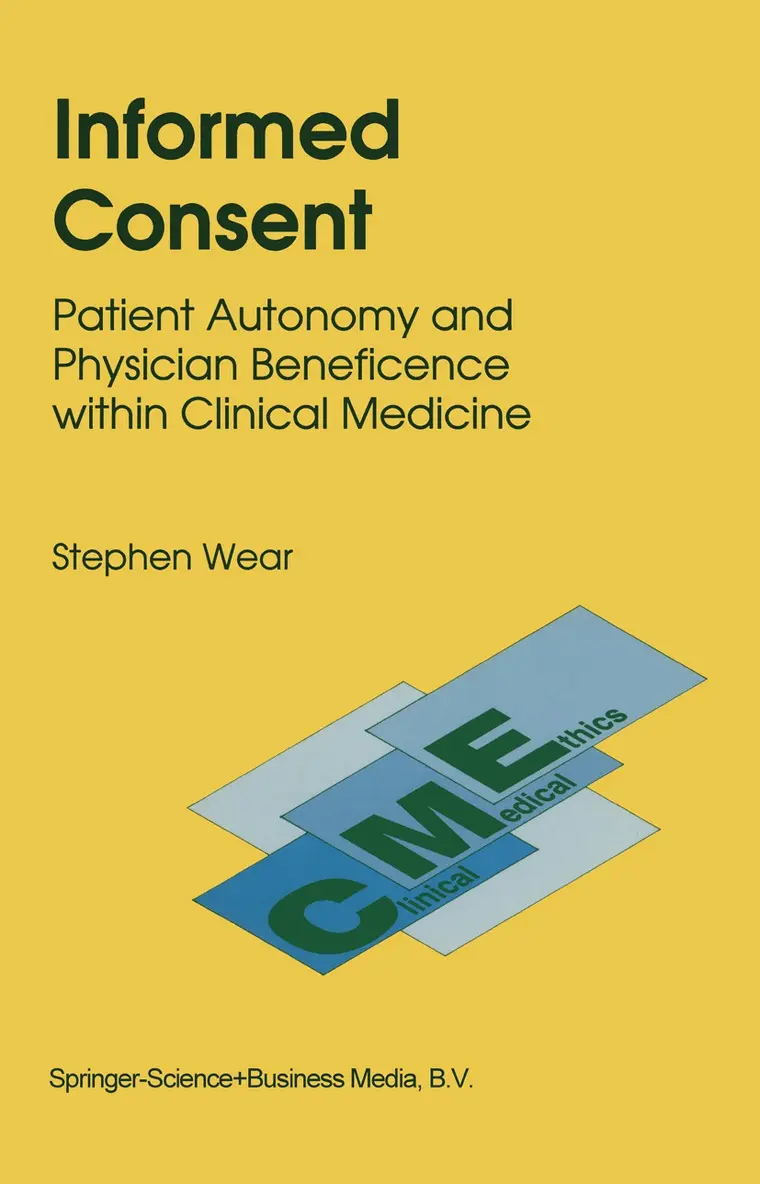
Informed Consent
Patient Autonomy and Physician Beneficence within Clinical Medicine
Inbunden, Engelska, 1992
1 062 kr
Skickas inom 10-15 vardagar
Substantial efforts have been made to reform the physician-patient relationship, particularly towards replacing the "silent world of doctor and patient" with informed patient participation in medical decision-making. This "new ethos of patient autonomy" has especially insisted on the routine provision of informed consent for all medical interventions. Strongly supported by most bioethicists and the law, as well as more popular writings, it seems clear that informed consent has, at best, been received in a lukewarm fashion by most clinicians, many simply rejecting what they commonly refer to as the "myth of informed consent". The purpose of this text is to defuse this seemingly intractable controversy by offering an effective operational model of informed consent. This goal is pursued first by reviewing and evaluating, in detail, the agendas, arguments and supporting materials of its proponents and detractors. A comprehensive review of empirical studies of informed consent is provided, as well as detailed reflection on the common clinician experience with attempts at informed consent and the exercise of autonomy by patients.Ultimately, informed consent is recast as a management tool for pursuing clinically and ethically important values. The model incorporates a flexible, anticipatory approach that recognizes that no static, generic ritual can legitimately pursue the quite variable values that may be at stake with different patients in different situations. Finally, efficiency of provision is addressed by not pursuing the unattainable and ancillary. Throughout, the traditional principle of beneficence is appealed to towards articulating an operational model of informed consent as an intervention that is likely to change outcomes at the bedside for the better.
Del 4 - Clinical Medical Ethics
Informed Consent
Patient Autonomy and Physician Beneficence within Clinical Medicine
Häftad, Engelska, 2010
1 062 kr
Skickas inom 10-15 vardagar
Substantial efforts have recently been made to reform the physician-patient relationship, particularly toward replacing the 'silent world of doctor and patient' with informed patient participation in medical decision-making. This 'new ethos of patient autonomy' has especially insisted on the routine provision of informed consent for all medical interventions. Stronly supported by most bioethicists and the law, as well as more popular writings and expectations, it still seems clear that informed consent has, at best, been received in a lukewarm fashion by most clinicians, many simply rejecting what they commonly refer to as the 'myth of informed consent'. The purpose of this book is to defuse this seemingly intractable controversy by offering an efficient and effective operational model of informed consent. This goal is pursued first by reviewing and evaluating, in detail, the agendas, arguments, and supporting materials of its proponents and detractors.A comprehensive review of empirical studies of informed consent is provided, as well as a detailed reflection on the common clinician experience with attempts at informed consent and the exercise of autonomy by patients. In the end, informed consent is recast as a management tool for pursuing clinically and ethically important goods and values that any clinician should see as meriting pursuit. Concurrently, the model incorporates a flexible, anticipatory approach that recognizes that no static, generic ritual can legitimately pursue the quite variable goods and values that may be at stake with different patients in different situations. Finally, efficiency of provision is addressed by not pursuing the unattainable and ancillary. Throughout, the traditional principle of beneficence is appealed to toward articulating an operational model of informed consent as an intervention that is likely to change outcomes at the bedside for the better.
534 kr
Skickas inom 10-15 vardagar
The first time I read the medical consent and authorization. it had registered in my mind simply as a legal document. Now I began to understand what it meant. It was a letter of ultimate love and trust. (Schucking. 1985. p. 268) Ever since Karen Ann Quinlan slipped into permanent unconsciousness in 1975 and her father agonized publicly over whether she should remain indefinitely on a respirator (In re Quinlan, 1976), the desires of patients, their families, and their friends to limit the application of apparently limitless medical technology have been a pressing concern for ethics, law, and public policy. Ms. Quinlan's case contained nearly all the elements of the problems we still face: vague, general, but sincere prior oral statements suggesting that she would not want continued treatment; a family attempting to do what they saw as best for her; and physicians uncertain whether to use medical judgment alone (and if so, what the "right" medical decision was), to preserve her life at all costs, or to honor the family's interpretation of their daughter's choice. Most ironically, once she was removed from her respirator, she did not die. Karen Quinlan - like dozens of other names made famous by court decisions, newspaper stories, and television evening news - has come to symbolize a tangled knot of issues surrounding the end of life and who controls it.
1 062 kr
Skickas inom 10-15 vardagar
1 062 kr
Skickas inom 10-15 vardagar
The issues explored in this book have unfortunately come to be known as 'maternal-fetal conflicts'. The phrase is unsatisfactory because it is misleading: It places the emphasis on the well-being of the fetus instead of on the born child (who will bear the burden of any harm done prenatally); it assumes a conflict between a pregnant women and her offspring (while the issue is usually more complex and more broadly based); and it incorrectly implies that all pregnant women are appropriately regarded as mothers. For these reasons, I have chosen to avoid the phrase 'matern- fetal conflict' altogether, and will instead speak in terms of 'preventable prenatal harm'. I mention this at the outset, for those of you familiar with 'maternal-fetal conflicts' who might be wondering if I am addressing the same issues. Yes. But I am trying to look at them in a new - and I hope more fruitful - way. I would like to thank the other participants in the Hastings Center's maternal-fetal project - especially those who disageed with me - for being so thought-provoking. And I owe a lasting debt of gratitude to Henry Ruth and Allen Buchanan for their invaluable counsel.