Clinical Medical Ethics series - Böcker
Visar alla böcker i serien Clinical Medical Ethics series. Handla med fri frakt och snabb leverans.
9 produkter
9 produkter
413 kr
Skickas inom 3-6 vardagar
Free and informed consent is one of the most widespread and morally important practices of modern health care; competence to consent is its cornerstone. In this book, Becky Cox White provides a concise introduction to the key practical, philosophical, and moral issues involved in competence to consent. The goals of informed consent, respect for patient autonomy and provision of beneficent care, cannot be met without a competent patient. Thus determining a patient's competence is the critical first step to informed consent. Determining competence depends on defining it, yet surprisingly, no widely accepted definition of competence exists. White identifies nine capacities that patients must exhibit to be competent. She approaches the problem from the task-oriented nature of decision making and focuses on the problems of defining competence within clinical practice. Her proposed definition is based on understanding competence as occurring in a special rather than a general context; as occurring in degrees rather than at a precise threshold; as independent of consequential appeals; and, as incorporating affective as well as cognitive capacities.Combining both an ethical overview and practical guidelines, this book will be of value to health care professionals, bioethicists, and lawyers.
656 kr
Tillfälligt slut
Medicine's changing economics have already fundamentally, permanently altered the relationship between physician and patient, E. Haavi Morreim argues. Physicians must weigh a patient's interests against the legitimate, competing claims of other patients, of payers, of society as a whole, and sometimes even of the physician himself. Focusing on actual situations in the clinical setting, Morreim explores the complex moral problems that current economic realities pose for the practicing physician. She redefines the moral obligations of both physicians and patients, traces the specific effects of these redefined obligations on clinical practice, and explores the implications for patients as individuals and for national health policy. Although the book focuses on health care in the United States, physicians everywhere are likely to face many of the same basic issues of clinical ethics, because every system of health care financing and distribution today is constrained by finite resources.
282 kr
Tillfälligt slut
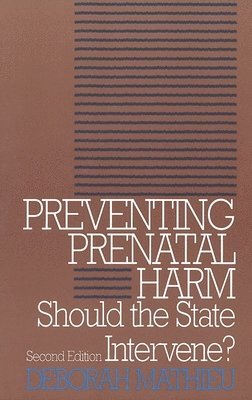
Arguing that the state must meet strict conditions to justify interfering in at-risk pregnancies, Deborah Mathieu examines the legal and ethical concerns that arise when governments mandate the behavior of pregnant women. She explores both the pregnant woman's right to decide what happens to her body and the future child's right to be protected from avoidable damage. Mathieu addresses such topics as reproductive hazards in the workplace, mandated fetal therapy, forced lifestyle changes for pregnant women, and the future child's right to sue for lack of prenatal care. The controversy raises key issues of rights, duties, and the scope of legitimate state action, thus posing fundamental challenges to the fields of medicine, biomedical ethics, law, and public policy. This edition has been completely updated and expanded. Mathieu presents new arguments for acceptable types of state intervention and provides specific examples. This edition also incorporates recent court decisions, especially cases involving substance abuse. The book includes both an updated bibliography and an updated reference list of relevant court cases.
611 kr
Skickas inom 7-10 vardagar
Advance directives - such as living wills and health care proxies - are documents intended to declare and preserve the health care choices of patients if they become unable to make their own decisions. This book provides a comprehensive overview of advance directives and clear, practical directions for writing and interpreting them. Nancy M.P. King provides a legal, philosophical, and historical analysis of the moral and legal force of advance directives. She explains the types and models of advance directives currently in use and offers guidelines for individuals seeking to write, read, and use directives to promote individuals' health care choices within the laws of their own states. King emphasizes that advance directives are not orders given by patients to their doctors; instead, they are documents that invite conversation between doctors and patients about health care decisions of great importance. The purpose of advance directives is to support patients' health care choices, and the book promotes a thoughtful use of advance directives that is best calculated to achieve that purpose, whatever form individual advance directives may take.This new edition has been updated to reflect the many changes in advance directive statutes since 1991, including expanded discussions of health care proxy statutes, the impact of the Patient Self-Determination Act and the Supreme Court's Cruzan decision. King also has extended her analysis of the implications for advance directives of managed care, resource allocation, resource scarcity, and the debate over futile treatment at the end of life. "Making Sense of Advance Directives" is a valuable handbook for patients, health care providers and administrators, patient counselors, lawyers, policymakers, and any individual interested in advance directives.
413 kr
Skickas inom 3-6 vardagar
Wear develops an efficient and flexible model of informed consent that accommodates both clinical realities and legal and ethical imperatives. In this second edition, he has expanded his examination of the larger process within which informed consent takes place and his discussion of the clinician's need for a wide range of discretion.
459 kr
Skickas inom 3-6 vardagar
The Patient Self-Determination Act of 1990 required medical facilities to provide patients with written notification of their right to refuse or consent to medical treatment. Using this Act as an important vehicle for improving the health care decisionmaking process, Lawrence P. Ulrich explains the social, legal, and ethical background to the Act by focusing on well-known cases such as those of Karen Quinlan and Nancy Cruzan, and he explores ways in which physicians and other caregivers can help patients face the complex issues in contemporary health care practices. According to Ulrich, health care facilities often address the letter of the law in a merely perfunctory way, even though the Act integrates all the major ethical issues in health care today. Ulrich argues that well-designed conversations between clinicians and patients or their surrogates will not only assist in preserving patient dignity - which is at the heart of the Act - but will also help institutions to manage the liability issues that the Act may have introduced. He particularly emphasizes developing effective advance directives.Ulrich examines related issues, such as the negative effect of managed care on patient self-determination, and concludes with a seldom-discussed issue: the importance of being a responsible patient. Showing how the Patient Self-Determination Act can be a linchpin of more meaningful and effective communication between patient and caregiver, this book provides concrete guidance to health care professionals, medical ethicists, and patient-rights advocates.
360 kr
Skickas inom 7-10 vardagar
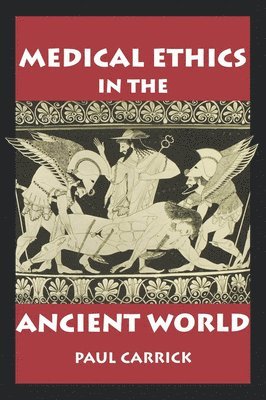
In this book, Paul Carrick charts the ancient Greek and Roman foundations of Western medical ethics. Surveying 1500 years of pre-Christian medical moral history, Carrick applies insights from ancient medical ethics to developments in contemporary medicine such as advance directives, gene therapy, physician-assisted suicide, abortion, and surrogate motherhood. He discusses such timeless issues as the social status of the physician; attitudes toward dying and death; and, the relationship of medicine to philosophy, religion, and popular morality. Opinions of a wide range of ancient thinkers are consulted, including physicians, poets, philosophers, and patients. He also explores the puzzling question of Hippocrates' identity, analyzing not only the Hippocratic Oath but also the Father of Medicine's lesser-known works. Complete with chapter discussion questions, illustrations, a map, and appendices of ethical codes, "Medical Ethics in the Ancient World" will be useful in courses on the medical humanities, ancient philosophy, bioethics, comparative cultures, and the history of medicine.Accessible to both professionals and to those with little background in medical philosophy or ancient science, Carrick's book demonstrates that in the ancient world, as in our own postmodern age, physicians, philosophers, and patients embraced a diverse array of perspectives on the most fundamental questions of life and death.
972 kr
Skickas inom 5-8 vardagar
In "Beyond a Western Bioethics", physicians Angeles Tan Alora and Josephine M. Lumitao join eight other contributors to provide a comprehensive exploration of bioethical issues outside of the dominant American and western European model. Using the Philippines as a case study, they address how a developing country's economy, religion, and culture affect the bioethical landscape for doctors, patients, families, and the society as a whole. American principles of medical ethics assume the primacy of individual autonomy, the importance of truth-telling and secular standards of justice and morality. In the Philippines, these standards are often at odds with a culture in which family relationships take precedence over individualism, and ideas of community, friendship, and religion can deeply influence personal behavior. Pervasive poverty further complicates the equation.Contributors move from a general discussion of the moral vision informing health care decisions in the Philippines to an exploration of a wide range of specific cases: family planning, care of the elderly, organ transplants, death and dying, medical research, AIDS care, doctor-patient relationships, informed consent, and the allocation of scarce health-care resources. Written for both students and professionals, this book provides a much-needed perspective on how medical ethics are practiced in a developing nation, and it successfully challenges the wisdom of global bioethical standards that do not account for local cultural and economic differences.
656 kr
Tillfälligt slut
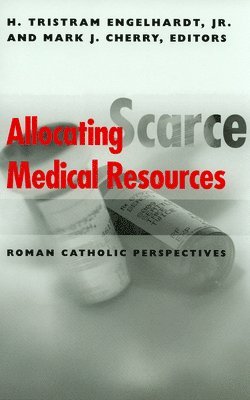
Roman Catholic moral theology is the point of departure for this multifaceted exploration of the challenge of allocating scarce medical resources. This volume begins its exploration of discerning moral limits to modern high-technology medicine with a consensus statement born of the conversations among its contributors. The seventeen essays use the example of critical care, because it offers one of the few areas in medicine where there are good clinical predictive measures regarding the likelihood of survival. As a result, the health care industry can with increasing accuracy predict the probability of saving lives - and at what cost. Because critical care involves hard choices in the face of finitude, it invites profound questions about the meaning of life, the nature of a good death, and distributive justice. For those who identify the prize of human life as immortality, the question arises as to how much effort should be invested in marginally postponing death. In a secular culture that presumes that individuals live only once, and briefly, there is an often-unacknowledged moral imperative to employ any means necessary to postpone death.The conflict between the free choice of individuals and various aspirations to equality compounds the challenge of controlling medical costs while also offering high-tech care to those who want its possible benefits. It forces society to confront anew notions of ordinary versus extraordinary, and proportionate versus disproportionate, treatment in a highly technologically structured social context. This cluster of discussions is enriched by five essays from Jewish, Orthodox Christian, and Protestant perspectives. Written by premier scholars from the United States and abroad, these essays will be valuable reading for students and scholars of bioethics and Christian moral theology.