Cold War 1945-1991 - Böcker
Visar alla böcker i serien Cold War 1945-1991. Handla med fri frakt och snabb leverans.
7 produkter
7 produkter
163 kr
Tillfälligt slut
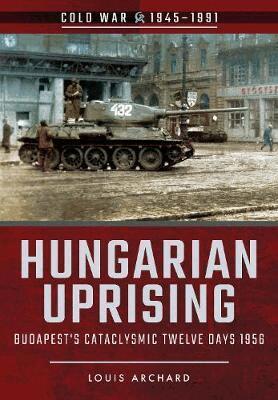
When the world held its breath It is more than 25 years since the end of the Cold War. It began over 75 years ago, in 1944 long before the last shots of the Second World War had echoed across the wastelands of Eastern Europe with the brutal Greek Civil War. The battle lines are no longer drawn, but they linger on, unwittingly or not, in conflict zones such as Syria, Somalia and Ukraine. In an era of mass-produced AK-47s and ICBMs, one such flashpoint was Hungary Soviet troops had occupied Hungary in 1945 as they pushed towards Germany and by 1949 the country was ruled by a communist government that towed the Soviet line. Resentment at the system eventually boiled over at the end of October 1956\. Protests erupted on the streets of Budapest and, as the violence spread, the government fell and was replaced by a new, more moderate regime. However, the intention of the new government to withdraw from the Warsaw Pact and declare neutrality in the Cold War proved just too much for Soviet leader Nikita Khrushchev.Soviet forces had intervened at the beginning of events to help the former regime keep order but were withdrawn at the end of October, only to return in November and quell the uprising with blunt force. Thousands were arrested, many of whom were imprisoned and more than 300 executed. An estimated 200,000 fled Hungary as refugees. Despite advocating a policy of rolling back Soviet influence, the US and other western powers were helpless to stop the suppression of the uprising, which marked a realization that the Cold War in Europe had reached a stalemate.
163 kr
Skickas
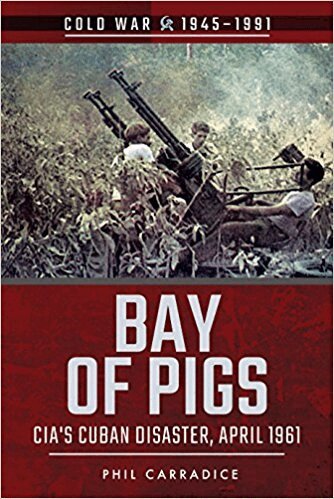
Perhaps not in casualties but as far as prestige and standing in the world were concerned, the Bay of Pigs invasion of 1961 was the worst disaster to befall the USA since the War of 1812 when British forces burned the White House. Badly planned, badly organized, the affair was littered with mistakes from start to finish-not least with an inept performance by John F. Kennedy and his new administration.Supposedly an attempt by Cuban exiles to regain their homeland, the whole operation was funded and equipped by the USA. When things began to go wrong with the landings at Playa Larga and Playa Giron on the southern coast of Cuba President Kennedy and his advisers began overruling military decisions with the result that the invading Brigade 2506-made up of Cuban exiles-was left with little or no air cover, limited ammunition and no easy escape.Fidel Castro made great play of his success and American failure at the Bay of Pigs. He, like Nikita Khrushchev, thought Kennedy was weak: the Cuban Missile Crisis of the following year was almost an inevitable consequence of the disaster.
163 kr
Skickas
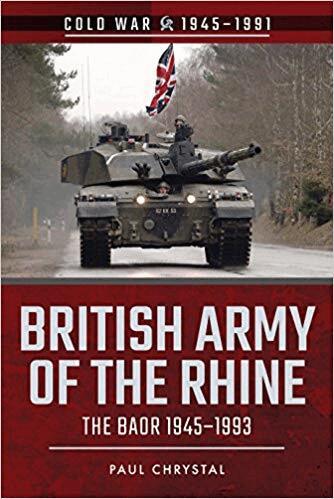
The nervous geopolitical tension between East and West, the Cold War, emerged before the end of the Second World War and lasted until 1991 with the collapse of the Soviet Union. The British Army of the Rhine was born in 1945 out of the British Liberation Army at the close of the war as the military government of the British zone of occupied Germany. As the Soviet threat increased, so BAOR became less of an occupational army and assumed the role of defender of Western Europe, and as a major contributor to NATO after 1949.This book traces and examines the changing role of BAOR from 1945 to its demise in the 1993 Options for Change defence cuts. It looks at the part it played in the defence of West Germany, its effectiveness as a Cold War deterrent, the garrisons and capabilities, logistics and infrastructure, its arms and armour, the nuclear option and the lives of the thousands of families living on the front line.
182 kr
Skickas
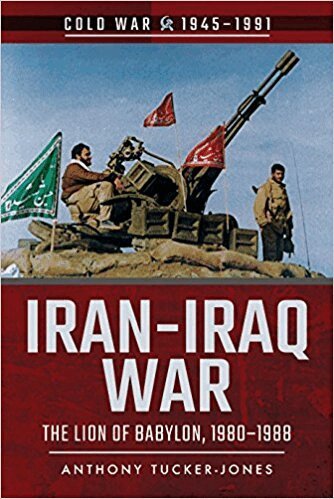
The bloody eight-year Iran-Iraq war is now almost forgotten, overshadowed by the subsequent Gulf War and Iraq War. However, it is best remembered for the unique so-called 'Tanker War' which threatened to strangle the world's oil supplies. At the time Tucker-Jones as a defence analyst wrote extensively on the war and now brings his expertise to bear with this account of a conflict fuelled by festering regional rivalries, the Cold War and the emerging threat posed by militant Shia Islam.Fought on land, at sea and in the air using some of the most modern weapons money could buy, Western-backed Saddam Hussein's Sunni Iraq and Shia Iran under the ayatollahs fought themselves to a standstill. Once Saddam's armoured blitzkrieg had been halted and Iran's human-wave counterattacks fought off, it became a war of attrition with major battles fought for the possession of Khorramshahr and Basra. Both sides resorted to chemical weapons and bombarding each other with missiles. When the war spilled over into the waters of the Gulf it sparked open Western intervention. Escalating attacks on oil tankers finally culminated in a ceasefire.
152 kr
Skickas
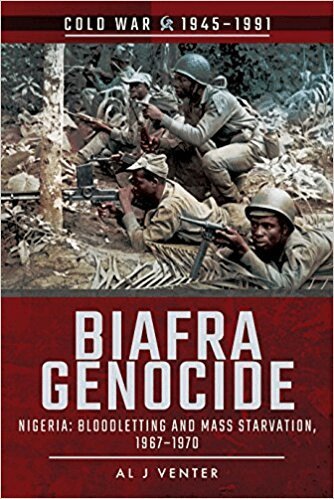
One of the great tragedies of Africa is not only the fact that a million people-mostly civilians and a large proportion of them children-died in one of Africa's first post-independence wars, but that until it happened the world thought Nigeria was immune from the wasting disease of tribalism. It certainly was not because the Biafran War is still the most expansive tribal conflagration that the continent has experienced-barring perhaps the ongoing Great Lakes conflict-involving the forces of East and West, only this time, with the British siding with the Soviets.Worse, some of the religious differences that emerged before and after that dreadful carnage are still with us today. During the course of hostilities that lasted almost four years, a lot of other shortcomings surfaced in Africa's most populous nation, including the kind of corruption that, until then, had always been linked to countries rich in oil. Disunity, incompetence and instability-from which Nigeria never really recovered-also emerged. Two bloody army coups followed after the rebels capitulated, together with an appalling series of massacres, mostly of southern Christians by Muslim northerners. Half a century later the slaughter continues.
157 kr
Tillfälligt slut
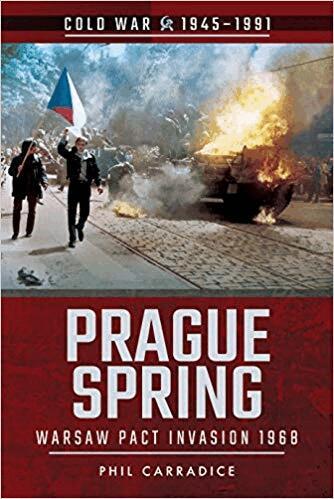
Cold War nadir: January 1968 and in Czechoslovakia the new Communist Party leader Alexander Dubcek has made it clear that this is the opportunity to loosen the Soviet stranglehold on the country. As the Prague winter slowly eases into a Prague spring, it really does seem as if Dubcek has judged it right. Reforms in oppressive censorship laws, improved housing, a lessening of totalitarian oppression, Dubcek promises and delivers on it all. The new regime in Czechoslovakia does seek to destroy communism but it does want to choose its own political destiny.And then, on the night of 20/21 August the Prague Spring is crushed by the Warsaw Pact invasion: 200,000 Communist troops, mostly Soviet but also Polish and East German, flood the country. The resulting protests and rallies against the invasion, mostly by young people, are violent and bloody. Hundreds die in clashes; self-immolation, in public and before the eyes of the world, brings home the horror and the depth of feeling in the Czech people.It is the end of the Prague Spring, the reformation of Czechoslovakia having ended in ruins. But despite the brutal crushing of Czech hopes and dreams, the events of 1968 lay the foundations for future change. It will take another two decades but it is, ultimately, where the unravelling of the Communist bloc begins.
163 kr
Skickas
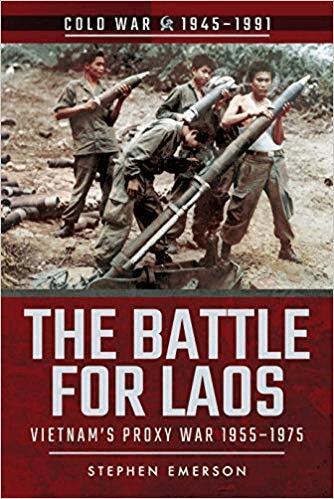
By 1959 the newly independent Kingdom of Laos was being transformed into a Cold War battleground for global superpower competition, having been born out of the chaos following the French military defeat and withdrawal from Indochina in 1954. The country was soon engulfed in a rapidly evolving civil war as rival forces jockeyed for power and swelling foreign intervention further fueled the fighting. Adding even more fuel to the fire, "neutral" Laos's geographic entanglement in the intensifying war in neighboring South Vietnam deepened in the early 1960s as Hanoi's reliance on the Ho Chi Minh Trail for moving men and material through the southern Laotian panhandle grew exponentially and became a priority target of American interdiction efforts.For almost twenty years, the fighting between the Western-supported Royal Lao government and the communist-supported Pathet Lao would rage across the plains, jungles, and mountaintops largely unseen by most of the world in this so-called "secret war." Thousands on each side would die and many more would be displaced as the conflict on the ground ebbed and flowed from season to season and year to year. And in the skies above, American and Royal Laotian aircraft would rain down their deadly payloads, decimating large swaths of the countryside in pursuit of victory. Nearly 3 million tons of bombs would be dropped on Laotian territory between 1965 and 1973, leaving a deadly legacy of unexploded ordnance that lingers to this day. Thus, the battle for Laos is the story of entire communities and generations caught up in a war seemingly without end, one that pitted competing foreign interests and their proxies against each other, and one that was forever tied to Washington's pursuit of victory in Vietnam.