Columbia Studies in International Order and Politics – serie
Visar alla böcker i serien Columbia Studies in International Order and Politics. Handla med fri frakt och snabb leverans.
12 produkter
12 produkter
1 132 kr
Skickas inom 5-8 vardagar
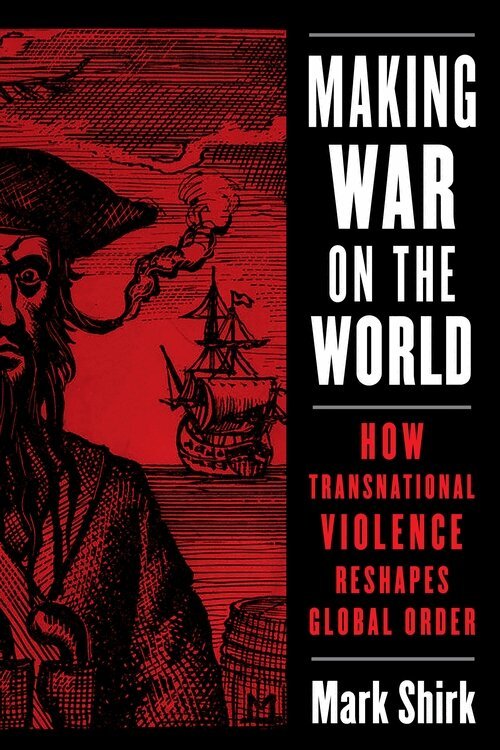
The state bounds politics: it constructs and enforces boundaries that separate what it controls from what lies outside its domain. However, states face a variety of threats that cross and challenge their geographical and conceptual boundaries. Transnational violent actors that transcend these boundaries also defy the state’s claims to political authority and legitimacy.Mark Shirk examines historical and contemporary state responses to transnational violence to develop a new account of the making of global orders. He considers a series of crises that plagued the state system in different eras: golden-age piracy in the eighteenth century, anarchist “propagandists of the deed” at the turn of the twentieth, and al-Qaeda in recent years. Shirk argues that states redraw conceptual boundaries, such as between “international” and “domestic,” to make sense of and defeat transnational threats. In response to forms of political violence that challenged boundaries, states developed creative responses that included new forms of control, surveillance, and rights. As a result, these responses gradually made and transformed the state and global order. Shirk draws on extensive archival research and interviews with policy makers and experts, and he explores the implications for understandings of state formation. Combining rich detail and theoretical insight, Making War on the World reveals the role of pirates, anarchists, and terrorists in shaping global order.
288 kr
Skickas inom 5-8 vardagar
The state bounds politics: it constructs and enforces boundaries that separate what it controls from what lies outside its domain. However, states face a variety of threats that cross and challenge their geographical and conceptual boundaries. Transnational violent actors that transcend these boundaries also defy the state’s claims to political authority and legitimacy.Mark Shirk examines historical and contemporary state responses to transnational violence to develop a new account of the making of global orders. He considers a series of crises that plagued the state system in different eras: golden-age piracy in the eighteenth century, anarchist “propagandists of the deed” at the turn of the twentieth, and al-Qaeda in recent years. Shirk argues that states redraw conceptual boundaries, such as between “international” and “domestic,” to make sense of and defeat transnational threats. In response to forms of political violence that challenged boundaries, states developed creative responses that included new forms of control, surveillance, and rights. As a result, these responses gradually made and transformed the state and global order. Shirk draws on extensive archival research and interviews with policy makers and experts, and he explores the implications for understandings of state formation. Combining rich detail and theoretical insight, Making War on the World reveals the role of pirates, anarchists, and terrorists in shaping global order.
1 132 kr
Skickas inom 5-8 vardagar
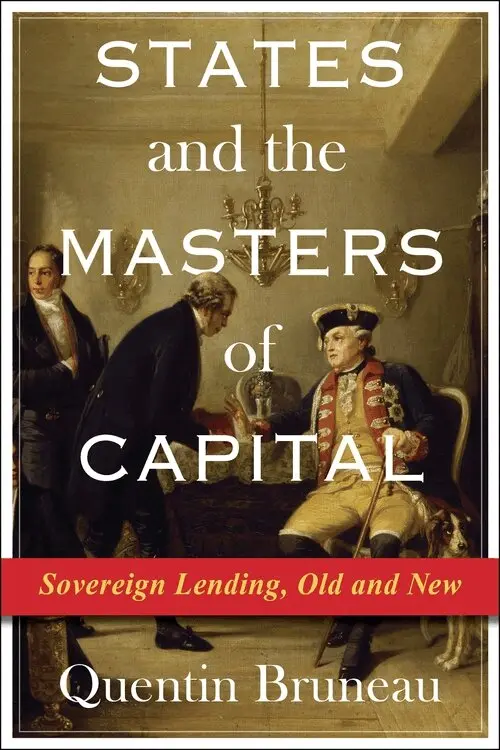
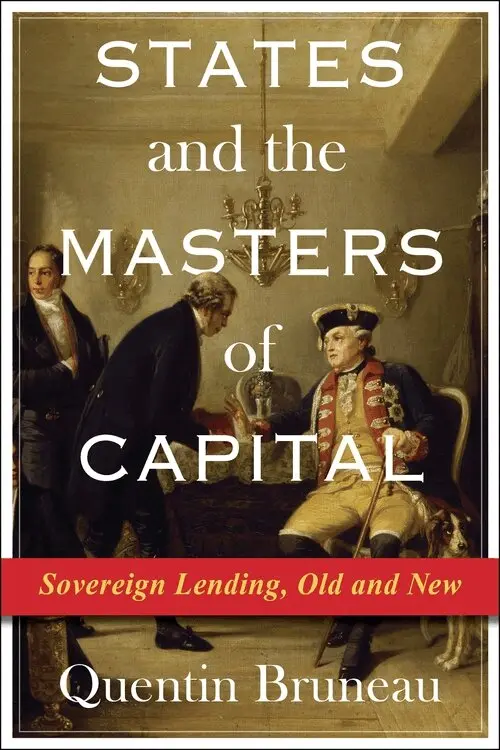
Winner, 2025 Francesco Guicciardini Prize for Best Book in Historical International Relations, Historical International Relations section, International Studies AssociationToday, states’ ability to borrow private capital depends on stringent evaluations of their creditworthiness. While many presume that this has long been the case, Quentin Bruneau argues that it is a surprisingly recent phenomenon—the outcome of a pivotal shift in the social composition of financial markets.Investigating the financiers involved in lending capital to sovereigns over the past two centuries, Bruneau identifies profound changes in their identities, goals, and forms of knowledge. He shows how an old world made up of merchant banking families pursuing both profit and status gradually gave way to a new one dominated by large companies, such as joint stock banks and credit rating agencies, exclusively pursuing profit. Lacking the web of personal ties to sovereigns across the world that their established rivals possessed, these financial institutions began relying on a different form of knowledge created to describe and compare states through quantifiable data: statistics. Over the course of this epochal shift, which only came to an end a few decades ago, financial markets thus reconceptualized states. Instead of a set of individuals to be known in person, they became numbers on a page. Raising new questions about the history of sovereign lending, this book illuminates the nature of the relationship between states and financial markets today—and suggests that it may be on the cusp of another major transformation.
288 kr
Skickas inom 5-8 vardagar
Winner, 2025 Francesco Guicciardini Prize for Best Book in Historical International Relations, Historical International Relations section, International Studies AssociationToday, states’ ability to borrow private capital depends on stringent evaluations of their creditworthiness. While many presume that this has long been the case, Quentin Bruneau argues that it is a surprisingly recent phenomenon—the outcome of a pivotal shift in the social composition of financial markets.Investigating the financiers involved in lending capital to sovereigns over the past two centuries, Bruneau identifies profound changes in their identities, goals, and forms of knowledge. He shows how an old world made up of merchant banking families pursuing both profit and status gradually gave way to a new one dominated by large companies, such as joint stock banks and credit rating agencies, exclusively pursuing profit. Lacking the web of personal ties to sovereigns across the world that their established rivals possessed, these financial institutions began relying on a different form of knowledge created to describe and compare states through quantifiable data: statistics. Over the course of this epochal shift, which only came to an end a few decades ago, financial markets thus reconceptualized states. Instead of a set of individuals to be known in person, they became numbers on a page. Raising new questions about the history of sovereign lending, this book illuminates the nature of the relationship between states and financial markets today—and suggests that it may be on the cusp of another major transformation.
Governing the Feminist Peace
The Vitality and Failure of the Women, Peace, and Security Agenda
Inbunden, Engelska, 2024
1 292 kr
Skickas inom 5-8 vardagar
Winner, 2025 Carole Pateman Gender and Politics Book Prize, Australian Political Studies AssociationHonorable Mention, 2025 Yale Ferguson Award, International Studies Association - NortheastWinner, 2024 Choice Outstanding Academic TitleThe Women, Peace, and Security (WPS) agenda is celebrated as a landmark global framework for achieving gender equality in peace and security governance. Its power is visible in two decades of United Nations resolutions, national action plans, regional initiatives, and countless activist, academic, and philanthropic projects. Yet despite this vitality, it is haunted by failure, as a lack of political will and stubborn patriarchal resistance frustrate its promise.This book offers a groundbreaking critical account of the WPS agenda, exploring its evolution in relation to the wider politics of global governance and feminism. Paul Kirby and Laura J. Shepherd argue that WPS is not a settled, cohesive policy but a field in flux, defined and disrupted by a growing number of national, supranational, subnational, and transnational agents who in turn act on an expanding catalogue of threats, from climate change to homophobia, challenging traditional boundaries of peace and security. Kirby and Shepherd reconceptualize WPS as a “policy ecosystem,” tracing interaction and contestation around the agenda across levels from the UN Security Council to military alliances to feminist activists. They combine analysis of a vast dataset of policy documents with key informant interviews and close readings of diplomacy, statecraft, the politics of indigeneity, counterinsurgency, antimilitarism, human rights, and the arms trade across the first twenty years of WPS. Far-reaching and incisive, Governing the Feminist Peace poses a provocative question: What if we abandoned the idea of the WPS agenda as a unified political project altogether?
Governing the Feminist Peace
The Vitality and Failure of the Women, Peace, and Security Agenda
Häftad, Engelska, 2024
328 kr
Skickas inom 5-8 vardagar
Winner, 2025 Carole Pateman Gender and Politics Book Prize, Australian Political Studies AssociationHonorable Mention, 2025 Yale Ferguson Award, International Studies Association - NortheastWinner, 2024 Choice Outstanding Academic TitleThe Women, Peace, and Security (WPS) agenda is celebrated as a landmark global framework for achieving gender equality in peace and security governance. Its power is visible in two decades of United Nations resolutions, national action plans, regional initiatives, and countless activist, academic, and philanthropic projects. Yet despite this vitality, it is haunted by failure, as a lack of political will and stubborn patriarchal resistance frustrate its promise.This book offers a groundbreaking critical account of the WPS agenda, exploring its evolution in relation to the wider politics of global governance and feminism. Paul Kirby and Laura J. Shepherd argue that WPS is not a settled, cohesive policy but a field in flux, defined and disrupted by a growing number of national, supranational, subnational, and transnational agents who in turn act on an expanding catalogue of threats, from climate change to homophobia, challenging traditional boundaries of peace and security. Kirby and Shepherd reconceptualize WPS as a “policy ecosystem,” tracing interaction and contestation around the agenda across levels from the UN Security Council to military alliances to feminist activists. They combine analysis of a vast dataset of policy documents with key informant interviews and close readings of diplomacy, statecraft, the politics of indigeneity, counterinsurgency, antimilitarism, human rights, and the arms trade across the first twenty years of WPS. Far-reaching and incisive, Governing the Feminist Peace poses a provocative question: What if we abandoned the idea of the WPS agenda as a unified political project altogether?
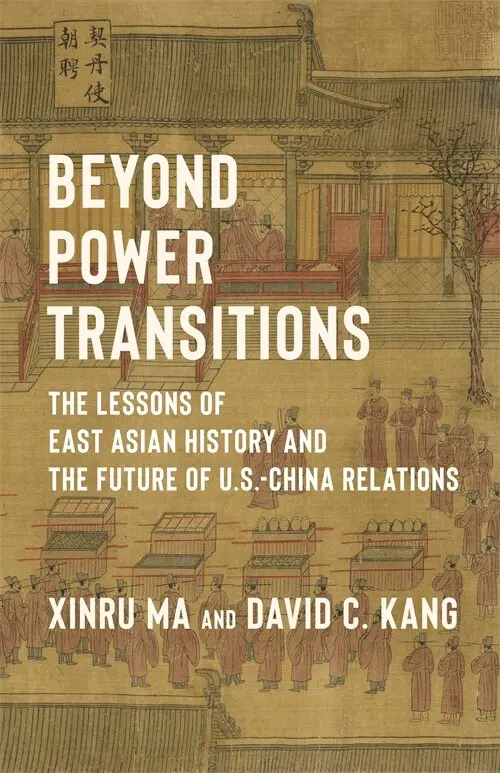
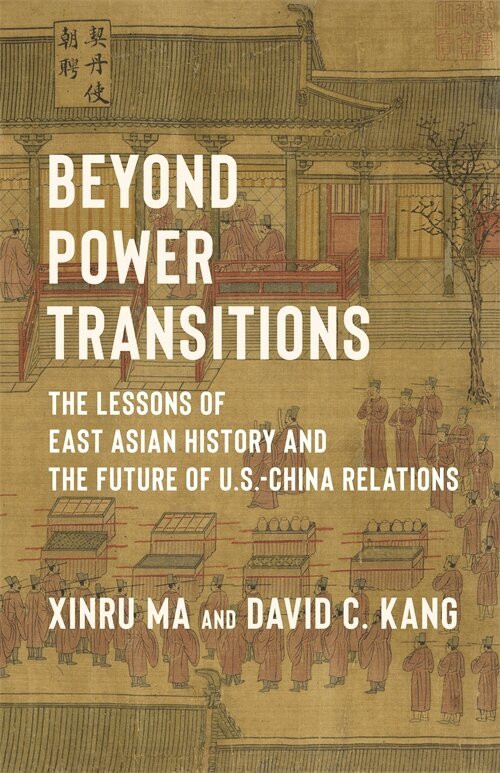
Beyond Power Transitions
The Lessons of East Asian History and the Future of U.S.-China Relations
Inbunden, Engelska, 2024
1 132 kr
Skickas inom 5-8 vardagar
Questions about the likelihood of conflict between the United States and China have dominated international policy discussion for years. But the leading theory of power transitions between a declining hegemon and a rising rival is based exclusively on European examples, such as the Peloponnesian War, as chronicled by Thucydides, as well as the rise of Germany under Bismarck and the Anglo-German rivalry of the nineteenth and early twentieth centuries. What lessons does East Asian history offer, for both the power transitions debate and the future of U.S.-China relations?Examining the rise and fall of East Asian powers over 1,500 years, Beyond Power Transitions offers a new perspective on the forces that shape war and peace. Xinru Ma and David C. Kang argue that focusing on the East Asian experience underscores domestic risks and constraints on great powers, not relative rise and decline in international competition. They find that almost every regime transition before the twentieth century was instigated by internal challenges and even the exceptions deviated markedly from the predictions of power transition theory. Instead, East Asia was stable for a remarkably long time despite massive power differences because of common understandings about countries’ relative status. Provocative and incisive, this book challenges prevailing assumptions about the universality of power transition theory and shows why East Asian history has profound implications for international affairs today.
Beyond Power Transitions
The Lessons of East Asian History and the Future of U.S.-China Relations
Häftad, Engelska, 2024
288 kr
Skickas inom 5-8 vardagar
Questions about the likelihood of conflict between the United States and China have dominated international policy discussion for years. But the leading theory of power transitions between a declining hegemon and a rising rival is based exclusively on European examples, such as the Peloponnesian War, as chronicled by Thucydides, as well as the rise of Germany under Bismarck and the Anglo-German rivalry of the nineteenth and early twentieth centuries. What lessons does East Asian history offer, for both the power transitions debate and the future of U.S.-China relations?Examining the rise and fall of East Asian powers over 1,500 years, Beyond Power Transitions offers a new perspective on the forces that shape war and peace. Xinru Ma and David C. Kang argue that focusing on the East Asian experience underscores domestic risks and constraints on great powers, not relative rise and decline in international competition. They find that almost every regime transition before the twentieth century was instigated by internal challenges and even the exceptions deviated markedly from the predictions of power transition theory. Instead, East Asia was stable for a remarkably long time despite massive power differences because of common understandings about countries’ relative status. Provocative and incisive, this book challenges prevailing assumptions about the universality of power transition theory and shows why East Asian history has profound implications for international affairs today.
1 132 kr
Skickas inom 5-8 vardagar
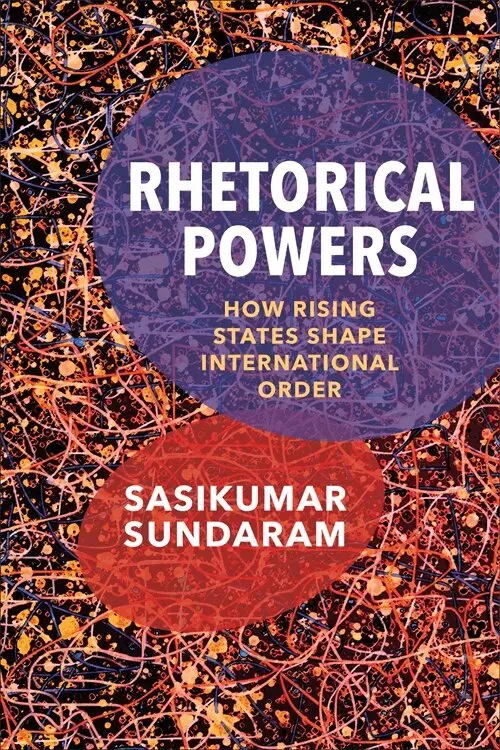
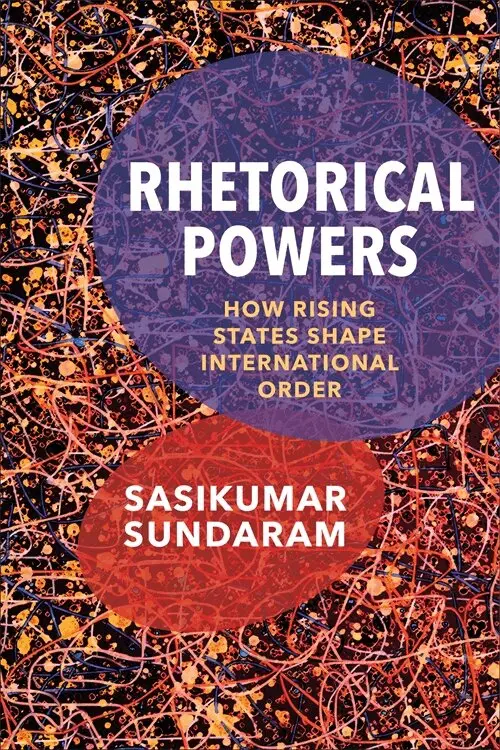
Recent years have seen a striking resurgence of anti-imperial and anticolonial rhetoric on the international stage, from Global South to Global North and from the Left to the Right. Why do states deploy these forms of rhetoric in global politics? How do practitioners from the so-called non-Western world differ in their use and performance of rhetoric, and in what ways do they shape international order?Sasikumar Sundaram provides a bold new theory of rhetoric as power politics, demonstrating how non-Western states challenge their silencing within the Western-led international order. He argues that, in the deeply hierarchical international system, states in the lower rungs resort to rhetorical performances in order to be heard. Through anti-imperial and anticolonial rhetorical statecraft, states such as India, Brazil, and China seek to expose and exploit the contradictions in the legitimating principles, norms, and rules of the international system—and, in so doing, pursue and exercise power. Today, as Russia, Europe, and even the United States engage in anti-imperial and anticolonial rhetoric, Sundaram shows why lessons from the non-Western world are crucial to recognizing the dynamics of power politics and global disorder. A bracing challenge to established theories of power in international relations, Rhetorical Powers underscores the need to address enduring forms of silencing within the international order.
296 kr
Skickas inom 5-8 vardagar
Recent years have seen a striking resurgence of anti-imperial and anticolonial rhetoric on the international stage, from Global South to Global North and from the Left to the Right. Why do states deploy these forms of rhetoric in global politics? How do practitioners from the so-called non-Western world differ in their use and performance of rhetoric, and in what ways do they shape international order?Sasikumar Sundaram provides a bold new theory of rhetoric as power politics, demonstrating how non-Western states challenge their silencing within the Western-led international order. He argues that, in the deeply hierarchical international system, states in the lower rungs resort to rhetorical performances in order to be heard. Through anti-imperial and anticolonial rhetorical statecraft, states such as India, Brazil, and China seek to expose and exploit the contradictions in the legitimating principles, norms, and rules of the international system—and, in so doing, pursue and exercise power. Today, as Russia, Europe, and even the United States engage in anti-imperial and anticolonial rhetoric, Sundaram shows why lessons from the non-Western world are crucial to recognizing the dynamics of power politics and global disorder. A bracing challenge to established theories of power in international relations, Rhetorical Powers underscores the need to address enduring forms of silencing within the international order.
1 331 kr
Skickas inom 5-8 vardagar
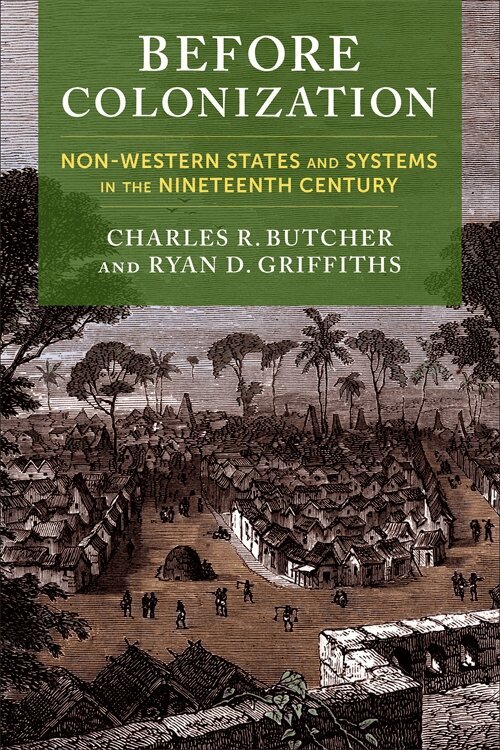
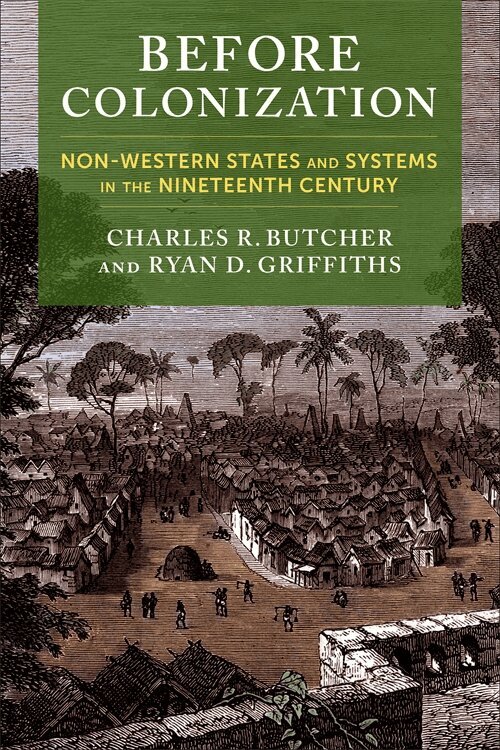
Prior to European colonization, the world was thickly populated with hundreds of independent states and vibrant regional state systems. Yet these states are typically excluded from traditional international relations scholarship, which has mostly focused on the European experience.This book provides a groundbreaking comparative analysis of non-Western states and state systems in the nineteenth century. Using an original data set on independent states during this period, Charles R. Butcher and Ryan D. Griffiths answer fundamental questions such as how many states there were, when they arose, and when they died, documenting the large number of states that were extinguished as a consequence of European colonialism. They explore the structure of nineteenth-century state systems in East Asia, South Asia, maritime Southeast Asia, and West Africa, examining the effects of war, trade, and interaction capacity. Through these case studies, Butcher and Griffiths provide novel perspectives on longstanding debates over state centralization and the choice between indirect and direct forms of rule. Shedding new light on the dynamics of non-Western interstate relations during the nineteenth century, Before Colonization reveals striking similarities between state systems across diverse historical settings.
338 kr
Skickas inom 5-8 vardagar
Prior to European colonization, the world was thickly populated with hundreds of independent states and vibrant regional state systems. Yet these states are typically excluded from traditional international relations scholarship, which has mostly focused on the European experience.This book provides a groundbreaking comparative analysis of non-Western states and state systems in the nineteenth century. Using an original data set on independent states during this period, Charles R. Butcher and Ryan D. Griffiths answer fundamental questions such as how many states there were, when they arose, and when they died, documenting the large number of states that were extinguished as a consequence of European colonialism. They explore the structure of nineteenth-century state systems in East Asia, South Asia, maritime Southeast Asia, and West Africa, examining the effects of war, trade, and interaction capacity. Through these case studies, Butcher and Griffiths provide novel perspectives on longstanding debates over state centralization and the choice between indirect and direct forms of rule. Shedding new light on the dynamics of non-Western interstate relations during the nineteenth century, Before Colonization reveals striking similarities between state systems across diverse historical settings.