Comparative Planetology - Böcker
1 446 kr
Skickas inom 7-10 vardagar
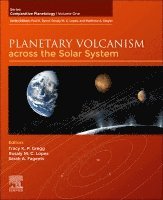
Planetary Volcanism across the Solar System compares and contrasts the vast array of planetary bodies in the Solar System, including Earth. The wealth of spacecraft data for almost all major solid-surface bodies in the Solar System indicate that volcanism has been a dominant mechanism in shaping the landscapes of these bodies. The book addresses key questions surrounding our understanding of planetary volcanism, such as how to integrate the data into a coherent view of how volcanic activity arises, how this mechanism shapes planets, which volcanic landforms are ubiquitous throughout the Solar System, and which are unique.
By placing a singular emphasis on comparing volcanic processes and landforms on all relevant Solar System bodies, and with the explicit objective of providing a systems-level understanding of this widespread phenomenon, users will find an up-to-date, accessible and comprehensive discussion of the major volcanic processes and landforms that shape and drive the evolution of planets, moons and smaller bodies.
Includes an introduction placing the book in the context of the larger Comparative Planetology series Compares volcanic processes and landforms on all relevant Solar System bodies, providing a systems-level understanding of this widespread phenomenon Offers a thorough examination of the major volcanic processes and landforms that shape and drive the evolution of planets, moons and smaller bodies Includes information from new mission data and discoveries in recent years Features over 100 color illustrations and charts to more clearly convey concepts Offers additional online content, including figures, animations, video, and other multimedia content such as interviews with contributing authors1 446 kr
Skickas inom 7-10 vardagar
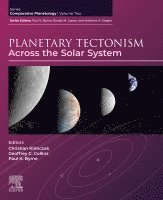
Planetary Tectonism across the Solar System, Volume Two in the Comparative Planetology series, addresses key questions surrounding planetary tectonism, such our understanding of the global contraction of Mercury, the formation of giant rift zones on Saturn's icy moons, or the tesserated terrain on Venus. The book makes connections to Earth, such as how deformation on Mercury is both similar and different, and how to apply theoretical considerations behind plate tectonics on Earth to other planets. The book offers up-to-date, accessible and comprehensive discussions on the major tectonic processes and landforms that shape and drive the evolution of planets, moons and smaller bodies.
By placing a singular emphasis on comparing tectonic processes and landforms on all relevant Solar System bodies, with the explicit objective of providing a systems-level understanding of this widespread phenomenon, this book is ideal for anyone studying planetary tectonism.
Includes an introduction that places the book in the context of the larger Comparative Planetology seriesCompares tectonic processes on all relevant Solar System bodies, providing a systems-level understanding of this widespread phenomenon that shapes and drives the evolution of planets, moons and smaller bodiesFeatures over 100 color illustrations and charts to better convey conceptsOffers additional online content, including figures, animations, videos and interviews with contributing authorsErosion, Deposition, and Weathering Across the Solar System
1 410 kr
Kommande
Erosion, Deposition, and Weathering Across the Solar System, Volume Four summarizes erosional landforms across the Solar System, with an emphasis on the mechanistic processes responsible for these features, including case studies and methods of data and image analysis. Using comparative studies of planetary bodies and various Earth locations as natural laboratories to test models of erosive processes and landscape evolution, the book provides a current review of understanding of the evolution of planetary surfaces for Earth and those of our Solar System.Planetary surfaces images across the Solar System reveal the ubiquity of erosional processes on planets, moons, and other bodies. From branching valley networks on Mars to hydrocarbon rivers on Titan to nitrogen glaciers on Pluto, landforms across the Solar System are conspicuously similar to features that we are familiar with on Earth. This familiarity suggests similar erosional processes are occurring across the Solar System despite drastically different surface conditions and material properties.
Focuses on the processes that occur on each planet, as well as providing remotely sensed data to compare geomorphology and processes on different bodiesExhaustively covers all geomorphological processes and all bodies in the Solar System, including planets, moons, and icy satellitesIntegrates all processes under an erosion theme, helping readers to visualize the processes and gain a better understanding of the overarching ideas