Composers of the Twentieth Century Series – serie
Visar alla böcker i serien Composers of the Twentieth Century Series. Handla med fri frakt och snabb leverans.
5 produkter
5 produkter
1 038 kr
Skickas inom 5-8 vardagar
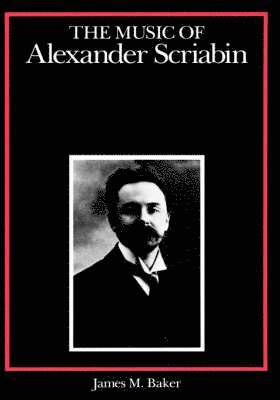
Alexander Scriabin was one of a few major composers who revolutionized musical style in the first decade of the twentieth century by eliminating key as a structural principle and by establishing a new use of dissonant harmonies. This book by James M. Baker is a study of Scriabin’s twentieth-century music, the first thorough analysis of the composer’s evolution from conventional tonality to his later atonal structure. Baker demonstrates that in Scriabin’s transitional music, tonal and atonal procedures—generally considered mutually exclusive—work together to create unified compositions. Baker places Scriabin’s harmony in the perspective of voice leading, applying Schenkerian techniques of analysis to his music for the first time. He explains the great variety of sonorities and their complex relations within the framework of set-complex theory and introduces an original method of statistical analysis to survey Scriabin’s harmonic practice from 1903 to 1914. Offering comprehensive analyses of a considerable number of complete compositions, including such important works as the Fifth Piano Sonata and the Poem of Ecstasy, Baker concludes with a penetrating examination of Prometheus, Scriabin’s largest and most complex composition. The literature thus far on Scriabin has emphasized aspects of his often eccentric personality and has focused narrowly on his use of certain characteristic harmonies, especially the famous “mystic chord.” This thought-provoking theoretical treatise takes an important step toward a deeper understanding of the composer’s accomplishments.
805 kr
Skickas inom 5-8 vardagar
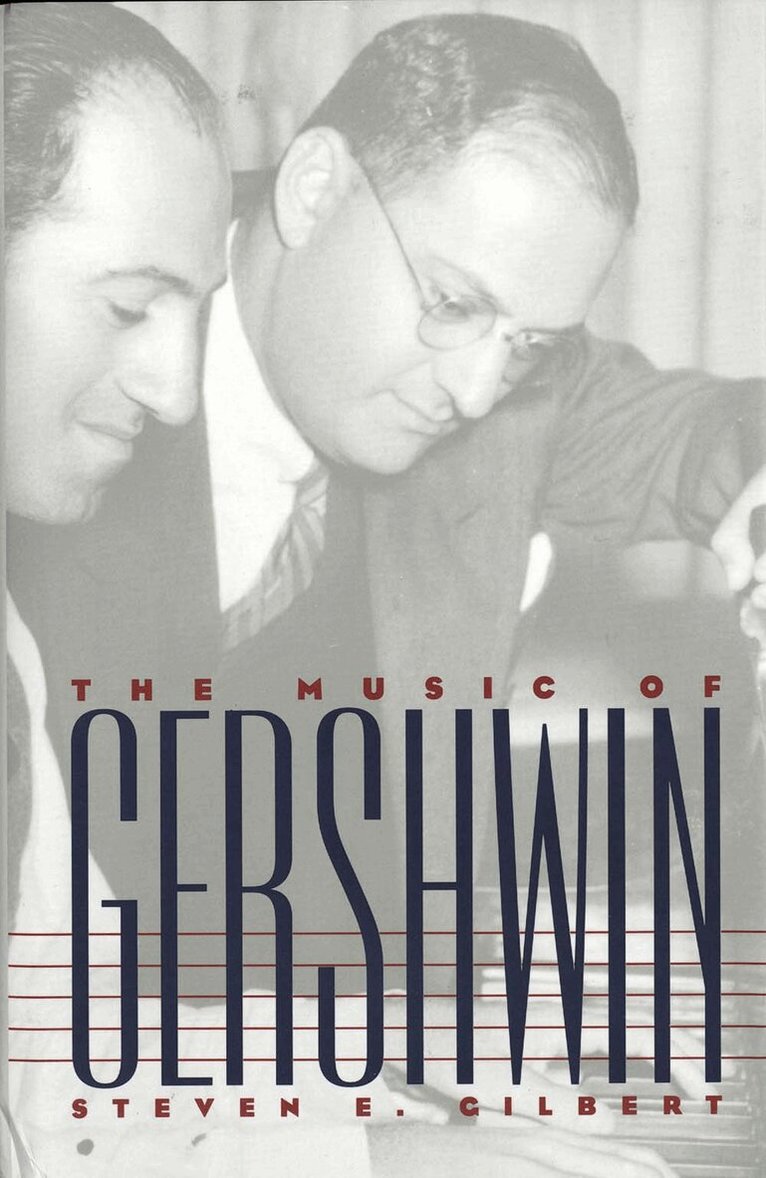
George Gershwin is perhaps the most popular American composer of the twentieth century, and his short and dramatic life has been the subject of much attention. His music, however, has never been scrutinized as closely as his life, and the composer known for his show tunes has had difficulty finding a niche in the world of "serious" music. This book is the first in-depth analysis of Gershwin's entire compositional oeuvre, including his concert music.Weaving biographical material with musical analysis, Steven Gilbert presents a chronological study of the highlights of Gershwin's career. He discusses the well-known Rhapsody in Blue, Concerto in F, An American in Paris, and Porgy and Bess, as well as such popular songs as "Swanee." "S'Wonderful," "I Got Rhythm," "Love Walked In," and "Love Is Here to Stay." But he also examines relatively neglected works that are no less deserving, such as Second Rhapsody, Cuban Overture, and Pardon My English, the last of which, says Gilbert, was a failure on Broadway but was one of George and Ira Gershwin's finest collaborations. Written in a fluid, conversational style and illustrated with numerous musical examples, some of which have never before been published, this book will be enjoyed by general readers and appreciated by professional musicians and musical scholars alike.
446 kr
Skickas inom 5-8 vardagar
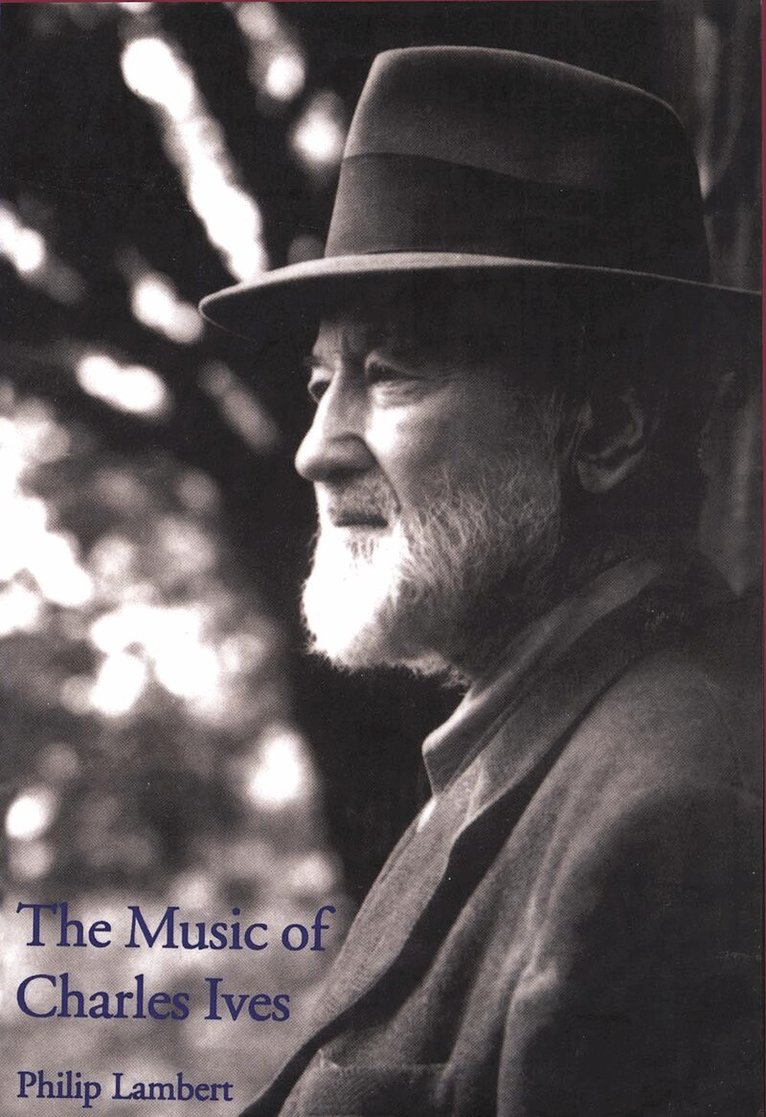
With this innovative analysis of the music of Charles Ives, Philip Lambert fills a significant gap in the literature on one of America’s most important composers. Lambert offers the first large-scale theoretical study of Ives’s repertoire, encompassing major works in all genres. He argues that systematic techniques governed Ives’s compositional language and thinking about music, even in his unconventional and apparently unstructured pieces. He portrays Ives as a composer of great diversity and complexity who nevertheless held to a single artistic vision.Using modes of analysis for post-tonal music and approaches devised specifically for the study of Ives as well, the author explains the origin, evolution, and culmination of Ives’s systematic methods. He discusses important aspects of the composer’s early training, the relation between Ives’s experimental and his concert music, Ives’s fugal and canonic techniques as the basis for his systematic music, his paradigms of procedure and transformation, and pitch relations in Ives’s music, particularly the unfinished Universe Symphony. Lambert refutes the popular image of Ives as a highly eccentric composer haphazardly casting about for arbitrarily regulated ways of generating musical material and instead portrays him as a keenly determined and resourceful artist who gradually discovered ever more powerful tools for creating remarkably original music.
679 kr
Skickas inom 5-8 vardagar
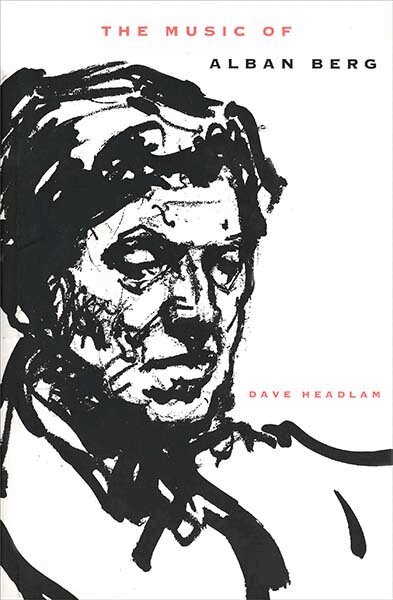
Austrian composer Alban Berg (1885-1935), along with his contemporaries Arnold Schoenberg and Anton von Webern, dramatically altered the musical landscape of the Western world. Dave Headlam offers a comprehensive analysis of Berg's music in this original book. He examines each of the composer's works—including the Piano Sonata, Opus 1, the operas Wozzeck and Lulu, and the Violin Concerto—and defines the main components of his musical language. Charting Berg's development as he progressed from late-romantic tonality to atonality and finally to his own distinctive dodecaphonic language, Headlam demonstrates with clarity and sophistication the compositional continuity that underlies all of Berg's music.Headlam closely analyzes Berg's compositional technique and the use of symmetry and cycles throughout his oeuvre. He brings into the discussion Berg's own writings as well as those of composer and musicologist George Perle; the techniques of Schoenberg, Webern, and other serialists; and aspects of pitch-class set and twelve-tone theory. Headlam contends that in his treatment of all musical elements—pitch, rhythmic, formal, and even orchestrational techniques—Berg achieved a synthesis that transcends the surface distinctions of his tonal, atonal, and twelve-tone periods, and that the cyclic basis of these chronological periods differs in degree rather than in kind. Berg's achievement of this synthesis foreshadows later developments in the work of his many musical heirs.
625 kr
Skickas inom 5-8 vardagar
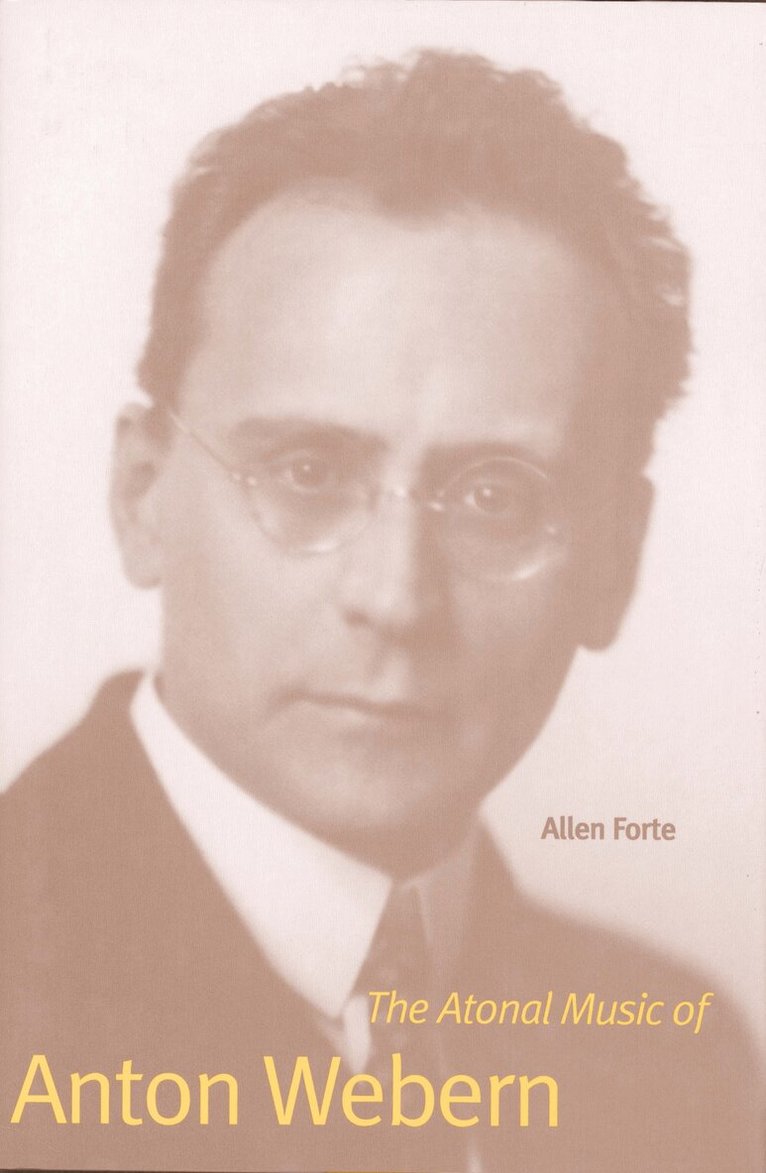
The Austrian composer Anton Webern (1883–1945) is one of the major figures of musical modernism. His mature works comprise two styles: the so-called free atonal music composed between 1907 and 1924, and the twelve-tone serial music that began in 1924 and extended through the remainder of his creative life. In this book an eminent music theorist presents the first systematic and in-depth study of the early atonal works, from the George Lieder, opus 3, through the Latin Canons, opus 16.Drawing on music-analytical procedures that he and other scholars have developed in recent years, Allen Forte argues that a single compositional system underlies all of Webern’s atonal music. Forte examines such elements as pitch, register, timbre, rhythm, form, and text setting, showing how Webern displaced the functional connections of traditional tonality to create a totally new sonic universe. Although the main thrust of the study is music-analytical in nature, Forte also considers historical context and significant biographical aspects of the individual works, as well as word-music relations in the music with text.