Computers in Biology and Medicine - Böcker
Visar alla böcker i serien Computers in Biology and Medicine. Handla med fri frakt och snabb leverans.
5 produkter
5 produkter
1 062 kr
Skickas inom 10-15 vardagar
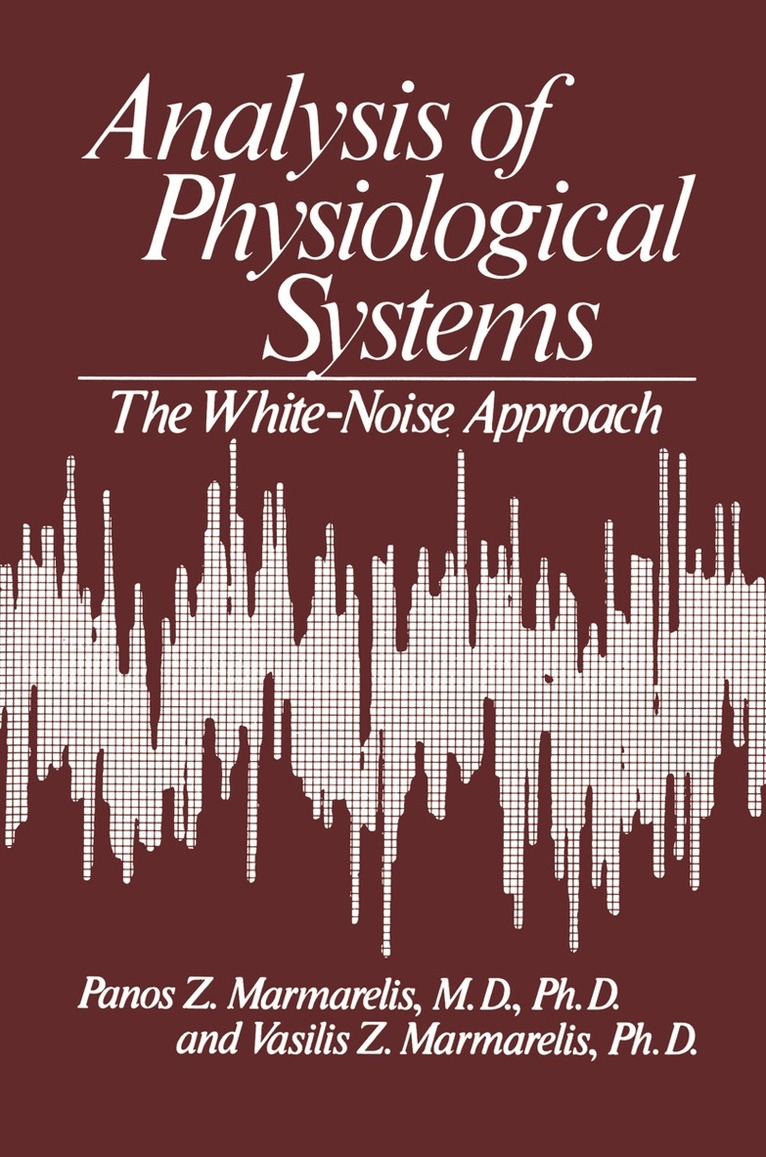
In studying physiological systems bioscientists are continually faced with the problem of providing descriptions of cause-effect relationships. This task is usually carried out through the performance of stimulus-response experiments. In the past, the design of such experiments has been ad hoc, incomplete, and certainly inefficient. Worse yet, bioscientists have failed to take advantage of advances in fields directly related to their problems (specifically, advances in the area of systems analysis). The raison d'etre of this book is to rectify this deficiency by providing the physiologist with methodological tools that will be useful to him or her in everyday labora tory encounters with physiological systems. The book was written so that it would be practical, useful, and up-to date. With this in mind, parts of it give step-by-step descriptions of in the laboratory. It is hoped that this systematic procedures to be followed will increase the usefulness of the book to the average research physiologist and, perhaps, reduce the need for in-depth knowledge of some of the associated mathematics. Even though the material deals with state-of-the art techniques in systems and signal analysis, the mathematical level has been kept low so as to be comprehensible to the average physiologist with no extensive training in mathematics. To this end, mathematical rigor is often sacrificed readily to intuitive simple arguments.
550 kr
Skickas inom 10-15 vardagar
In May 1979 the first international symposium on Computers in Critical Care and Pulmonary Medicine was held at Norwalk Hospital-Yale University School of Medicine. Scientists from eigh teen different countries participated in the program which illus trated the importance of computer applications in critical care and respiratory physiology. This book presents the proceedings of the symposium. would I like to thank Miss Nancy Smith for her untiring efforts and excellent work in typing the manuscripts. Mr. Gary Jacobson and Mr. Thomas Haller have been invaluable in the computerized preparation of the manuscripts and in the use of word processing equipment. I would also like to gratefully acknowledge the contributions made by my wife Rhoda Nair for her helpful suggestions and her as sistance in editing this book. February 1980 Sreedhar Nair v ERRATUM There is a systematic error in the Table of Contents printed on pages vii-x. The corrected Table of Contents appears below. CONTENTS Analog Computation for Evaluation of Ventilators . . . . • 1 S.W. Weitzner Ventilator Surveillance - Routine Application and Quality Control . . . . . 19 C.C. Rattenborg, R. Buccini, J. Kestner, and R. Mikula Automated Estimation of Respiratory Dead Space: 27 Tidal Volume Ratio . . . . .
534 kr
Skickas inom 10-15 vardagar
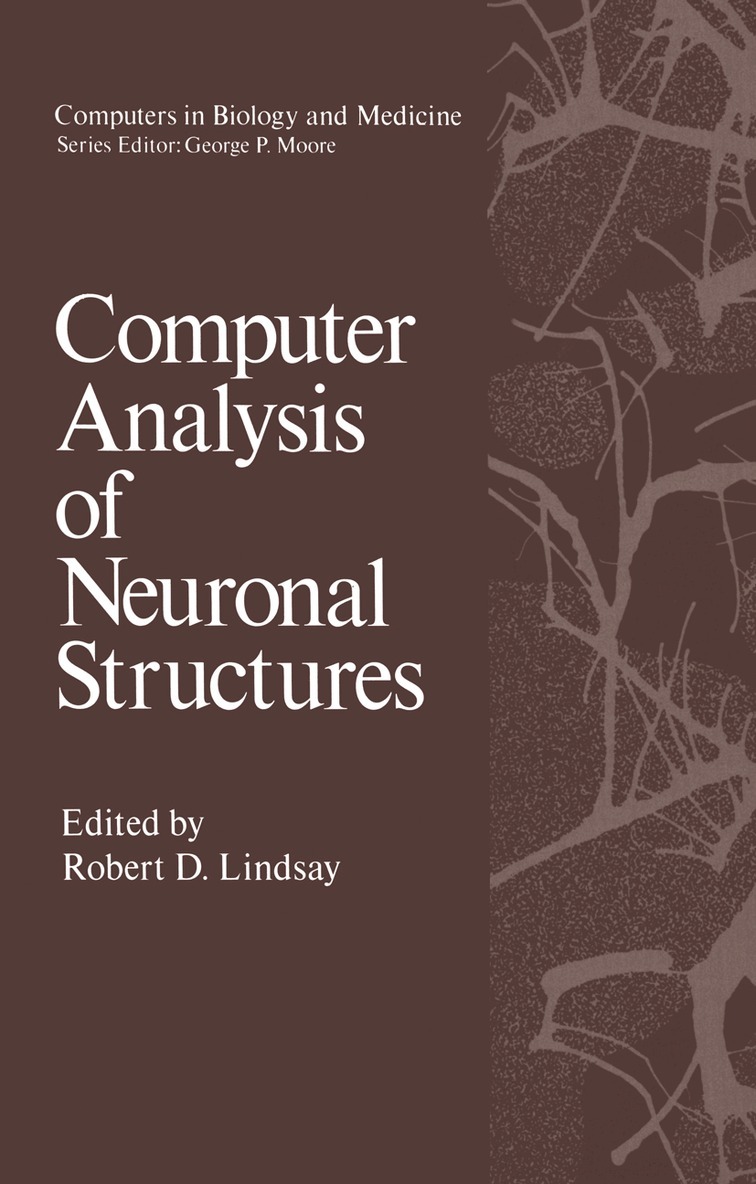
It seems particularly appropriate that this pioneering collection of papers should be dedicated to Donald Sholl since those of us who count, measure, and reconstruct elements of the neural en~emble are all very much in his debt. Sholl was certainly not the first to attempt quantification of certain aspects of brain structure. No computers were available to him for the kind of answers he sought, and some of his answers - or rather his interpretations - may not stand the test of time. But we remember him because of the questions he asked and for the reasons he asked them. At a time when the entire family of Golgi techniques was in almost total eclipse, he had the judgment to rely on them. And in a period when the canonical neuron was a perfect sphere (the enormous dendritic superstructure being almost forgotten), he was one of a very few who looked to dendrite extension and pattern as a prime clue to the overall problem of neuronal connectivity.
550 kr
Skickas inom 10-15 vardagar
This first volume is but an introduction to the growing use of computer-based systems in health-science education. It is unlikely that the intellectual or applied system constructs herein are either exhaustive of the field or immutable; growth is inevitable. For one thing, the field is still fractured and loosely organized, which is an inevitable description of an adolescent science in a rich mine of ideas. There is emerging, however, an organizing concept. A short look into the future indicates that educational system design will be dominated by a concept which, for want of a better term, we may call an "information system." Actually, this term de rives from an early New York World's Fair exhibition designed by Charles Eames entitled the "Informational Machine," in which the designer illustrated once again his insight into the future by showing how in a fundamental manner the digital computer promised to affect and to change our lives; and this change is by no means completed. Even during the publication of this volume, the basic sciences re quisite to the development of an information machine have evolved significantly. The three intellectual areas to watch are developments in artificial intelligence, graphics and man/machine interaction, and basic component and computer system design.
550 kr
Skickas inom 10-15 vardagar
The third international symposium on Critical Care and Pulmonary Medicine was held in Norwalk Hospital, Yale University School of Medicine in June 1981. This publication contains the majority of papers that were presented at the three day conference. The book deals with the use of computers in: (1) monitoring (2) pulmonary laboratory (3) anesthesia (4) database management. Extraordinary progress in the use of computers in critical care medicine and pulmonary function testing is evident in the presen tations. I would like to thank the members of the Steering Committee and the International Advisory Committee for their efforts in bring ing together many leaders in the field, and enriching the symposium with their own contributions. My special thanks to Mr. Norman Brady, President of the Norwalk Hospital, for his generous hospitality and his untiring assistance during the three days of the symposium. I would also like to thank Martin H. Floch, M.D., Chairman of the Department of Medicine, Norwalk Hospital, for his advice and support. I sincerely appreciate the cooperation and help from the members of the Section of Pulmonary Medicine and Medical Computer Science of the Norwalk Hospital. Finally I would like to thank Ms. Nancy Smith for the excellent work in the preparation of the manuscripts, and the staff of the Plenum Press for their help in publishing this volume.