Constitutional Conflicts - Böcker
Visar alla böcker i serien Constitutional Conflicts. Handla med fri frakt och snabb leverans.
12 produkter
12 produkter
332 kr
Skickas inom 7-10 vardagar
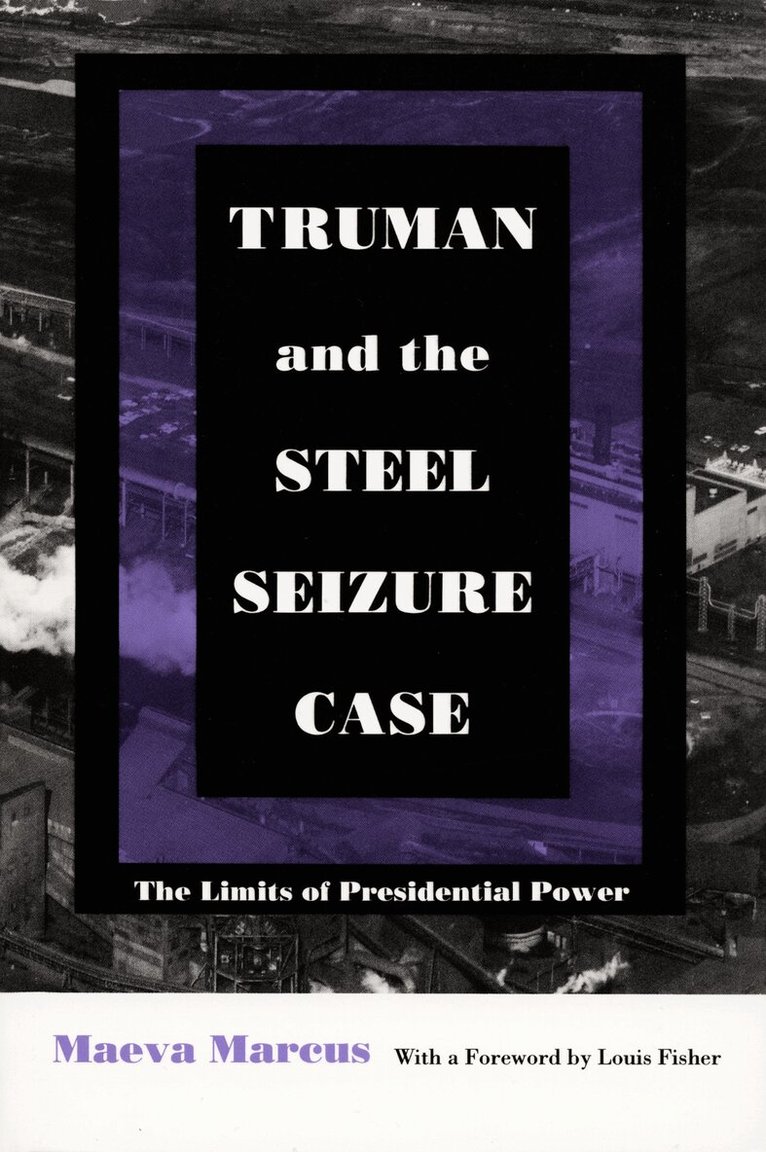
Government seizure of the nation’s strikebound steel mills on 8 April 1952 stands as one of President Harry S Truman’s most controversial actions, representing an unprecedented use of presidential power. On 8 June 1952 the United States Supreme Court invalidated Truman’s order with its monumental decision in Youngstown Sheet and Tube Co. v. Sawyer. The history and significance of this case constitute the subject of Maeva Marcus’s meticulously researched, brilliantly analyzed, and authoritative study. From Truman’s initial assertion of "inherent" executive power under the Constitution to the High Court’s seven opinions, Marcus assesses the influence of the case on the doctrine of separation of powers and, specifically, the nature and practice of executive authority. First published in 1977 (Columbia University Press), and reissued here in paperback with a new foreword by Louis Fisher, this book remains the definitive account of the Steel Seizure incident and its political and legal ramifications.
1 325 kr
Skickas inom 7-10 vardagar
The Fourteenth Amendment guarantees all citizens equal protection under the law as well as immunity from laws that deprive them of life, liberty, or property without due process of law. In Progressive Constitutionalism, Robin West develops an interpretation of this amendment that contrasts with the views, conservative and liberal, of the Rehnquist, Burger, and Warren Courts, and with the radical "antisubordinationist" account provided by the critical legal studies movement and many prominent feminist and critical race theorists. Her interpretation consists of a "substantive" argument regarding the Amendment’s core meaning, and a jurisprudential argument regarding the role of the courts and Congress in fulfilling the Amendment’s progressive promise.West shows how the "equal protection" clause, far from insulating the private spheres of culture, market, and home life, as is commonly held, directly targets abuses of power within those spheres. She develops a number of arguments for the modern relevance of this understanding, from the failure of the state to provide equal protection against private domestic violence, permitting a "private sovereignty" of patriarchal power within the home, to the the state’s failure to provide equal protection against material deprivation, allowing "private sovereignty" between economically privileged and desperate people in private markets.West’s argument extends to the "liberty" prong of the due process clause, seen here as a protection of the positive, not negative, liberty of citizens, covering rights in such typically controversial areas as welfare, education, and domestic safety. This interpretation recasts a number of contemporary constitutional issues, such as affirmative action and hate speech, and points to very different problems-notably private, unchecked criminal violence and extreme economic deprivation-as the central constitutional dilemmas of our day. Progressive Constitutionalism urges a substantive, institutional, and jurisprudential reorientation of our understanding of the Fourteenth Amendment, one that would necessarily be pursued through Congressional rather than judicial channels. In doing so, with attention to history and both feminist and critical race scholarship, it should reinvigorate our politics and our constitutional conversations-and, perhaps, point us toward a more just society.
497 kr
Skickas inom 3-6 vardagar
Despite its importance to the life of the nation and all its citizens, the Supreme Court remains a mystery to most Americans, its workings widely felt but rarely seen firsthand. In this book, journalists who cover the Court-acting as the eyes and ears of not just the American people, but the Constitution itself-give us a rare close look into its proceedings, the people behind them, and the complex, often fascinating ways in which justice is ultimately served. Their narratives form an intimate account of a year in the life of the Supreme Court.The cases heard by the Surpreme Court are, first and foremost, disputes involving real people with actual stories. The accidents and twists of circumstance that have brought these people to the last resort of litigation can make for compelling drama. The contributors to this volume bring these dramatic stories to life, using them as a backdrop for the larger issues of law and social policy that constitute the Court’s business: abortion, separation of church and state, freedom of speech, the right of privacy, crime, violence, discrimination, and the death penalty. In the course of these narratives, the authors describe the personalities and jurisprudential leanings of the various Justices, explaining how the interplay of these characters and theories about the Constitution interact to influence the Court’s decisions.Highly readable and richly informative, this book offers an unusually clear and comprehensive portrait of one of the most influential institutions in modern American life.
497 kr
Skickas inom 3-6 vardagar
This timely and accessible volume takes a fresh approach to a question of increasing public concern: whether or not the federal government should regulate media violence. In Violence as Obscenity, Kevin W. Saunders boldly calls into question the assumption that violent material is protected by the First Amendment. Citing a recognized exception to the First Amendment that allows for the regulation of obscene material, he seeks to expand the definition of obscenity to include explicit and offensive depictions of violence. Saunders examines the public debate on media violence, the arguments of professional and public interest groups urging governmental action, and the media and the ACLU’s desire for self-regulation. Citing research that links violence in the media to actual violence, Saunders argues that a present danger to public safety may be reduced by invoking the existing law on obscenity. Reviewing the justifications of that law, he finds that not only is the legal history relied on by the Supreme Court inadequate to distinguish violence from sex, but also many of the justifications apply more forcefully to instances of violence than to sexually explicit material that has been ruled obscene. Saunders also examines the actions that Congress, states, and municipalities have taken to regulate media violence as well as the legal limitations imposed on such regulations by the First Amendment protections given to speech and the press. In discussing the current operation of the obscenity exception and confronting the issue of censorship, he advocates adapting to the regulation of violent material the doctrine of variable obscenity, which applies a different standard for material aimed at youth, and the doctrine of indecency, which allows for federal regulation of broadcast material. Cogently and passionately argued, Violence as Obscenity will attract scholars of American constitutional law and mass communication, and general readers moved by current debates about media violence, regulation, and censorship.
333 kr
Skickas inom 7-10 vardagar
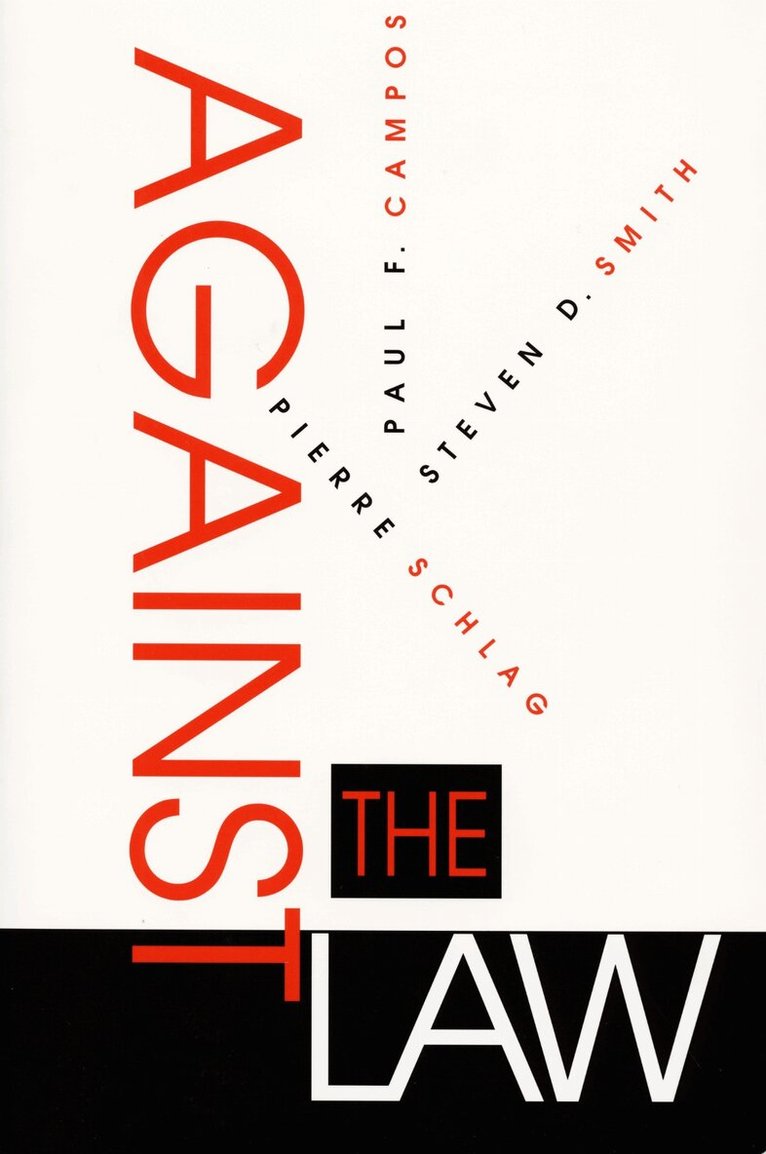
A fundamental critique of American law and legal thought, Against the Law consists of a series of essays written from three different perspectives that coalesce into a deep criticism of contemporary legal culture. Paul F. Campos, Pierre Schlag, and Steven D. Smith challenge the conventional representations of the legal system that are articulated and defended by American legal scholars. Unorthodox, irreverent, and provocative, Against the Law demonstrates that for many in the legal community, law has become a kind of substitute religion-an essentially idolatrous practice composed of systematic self-misrepresentation and self-deception.Linked by a persistent inquiry into the nature and identity of “the law,” these essays are informed by the conviction that the conventional representations of law, both in law schools and the courts, cannot be taken at face value-that the law, as commonly conceived, makes no sense. The authors argue that the relentlessly normative prescriptions of American legal thinkers are frequently futile and, indeed, often pernicious. They also argue that the failure to recognize the role that authorship must play in the production of legal thought plagues both the teaching and the practice of American law. Ranging from the institutional to the psychological and metaphysical deficiencies of the American legal system, the depth of criticism offered by Against the Law is unprecedented. In a departure from the nearly universal legitimating and reformist tendencies of American legal thought, this book will be of interest not only to the legal academics under attack in the book, but also to sociologists, historians, and social theorists. More particularly, it will engage all the American lawyers who suspect that there is something very wrong with the nature and direction of their profession, law students who anticipate becoming part of that profession, and those readers concerned with the status of the American legal system.
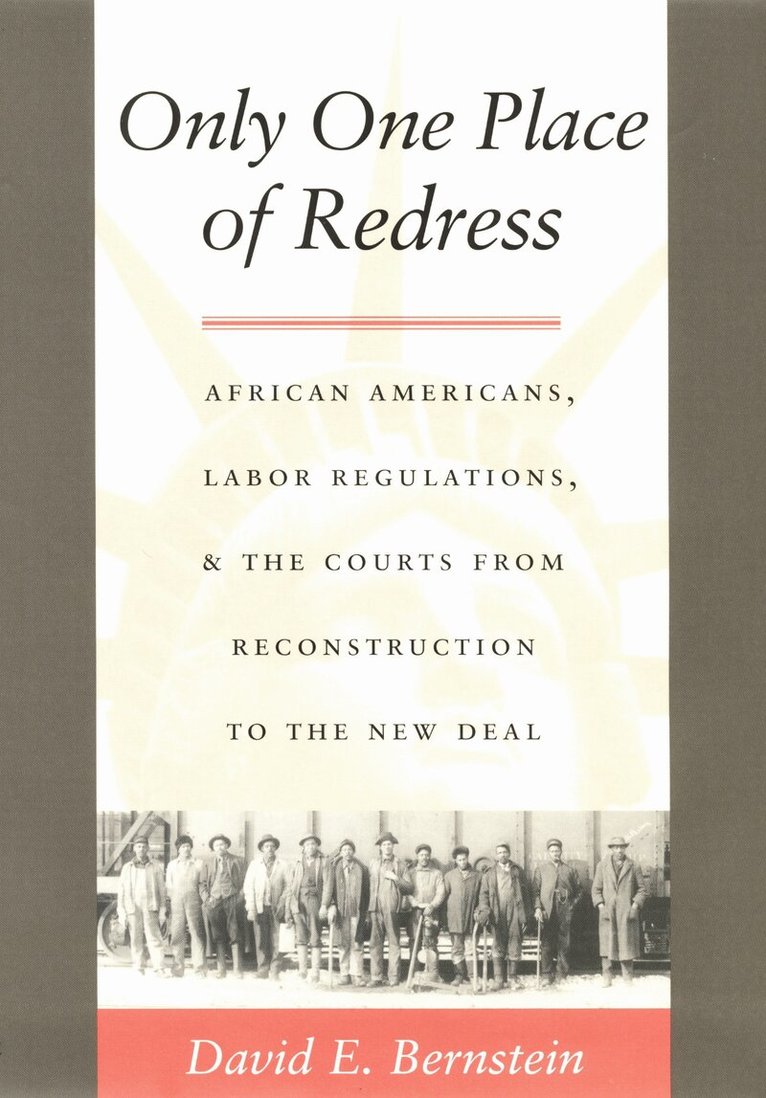
Only One Place of Redress
African Americans, Labor Regulations, and the Courts from Reconstruction to the New Deal
Inbunden, Engelska, 2001
603 kr
Skickas inom 7-10 vardagar
In Only One Place of Redress David E. Bernstein offers a bold reinterpretation of American legal history: he argues that American labor and occupational laws, enacted by state and federal governments after the Civil War and into the twentieth century, benefited dominant groups in society to the detriment of those who lacked political power. Both intentionally and incidentally, claims Bernstein, these laws restricted in particular the job mobility and economic opportunity of blacks.A pioneer in applying the insights of public choice theory to legal history, Bernstein contends that the much-maligned jurisprudence of the Lochner era-with its emphasis on freedom of contract and private market ordering-actually discouraged discrimination and assisted groups with little political clout. To support this thesis he examines the motivation behind and practical impact of laws restricting interstate labor recruitment, occupational licensing laws, railroad labor laws, minimum wage statutes, the Davis-Bacon Act, and New Deal collective bargaining. He concludes that the ultimate failure of Lochnerism-and the triumph of the regulatory state-not only strengthened racially exclusive labor unions but contributed to a massive loss of employment opportunities for African Americans, the effects of which continue to this day. Scholars and students interested in race relations, labor law, and legal or constitutional history will be fascinated by Bernstein’s daring-and controversial-argument.
624 kr
Skickas inom 3-6 vardagar
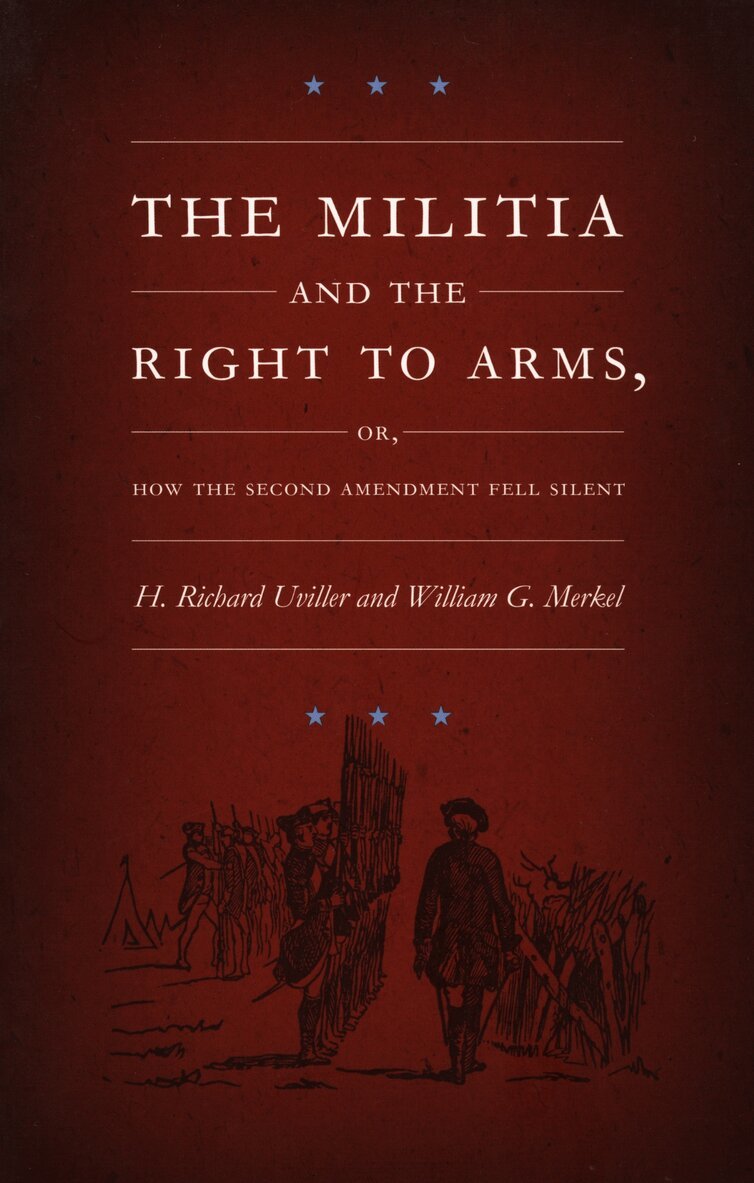
"A well regulated Militia, being necessary to the security of a free State, the right of the people to keep and bear Arms, shall not be infringed."-Amendment II, United States Constitution The Second Amendment is regularly invoked by opponents of gun control, but H. Richard Uviller and William G. Merkel argue the amendment has nothing to contribute to debates over private access to firearms. In The Militia and the Right to Arms, or, How the Second Amendment Fell Silent, Uviller and Merkel show how postratification history has sapped the Second Amendment of its meaning. Starting with a detailed examination of the political principles of the founders, the authors build the case that the amendment's second clause (declaring the right to bear arms) depends entirely on the premise set out in the amendment's first clause (stating that a well-regulated militia is necessary to the security of a free state). The authors demonstrate that the militia envisioned by the framers of the Bill of Rights in 1789 has long since disappeared from the American scene, leaving no lineal descendants. The constitutional right to bear arms, Uviller and Merkel conclude, has evaporated along with the universal militia of the eighteenth century. Using records from the founding era, Uviller and Merkel explain that the Second Amendment was motivated by a deep fear of standing armies. To guard against the debilitating effects of militarism, and against the ultimate danger of a would-be Caesar at the head of a great professional army, the founders sought to guarantee the existence of well-trained, self-armed, locally commanded citizen militia, in which service was compulsory. By its very existence, this militia would obviate the need for a large and dangerous regular army. But as Uviller and Merkel describe the gradual rise of the United States Army and the National Guard over the last two hundred years, they highlight the nation's abandonment of the militia ideal so dear to the framers. The authors discuss issues of constitutional interpretation in light of radically changed social circumstances and contrast their position with the arguments of a diverse group of constitutional scholars including Sanford Levinson, Carl Bogus, William Van Alstyne, and Akhil Reed Amar. Espousing a centrist position in the polarized arena of Second Amendment interpretation, this book will appeal to those wanting to know more about the amendment's relevance to the issue of gun control, as well as to those interested in the constitutional and political context of America's military history.
362 kr
Skickas inom 7-10 vardagar
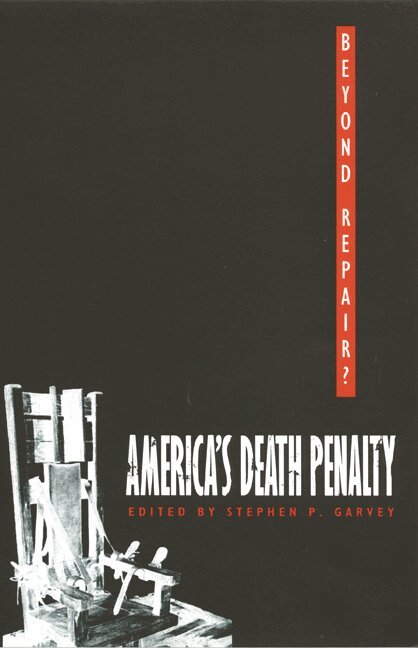
Can the death penalty be administered in a just way-without executing the innocent, without regard to race, and without arbitrariness? How does capital punishment in the United States fit with international human rights law? These are among the questions that leading legal scholars and journalists explore in Beyond Repair? All new, the essays in this collection focus on the period since 1976, when the Supreme Court held that capital punishment, in and of itself, does not violate the Constitution. In addition to reflecting on the most recent developments in the law, the contributors draw on empirical research to consider connections between newly available data and modern American death penalty procedures. A number of the essays scrutinize thinking about capital punishment. They examine why, following almost two decades of strong public support for the death penalty, public opinion in favor of it has recently begun to decline. Beyond Repair? presents some of the findings of the Capital Jury Project, a nationwide research initiative that has interviewed over one thousand people who served as jurors in capital trials. It looks at what goes through the minds of jurors asked to consider imposing the death penalty, how qualified they are to make such an important decision, and how well they understand the judge’s instructions. Contributors also investigate the risk of executing the innocent, the role that race plays in determining which defendants are sentenced to death, and the effect of expanded restrictions on access to federal appellate relief. The postscript contemplates the peculiarities of our contemporary system of capital punishment, including the alarming variance in execution rates from state to state.Filled with current insights and analysis, Beyond Repair? will provide valuable information to attorneys, political scientists, criminologists, and all those wanting to participate knowledgeably in the debates about the death penalty in America.Contributors. Ken Armstrong, John H. Blume, Theodore Eisenberg, Phoebe C. Ellsworth, Stephen P. Garvey, Samuel R. Gross, Sheri Lynn Johnson, Steve Mills, William A. Schabas, Larry W. Yackle, Franklin E. Zimring
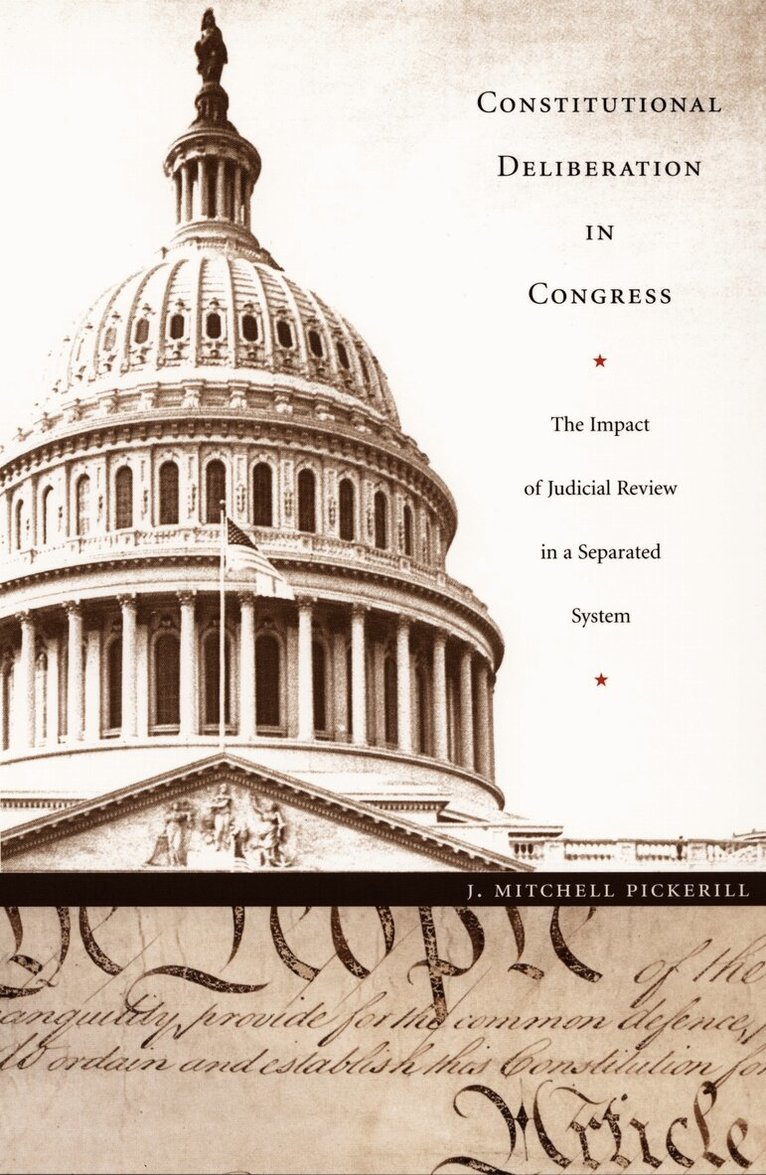
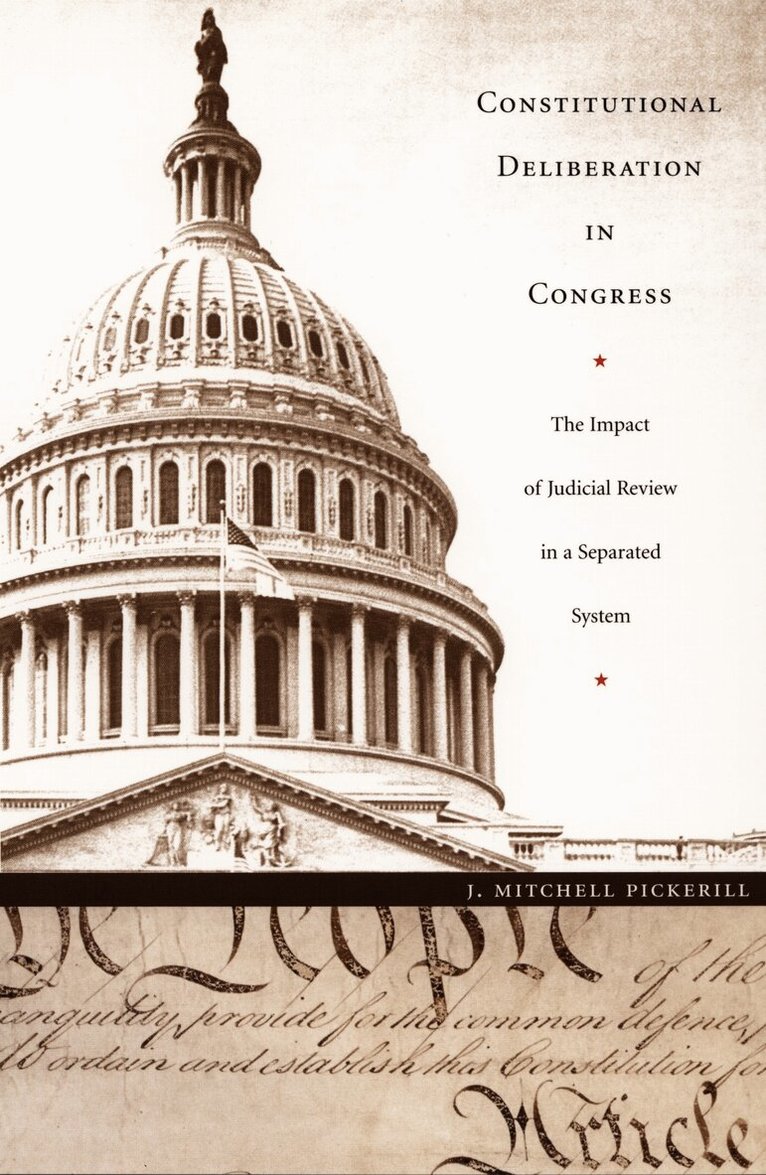
Constitutional Deliberation in Congress
The Impact of Judicial Review in a Separated System
Häftad, Engelska, 2004
297 kr
Skickas inom 7-10 vardagar
In Constitutional Deliberation in Congress J. Mitchell Pickerill analyzes the impact of the Supreme Court’s constitutional decisions on Congressional debates and statutory language. Based on a thorough examination of how Congress responds to key Court rulings and strategizes in anticipation of them, Pickerill argues that judicial review-or the possibility of it-encourages Congressional attention to constitutional issues. Revealing critical aspects of how laws are made, revised, and refined within the separated system of government of the United States, he makes an important contribution to “constitutionalism outside the courts” debates.Pickerill combines legislative histories, extensive empirical findings, and interviews with current and former members of Congress, congressional staff, and others. He examines data related to all of the federal legislation struck down by the Supreme Court from the beginning of the Warren Court in 1953 through the 1996–97 term of the Rehnquist Court. By looking at the legislative histories of Congressional acts that invoked the Commerce Clause and presented Tenth Amendment conflicts-such as the Child Labor Act (1916), the Civil Rights Act (1965), the Gun-Free School Zones Act (1990), and the Brady Bill (1994)-Pickerill illuminates how Congressional deliberation over newly proposed legislation is shaped by the possibility of judicial review. The Court’s invalidation of the Gun-Free School Zones Act in its 1995 ruling United States v. Lopez signaled an increased judicial activism regarding issues of federalism. Pickerill examines that case and compares congressional debate over constitutional issues in key pieces of legislation that preceded and followed it: the Violence Against Women Act of 1994 and the Hate Crimes Prevention Act of 1997. He shows that Congressional attention to federalism increased in the 1990s along with the Court’s greater scrutiny.
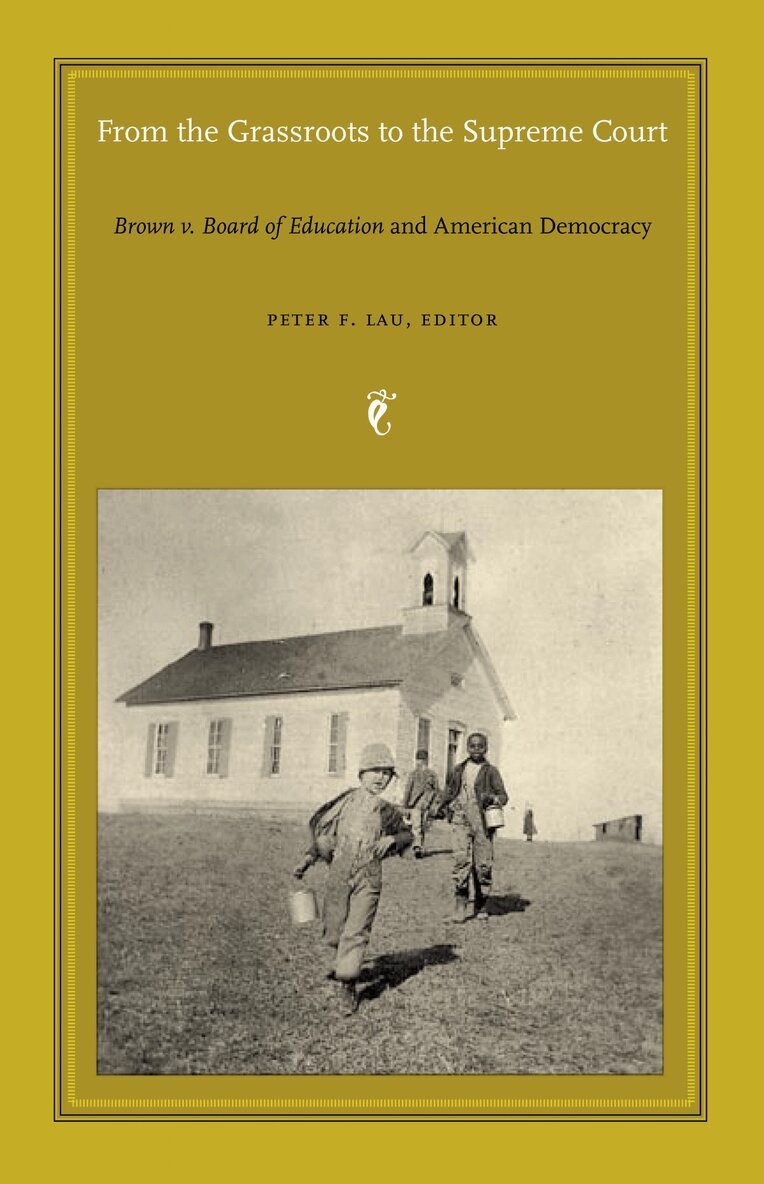
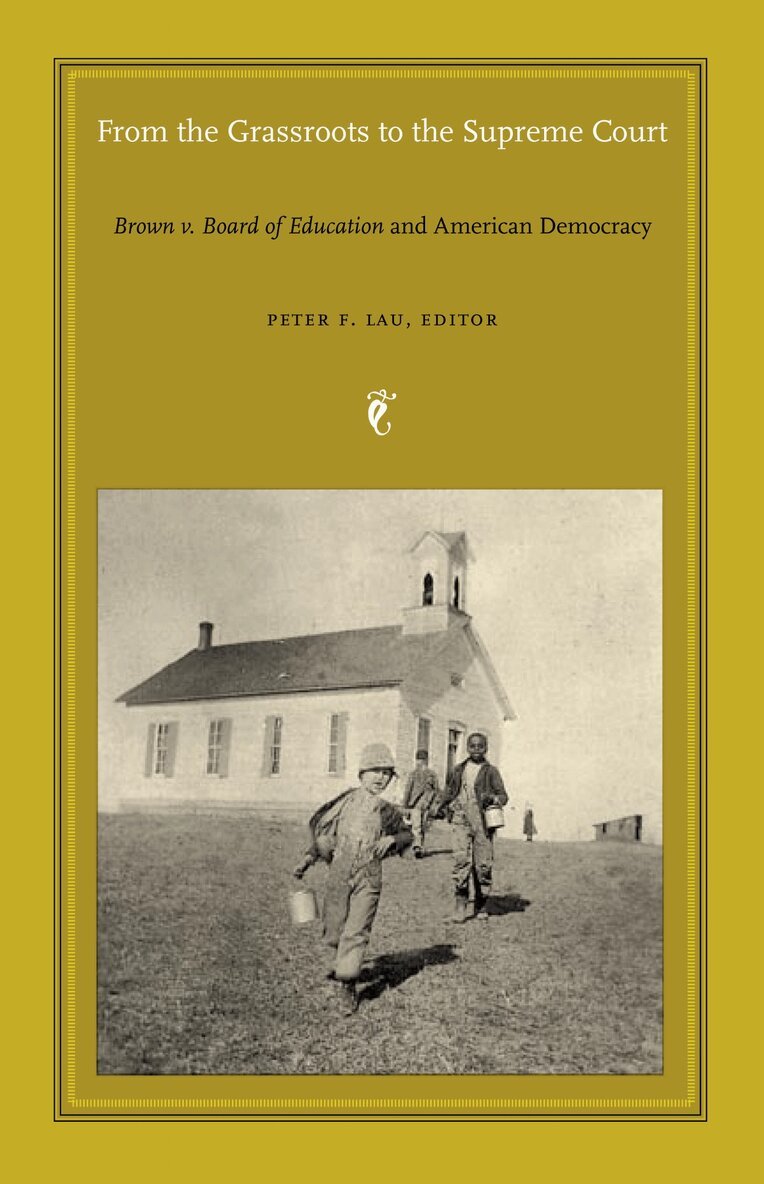
From the Grassroots to the Supreme Court
Brown V. Board of Education and American Democracy
Häftad, Engelska, 2004
382 kr
Skickas inom 7-10 vardagar
Perhaps more than any other Supreme Court ruling, Brown v. Board of Education, the 1954 decision declaring the segregation of public schools unconstitutional, highlighted both the possibilities and the limitations of American democracy. This collection of sixteen original essays by historians and legal scholars takes the occasion of the fiftieth anniversary of Brown to reconsider the history and legacy of that landmark decision. From the Grassroots to the Supreme Court juxtaposes oral histories and legal analysis to provide a nuanced look at how men and women understood Brown and sought to make the decision meaningful in their own lives.The contributors illuminate the breadth of developments that led to Brown, from the parallel struggles for social justice among African Americans in the South and Mexican, Asian, and Native Americans in the West during the late nineteenth century to the political and legal strategies implemented by the National Association for the Advancement of Colored People (naacp) in the twentieth century. Describing the decision’s impact on local communities, essayists explore the conflict among African Americans over the implementation of Brown in Atlanta’s public schools as well as understandings of the ruling and its relevance among Puerto Rican migrants in New York City. Assessing the legacy of Brown today, contributors analyze its influence on contemporary law, African American thought, and educational opportunities for minority children.ContributorsTomiko Brown-NaginDavison M. DouglasRaymond GavinsLaurie B. GreenChristina GreeneBlair L. M. KelleyMichael J. KlarmanPeter F. LauMadeleine E. LopezWaldo E. Martin Jr.Vicki L. RuizChristopher SchmidtLarissa M. SmithPatricia SullivanKara Miles TurnerMark V. Tushnet
333 kr
Skickas inom 7-10 vardagar
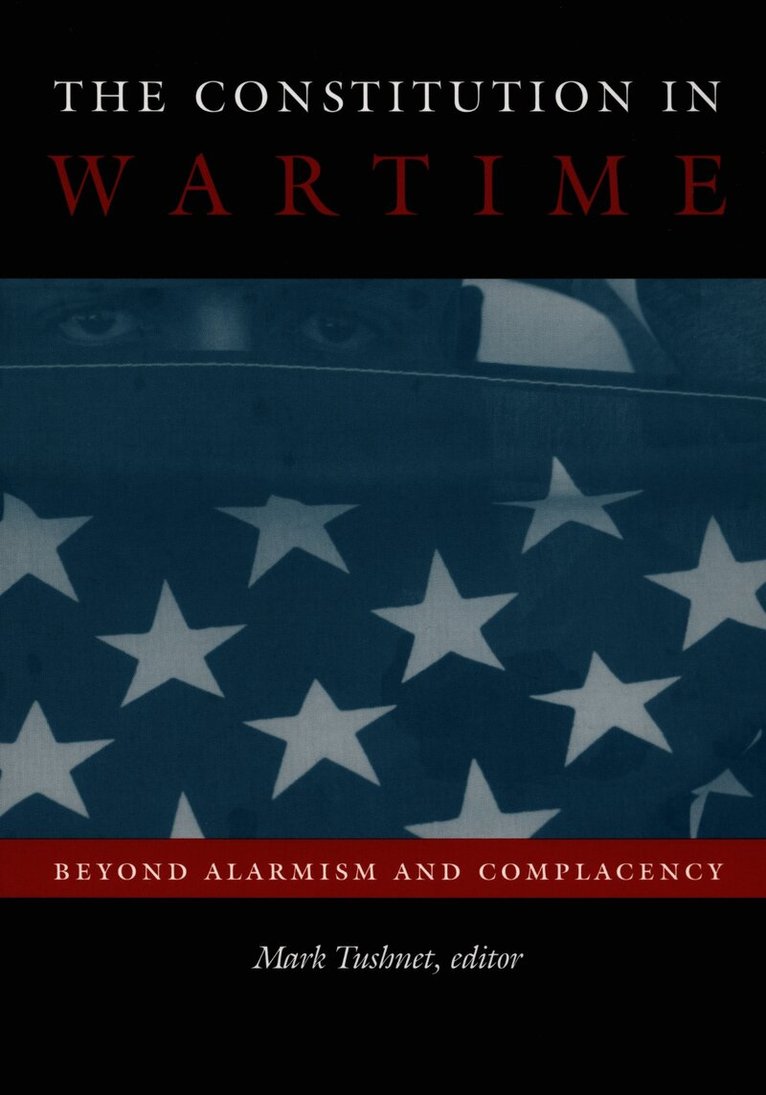
Most recent discussion of the United States Constitution and war-both the war on terrorism and the war in Iraq-has been dominated by two diametrically opposed views: the alarmism of those who see many current policies as portending gross restrictions on American civil liberties, and the complacency of those who see these same policies as entirely reasonable accommodations to the new realities of national security. Whatever their contributions to the public discussion and policy-making processes, these voices contribute little to an understanding of the real constitutional issues raised by war. Providing the historical and legal context needed to assess competing claims, The Constitution in Wartime identifies and explains the complexities of the important constitutional issues brought to the fore by wartime actions and policies. Twelve prominent legal scholars and political scientists combine broad overviews of U.S. history and contemporary policy with detailed yet accessible analyses of legal issues of pressing concern today.Some of the essays are broad in scope, reflecting on national character, patriotism, and political theory; exploring whether war and republican government are compatible; and considering in what sense we can be said to be in wartime circumstances today. Others are more specific, examining the roles of Congress, the presidency, the courts, and the international legal community. Throughout the collection, balanced, unbiased analysis leads to some surprising conclusions, one of which is that wartime conditions have sometimes increased, rather than curtailed, civil rights and civil liberties. For instance, during the cold war, government officials regarded measures aimed at expanding African Americans’ freedom at home as crucial to improving America’s image abroad.Contributors. Sotirios Barber, Mark Brandon, James E. Fleming, Mark Graber, Samuel Issacharoff, David Luban, Richard H. Pildes, Eric Posner, Peter Spiro, William Michael Treanor, Mark Tushnet, Adrian Vermeule
333 kr
Skickas inom 7-10 vardagar
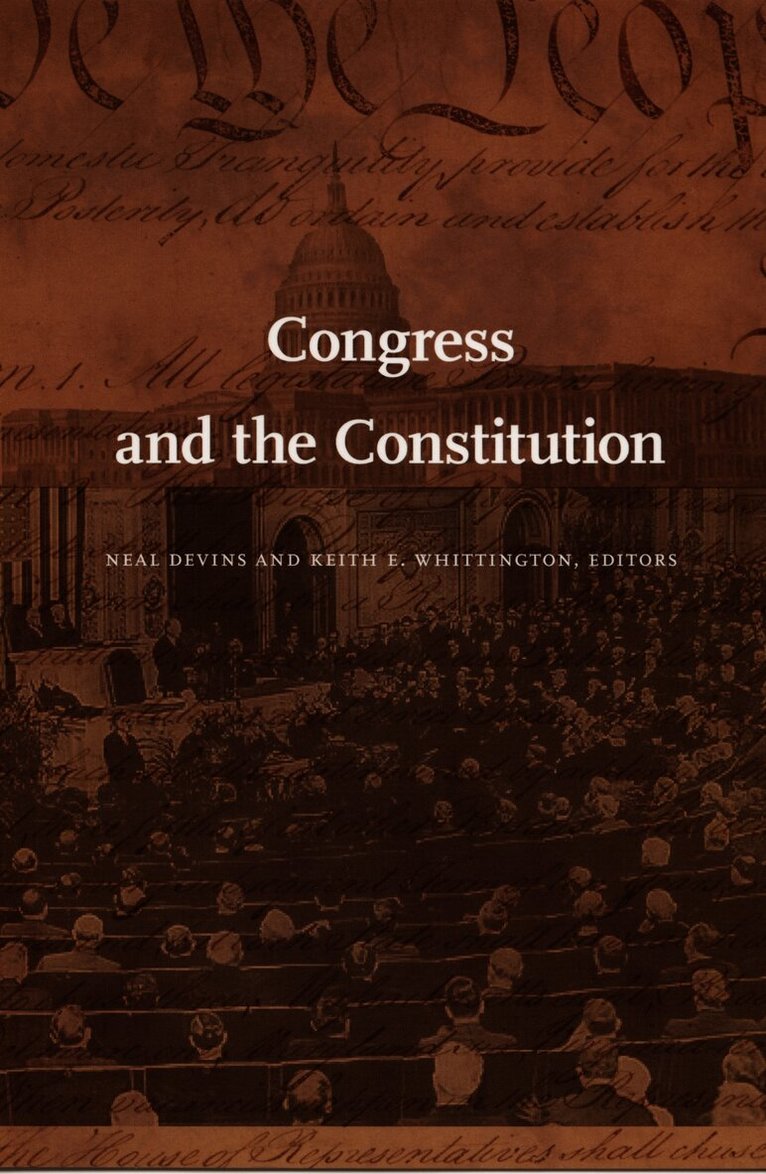
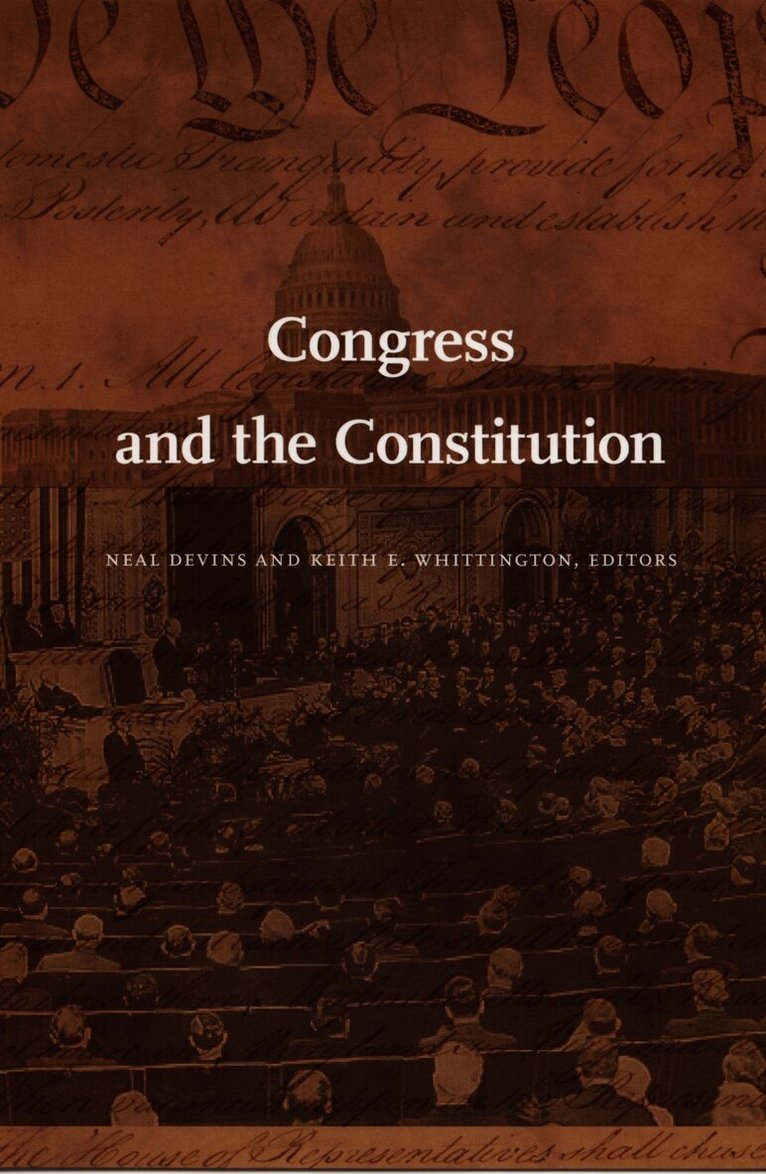
For more than a decade, the U.S. Supreme Court has turned a skeptical eye toward Congress. Distrustful of Congress’s capacity to respect constitutional boundaries, the Court has recently overturned federal legislation at a historically unprecedented rate. This intensified judicial scrutiny highlights the need for increased attention to how Congress approaches constitutional issues. In this important collection, leading scholars in law and political science examine the role of Congress in constitutional interpretation, demonstrating how to better integrate the legislative branch into understandings of constitutional practice.Several contributors offer wide-ranging accounts of the workings of Congress. They look at lawmakers’ attitudes toward Congress’s role as a constitutional interpreter, the offices within Congress that help lawmakers learn about constitutional issues, Congress’s willingness to use its confirmation power to shape constitutional decisions by both the executive and the courts, and the frequency with which congressional committees take constitutional questions into account. Other contributors address congressional deliberation, paying particular attention to whether Congress’s constitutional interpretations are sound. Still others examine how Congress and the courts should respond to one another’s decisions, suggesting how the courts should evaluate Congress’s work and considering how lawmakers respond to Court decisions that strike down federal legislation. While some essayists are inclined to evaluate Congress’s constitutional interpretation positively, others argue that it could be improved and suggest institutional and procedural reforms toward that end. Whatever their conclusions, all of the essays underscore the pervasive and crucial role that Congress plays in shaping the meaning of the Constitution.Contributors. David P. Currie, Neal Devins, William N. Eskridge Jr.. John Ferejohn, Louis Fisher, Elizabeth Garrett, Michael J. Gerhardt, Michael J. Klarman, Bruce G. Peabody, J. Mitchell Pickerill, Barbara Sinclair, Mark Tushnet, Adrian Vermeule, Keith E. Whittington, John C. Yoo