Contemporary Ethical Debates - Böcker
Visar alla böcker i serien Contemporary Ethical Debates. Handla med fri frakt och snabb leverans.
5 produkter
5 produkter
397 kr
Skickas inom 7-10 vardagar
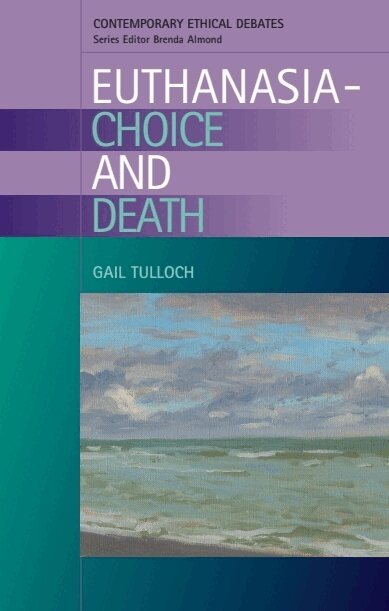
The pressing and universally relevant issue of euthanasia is debated in this volume. Euthanasia has become increasingly contentious as populations age, and medical and scientific advances continue to transform and extend life. Euthanasia - Choice and Death examines the key philosophical arguments that have underpinned thinking and practice up till now: the centrality of choice to our notion of the human being, and the challenge of changes to our concept of death in the face of medical, scientific and technological advances. Gail Tulloch develops a conception of dignity that does not depend on religious assumptions and can promote a broad ethical consensus in a liberal democracy. Examination of landmark cases and the approaches adopted by key countries - the U.S.A., the U.K., the Netherlands, and Australia - ground the book.
1 454 kr
Skickas inom 7-10 vardagar
The pressing and universally relevant issue of euthanasia is debated in this volume. Euthanasia has become increasingly contentious as populations age, and medical and scientific advances continue to transform and extend life. Euthanasia - Choice and Death examines the key philosophical arguments that have underpinned thinking and practice up till now: the centrality of choice to our notion of the human being, and the challenge of changes to our concept of death in the face of medical, scientific and technological advances. Gail Tulloch develops a conception of dignity that does not depend on religious assumptions and can promote a broad ethical consensus in a liberal democracy. Examination of landmark cases and the approaches adopted by key countries - the U.S.A., the U.K., the Netherlands, and Australia - ground the book.
936 kr
Skickas inom 11-20 vardagar
This book examines the ethical problems with using donated sperm, eggs and embryos, known collectively as "donor conception". In addition to delineating the existing arguments, it introduces new thinking and clear analysis into a debate which has hitherto been the preserve of professional groups with their own cultures and perspectives. It covers: *Details of the history and practice of donor conception in the UK and overseas. *The argument that donor conception is a social experiment whose secrecy makes its results impossible to determine. *The evidence from adoption that genetic relationships are of fundamental importance to human beings, and the resulting likelihood that donor-conceived people are being significantly damaged. *The philosophical arguments that are used to justify donor conception even if damage is being caused. These arguments are examined in detail and found to be unconvincing. *The ideologies in society that make the medium-term continuation of donor conception inevitable. *The likely long-term outcome, which is a reassessment by society both of donor conception and of the underlying ideologies.This is a readable text in a complex area, suitable for undergraduates, academic researchers and the general reader.
1 391 kr
Skickas inom 7-10 vardagar
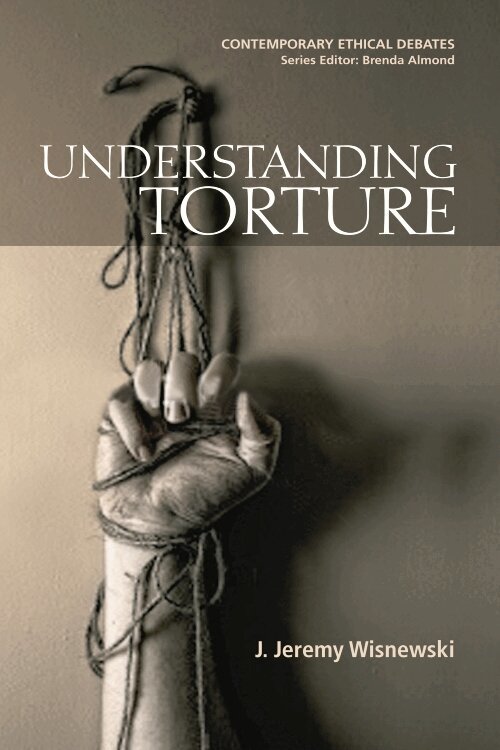
Despite Victor Hugo's proclamation (in the 19th-century) that torture no longer exists, we find it in virtually every corner of the world - even now, even in those nations that claim to be paradigms of civility.In this important new book, J. Jeremy Wisnewski examines and explains the moral dimensions of this perennial practice, paying careful attention to what lessons torture can teach us about our own moral psychology. Why is it that torture still exists in a world where it is routinely regarded as immoral? Is it possible to eliminate torture, and if so, how? What exactly does it mean to call something 'torture,' and is it always morally reprehensible?Arguments in favour of torture abound, but Wisnewski contends that there are powerful arguments for a universal prohibition against torture. By systematically exposing the weaknesses of the dominant arguments for torture, drawing on resources in both analytic and continental philosophy, as well as relevant empirical literature in psychology, Wisnewski aims to provide an over-arching account of torture: what it is, why it's wrong, and why even the most civilized people can nevertheless engage in it.
402 kr
Skickas inom 11-20 vardagar
Despite Victor Hugo's proclamation (in the 19th-century) that torture no longer exists, we find it in virtually every corner of the world - even now, even in those nations that claim to be paradigms of civility.In this important new book, J. Jeremy Wisnewski examines and explains the moral dimensions of this perennial practice, paying careful attention to what lessons torture can teach us about our own moral psychology. Why is it that torture still exists in a world where it is routinely regarded as immoral? Is it possible to eliminate torture, and if so, how? What exactly does it mean to call something 'torture,' and is it always morally reprehensible?Arguments in favour of torture abound, but Wisnewski contends that there are powerful arguments for a universal prohibition against torture. By systematically exposing the weaknesses of the dominant arguments for torture, drawing on resources in both analytic and continental philosophy, as well as relevant empirical literature in psychology, Wisnewski aims to provide an over-arching account of torture: what it is, why it's wrong, and why even the most civilized people can nevertheless engage in it.