Contributions to the Study of American Literature – serie
Visar alla böcker i serien Contributions to the Study of American Literature. Handla med fri frakt och snabb leverans.
8 produkter
8 produkter
E-bok
PDF, Engelska, 20001 305 kr
Läs direkt efter köp
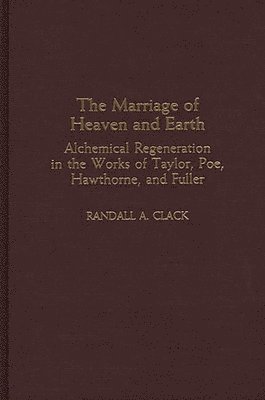
From the Middle Ages to the close of the 17th century, alchemy was fundamental to Western culture, as scores of experimenters sought to change lead into gold. Though its significance declined with the rise of chemistry, alchemy continued to captivate the imagination of writers and its images still appear in modern creative works. This book examines the literary representation of alchemical theory and the metaphor of alchemical regeneration in the works of Edward Taylor, Edgar Allan Poe, Nathaniel Hawthorne, and Margaret Fuller.While Taylor used alchemical metaphors to illustrate the redeeming grace of God upon the soul, these same metaphors were used by Poe, Hawthorne, and Fuller to depict a broader concept of redemption. These later writers used alchemical imagery to describe both the regeneration of the individual and the possible transformation of society. For Poe, alchemy became a metaphor for the transforming power of imagination; for Hawthorne, it became a means of representing the redeeming power of love; for Fuller, it figured the reconciliation of gender opposites. Thus these four American writers incorporated the idea of regeneration in their works, and the tropes and metaphors of the medieval alchemists provided a fascinating way of imagining the transformative process.
E-bok
PDF, Engelska, 19991 260 kr
Läs direkt efter köp
The interplay between solitude and society was a particularly persistent theme in nineteenth-century American literature, though writers approached this theme in different ways. Poe explored the metaphysical significance of isolation and held solitude in high esteem; Hawthorne viewed the theme in moral terms and examined the obligation of each individual to the larger community; and Emerson maintained that the contradictory states of self-reliance and solidarity are fundamental to human happiness. Herman Melville emerged with an ontological response to this issue. Questioning the nature of being, he argued that humans are essentially isolated creatures. While he grants that we are free to choose how we conduct our lives, whether in solitude or in society, we cannot escape the essential condition of our alienation. Thus in Moby-Dick, he coins the term Isolato to signify the inherent separateness of all individuals. Writing some fifty years later, Edith Wharton reached the same conclusion. This book argues that Wharton's views on solitude and society were strongly parallel to those of Melville.Scholars have generally held that Wharton was primarily influenced by the great English, French, and Russian writers of the nineteenth century; and that with the exception of Walt Whitman, Ralph Waldo Emerson, and Henry James, she neglected the influence of American literature almost entirely. This study demonstrates that Wharton read a significant portion of Melville's writings, that she reflected on the nature and achievement of his works, and that her consideration of his importance emerged during very significant moments in her life, when she was forced to grapple with her own place as an individual in relation to a larger community. Though Melville and Wharton initially seem disparate, this book shows that they had much in common. By studying the two authors side by side, this volume reveals that they shared a similar way of seeing the world, particularly with respect to their considerations of solitude and society. Through their solitary characters, Melville and Wharton question the relationship of self and society and thus engage a universal problem of special interest to the nineteenth century.
E-bok
PDF, Engelska, 20001 008 kr
Läs direkt efter köp
The volume approaches Greeleys novels by comparing him to the 19th-century French writer Honoré de Balzac. A prolific and popular author, Balzac recorded his milieu in tremendous detail, created a fictional universe peopled by hundreds of characters, and explored the role of Catholicism in his world. Because of his training as a sociologist, Greeley brings to his novels a thorough knowledge of popular culture and social theory. And because of his experience as a Roman Catholic priest, he has gained special knowledge of vice, virtue, and the workings of the Church. Like Balzac—now a major canonical author—Greeley has created a world of numerous fictional persons, mapped the details of his culture, and explored the place of Catholicism in contemporary life.
E-bok
PDF, Engelska, 20021 260 kr
Läs direkt efter köp
In America, the long 1950s were marked by an intense skepticism toward utopian alternatives to the existing capitalist order. This skepticism was closely related to the climate of the Cold War, in which the demonization of socialism contributed to a dismissal of all alternatives to capitalism. This book studies how American novels and films of the long 1950s reflect the loss of the utopian imagination and mirror the growing concern that capitalism brought routinization, alienation, and other dehumanizing consequences. The volume relates the decline of the utopian vision to the rise of late capitalism, with its expanding globalization and consumerism, and to the beginnings of postmodernism.In addition to well-known literary novels, such as Nabokov's Lolita, Booker explores a large body of leftist fiction, popular novels, and the films of Alfred Hitchcock and Walt Disney. The book argues that while the canonical novels of the period employ a utopian aesthetic, that aesthetic tends to be very weak and is not reinforced by content. The leftist novels, on the other hand, employ a realist aesthetic but are utopian in their exploration of alternatives to capitalism. The study concludes that the utopian energies in cultural productions of the long 1950s are very weak, and that these works tend to dismiss utopian thinking as na^Dive or even sinister. The weak utopianism in these works tends to be reflected in characteristics associated with postmodernism.
Inbunden, Engelska, 2000
1 205 kr
Skickas inom 10-15 vardagar
From the Middle Ages to the close of the 17th century, alchemy was fundamental to Western culture, as scores of experimenters sought to change lead into gold. Though its significance declined with the rise of chemistry, alchemy continued to captivate the imagination of writers and its images still appear in modern creative works. This book examines the literary representation of alchemical theory and the metaphor of alchemical regeneration in the works of Edward Taylor, Edgar Allan Poe, Nathaniel Hawthorne, and Margaret Fuller.While Taylor used alchemical metaphors to illustrate the redeeming grace of God upon the soul, these same metaphors were used by Poe, Hawthorne, and Fuller to depict a broader concept of redemption. These later writers used alchemical imagery to describe both the regeneration of the individual and the possible transformation of society. For Poe, alchemy became a metaphor for the transforming power of imagination; for Hawthorne, it became a means of representing the redeeming power of love; for Fuller, it figured the reconciliation of gender opposites. Thus these four American writers incorporated the idea of regeneration in their works, and the tropes and metaphors of the medieval alchemists provided a fascinating way of imagining the transformative process.
Inbunden, Engelska, 2001
966 kr
Skickas inom 10-15 vardagar
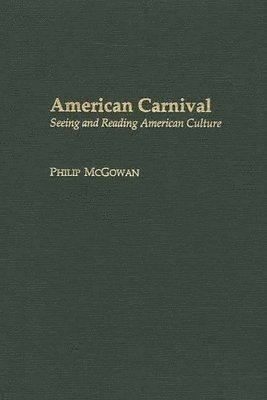
Traditionally, the carnival mode in Europe offers a suspension of time and ordinary social conventions; however, through the presentation and representation of that which is deemed exotic and unconventional, American carnival proposes an alternative landscape. While other authors have generally focused on European manifestations of the carnival, McGowan identifies and analyzes a particularly American form of the carnival, which systematically operates to codify race and space within the United States. Through an analysis of overt carnival forms, such as minstrel shows, World's Fairs, and Coney Island, McGowan demonstrates how America reads society and culture through a dualistic vision contoured by race, class, ethnic, and gender concerns. American exhibitions of Otherness are constructed within, and interpreted through, an economy of spectacular display and punishment, in which the normative position of whiteness is opposed by manipulated representations of Other identities, such as freaks and monsters, blacks, Native Americans, and other minority groups.The volume explores how such carnivalizations of America's racial faces and social spaces extend beyond overt spectacles and constitute a continuous process of encoded readings of social position. The book examines a range of texts and cultural events from the 19th and 20th centuries to identify the operations and mutations of American carnival forms, including literary works by such authors as Fitzgerald, Hawthorne, Hemingway, Faulkner, and Bellow.
Inbunden, Engelska, 2004
1 365 kr
Skickas inom 10-15 vardagar
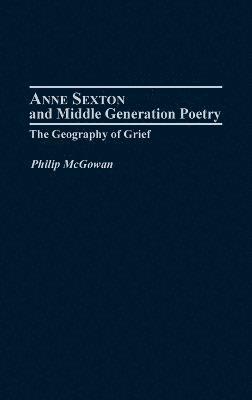
Focusing on Sexton's poems rather than on the life she led, this fresh critique of her work restarts the debate about her poetry 30 years after her death. McGowan argues that Sexton's poetry collections develop a three-way investigation into the possibilities of language to convey an individual's response to her own existence, to the project of defining love (by physical, human, and divine standards) and to the purpose of the aesthetic in our understanding of these entities. He charts the chronological development of Sexton's poetic aesthetic and provides a new interpretation of this major poet's work.Informed by the poetic and philosophical works of a number of other writers, McGowan's readings of Sexton's work are detailed and thorough. The work opens with a reconsideration of an early Sexton poem and moves through her other works in a carefully crafted fashion. He argues against the confessional interpretations of earlier readings and resituates the debate into Sexton's poetic territories, concentrating on her words, not her world. Concluding that Sexton's work challenges aesthetic and philosophical issues concerning our existence in this world and how language attempts to respond to such questions, McGowan offers a new approach and a fresh outlook on the poetry Sexton has left us.
Inbunden, Engelska, 2002
966 kr
Skickas inom 10-15 vardagar
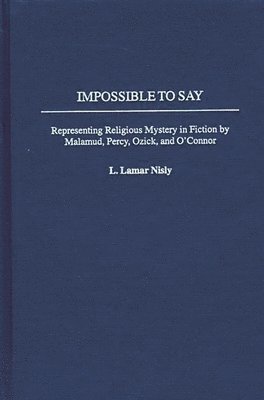
Although Judaism and Catholicism have important differences, both religions contain elements of religious mystery, aspects of belief that transcend the rational. Each religion additionally provides believers a concrete method for encountering the numinous: following the commandments in Judaism or partaking of the sacraments in Catholicism. This book studies how Jewish and Catholic practices of giving structure to religious mystery are embodied in the works of Bernard Malamud, Walker Percy, Cynthia Ozick, and Flannery O'Connor.The volume links Malamud with Percy and Ozick with O'Connor because these Jewish and Catholic authors depict religious mystery in similar ways. Percy and Malamud use the quest form to give shape to mystery. In doing so, they show their characters moving toward a religious commitment. In contrast, O'Connor and Ozick use the grotesque and fantastic to evoke the numinous. Thus they embody the religious mystery that Malamud's and Percy's characters seek to encounter. Whether presenting a movement toward mystery or serving to evoke it, these four authors explore an ineffable dimension that readers need to sense in order to gain a better understanding of their works.