Criminology in Focus - Böcker
Visar alla böcker i serien Criminology in Focus. Handla med fri frakt och snabb leverans.
14 produkter
14 produkter
688 kr
Skickas inom 10-15 vardagar
This book explores practical examples of co-production in criminal justice research and practice. Through a series of seven case studies, the authors examine what people do when they co-produce knowledge in criminal justice contexts: in prisons and youth detention centres; with criminalised women; from practitioners’ perspectives; and with First Nations communities.Co-production holds a promise: that people whose lives are entangled in the criminal justice system can be valued as participants and partners, helping to shape how the system works. But how realistic is it to imagine criminal justice "service users" participating, partnering, and sharing genuine decision-making power with those explicitly holding power over them?Taking a sophisticated yet accessible theoretical approach, the authors consider issues of power, hierarchy, and different ways of knowing to understand the perils and possibilities of co-production under the shadow of "justice". In exploring these complexities, this book brings cautious optimism to co-production partners and project leaders. The book provides a foundational text for scholars and practitioners seeking to apply co-production principles in their research and practice. With stories from Australia, the United Kingdom, and Ireland, the text will appeal to the international community. For students of criminology and social work, the book’s critical insights will enhance their work in the field.
727 kr
Skickas inom 10-15 vardagar
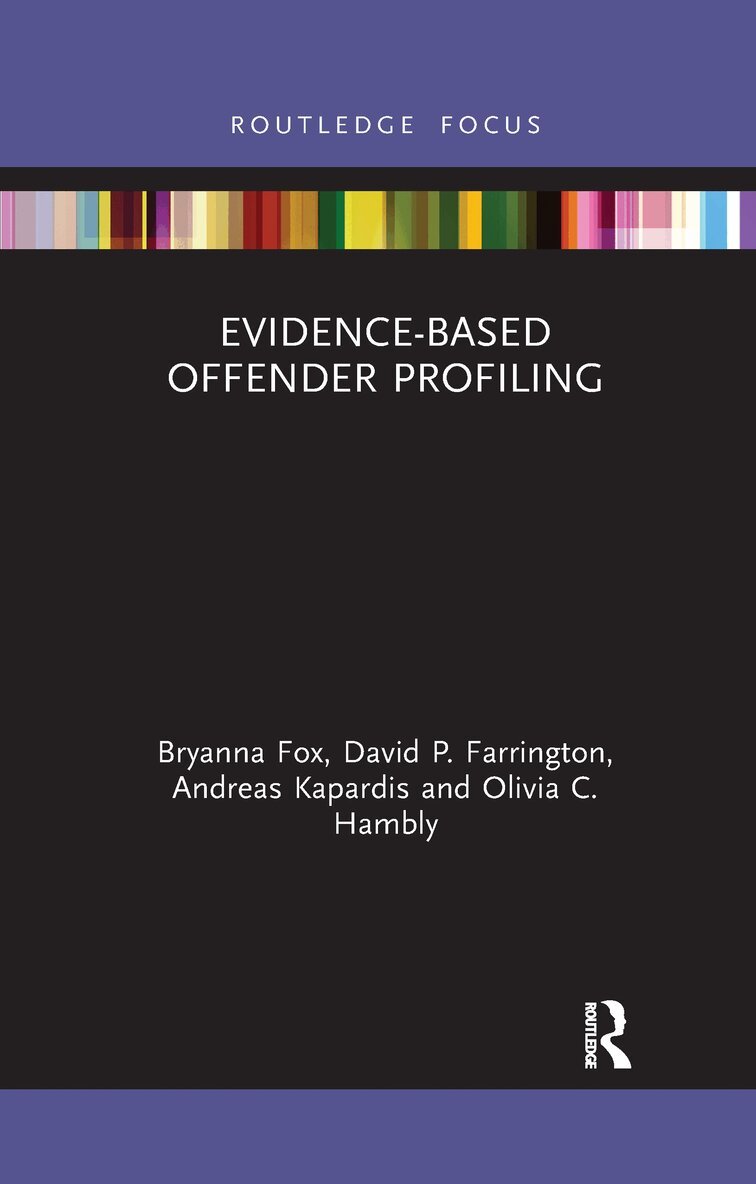
Offender profiling is an investigative tool used to narrow down the range of potential suspects for a crime by predicting the personality, behavioral, and demographic characteristics that an offender is likely to possess, based upon information collected at the crime scene. While offender profiling has been popularized by TV shows and movies such as Criminal Minds, Silence of the Lambs, and Mindhunter, the real-world impact of offender profiling is largely unknown. This book discusses the history of offender profiling, summarizes research on offender profiling methods, and reviews offender profiling evaluations of accuracy and applied impact.This book also describes a promising new offender profiling methodology called evidence-based offender profiling. This new method relies upon empirical data and scientific methods to develop, evaluate, and replicate offender profiles, thereby increasing offender profiling’s accuracy and utility for active police investigations. It uses prior information about statistical regularities between types of offenders and types of offenses to predict the characteristics of offenders in unsolved cases. A discussion of the future of offender profiling research and implications for law enforcement is also included. This book also explains how practitioners can benefit from the use of empirically tested and validated profiles in their unsolved investigations and how the use, continued research, and evaluation of evidence-based offender profiling can advance the quality, prestige, and utility of the field of offender profiling.
Decolonising Justice for Aboriginal youth with Fetal Alcohol Spectrum Disorders
Inbunden, Engelska, 2020
688 kr
Skickas inom 10-15 vardagar
This book reflects multidisciplinary and cross-jurisdictional analysis of issues surrounding Fetal Alcohol Spectrum Disorders (FASD) and the criminal justice system, and the impact on Aboriginal children, young people, and their families.This book provides the first comprehensive and multidisciplinary account of FASD and its implications for the criminal justice system – from prevalence and diagnosis to sentencing and culturally secure training for custodial officers. Situated within a ‘decolonising’ approach, the authors explore the potential for increased diversion into Aboriginal community-managed, on-country programmes, enabled through innovation at the point of first contact with the police, and non-adversarial, needs-focussed courts. Bringing together advanced thinking in criminology, Aboriginal justice issues, law, paediatrics, social work, and Indigenous mental health and well-being, the book is grounded in research undertaken in Australia, Canada, and New Zealand. The authors argue for the radical recalibration of both theory and practice around diversion, intervention, and the role of courts to significantly lower rates of incarceration; that Aboriginal communities and families are best placed to construct the social and cultural scaffolding around vulnerable youth that could prevent damaging contact with the mainstream justice system; and that early diagnosis and assessment of FASD may make a crucial difference to the life chances of Aboriginal youth and their families.Exploring how, far from providing solutions to FASD, the mainstream criminal justice system increases the likelihood of adverse outcomes for children with FASD and their families, this innovative book will be of great value to researchers and students worldwide interested in criminal and social justice, criminology, youth justice, social work, and education.
Decolonising Justice for Aboriginal youth with Fetal Alcohol Spectrum Disorders
Häftad, Engelska, 2022
304 kr
Skickas inom 10-15 vardagar
This book reflects multidisciplinary and cross-jurisdictional analysis of issues surrounding Fetal Alcohol Spectrum Disorders (FASD) and the criminal justice system, and the impact on Aboriginal children, young people, and their families.This book provides the first comprehensive and multidisciplinary account of FASD and its implications for the criminal justice system – from prevalence and diagnosis to sentencing and culturally secure training for custodial officers. Situated within a ‘decolonising’ approach, the authors explore the potential for increased diversion into Aboriginal community-managed, on-country programmes, enabled through innovation at the point of first contact with the police, and non-adversarial, needs-focussed courts. Bringing together advanced thinking in criminology, Aboriginal justice issues, law, paediatrics, social work, and Indigenous mental health and well-being, the book is grounded in research undertaken in Australia, Canada, and New Zealand. The authors argue for the radical recalibration of both theory and practice around diversion, intervention, and the role of courts to significantly lower rates of incarceration; that Aboriginal communities and families are best placed to construct the social and cultural scaffolding around vulnerable youth that could prevent damaging contact with the mainstream justice system; and that early diagnosis and assessment of FASD may make a crucial difference to the life chances of Aboriginal youth and their families.Exploring how, far from providing solutions to FASD, the mainstream criminal justice system increases the likelihood of adverse outcomes for children with FASD and their families, this innovative book will be of great value to researchers and students worldwide interested in criminal and social justice, criminology, youth justice, social work, and education.
681 kr
Skickas inom 10-15 vardagar
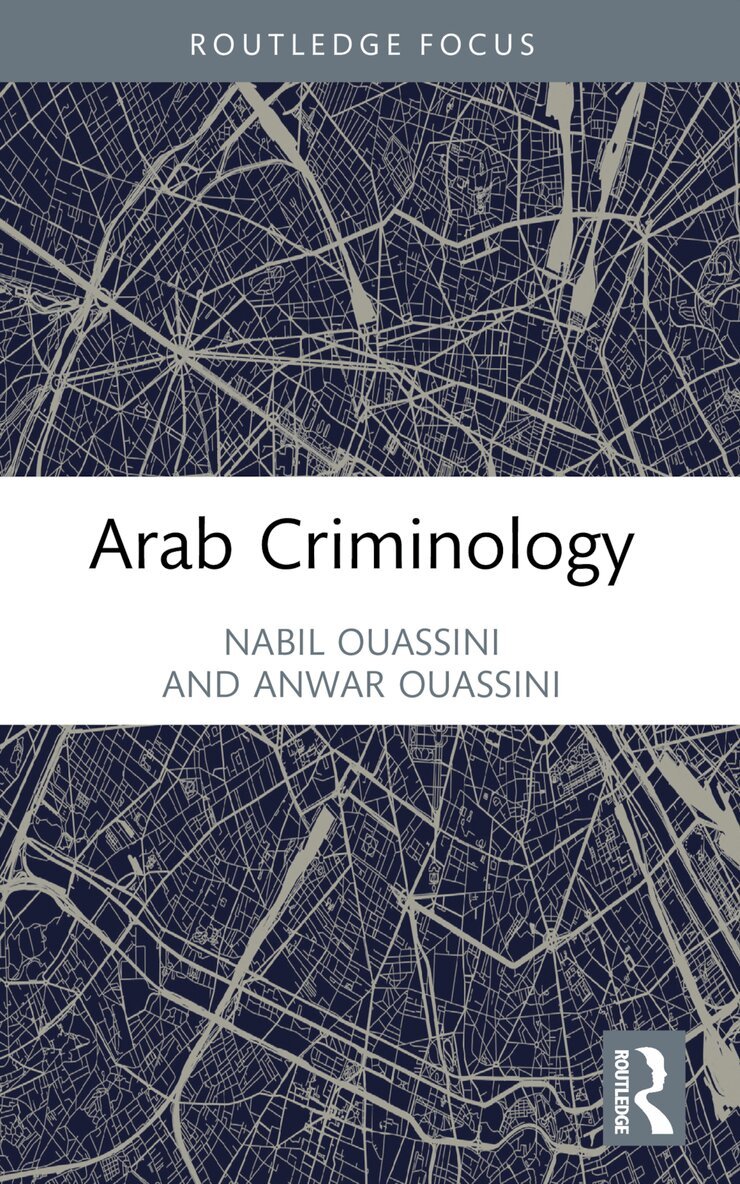
The objective of Arab Criminology is to establish a criminological subfield called ‘Arab Criminology.’The ever-evolving field of criminology has advanced in the past decade, yet many impediments remain. Unlike criminology in Africa, Asia, the Americas, Europe, and Oceania, which is based merely on geopolitical constructs, the Arab world has unique commonalities that do not exist in the other established subfields of criminology. The Arab world has largely remained in criminology’s periphery despite the region’s considerable importance to current international affairs. In response, this book explores two main questions: Why should we and how do we establish a subfield in Arab criminology? The authors examine the state of criminology in the Arab world, define its parameters, and present four components that bond and distinguish Arab criminology from other criminological area studies. They then identify the requirements for establishing Arab criminology and detail how local, regional, and international researchers can collaborate, develop, and expand the subfield. Arab criminology will challenge some of the recurrent Orientalist and Islamophobic tropes in Northern criminology and progress the discipline of criminology to reflect a more diverse focus that embraces regions from the Global South.Presenting compelling arguments and examples that support the establishment of this subfield, Arab Criminology will be of great interest to scholars of criminology, criminal justice, legal studies, and Middle Eastern/North African studies, particularly those working on Southern criminology, comparative criminology, international criminal justice systems, and Arab studies.
277 kr
Skickas inom 10-15 vardagar
The objective of Arab Criminology is to establish a criminological subfield called ‘Arab Criminology.’The ever-evolving field of criminology has advanced in the past decade, yet many impediments remain. Unlike criminology in Africa, Asia, the Americas, Europe, and Oceania, which is based merely on geopolitical constructs, the Arab world has unique commonalities that do not exist in the other established subfields of criminology. The Arab world has largely remained in criminology’s periphery despite the region’s considerable importance to current international affairs. In response, this book explores two main questions: Why should we and how do we establish a subfield in Arab criminology? The authors examine the state of criminology in the Arab world, define its parameters, and present four components that bond and distinguish Arab criminology from other criminological area studies. They then identify the requirements for establishing Arab criminology and detail how local, regional, and international researchers can collaborate, develop, and expand the subfield. Arab criminology will challenge some of the recurrent Orientalist and Islamophobic tropes in Northern criminology and progress the discipline of criminology to reflect a more diverse focus that embraces regions from the Global South.Presenting compelling arguments and examples that support the establishment of this subfield, Arab Criminology will be of great interest to scholars of criminology, criminal justice, legal studies, and Middle Eastern/North African studies, particularly those working on Southern criminology, comparative criminology, international criminal justice systems, and Arab studies.
688 kr
Skickas inom 10-15 vardagar
Building on her leading research in creative methodology, in this book Wendy Fitzgibbon explores and illustrates how Photovoice, a participatory, active research tool, can enable new insights and engagement with both marginalised people and those working with them in the criminal justice system. Including research examples from criminal justice settings around Europe, the book explains how one could undertake such research and the ethical and practical challenges presented.Engaging, accessible and illustrated with original photographs, this book not only presents the theoretical and practical information necessary for researchers, students and practitioners to be able to utilise Photovoice – it demonstrates these with original empirical findings from an international range of projects, including work with the probation service, with female offenders and with an open prison. It is essential reading for those engaged with criminological research methods, and Visual Criminology.
748 kr
Skickas inom 10-15 vardagar
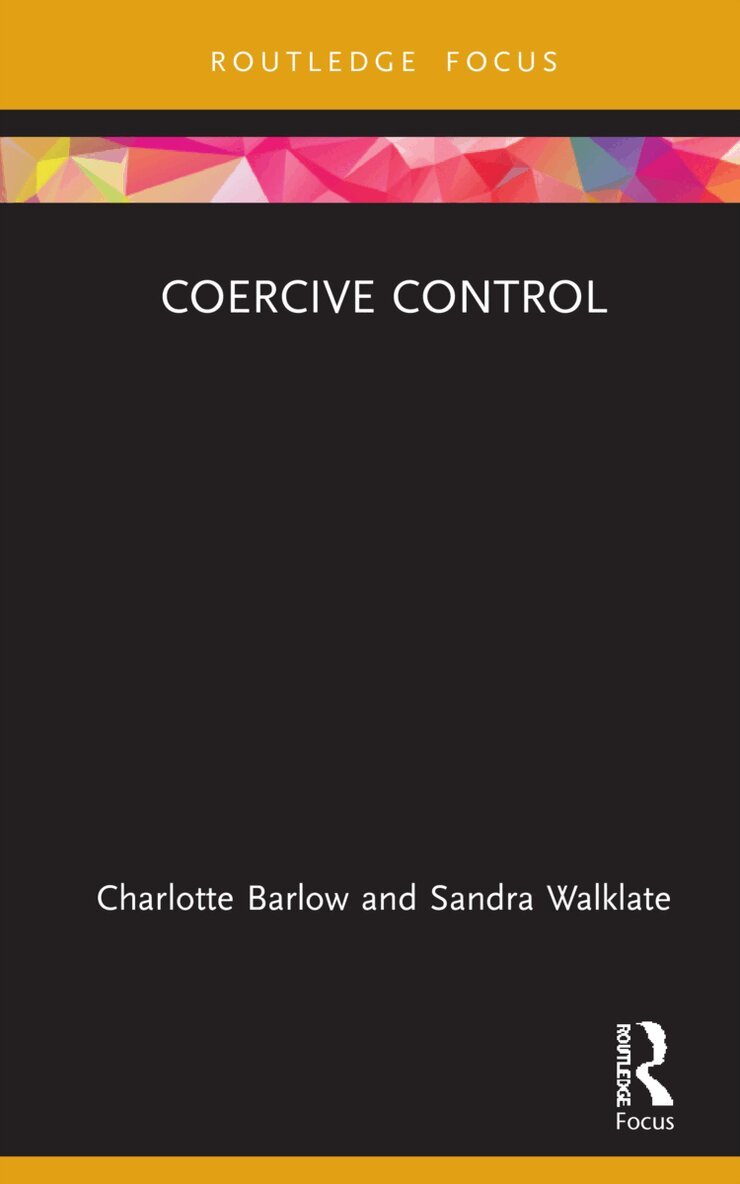
This book offers a critical appreciation of the nature and impact of coercive control in interpersonal relationships. It examines what this concept means, who is impacted by the behaviours it captures, and how academics, policymakers, and policy advocates have responded to the increasing recognition of the deleterious effects that coercive control has on especially women’s lives. The book discusses the historical emergence of this concept, who its main proponents have been, and how its effects have been understood. It considers the role of coercive control in making sense of women’s pathway into crime as well as their experiences of it as victims. Coercive control has been presented predominantly as a gendered process, and consideration is given in this book to the efficacy of this assumption as well as the extent to which the concept makes sense for a wide constituency of marginalized women. In recent years, much energy has been given to efforts to criminalize coercive control, and the concerns that these efforts generate are discussed in detail, alongside what the limitations to such initiatives might be. In conclusion, the book situates the rising pre-occupation with coercive control within the broader concerns with policy transfer, ways of taking account of victim-survivor voices, alongside the importance of working towards more holistic policy responses to violence(s) against women.The book will be of particular interest to academics, policymakers, and practitioners working in criminal justice who wish to understand both the nature and extent of coercive control and the importance of appreciating the role of nuance in translating that understanding into practice.
321 kr
Skickas inom 10-15 vardagar
Offender profiling is an investigative tool used to narrow down the range of potential suspects for a crime by predicting the personality, behavioral, and demographic characteristics that an offender is likely to possess, based upon information collected at the crime scene. While offender profiling has been popularized by TV shows and movies such as Criminal Minds, Silence of the Lambs, and Mindhunter, the real-world impact of offender profiling is largely unknown. This book discusses the history of offender profiling, summarizes research on offender profiling methods, and reviews offender profiling evaluations of accuracy and applied impact.This book also describes a promising new offender profiling methodology called evidence-based offender profiling. This new method relies upon empirical data and scientific methods to develop, evaluate, and replicate offender profiles, thereby increasing offender profiling’s accuracy and utility for active police investigations. It uses prior information about statistical regularities between types of offenders and types of offenses to predict the characteristics of offenders in unsolved cases. A discussion of the future of offender profiling research and implications for law enforcement is also included. This book also explains how practitioners can benefit from the use of empirically tested and validated profiles in their unsolved investigations and how the use, continued research, and evaluation of evidence-based offender profiling can advance the quality, prestige, and utility of the field of offender profiling.
316 kr
Skickas inom 10-15 vardagar
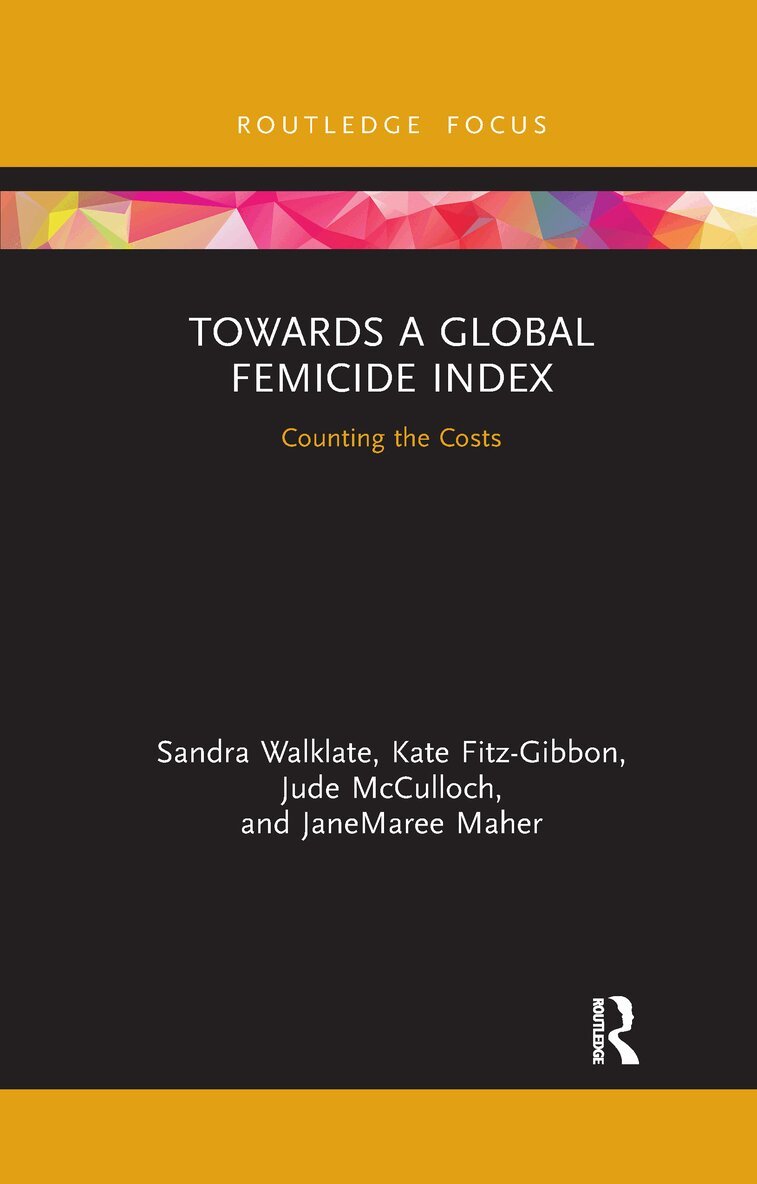
Increasingly there is global attention on the prevalence of women’s deaths resulting from intimate partner violence. Campaigns such as ‘Counting Dead Women’ in Australia, the ‘Femicide Census’ in England, the Canadian Femicide Observatory, and the emergence of family violence death review teams globally, build on the work of agencies such as the United Nations and the World Health Organisation, highlighting the fatal consequences of intimate partner violence for women around the world. This book considers the need for and the steps to be taken towards creating a meaningful framework for a global index of women’s deaths from intimate partner violence. While there are global indices for deaths that relate to public violence, such as terrorism, there is to date no systematic global count of killings of women by their intimate partners. It considers the possibilities and challenges that arise in counting intimate femicide. It argues that such an exercise needs to avoid narrow empiricism and instead be part of a broader feminist political project aimed at ending violence against women. This work will be of great interest to students and scholars of criminology, sociology, law, policing, and politics.
290 kr
Skickas inom 10-15 vardagar
This book offers a critical appreciation of the nature and impact of coercive control in interpersonal relationships. It examines what this concept means, who is impacted by the behaviours it captures, and how academics, policymakers, and policy advocates have responded to the increasing recognition of the deleterious effects that coercive control has on especially women’s lives. The book discusses the historical emergence of this concept, who its main proponents have been, and how its effects have been understood. It considers the role of coercive control in making sense of women’s pathway into crime as well as their experiences of it as victims. Coercive control has been presented predominantly as a gendered process, and consideration is given in this book to the efficacy of this assumption as well as the extent to which the concept makes sense for a wide constituency of marginalized women. In recent years, much energy has been given to efforts to criminalize coercive control, and the concerns that these efforts generate are discussed in detail, alongside what the limitations to such initiatives might be. In conclusion, the book situates the rising pre-occupation with coercive control within the broader concerns with policy transfer, ways of taking account of victim-survivor voices, alongside the importance of working towards more holistic policy responses to violence(s) against women.The book will be of particular interest to academics, policymakers, and practitioners working in criminal justice who wish to understand both the nature and extent of coercive control and the importance of appreciating the role of nuance in translating that understanding into practice.
267 kr
Skickas inom 10-15 vardagar
Building on her leading research in creative methodology, in this book Wendy Fitzgibbon explores and illustrates how Photovoice, a participatory, active research tool, can enable new insights and engagement with both marginalised people and those working with them in the criminal justice system. Including research examples from criminal justice settings around Europe, the book explains how one could undertake such research and the ethical and practical challenges presented.Engaging, accessible and illustrated with original photographs, this book not only presents the theoretical and practical information necessary for researchers, students and practitioners to be able to utilise Photovoice – it demonstrates these with original empirical findings from an international range of projects, including work with the probation service, with female offenders and with an open prison. It is essential reading for those engaged with criminological research methods, and Visual Criminology.
290 kr
Skickas inom 10-15 vardagar
This book explores practical examples of co-production in criminal justice research and practice. Through a series of seven case studies, the authors examine what people do when they co-produce knowledge in criminal justice contexts: in prisons and youth detention centres; with criminalised women; from practitioners’ perspectives; and with First Nations communities.Co-production holds a promise: that people whose lives are entangled in the criminal justice system can be valued as participants and partners, helping to shape how the system works. But how realistic is it to imagine criminal justice "service users" participating, partnering, and sharing genuine decision-making power with those explicitly holding power over them?Taking a sophisticated yet accessible theoretical approach, the authors consider issues of power, hierarchy, and different ways of knowing to understand the perils and possibilities of co-production under the shadow of "justice". In exploring these complexities, this book brings cautious optimism to co-production partners and project leaders. The book provides a foundational text for scholars and practitioners seeking to apply co-production principles in their research and practice. With stories from Australia, the United Kingdom, and Ireland, the text will appeal to the international community. For students of criminology and social work, the book’s critical insights will enhance their work in the field.
748 kr
Skickas inom 10-15 vardagar
Increasingly there is global attention on the prevalence of women’s deaths resulting from intimate partner violence. Campaigns such as ‘Counting Dead Women’ in Australia, the ‘Femicide Census’ in England, the Canadian Femicide Observatory, and the emergence of family violence death review teams globally, build on the work of agencies such as the United Nations and the World Health Organisation, highlighting the fatal consequences of intimate partner violence for women around the world. This book considers the need for and the steps to be taken towards creating a meaningful framework for a global index of women’s deaths from intimate partner violence. While there are global indices for deaths that relate to public violence, such as terrorism, there is to date no systematic global count of killings of women by their intimate partners. It considers the possibilities and challenges that arise in counting intimate femicide. It argues that such an exercise needs to avoid narrow empiricism and instead be part of a broader feminist political project aimed at ending violence against women. This work will be of great interest to students and scholars of criminology, sociology, law, policing, and politics.