Crip – serie
Visar alla böcker i serien Crip. Handla med fri frakt och snabb leverans.
16 produkter
16 produkter
325 kr
Skickas
Uses literature to understand and remake our ethics regarding nonhuman animals, old human beings, disabled human beings, and cloned posthumansLiterary Bioethics argues for literature as an untapped and essential site for the exploration of bioethics. Novels, Maren Tova Linett argues, present vividly imagined worlds in which certain values hold sway, casting new light onto those values; and the more plausible and well rendered readers find these imagined worlds, the more thoroughly we can evaluate the justice of those values. In an innovative set of readings, Linett thinks through the ethics of animal experimentation in H.G. Wells's The Island of Doctor Moreau, explores the elimination of aging in Aldous Huxley's Brave New World, considers the valuation of disabled lives in Flannery O'Connor's The Violent Bear It Away, and questions the principles of humane farming through reading Kazuo Ishiguro's Never Let Me Go. By analyzing novels published at widely spaced intervals over the span of a century, Linett offers snapshots of how we confront questions of value. In some cases the fictions are swayed by dominant devaluations of nonnormative or nonhuman lives, while in other cases they confirm the value of such lives by resisting instrumental views of their worth—views that influence, explicitly or implicitly, many contemporary bioethical discussions, especially about the value of disabled and nonhuman lives. Literary Bioethics grapples with the most fundamental questions of how we value different kinds of lives, and questions what those in power ought to be permitted to do with those lives as we gain unprecedented levels of technological prowess.
1 168 kr
Skickas inom 10-15 vardagar
Uses literature to understand and remake our ethics regarding nonhuman animals, old human beings, disabled human beings, and cloned posthumansLiterary Bioethics argues for literature as an untapped and essential site for the exploration of bioethics. Novels, Maren Tova Linett argues, present vividly imagined worlds in which certain values hold sway, casting new light onto those values; and the more plausible and well rendered readers find these imagined worlds, the more thoroughly we can evaluate the justice of those values. In an innovative set of readings, Linett thinks through the ethics of animal experimentation in H.G. Wells's The Island of Doctor Moreau, explores the elimination of aging in Aldous Huxley's Brave New World, considers the valuation of disabled lives in Flannery O'Connor's The Violent Bear It Away, and questions the principles of humane farming through reading Kazuo Ishiguro's Never Let Me Go. By analyzing novels published at widely spaced intervals over the span of a century, Linett offers snapshots of how we confront questions of value. In some cases the fictions are swayed by dominant devaluations of nonnormative or nonhuman lives, while in other cases they confirm the value of such lives by resisting instrumental views of their worth—views that influence, explicitly or implicitly, many contemporary bioethical discussions, especially about the value of disabled and nonhuman lives. Literary Bioethics grapples with the most fundamental questions of how we value different kinds of lives, and questions what those in power ought to be permitted to do with those lives as we gain unprecedented levels of technological prowess.
280 kr
Skickas inom 5-8 vardagar
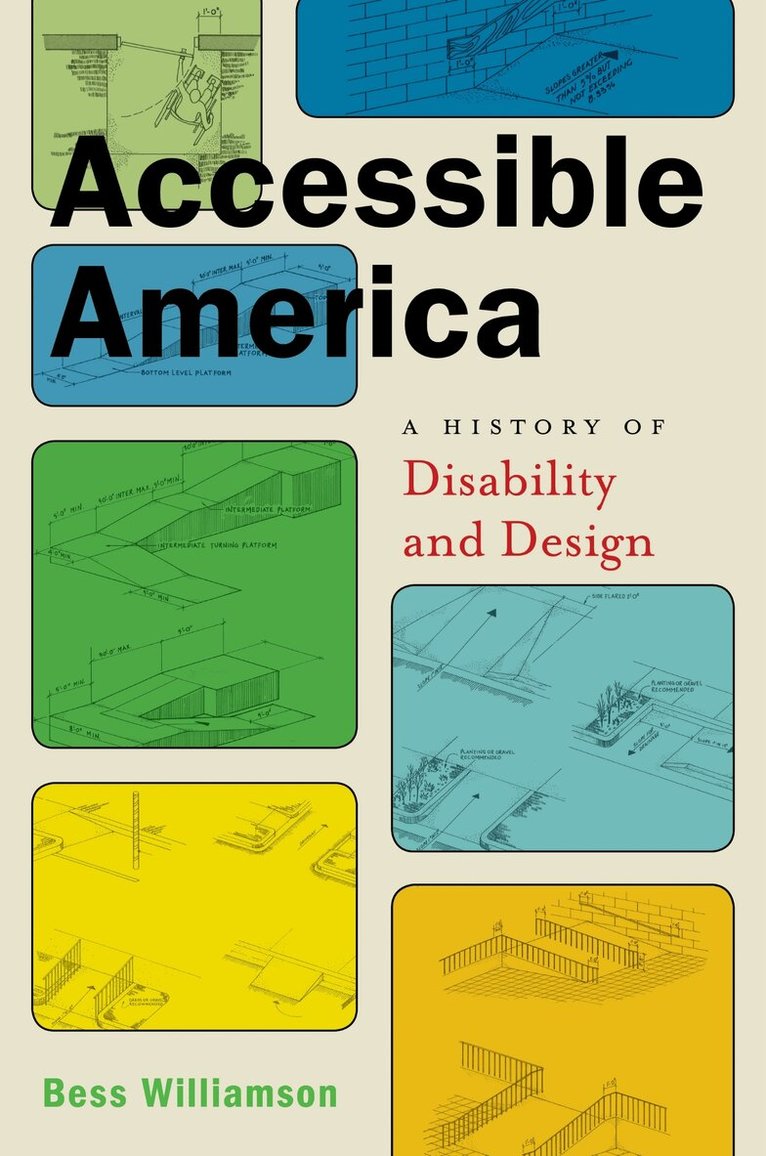
A history of design that is often overlooked—until we need itHave you ever hit the big blue button to activate automatic doors? Have you ever used an ergonomic kitchen tool? Have you ever used curb cuts to roll a stroller across an intersection? If you have, then you've benefited from accessible design—design for people with physical, sensory, and cognitive disabilities. These ubiquitous touchstones of modern life were once anything but. Disability advocates fought tirelessly to ensure that the needs of people with disabilities became a standard part of public design thinking. That fight took many forms worldwide, but in the United States it became a civil rights issue; activists used design to make an argument about the place of people with disabilities in public life.In the aftermath of World War II, with injured veterans returning home and the polio epidemic reaching the Oval Office, the needs of people with disabilities came forcibly into the public eye as they never had before. The US became the first country to enact federal accessibility laws, beginning with the Architectural Barriers Act in 1968 and continuing through the landmark Americans with Disabilities Act in 1990, bringing about a wholesale rethinking of our built environment. This progression wasn't straightforward or easy. Early legislation and design efforts were often haphazard or poorly implemented, with decidedly mixed results. Political resistance to accommodating the needs of people with disabilities was strong; so, too, was resistance among architectural and industrial designers, for whom accessible design wasn't "real" design.Bess Williamson provides an extraordinary look at everyday design, marrying accessibility with aesthetic, to provide an insight into a world in which we are all active participants, but often passive onlookers. Richly detailed, with stories of politics and innovation, Williamson's Accessible America takes us through this important history, showing how American ideas of individualism and rights came to shape the material world, often with unexpected consequences.
Disabilities of the Color Line
Redressing Antiblackness from Slavery to the Present
Inbunden, Engelska, 2022
1 106 kr
Skickas inom 10-15 vardagar
Winner of the 2023 Phi Beta Kappa Christian Gauss Award Honorable Mention for the 2022 Robert K. Martin Book Prize from the Canadian Association for American Studies (CAAS)ASALH 2023 Book Prize FinalistReveals how disability and disablement have shaped Black social life in AmericaThrough both law and custom, the color line has cast Black people as innately disabled and thus unfit for freedom, incapable of self-governance, and contagious within the national body politic. Disabilities of the Color Line maintains that the Black literary tradition historically has inverted this casting by exposing the disablement of racism without disclaiming disability.In place of a triumphalist narrative of overcoming where both disability and disablement alike are shunned, Dennis Tyler argues that Black authors and activists have consistently avowed what he calls the disabilities of the color line: the historical and ongoing anti-Black systems of division that maim, immobilize, and stigmatize Black people. In doing so, Tyler reveals how Black writers and activists such as David Walker, Henry Box Brown, William and Ellen Craft, Charles Chesnutt, James Weldon Johnson, and Mamie Till-Mobley have engaged in a politics and aesthetics of redress: modes of resistance that, in the pursuit of racial and disability justice, acknowledged the disabling violence perpetrated by anti-Black regimes in order to conceive or engender dynamic new worlds that account for people of all abilities. While some writers have affirmed disability to capture how their bodies, minds, and health have been made vulnerable to harm and impairment by the state and its citizens, others' assertion of disability symbolizes a sense of community as well as a willingness to imagine and create a world distinct from the dominant social order.
725 kr
Skickas
How can we learn to notice the signs of disability?We see indications of disability everywhere: yellow diamond-shaped "deaf person in area" road signs, the telltale shapes of hearing aids, or white-tipped canes sweeping across footpaths. But even though the signs are ubiquitous, Stephanie L. Kerschbaum argues that disability may still not be perceived due to a process she terms "dis-attention."To tell better stories of disability, this multidisciplinary work turns to rhetoric, communications, sociology, and phenomenology to understand the processes by which the material world becomes sensory input that then passes through perceptual apparatuses to materialize phenomena—including disability. By adding perception to the understanding of disability's materialization, Kerschbaum significantly expands our understanding of disability, accounting for its fluctuations and transformations in the semiotics of everyday life.Drawing on a set of thirty-three research interviews focused on disabled faculty members' experiences with disability disclosure, as well as written narratives by disabled people, this book argues for the materiality of narrative, suggesting narratives as a means by which people enact boundaries around phenomena and determine their properties. Signs of Disability offers strategies and practices for challenging problematic and pervasive forms of "dis-attention" and proposes a new theoretical model for understanding disability in social, rhetorical, and material settings.
362 kr
Skickas inom 5-8 vardagar
How can we learn to notice the signs of disability?We see indications of disability everywhere: yellow diamond-shaped "deaf person in area" road signs, the telltale shapes of hearing aids, or white-tipped canes sweeping across footpaths. But even though the signs are ubiquitous, Stephanie L. Kerschbaum argues that disability may still not be perceived due to a process she terms "dis-attention."To tell better stories of disability, this multidisciplinary work turns to rhetoric, communications, sociology, and phenomenology to understand the processes by which the material world becomes sensory input that then passes through perceptual apparatuses to materialize phenomena—including disability. By adding perception to the understanding of disability's materialization, Kerschbaum significantly expands our understanding of disability, accounting for its fluctuations and transformations in the semiotics of everyday life.Drawing on a set of thirty-three research interviews focused on disabled faculty members' experiences with disability disclosure, as well as written narratives by disabled people, this book argues for the materiality of narrative, suggesting narratives as a means by which people enact boundaries around phenomena and determine their properties. Signs of Disability offers strategies and practices for challenging problematic and pervasive forms of "dis-attention" and proposes a new theoretical model for understanding disability in social, rhetorical, and material settings.
962 kr
Skickas inom 10-15 vardagar
The role of disability and deafness in artDistressing Language is full of mistakes—errors of hearing, speaking, writing, and understanding. Michael Davidson engages the role of disability and deafness in contemporary aesthetics, exploring how physical and intellectual differences challenge our understanding of art and poetry. Where hearing and speaking are considered normative conditions of the human, what happens when words are misheard and misspoken? How have writers and artists, both disabled and non-disabled, used error as generative elements in contesting the presumed value of "sounding good"? Distressing Language grows out of the author's experience of hearing loss in which misunderstandings have become a daily occurrence. Davidson maintains that verbal confusions are less an aberration in understanding than a component of new knowledge.Davidson discusses a range of sites, from captioning errors and Bad Lip Reads on YouTube, to the deaf artist Christine Sun Kim's audiovisual installations, and a poetic reinterpretation of the Biblical Shibboleth responding to the atrocities of the Holocaust. Deafness becomes a guide in each chapter of Distressing Language, giving us a closer look at a range of artistic mediums and how artists are working with the axiom of "error" to produce novel subjecthoods and possibilities.
325 kr
Skickas inom 5-8 vardagar
The role of disability and deafness in artDistressing Language is full of mistakes—errors of hearing, speaking, writing, and understanding. Michael Davidson engages the role of disability and deafness in contemporary aesthetics, exploring how physical and intellectual differences challenge our understanding of art and poetry. Where hearing and speaking are considered normative conditions of the human, what happens when words are misheard and misspoken? How have writers and artists, both disabled and non-disabled, used error as generative elements in contesting the presumed value of "sounding good"? Distressing Language grows out of the author's experience of hearing loss in which misunderstandings have become a daily occurrence. Davidson maintains that verbal confusions are less an aberration in understanding than a component of new knowledge.Davidson discusses a range of sites, from captioning errors and Bad Lip Reads on YouTube, to the deaf artist Christine Sun Kim's audiovisual installations, and a poetic reinterpretation of the Biblical Shibboleth responding to the atrocities of the Holocaust. Deafness becomes a guide in each chapter of Distressing Language, giving us a closer look at a range of artistic mediums and how artists are working with the axiom of "error" to produce novel subjecthoods and possibilities.
Falling, Floating, Flickering
Disability and Differential Movement in African Diasporic Performance
Inbunden, Engelska, 2023
1 046 kr
Skickas inom 10-15 vardagar
Insists on the importance of embodiment and movement to the creation of Black socialityLinking African diasporic performance, disability studies, and movement studies, Falling, Floating, Flickering approaches disability transnationally by centering Black, African, and diasporic experiences. By eschewing capital's weighted calculus of which bodies hold value, this book centers alternate morphologies and movement practices that have previously been dismissed as abnormal or unrecognizable. To move beyond binaries of ability, Hershini Bhana Young traverses multiple geohistories and cultural forms stretching from the United States and the Mediterranean to Sierra Leone, Nigeria, and South Africa, as well as independent and experimental film, novels, sculptures, images, dance, performances, and anecdotes. In doing so, she argues for the importance of differential embodiment and movement to the creation and survival of Black sociality, and refutes stereotypic notions of Africa as less progressive than the West in recognizing the rights of disabled people. Ultimately, this book foregrounds the engagement of diasporic Africans, who are still reeling from the violence of colonialism, slavery, poverty, and war, as they gesture toward a liberatory Black sociality by falling, floating, and flickering.
Falling, Floating, Flickering
Disability and Differential Movement in African Diasporic Performance
Häftad, Engelska, 2023
362 kr
Skickas inom 5-8 vardagar
Insists on the importance of embodiment and movement to the creation of Black socialityLinking African diasporic performance, disability studies, and movement studies, Falling, Floating, Flickering approaches disability transnationally by centering Black, African, and diasporic experiences. By eschewing capital's weighted calculus of which bodies hold value, this book centers alternate morphologies and movement practices that have previously been dismissed as abnormal or unrecognizable. To move beyond binaries of ability, Hershini Bhana Young traverses multiple geohistories and cultural forms stretching from the United States and the Mediterranean to Sierra Leone, Nigeria, and South Africa, as well as independent and experimental film, novels, sculptures, images, dance, performances, and anecdotes. In doing so, she argues for the importance of differential embodiment and movement to the creation and survival of Black sociality, and refutes stereotypic notions of Africa as less progressive than the West in recognizing the rights of disabled people. Ultimately, this book foregrounds the engagement of diasporic Africans, who are still reeling from the violence of colonialism, slavery, poverty, and war, as they gesture toward a liberatory Black sociality by falling, floating, and flickering.
885 kr
Skickas inom 10-15 vardagar
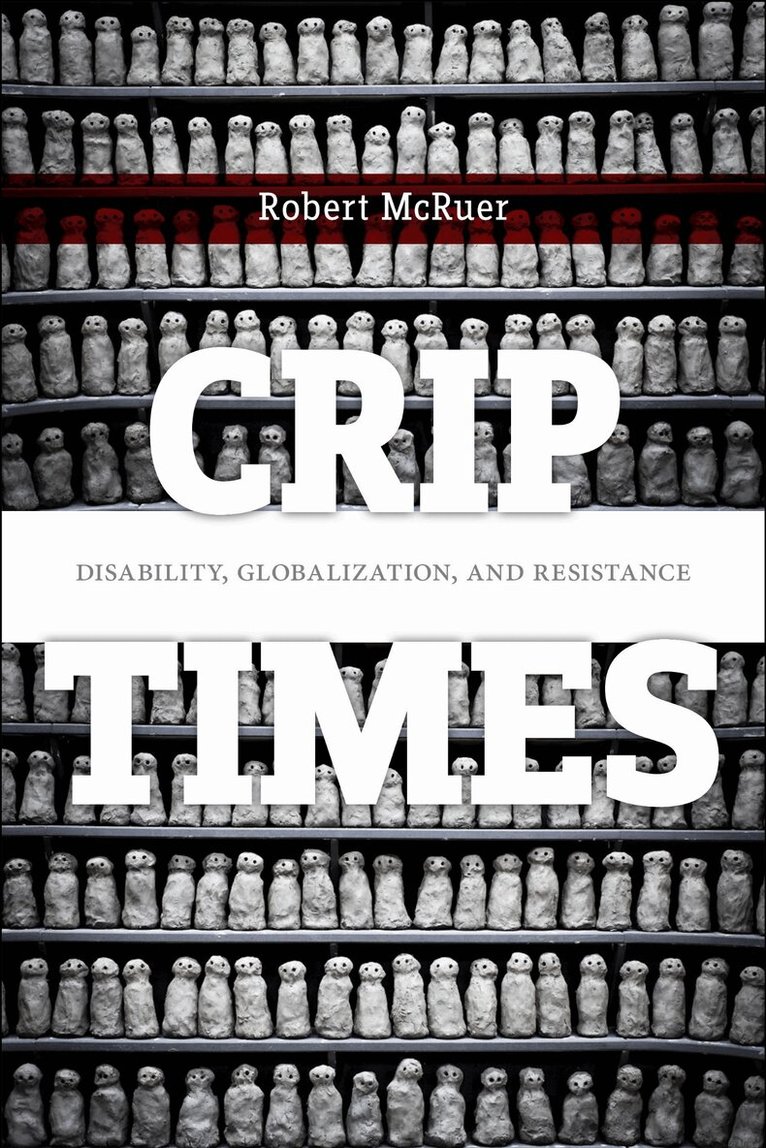
Contends that disability is a central but misunderstood element of global austerity politics. Broadly attentive to the political and economic shifts of the last several decades, Robert McRuer asks how disability activists, artists and social movements generate change and resist the dominant forms of globalization in an age of austerity, or "crip times." Throughout Crip Times, McRuer considers how transnational queer disability theory and culture—activism, blogs, art, photography, literature, and performance—provide important and generative sites for both contesting austerity politics and imagining alternatives. The book engages various cultural flashpoints, including the spectacle surrounding the London 2012 Olympic and Paralympic Games; the murder trial of South African Paralympian Oscar Pistorius; the photography of Brazilian artist Livia Radwanski which documents the gentrification of Colonia Roma in Mexico City; the defiance of Chilean students demanding a free and accessible education for all; the sculpture and performance of UK artist Liz Crow; and the problematic rhetoric of "aspiration" dependent upon both able-bodied and disabled figurations that emerged in Thatcher's England. Crip Times asserts that disabled people themselves are demanding that disability be central to our understanding of political economy and uneven development and suggests that, in some locations, their demand for disability justice is starting to register. Ultimately, McRuer argues that a politics of austerity will always generate the compulsion to fortify borders and to separate a narrowly defined "us" in need of protection from "them."
Disabilities of the Color Line
Redressing Antiblackness from Slavery to the Present
Häftad, Engelska, 2022
382 kr
Skickas
Winner of the 2023 Phi Beta Kappa Christian Gauss Award Honorable Mention for the 2022 Robert K. Martin Book Prize from the Canadian Association for American Studies (CAAS)ASALH 2023 Book Prize FinalistReveals how disability and disablement have shaped Black social life in AmericaThrough both law and custom, the color line has cast Black people as innately disabled and thus unfit for freedom, incapable of self-governance, and contagious within the national body politic. Disabilities of the Color Line maintains that the Black literary tradition historically has inverted this casting by exposing the disablement of racism without disclaiming disability.In place of a triumphalist narrative of overcoming where both disability and disablement alike are shunned, Dennis Tyler argues that Black authors and activists have consistently avowed what he calls the disabilities of the color line: the historical and ongoing anti-Black systems of division that maim, immobilize, and stigmatize Black people. In doing so, Tyler reveals how Black writers and activists such as David Walker, Henry Box Brown, William and Ellen Craft, Charles Chesnutt, James Weldon Johnson, and Mamie Till-Mobley have engaged in a politics and aesthetics of redress: modes of resistance that, in the pursuit of racial and disability justice, acknowledged the disabling violence perpetrated by anti-Black regimes in order to conceive or engender dynamic new worlds that account for people of all abilities. While some writers have affirmed disability to capture how their bodies, minds, and health have been made vulnerable to harm and impairment by the state and its citizens, others' assertion of disability symbolizes a sense of community as well as a willingness to imagine and create a world distinct from the dominant social order.
1 041 kr
Kommande
Asserts how Black artists and activists developed a disability consciousness in response to racialized disabling experiences in the early to mid-twentieth centuryBlack Crip Modern uncovers how early twentieth-century Black writers, artists, and activists laid the groundwork for modern disability consciousness. Under Jim Crow, Black disabled citizens were excluded from social services and medical reforms, even as racist violence, carceral surveillance, eugenic logic, and exploitative labor conditions deepened disabling experiences. Through literature, film, photography, and personal testimony, Black modernists registered these compounded injustices and articulated new ways of thinking about illness, impairment, and care.Engaging the work of figures such as Zora Neale Hurston, Claude McKay, Wallace Thurman, Pauli Murray, Langston Hughes and Marita Bonner, Jess Waggoner traces how Black cultural production challenged both white supremacy and ableist ideals of progress. In their writing, Waggoner finds an early "Black crip modern" consciousness – one that rejected eugenic reform, critiqued racialized caregiving hierarchies, and envisioned collective care grounded in feminist and anti-carceral principles.In conversation with contemporary disability justice movements, Black Crip Modern reveals how Black thinkers and artists forged a disability politics before it was formally named. By assembling these overlooked histories of Black ill and disabled life, Waggoner reframes the foundations of disability studies and insists that Black cultural production has always been central to the struggle for bodily autonomy, access, and justice.
295 kr
Kommande
Asserts how Black artists and activists developed a disability consciousness in response to racialized disabling experiences in the early to mid-twentieth centuryBlack Crip Modern uncovers how early twentieth-century Black writers, artists, and activists laid the groundwork for modern disability consciousness. Under Jim Crow, Black disabled citizens were excluded from social services and medical reforms, even as racist violence, carceral surveillance, eugenic logic, and exploitative labor conditions deepened disabling experiences. Through literature, film, photography, and personal testimony, Black modernists registered these compounded injustices and articulated new ways of thinking about illness, impairment, and care.Engaging the work of figures such as Zora Neale Hurston, Claude McKay, Wallace Thurman, Pauli Murray, Langston Hughes and Marita Bonner, Jess Waggoner traces how Black cultural production challenged both white supremacy and ableist ideals of progress. In their writing, Waggoner finds an early "Black crip modern" consciousness – one that rejected eugenic reform, critiqued racialized caregiving hierarchies, and envisioned collective care grounded in feminist and anti-carceral principles.In conversation with contemporary disability justice movements, Black Crip Modern reveals how Black thinkers and artists forged a disability politics before it was formally named. By assembling these overlooked histories of Black ill and disabled life, Waggoner reframes the foundations of disability studies and insists that Black cultural production has always been central to the struggle for bodily autonomy, access, and justice.
329 kr
Skickas
Contends that disability is a central but misunderstood element of global austerity politics. Broadly attentive to the political and economic shifts of the last several decades, Robert McRuer asks how disability activists, artists and social movements generate change and resist the dominant forms of globalization in an age of austerity, or "crip times." Throughout Crip Times, McRuer considers how transnational queer disability theory and culture—activism, blogs, art, photography, literature, and performance—provide important and generative sites for both contesting austerity politics and imagining alternatives. The book engages various cultural flashpoints, including the spectacle surrounding the London 2012 Olympic and Paralympic Games; the murder trial of South African Paralympian Oscar Pistorius; the photography of Brazilian artist Livia Radwanski which documents the gentrification of Colonia Roma in Mexico City; the defiance of Chilean students demanding a free and accessible education for all; the sculpture and performance of UK artist Liz Crow; and the problematic rhetoric of "aspiration" dependent upon both able-bodied and disabled figurations that emerged in Thatcher's England. Crip Times asserts that disabled people themselves are demanding that disability be central to our understanding of political economy and uneven development and suggests that, in some locations, their demand for disability justice is starting to register. Ultimately, McRuer argues that a politics of austerity will always generate the compulsion to fortify borders and to separate a narrowly defined "us" in need of protection from "them."
1 102 kr
Skickas inom 10-15 vardagar
A history of design that is often overlooked—until we need itHave you ever hit the big blue button to activate automatic doors? Have you ever used an ergonomic kitchen tool? Have you ever used curb cuts to roll a stroller across an intersection? If you have, then you've benefited from accessible design—design for people with physical, sensory, and cognitive disabilities. These ubiquitous touchstones of modern life were once anything but. Disability advocates fought tirelessly to ensure that the needs of people with disabilities became a standard part of public design thinking. That fight took many forms worldwide, but in the United States it became a civil rights issue; activists used design to make an argument about the place of people with disabilities in public life.In the aftermath of World War II, with injured veterans returning home and the polio epidemic reaching the Oval Office, the needs of people with disabilities came forcibly into the public eye as they never had before. The US became the first country to enact federal accessibility laws, beginning with the Architectural Barriers Act in 1968 and continuing through the landmark Americans with Disabilities Act in 1990, bringing about a wholesale rethinking of our built environment. This progression wasn't straightforward or easy. Early legislation and design efforts were often haphazard or poorly implemented, with decidedly mixed results. Political resistance to accommodating the needs of people with disabilities was strong; so, too, was resistance among architectural and industrial designers, for whom accessible design wasn't "real" design.Bess Williamson provides an extraordinary look at everyday design, marrying accessibility with aesthetic, to provide an insight into a world in which we are all active participants, but often passive onlookers. Richly detailed, with stories of politics and innovation, Williamson's Accessible America takes us through this important history, showing how American ideas of individualism and rights came to shape the material world, often with unexpected consequences.