Critical Bibliographic Review - Böcker
Visar alla böcker i serien Critical Bibliographic Review. Handla med fri frakt och snabb leverans.
4 produkter
4 produkter
2 159 kr
Skickas inom 10-15 vardagar
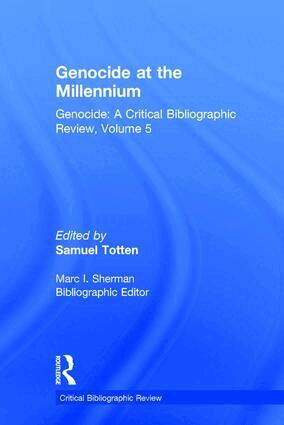
Genocide at the Millennium is the fifth volume in the acclaimed series Genocide: A Critical Bibliographical Review. This latest volume's focus is both the genocidal activity that has taken place over the past fourteen years (including that in Rwanda and the former Yugoslavia) as well as a critique of the international community's response to genocide and potential genocidal situations (including those of the United Nations and nongovernmental organizations).Genocide at the Millennium is divided into ten chapters. The opening chapter treats the Yugoslav genocide, discussing the causes of the conflict, the violence that ensued, the reaction of the international community, and the ramifications that are still being felt in that part of the world today. Chapter 2 provides a detailed and thought-provoking examination of the causes, results and ramifications of the 1994 Rwandan genocide. Chapter 3 examines the conflict in Kosovo and the events surrounding the controversial intervention by NATO. Chapter 4 discusses the remarkable efforts and successes that various non-governmental agencies have had in addressing a wide variety of issues related to genocide. Chapter 5 examines the United Nations' efforts to address the issue of genocide at the turn of the century. The role of individual states confronting issues and cases of genocide is analyzed in chapter 6. Chapter 7 gives a solid overview of the evolution of international law as it pertains to the crime of genocide and how and why major changes in such law have begun to take place in the 1990s and early 2000s. The international criminal tribunals for Rwanda and the former Yugoslavia are considered in chapters 8 and 9. The concluding chapter provides an extremely detailed and highly informative overview of key aspects of the International Criminal Court.In keeping with the multidisciplinary approach of previous volumes in the series, each of the essays and accompanying annotated bibliographies have been written by experts in their fields, many of whom have worked for many years wrestling the thorny, and often horrific, issues germane to the issue of genocide.
1 326 kr
Skickas inom 10-15 vardagar
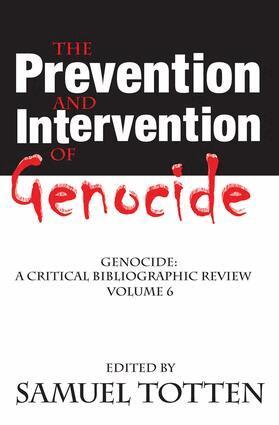
Over the last twenty years the world has witnessed four major genocides. There was the genocide in Iraq (1988), in Rwanda (1994), in Srebrenica (1995), and in Darfur (2003 and continuing). Most observers agree there is an urgent need to assess the international community's efforts to prevent genocide and to intervene (once a genocide is under way) in an effective and timely manner. This volume, the latest in a widely respected series on the subject of genocide, provides an overview of a host of issues germane to this task.The book begins with a cogent discussion of the issues of prevention and intervention during the Cold War years. The second chapter discusses the abject failures and moderate (though, in some cases, highly controversial) successes at prevention and intervention carried out in the 1990s and early 2000s. Further chapters examine latest efforts to develop an effective genocide early warning system and examine the complexity of and barriers to prevention. The pros and cons of sanctions and the problems of enforcement and evaluation their effectiveness are then discussed. Conflicts between state sovereignty and the protection of threatened populations are examined both in historical context and by incorporating the latest thinking.Later chapters treat the issue of intervention; why and how it has met with only limited success. Concentrating on Rwanda and Srebrenica, chapter 8 discusses various peace operations that were abject failures and those that were moderately successful. The concept of an anti-genocide regime is examined in terms of progress in developing such a regime as well as what the international community must do in order to implement it. Chapters discuss key issues related to post-genocidal periods, those that need to be addressed in order to establish stability in a wounded land and populace as well as to prevent future genocides. The final chapter asks whether bringing perpetrators to justice has any impact in breaking impunity, ensuring deterrence, and bringing about reconciliation.The contributors to the volume are all noted scholars, some of whom specialize in the study of genocide, and others who specialize in such areas as early warning, peacekeeping, and sanctions.
670 kr
Skickas inom 10-15 vardagar
Genocide at the Millennium is the fifth volume in the acclaimed series Genocide: A Critical Bibliographical Review. This latest volume's focus is both the genocidal activity that has taken place over the past fourteen years (including that in Rwanda and the former Yugoslavia) as well as a critique of the international community's response to genocide and potential genocidal situations (including those of the United Nations and nongovernmental organizations).Genocide at the Millennium is divided into ten chapters. The opening chapter treats the Yugoslav genocide, discussing the causes of the conflict, the violence that ensued, the reaction of the international community, and the ramifications that are still being felt in that part of the world today. Chapter 2 provides a detailed and thought-provoking examination of the causes, results and ramifications of the 1994 Rwandan genocide. Chapter 3 examines the conflict in Kosovo and the events surrounding the controversial intervention by NATO. Chapter 4 discusses the remarkable efforts and successes that various non-governmental agencies have had in addressing a wide variety of issues related to genocide. Chapter 5 examines the United Nations' efforts to address the issue of genocide at the turn of the century. The role of individual states confronting issues and cases of genocide is analyzed in chapter 6. Chapter 7 gives a solid overview of the evolution of international law as it pertains to the crime of genocide and how and why major changes in such law have begun to take place in the 1990s and early 2000s. The international criminal tribunals for Rwanda and the former Yugoslavia are considered in chapters 8 and 9. The concluding chapter provides an extremely detailed and highly informative overview of key aspects of the International Criminal Court.In keeping with the multidisciplinary approach of previous volumes in the series, each of the essays and accompanying annotated bibliographies have been written by experts in their fields, many of whom have worked for many years wrestling the thorny, and often horrific, issues germane to the issue of genocide.
453 kr
Skickas inom 10-15 vardagar
Over the last twenty years the world has witnessed four major genocides. There was the genocide in Iraq (1988), in Rwanda (1994), in Srebrenica (1995), and in Darfur (2003 and continuing). Most observers agree there is an urgent need to assess the international community's efforts to prevent genocide and to intervene (once a genocide is under way) in an effective and timely manner. This volume, the latest in a widely respected series on the subject of genocide, provides an overview of a host of issues germane to this task.The book begins with a cogent discussion of the issues of prevention and intervention during the Cold War years. The second chapter discusses the abject failures and moderate (though, in some cases, highly controversial) successes at prevention and intervention carried out in the 1990s and early 2000s. Further chapters examine latest efforts to develop an effective genocide early warning system and examine the complexity of and barriers to prevention. The pros and cons of sanctions and the problems of enforcement and evaluation their effectiveness are then discussed. Conflicts between state sovereignty and the protection of threatened populations are examined both in historical context and by incorporating the latest thinking.Later chapters treat the issue of intervention; why and how it has met with only limited success. Concentrating on Rwanda and Srebrenica, chapter 8 discusses various peace operations that were abject failures and those that were moderately successful. The concept of an anti-genocide regime is examined in terms of progress in developing such a regime as well as what the international community must do in order to implement it. Chapters discuss key issues related to post-genocidal periods, those that need to be addressed in order to establish stability in a wounded land and populace as well as to prevent future genocides. The final chapter asks whether bringing perpetrators to justice has any impact in breaking impunity, ensuring deterrence, and bringing about reconciliation.The contributors to the volume are all noted scholars, some of whom specialize in the study of genocide, and others who specialize in such areas as early warning, peacekeeping, and sanctions.