Digital Culture Books - Böcker
Visar alla böcker i serien Digital Culture Books. Handla med fri frakt och snabb leverans.
6 produkter
6 produkter
Collecting Lives
Critical Data Narrative as Modernist Aesthetic in Early Twentieth-Century U.S. Literatures
Häftad, Engelska, 2022
413 kr
Skickas inom 7-10 vardagar
On a near-daily basis, data is being used to narrate our lives. Categorizing algorithms drawn from amassed personal data to assign narrative destinies to individuals at crucial junctures, simultaneously predicting and shaping the paths of our lives. Data is commonly assumed to bring us closer to objectivity, but the narrative paths these algorithms assign seem, more often than not, to replicate biases about who an individual is and could become.While the social effects of such algorithmic logics seem new and newly urgent to consider, Collecting Lives looks to the late nineteenth and early twentieth century U.S. to provide an instructive prehistory to the underlying question of the relationship between data, life, and narrative. Rodrigues contextualizes the application of data collection to human selfhood in order to uncover a modernist aesthetic of data that offers an alternative to the algorithmic logic pervading our sense of data’s revelatory potential. Examining the work of W. E. B. Du Bois, Henry Adams, Gertrude Stein, and Ida B. Wells-Barnett, Rodrigues asks how each of these authors draw from their work in sociology, history, psychology, and journalism to formulate a critical data aesthetic as they attempt to answer questions of identity around race, gender, and nation both in their research and their life writing. These data-driven modernists not only tell different life stories with data, they tell life stories differently because of data.
359 kr
Skickas inom 7-10 vardagar
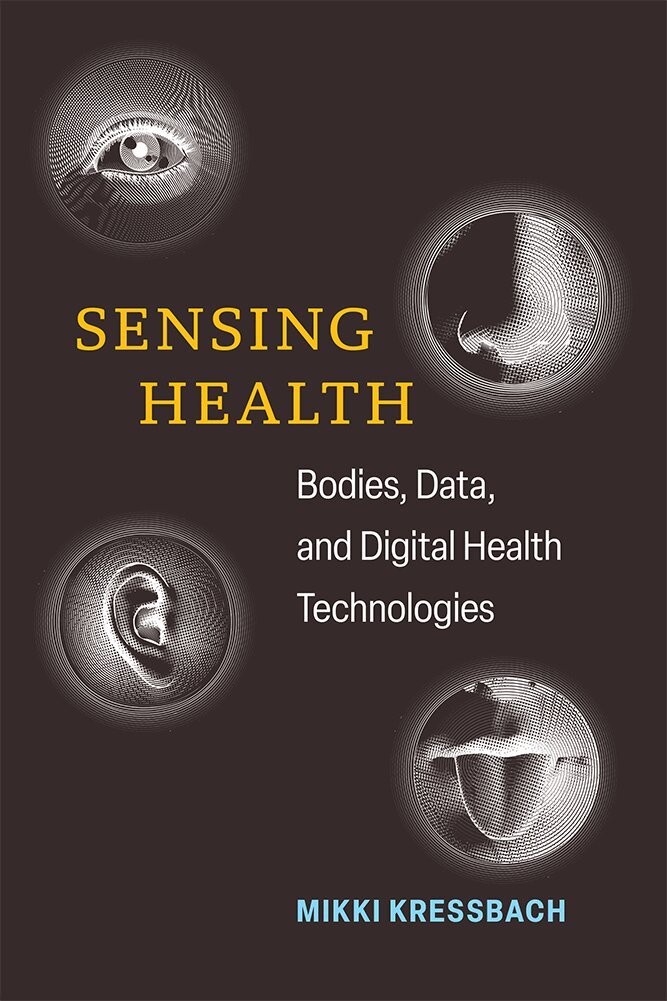
In the age of Apple Watches and Fitbits, the concept of “health” emerges through an embodied experience of a digital health device or platform, not simply through the biomedical data it provides. Sensing Health: Bodies, Data, and Digital Health Technologies analyzes popular digital health technologies as aesthetic experiences to understand how these devices and platforms have impacted the way individuals perceive their bodies, behaviors, health, and well-being. By tracing design alongside embodied experiences of digital health, Kressbach shows how these technologies aim to quantify, track and regulate the body, while at the same time producing moments that bring the body’s affordances and relationship to the fore. This mediated experience of “health” may offer an alternative to biomedical definitions that define health against illness.To capture and analyze digital health experiences, Kressbach develops a method that combines descriptive practices from Film and Media Studies and Phenomenology. After examining the design and feedback structures of digital health platforms and devices, the author uses her own first-person accounts to analyze the impact of the technology on her body, behaviors, and perception of health. Across five chapters focused on different categories of digital health—menstrual trackers, sexual wellness technologies, fitness trackers, meditation and breathing technologies, and posture and running wearables—Sensing Health demonstrates a method of analysis that acknowledges and critiques the biomedical structures of digital health technology while remaining attentive to the lived experiences of users. Through a focus on the intersection of technological design and experience, this method can be used by researchers, scholars, designers, and developers alike.
292 kr
Skickas inom 7-10 vardagar
Publishing Beyond the Market argues that the move to open access should focus less on the free accessibility of research outputs and more on who controls the publications and infrastructures for scholarly communication. By deploying theoretical literature on science and technology studies, care ethics, and the commons, the book critically interrogates open access and reimagines a more ethical future for researcher-led publishing. A case study of Plan S—the multifunder European policy for open access publishing—explores its tendency to rehearse all the failures of commercialisation. Through critical engagement with the open access landscape, the book reveals the shortcomings of market-centric and policy-based approaches to open access book and journal publishing, particularly their tendency to reinforce conservatism, commercialism, and private control of publishing.Going forward, Publishing Beyond the Market explores the importance of collectivity and democratic governance within the transition to open access publishing. It suggests that developing a commons-based, scholar-led publishing landscape through a series of presses that are each managed by working academics could offer a productive counterpoint to marketised systems of open access and subscription publishing. In weaving themselves together in order to “scale small” these publishing initiatives would act as a counter-hegemonic project based on mutual reliance and care. By illustrating how these projects build toward a commons-based publishing future, and how they may complement other approaches to publishing within university presses and libraries, the book culminates in an argument for the infrastructures, policies, and forms of governance needed to nurture such a collective vision.
359 kr
Skickas inom 7-10 vardagar
Examining celebrity and fan studies together, Professor Superstar argues that academia shares key traits with fandom, including collective emotional investment, shared interpretation of texts, and identity formation. Universities are often seen as isolated from everyday life, creating an atmosphere of both fascination and resentment. Some academics even go on to become field-specific microcelebrities. Some celebrate their influence while others resent their prominence, leading to both fandom and anti-fandom and reflecting broader social struggles as universities become battlegrounds for economic and political debates. The audiences engaging with academia extend beyond the students and faculty directly involved, creating multiple and conflicting interpretations of what academia represents. Public perceptions of academia are shaped less by its reality than by competing narratives about its role in society. By taking these dynamics seriously, we can better understand the cultural forces shaping both admiration and hostility toward higher education.
1 054 kr
Skickas inom 7-10 vardagar
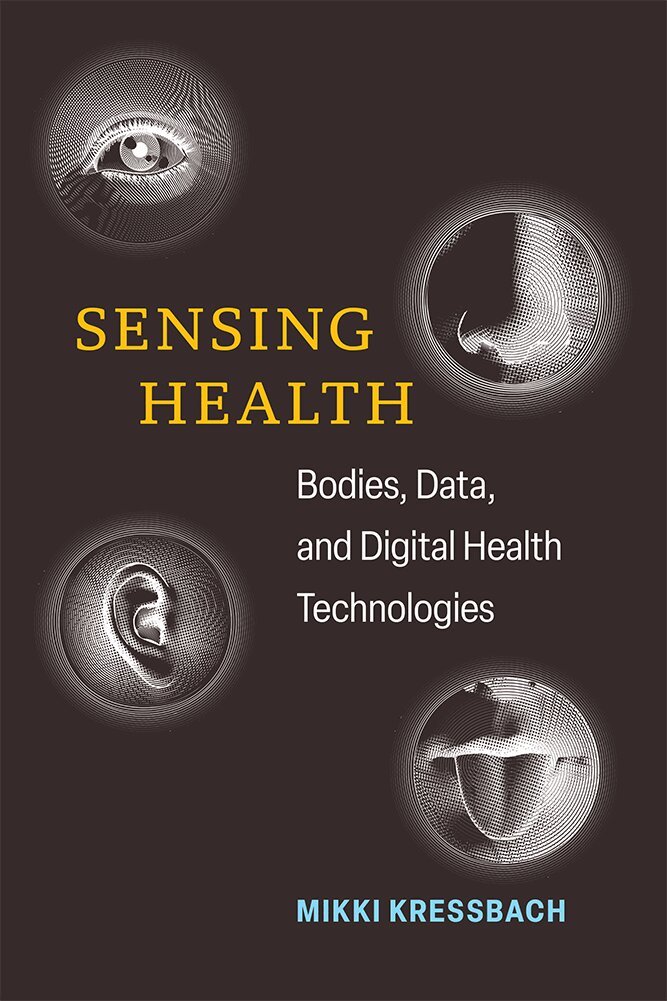
In the age of Apple Watches and Fitbits, the concept of “health” emerges through an embodied experience of a digital health device or platform, not simply through the biomedical data it provides. Sensing Health: Bodies, Data, and Digital Health Technologies analyzes popular digital health technologies as aesthetic experiences to understand how these devices and platforms have impacted the way individuals perceive their bodies, behaviors, health, and well-being. By tracing design alongside embodied experiences of digital health, Kressbach shows how these technologies aim to quantify, track and regulate the body, while at the same time producing moments that bring the body’s affordances and relationship to the fore. This mediated experience of “health” may offer an alternative to biomedical definitions that define health against illness.To capture and analyze digital health experiences, Kressbach develops a method that combines descriptive practices from Film and Media Studies and Phenomenology. After examining the design and feedback structures of digital health platforms and devices, the author uses her own first-person accounts to analyze the impact of the technology on her body, behaviors, and perception of health. Across five chapters focused on different categories of digital health—menstrual trackers, sexual wellness technologies, fitness trackers, meditation and breathing technologies, and posture and running wearables—Sensing Health demonstrates a method of analysis that acknowledges and critiques the biomedical structures of digital health technology while remaining attentive to the lived experiences of users. Through a focus on the intersection of technological design and experience, this method can be used by researchers, scholars, designers, and developers alike.
1 119 kr
Skickas inom 7-10 vardagar
Examining celebrity and fan studies together, Professor Superstar argues that academia shares key traits with fandom, including collective emotional investment, shared interpretation of texts, and identity formation. Universities are often seen as isolated from everyday life, creating an atmosphere of both fascination and resentment. Some academics even go on to become field-specific microcelebrities. Some celebrate their influence while others resent their prominence, leading to both fandom and anti-fandom and reflecting broader social struggles as universities become battlegrounds for economic and political debates. The audiences engaging with academia extend beyond the students and faculty directly involved, creating multiple and conflicting interpretations of what academia represents. Public perceptions of academia are shaped less by its reality than by competing narratives about its role in society. By taking these dynamics seriously, we can better understand the cultural forces shaping both admiration and hostility toward higher education.