Ecostacking Series - Böcker
Visar alla böcker i serien Ecostacking Series. Handla med fri frakt och snabb leverans.
2 produkter
2 produkter
1 295 kr
Skickas
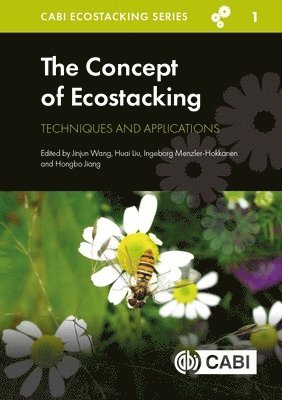
Ecostacking is a new concept and approach which aims to maximize the benefits of ecosystem service providers in cropping systems to help achieve the goal of long-term sustainable agriculture and food production. The term "ecostacking" means combining synergistically the beneficial services of functional biodiversity from all levels and types. It is a comprehensive approach, where the various ecosystem service providers are fully integrated with the rest of the cropping system including agronomic practices. It is an approach which goes beyond conventional Integrated Pest Management practises, and attempts to take advantage of all the functional biodiversity of a system. The main focus of ecostacking is on maximizing ecosystem services for biological control and pollination from beneficial arthropods, but the approach also utilizes other invertebrates (e.g., earthworms) as well as beneficial vertebrates such as bats, birds and small mammals. Microbes also provide invaluable ecosystem services including pest, disease, and weed control, either directly as components of "suppressive soils" or as plant colonizers (as endophytes or as epiphytic microbial flora). The ecostacking approach also aims to maximize other nature-provided services such as maintenance of soil health and nutrient cycling. The Concept of Ecostacking is the first book in a series which introduces ecostacking concepts to the reader and explores how this approach can be used in a variety of ways and in different cropping systems. The book defines this new concept and shows, using illustrative case studies from around the world, how ecostacking principles can be successfully employed in cropping systems in the open field, in greenhouses and in forestry. This book: · will serve as inspiration for developing further applications of this breakthrough technology for sustainable agricultural production. · is a must-read for everyone with an interest in developing sustainable crop protection systems and ecosystem management. · has been written and edited by the world's leading experts in this new and exciting endeavour.
1 644 kr
Skickas inom 7-10 vardagar
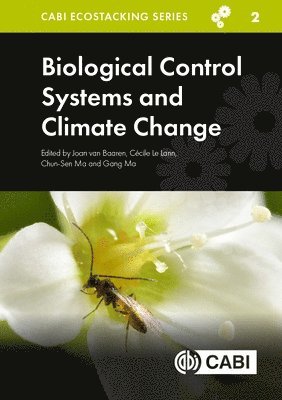
Biological control (or Biocontrol) is the use of natural enemies (predators, parasitoids or pathogens) for the control of pests in crops. In classical biological control, a natural enemy is introduced as a new predator to a range where it is not native. In augmentative biological control, a large number of natural enemies are introduced, either in an area with no natural enemies like glasshouses, or to augment natural populations, to ensure a rapid pest suppression. In conservation biological control, habitats surrounding and within crops are managed to favour an increase in natural enemy populations while suppressing pest populations. These agroecological systems can be complex, and are affected by climate change, both negatively and positively. The object of this book is to synthesize and summarize current knowledge of the many ways climate change can influence the effectiveness of biological control systems. The book introduces the reader to general concepts and then describes climate change effects on the large diversity of macro- and microorganisms involved in biocontrol, and the possible increase or decrease in pest outbreaks following changes in characteristics (morphology, physiology, behaviour....), distribution or phenology. It then outlines methods for mitigating the effects of climate change through the adaptation of biological control strategies, including integrated pest management case studies from diverse continents and cultural contexts. Finally, it explores the economic and societal impacts of climate change on biological control systems. This is the second book in the CABI Ecostacking Series. Biological control is a major component of the ecostacking approach to cropping systems. It is intended for students, researchers, lecturers, and stakeholders engaged in biological control worldwide. It is also essential reading for research personnel and managers in companies that produce biological control agents for field application.