Edinburgh Classic Editions - Böcker
Visar alla böcker i serien Edinburgh Classic Editions. Handla med fri frakt och snabb leverans.
6 produkter
6 produkter
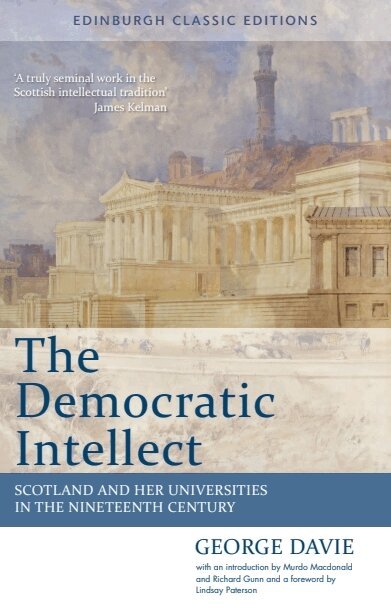
Democratic Intellect
Scotland and her Universities in the Nineteenth Century: Edinburgh Classic Editions
Häftad, Engelska, 2013
569 kr
Skickas inom 3-6 vardagar
An Edinburgh Classic edition of the cornerstone work on Scotland’s intellectual identityFirst published in 1961, The Democratic Intellect provoked a re-evaluation of Scotland’s philosophy of itself. George Davie's account of the history of the movements which set Scotland apart from its neighbours, and of the great personalities involved, has proved seminal in restoring to Scotland a sense of the value of its unique cultural identity. Scotland’s approach to higher education has always been distinctive. From the inauguration of its first universities, the accent was on first principles, and this broad, philosophical interpretation unified the approach to knowledge – even of mathematics and science. The resulting generalist tradition contrasted with the specialism of the two English universities, Oxford and Cambridge. It stood Scotland in good stead, characterising its intellectual life even into the nineteenth century when economic, social and political pressures enforced an increasing conformity to English models. The Democratic Intellect is rightly a benchmark in Scotland’s intellectual heritage and continues to have a marked influence on those now promoting enquiry and improvement within our colleges and universities.An introduction by Murdo Macdonald and Richard Gunn and a foreword by Lindsay Paterson set the book in context for this Classic Edition, reissued to coincide with the Scotland Independence debate of 2014.Key Features:New Edinburgh Classic edition at accessible price New preface and foreword setting the book in context Launches a series of Edinburgh Classics in Scottish History Will contribute to the Independence debate of 2014 Key words:Scotland, education, history, philosophy, classic, Enlightenment, George DavieSubject:Scottish History
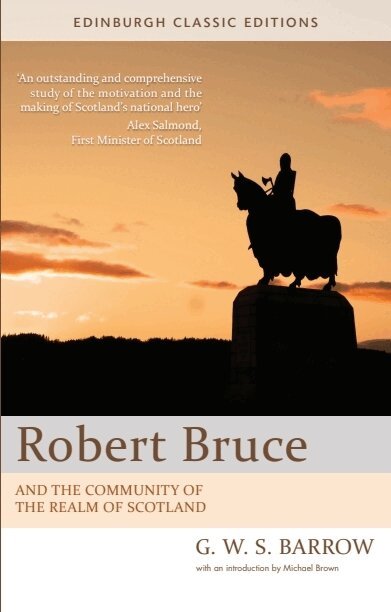
Robert Bruce
And the Community of the Realm of Scotland: An Edinburgh Classic Edition
Häftad, Engelska, 2013
569 kr
Skickas inom 3-6 vardagar
A new in paperback edition commemorating the 700th anniversary of the Battle of Bannockburn, 1314This classic edition of the definitive history of Robert Bruce’s life and career, during Scotland’s tumultuous coming of age in the Wars of Independence, is one of the twentieth century’s bona-fide classics in historical writing.First published in 1965, ROBERT BRUCE was quickly recognised as an indispensable guide to understanding Scotland’s complex game of thrones and its medieval society. The central theme of this seminal work remains the interplay and tension between Bruce himself and the very concept of a Scottish nation, of which Bruce aspired to be king. The chief shift in emphasis in this history was to demonstrate the continuity and unity of purpose which linked the stake-holders of a nascent Scottish realm throughout the period from 1290 to 1329. In this bloody period of political intrigue, battlefield heroism and variable loyalties, a singularly Scottish identity was born in campaigns against English claims, culminating in the Battle of Bannockburn in June 1314, the fulcrum around which Bruce built a nation and a Scottish peace.
569 kr
Skickas inom 3-6 vardagar
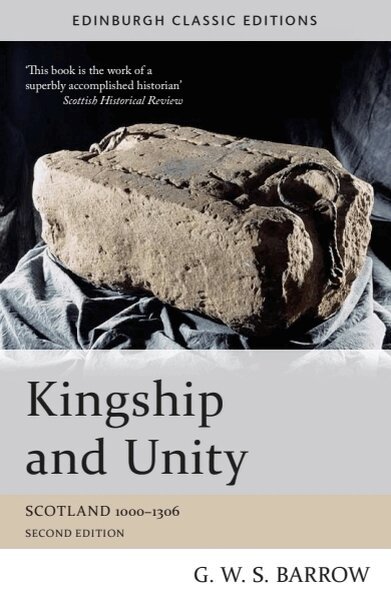
A stunning overview of the medieval landscape of ScotlandThis is a history of the forging of the Scottish kingdom during the first three centuries of the second millennium. In AD 1000 the Scottish kings had embarked on the annexation of English-speaking Lothian and of Cumbric-speaking Clydesdale, Ayrshire and Dumfriesshire. The country’s enlargement continued under a line of remarkably able kings with the inclusion first of the highlands and then, after the defeat of the Norwegians in 1263, of the islands of the Inner and Outer Hebrides. How Scotland’s landscape influenced its people and conditioned its outlook on the world is a theme running throughout the book.Geoffrey Barrow describes the evolution of Scottish kingship and government during the period, in the process examining the character of Scottish feudalism and the manner of its imposition. He discusses the social, economic and political changes of the period, with separate chapters on the expansion of towns and trade, the role of the church, and advances in education and learning. A sense of national identity had, he argues, become sufficiently strong by the end of the thirteenth century for the country to survive humiliation by Edward I and to reunite under Robert Bruce. With Bruce’s coronation as Robert I in 1306 this richly detailed and readable account of Scotland’s formative period comes to an end.Since first publication in 1981, this reissued edition for The Edinburgh Classic Editions series, as indicated in the preface by the series editor Jenny Wormald, can now rightly take its place amongst the classics of Scottish history.Key features:Long seen as a key text for students of medieval ScotlandWritten by a respected and renowned historianReadable, cinematic in scope, colourful and scholarly at the same time
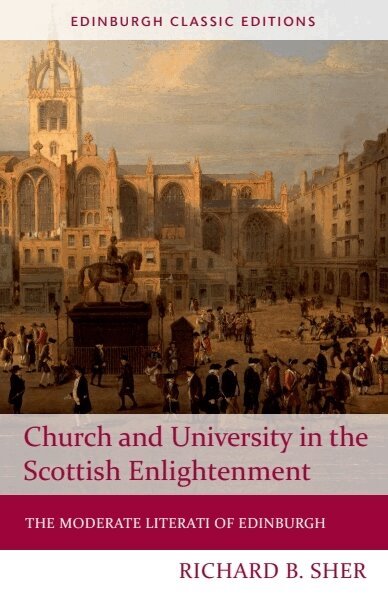
Church and University in the Scottish Enlightenment
The Moderate Literati of Edinburgh
Häftad, Engelska, 2015
309 kr
Skickas
Since its original publication in 1985, Church and University in the Scottish Enlightenment has come to be regarded as a classic work in eighteenth-century Scottish history and Enlightenment studies. It depicts Hugh Blair, Alexander Carlyle, Adam Ferguson, John Home, and William Robertson as an intimate coterie that played a central role in the Scottish Enlightenment, seen here not only as an intellectual but as a cultural movement. These men were among the leaders in the University of Edinburgh, in the Moderate party in the Church of Scotland, and in Edinburgh’s thriving clubs. They used their institutional influence and their books, plays, sermons, and pamphlets to promulgate the tenets of Moderatism, including polite Presbyterianism, Christian Stoicism, civic humanism, social and political conservatism, and the tolerant, cosmopolitan values of the international Enlightenment. Using a wide variety of sources and an interdisciplinary methodology, this collective biography portrays these "Moderate literati" as zealous activists for the cause in which they believed, ranging from support for a Scots militia, Ossian, and Roman Catholic relief to opposition to the Jacobite rebellion of 1745 and the American and French Revolutions.
318 kr
Skickas
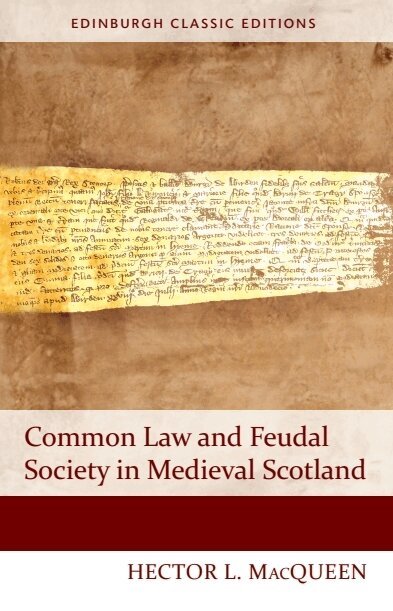
An influential and key modern text in Scottish legal historyExploring the relationship between law and society, this classic edition of Common Law and Feudal Society brings a key legal history text back to life in a popular new series, affordable for the student of early Scottish legal history.The close links between the Scots and English law in the Middle Ages have long been recognised, but this classic text assesses the relevance of traditional approaches to Scottish legal history, setting the development of medieval law within the context of a society in which private lordship, exercised through courts and other less formal methods of dispute settlement, played a key role alongside royal justice.Based on extensive research, this book examines the brieves of novel dissasine, mortancestry and right, and legal remedies for the recovery of land, as well as aspects of the early history of the Scottish legal profession and the origins of the Court of Session.
306 kr
Skickas inom 11-20 vardagar
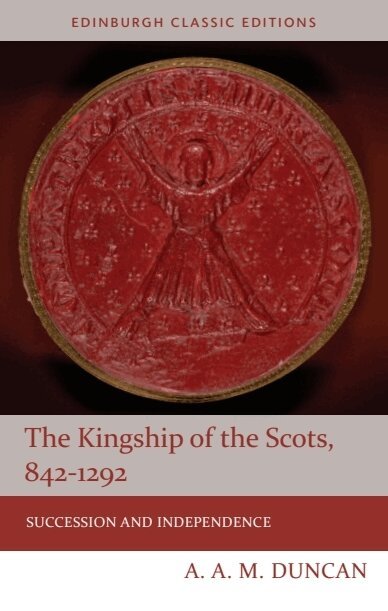
First published in 2002, and here introduced by Dauvit Broun as a core text in Scottish medieval history, this classic work is considered one of the most invaluable critiques of kingship in Scotland during the nation’s foundations. In the early years of the period a custom of succession within one royal lineage allowed the Gaelic kingdom to grow in authority and extent. The Norman Conquest of England altered the balance of power between the north and south, and the relationship between the two kingdoms, which had never been easy, became unstable. When Scotland became kingless in 1286, Edward I exploited the succession debate between Balliol and Bruce and set claim to overlordship of Scotland until Bruce’s coronation fixed the right of succession by law for Scottish kingship. In a meticulous account of this period, Professor Duncan disentangles the power struggles during the ‘Great Cause’ between the Balliols and the Bruces, and of the actions, motives and decisive interventions of Edward I. The Kingship of the Scots is historical scholarship at its best – thoughtful, challenging, incisive and readable.