Edinburgh Readings on the Ancient World - Böcker
Visar alla böcker i serien Edinburgh Readings on the Ancient World. Handla med fri frakt och snabb leverans.
12 produkter
12 produkter
1 822 kr
Skickas inom 7-10 vardagar
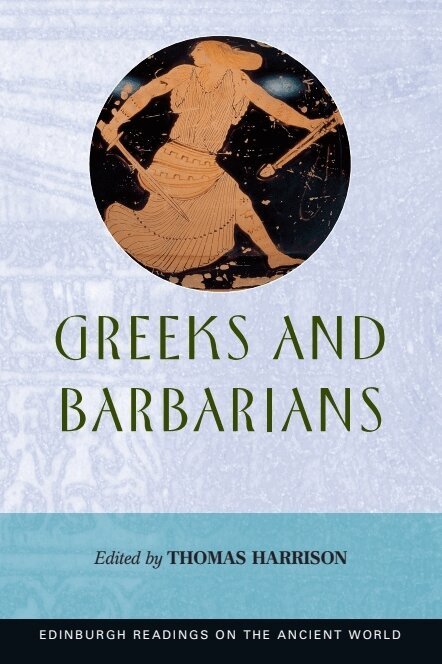
How did the Greeks view foreign peoples? This book considers what the Greeks thought of foreigners and their religions, cultures and politics, and what these beliefs and opinions reveal about the Greeks. The Greeks were occasionally intrigued by the customs and religions of the many different peoples with whom they came into contact; more often they were disdainful or dismissive, tending to regard non-Greeks as at best inferior, and at worst as candidates for conquest and enslavement. Facing up to this less attractive aspect of the classical tradition is vital, Thomas Harrison argues, to seeing both what the ancient world was really like and the full nature of its legacy in the modern. In this book he brings together outstanding European and American scholarship to show the difference and complexity of Greek representations of foreign peoples – or barbarians, as the Greeks called them – and how these representations changed over time.The book looks first at the main sources: the Histories of Herodotus, Greek tragedy, and Athenian art. Part II examines how the Greeks distinguished themselves from barbarians through myth, language and religion. Part III considers Greek representations of two different barbarian peoples – the allegedly decadent and effeminate Persians, and the Egyptians, proverbial for their religious wisdom. In part IV three chapters trace the development of the Greek–barbarian antithesis in later history: in nineteenth-century scholarship, in Byzantine and modern Greece, and in western intellectual history.Of the twelve chapters six are published in English for the first time. The editor has provided an extensive general introduction, as well as introductions to the parts. The book contains two maps, a guide to further reading and an intellectual chronology. All passages of ancient languages are translated, and difficult terms are explained.
414 kr
Skickas inom 11-20 vardagar
How did the Greeks view foreign peoples? This book considers what the Greeks thought of foreigners and their religions, cultures and politics, and what these beliefs and opinions reveal about the Greeks. The Greeks were occasionally intrigued by the customs and religions of the many different peoples with whom they came into contact; more often they were disdainful or dismissive, tending to regard non-Greeks as at best inferior, and at worst as candidates for conquest and enslavement. Facing up to this less attractive aspect of the classical tradition is vital, Thomas Harrison argues, to seeing both what the ancient world was really like and the full nature of its legacy in the modern. In this book he brings together outstanding European and American scholarship to show the difference and complexity of Greek representations of foreign peoples – or barbarians, as the Greeks called them – and how these representations changed over time.The book looks first at the main sources: the Histories of Herodotus, Greek tragedy, and Athenian art. Part II examines how the Greeks distinguished themselves from barbarians through myth, language and religion. Part III considers Greek representations of two different barbarian peoples – the allegedly decadent and effeminate Persians, and the Egyptians, proverbial for their religious wisdom. In part IV three chapters trace the development of the Greek–barbarian antithesis in later history: in nineteenth-century scholarship, in Byzantine and modern Greece, and in western intellectual history.Of the twelve chapters six are published in English for the first time. The editor has provided an extensive general introduction, as well as introductions to the parts. The book contains two maps, a guide to further reading and an intellectual chronology. All passages of ancient languages are translated, and difficult terms are explained.
414 kr
Skickas inom 11-20 vardagar
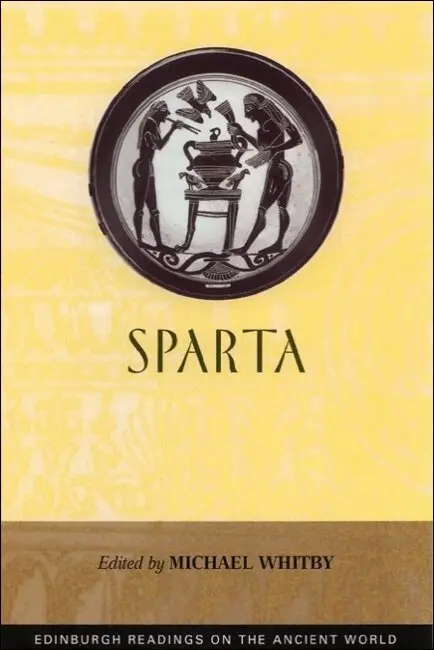
This volume introduces the reader to every important aspect of the society of Sparta, the dominant power in southern Greece from the seventh century BC and the great rival of democratic Athens in the fifth and fourth centuries. During this period Sparta evolved a unique social and political system that combined egalitarian structures, military ideals and brutal oppression, and permitted male citizens to focus on the practice of war. The system fascinated scholars at the time and has done so ever since: its outlines are clear, but because of the nature of the evidence almost all detailed aspects of Spartan social practices and constitutional affairs are open to debate. Michael Whitby introduces and presents some of the most outstanding contributions to the history of Sparta. Together they cover the key aspects of Spartan history and society: its problematic early history, social and economic organisation (especially the different categories of citizens and non-citizens), international relations and military achievements, religious practices and culture, the role of women, and sexual conduct and values. He has chosen them partly for their clarity and importance, and partly too for the questions they raise about the problems of studying Sparta - what evidence to consider, what precautions need to be observed in considering it, and what sorts of conclusions it is reasonable to draw. His intention is not to pretend that definitive answers can be offered to the main problems of Sparta but to encourage readers to formulate their own approaches and judgements with due respect for the limitations of the evidence and awareness of the benefits of informed speculation.
2 872 kr
Skickas inom 3-6 vardagar
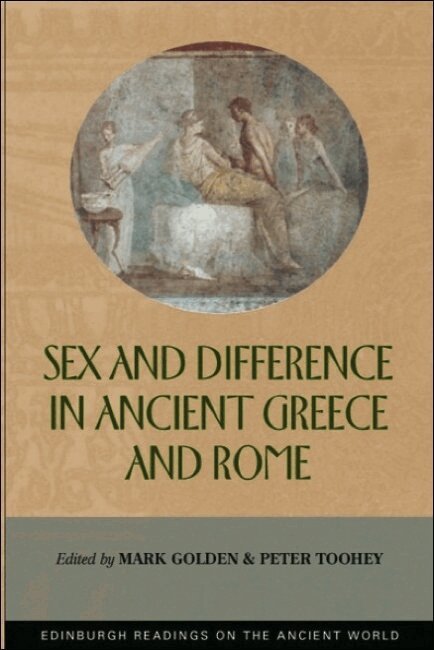
This volume collects and introduces some of the best writing on sexual behaviour and gender differences in ancient Greece and Rome including four chapters newly translated from German and French. For centuries discussions of sexuality and gender in the ancient world, if they took place at all, focussed on how the roles and spheres of the sexes were divided. While men occupied the public sphere of the community, ranged through the Greek and Roman worlds and participated in politics, courts, theatre and sport, women kept to the home. Sex occupied a separate sphere, in scholarly terms restricted to specialists in ancient medicine. And then the subjects were transformed, first by Sir Kenneth Dover, then by Michel Foucault.This book charts and illustrates the extraordinary evolution of scholarly investigation of a once hidden aspect of the ancient world. In doing so it sheds light on fascinating and curious aspects of ancient lives and thought.
654 kr
Skickas inom 3-6 vardagar
This volume collects and introduces some of the best writing on sexual behaviour and gender differences in ancient Greece and Rome including four chapters newly translated from German and French. For centuries discussions of sexuality and gender in the ancient world, if they took place at all, focussed on how the roles and spheres of the sexes were divided. While men occupied the public sphere of the community, ranged through the Greek and Roman worlds and participated in politics, courts, theatre and sport, women kept to the home. Sex occupied a separate sphere, in scholarly terms restricted to specialists in ancient medicine. And then the subjects were transformed, first by Sir Kenneth Dover, then by Michel Foucault.This book charts and illustrates the extraordinary evolution of scholarly investigation of a once hidden aspect of the ancient world. In doing so it sheds light on fascinating and curious aspects of ancient lives and thought.
726 kr
Skickas inom 3-6 vardagar
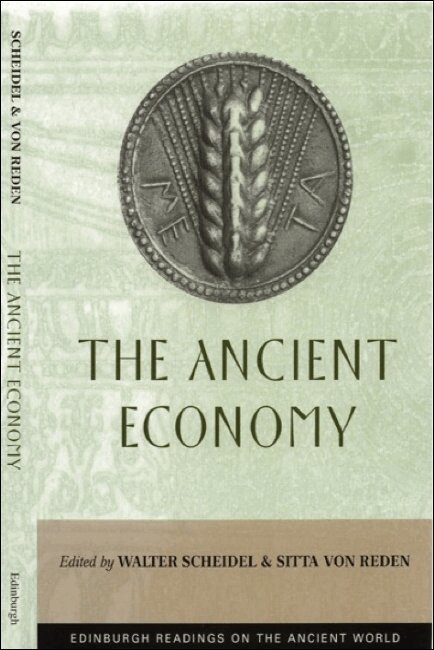
Introducing students to current controversies over the nature of the ancient economy, this volume brings together twelve influential studies by leading experts in the field. In 1973, Moses Finley unveiled a comprehensive model of the economic underpinnings of classical civilisation. Since then, supporters and critics have turned the study of the ancient economy into what has been called ‘an academic battleground’. In recent years, however, a growing number of scholars have aimed to move the debate beyond partisan controversies. This volume takes stock of these developments. Embracing a wide range of interdisciplinary perspectives derived from ecology, economics and cultural studies and drawing on literary, documentary and archaeological evidence, the contributions address crucial issues from agricultural production, the uses of money and the creation of markets to the scale of long-distance trade and economic growth in the Greek and Roman periods. In a general introduction and separate headnotes for each chapter, the editors provide a concise survey of recent debates, seeking to situate the different contributions in the broader context of contemporary scholarship. This is the first collection of its kind. It is designed to acquaint beginners as well as more advanced students with a variety of thematic and methodological approaches to the study of economic processes in the ancient world. All terms in foreign or ancient languages have been translated into English or explained in a comprehensive glossary. An up-to-date bibliographical essay covering pertinent scholarship in English offers guidance for further reading and the preparation of term papers.
705 kr
Skickas inom 3-6 vardagar
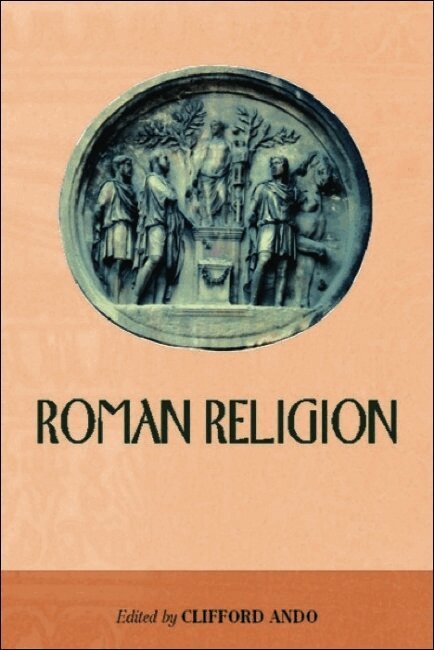
This book introduces students to the complex and foreign world of Roman religion and to major trends in its study. Praised in the Enlightenment for its supposed tolerance, it has been vilified for persecuting the early Christians. It professed a profound conservatism and yet received myths from Greece and Asia and gods from every corner of the Empire.Clifford Ando presents fourteen papers on central topics in the study of Roman religion and its connections with Roman literature, history and culture. Subjects treated include the nature and development of religious authority and religious institutions; the control of space and time; and religion's role in fashioning Roman identity. Also under discussion is the narration and analysis of Rome's transition from Republic to Empire.In introducing the volume and its individual parts, Clifford Ando considers issues of method and substance arising from the study of Roman religion and places each chapter in context. His selection of papers illustrates a range from approaches from Europe, Britain and America during a century of scholarship. Four papers are published in English for the first time. The book includes a chronology, biographical dictionary, glossary and guide to further reading; all passages of ancient languages are translated.
726 kr
Skickas inom 3-6 vardagar
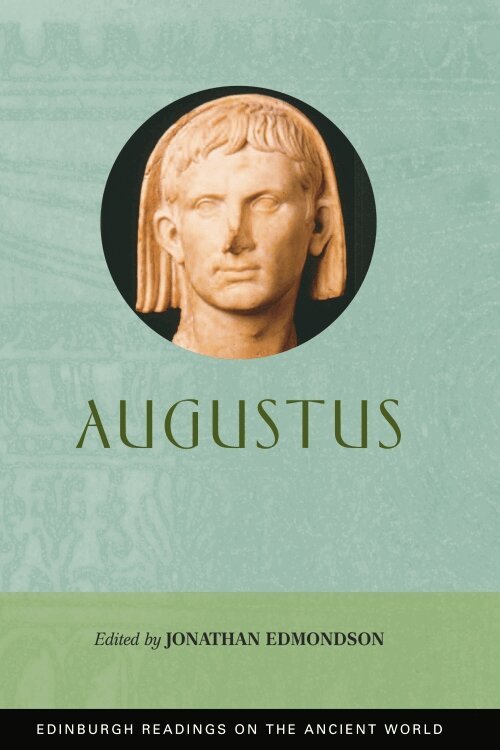
Augustus (63 BC – AD 14), the first Roman emperor, brought peace and stability to Rome after decades of strife and uncertainty. He put in place a new institutional framework for the Roman Empire and inspired the ideology that sustained it for the next three hundred years. This book presents a selection of the most important scholarship on Augustus and the contribution he made to the development of the Roman state in the early imperial period. The subjects of the selected papers include Augustus’ dramatic rise to prominence following the death of Julius Caesar in 44 BC and the nature of his powers first as triumvir, then as Princeps; his policy regarding overseas wars and expansion, his administrative and military reforms of the Roman state; the role of his own family, his wife Livia, his son-in-law Agrippa and his adopted sons Gaius and Lucius Caesar and then Tiberius, in public life; his concern to reinforce Roman religion and family life; the development of an ideology that helped bolster his authority as ruler of an expanded Empire, including the importance of visual imagery, monuments and literature in the far-flung propagation of his image as leader; and the impact that his regime made on the communities of the Roman provinces. Jonathan Edmondson sets these papers into the general context of major trends in the study of Augustus in Britain, Europe and North America since the nineteenth century. Five are published here in English for the first time and many include illustrations of the most important visual evidence for the principate of Augustus. The book is equipped with a chronology, a glossary and a guide to further reading; all passages in Latin and Greek are translated into English.
1 692 kr
Skickas inom 7-10 vardagar
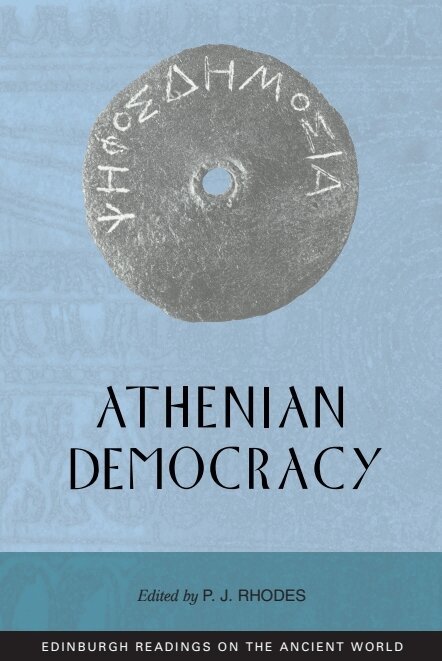
Athens’ democracy developed during the sixth and fifth centuries and continued into the fourth; Athens’ defeat by Macedon in 322 began a series of alternations between democracy and oligarchy. The democracy was inseparably bound up with the ideals of liberty and equality, the rule of law, and the direct government of the people by the people. Liberty meant above all freedom of speech, the right to be heard in the public assembly and the right to speak one’s mind in private. Equality meant the equal right of the male citizens (perhaps 60,000 in the fifth century, 30,000 in the fourth) to participate in the government of the state and the administration of the law. Disapproved of as mob rule until the nineteenth century, the institutions of Athenian democracy have become an inspiration for modern democratic politics and political philosophy. P. J. Rhodes’s reader focuses on the political institutions, political activity, history, and nature of Athenian democracy and introduces some of the best British, American, German and French scholarship on its origins, theory and practice. Part I is devoted to political institutions: citizenship, the assembly, the law-courts, and capital punishment. Part II explores aspects of political activity: the demagogues and their relationship with the assembly, the manoeuvrings of the politicians, competitive festivals, and the separation of public from private life. Part III looks at three crucial points in the development of the democracy: the reforms of Solon, Cleisthenes and Ephialtes. Part IV considers what it was in Greek life that led to the development of democracy. Some of the authors adopt broad-brush approaches to major questions; others analyse a particular body of evidence in detail. Use is made of archaeology, comparison with other societies, the location of festivals in their civic context, and the need to penetrate behind what the classical Athenians made of their past.
2 658 kr
Skickas inom 3-6 vardagar
In the fifth century BC, the Athenian Empire dominated the politics and culture of the Mediterranean world. Historians, then and now, have been fascinated by that domination, and continue to grapple with the problem of explaining and analysing it. This book offers a comprehensive, and multi-faceted, analysis of the history and significance of the Athenian Empire. It starts by exploring possible answers to the crucial questions of the origins and growth of the empire. Subsequent sections deal with the institutions and regulations of empire, and the mechanisms by which it was controlled; the costs and benefits of imperialism (for both rulers and ruled); and the ideological, cultural and artistic aspects of Athenian power. The articles collected here are among the most influential studies in the field, written by the foremost scholars of the 20th and 21st centuries. They engage with the full range of evidence available to the historian of the Athenian Empire – literary, epigraphic, archaeological and art-historical – and offer a compelling demonstration of the range of approaches, and conclusions, for which that evidence allows. The book includes a chronology and a guide to further reading. All passages of ancient Greek are translated and difficult terms are explained. One article has been translated and is available in English for the first time.Key Features:• Key articles are collected and available in one location• Articles in Greek and other foreign languages are translated into English• Provides access to a range of scholarly views on contested topics• Includes editorial introductions, timelines and a bibliography which provide orientation for students and scope for further study
2 365 kr
Tillfälligt slut
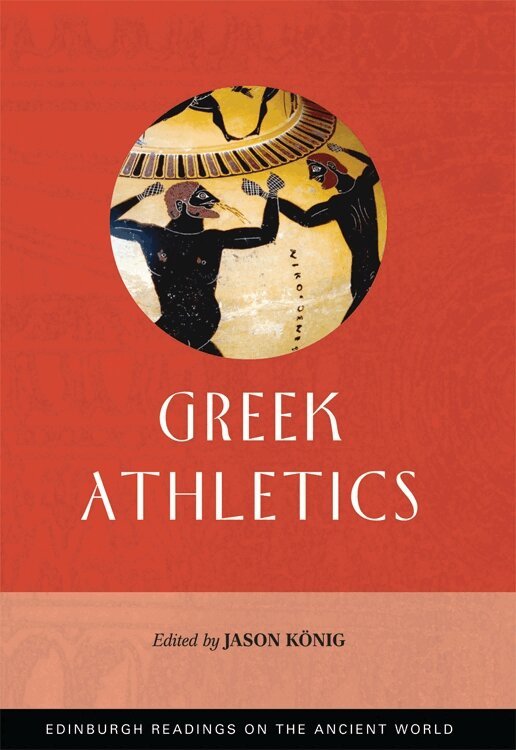
Athletic training and athletic competition were key features of ancient Greek life for more than 1,000 years, from the foundation of the Olympic festival in the eighth century BC into the Roman period. Recent years have seen an enormous growth in scholarship on the subject, and in undergraduate teaching, but many seminal articles remain inaccessible, especially to English-speaking readers. This volume brings together for the first time a collection of important pieces and extracts on core themes, covering gymnasium education, festival competition and victory, the role of athlectic activity in conceptions of ancient identity, and the reception of the ancient athletic heritage in the modern world. Features:• Five of the twelve pieces are translated for the first time from French and German • contains an extensive introduction covering key issues for study and research• brief editorial discussions of each of the articles are included.
726 kr
Skickas inom 3-6 vardagar
Exploring the past and rethinking the future of ancient sport studiesWhat did sporting competition and athletic education in the ancient world really involve? Why was it so highly valued? How did ancient athletic practices change over time? This volume answers these questions by bringing together a collection of important articles and book extracts by American and European scholars, covering gymnasium education, festival competition and victory, the role of athletic activity in conceptions of ancient identity, and the reception of the ancient athletic heritage in the modern world.Greek Athletics will appeal to anyone interested in ancient Greek history and ancient sport in particular.Key features:Offers a vivid summary of the key features of ancient athletic culture, together with discussion of recent progress in the field and possible future developmentsIncludes extensive supporting material: glossary, chronology, suggestions for further reading and comprehensive mapsFour pieces are translated for the first time from French and German into EnglishIncludes brief editorial discussions of each article