P. J. Rhodes – författare
Visar alla böcker från författaren P. J. Rhodes. Handla med fri frakt och snabb leverans.
21 produkter
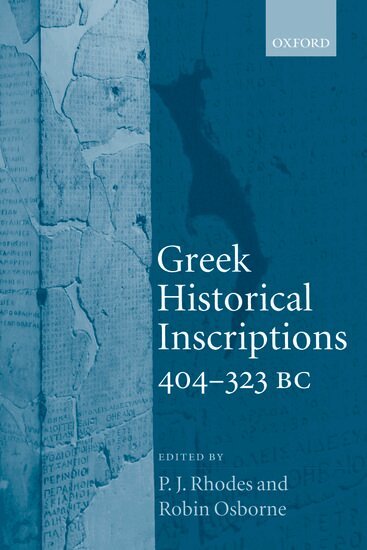
Greek Historical Inscriptions, 404-323 BC
Av Robin Osborne, P. J. Rhodes
E-bok, 2004
974 kr
Lägg i varukorg
This volume is a successor to the second volume of M. N. Tod''s Selection of Greek Historical Inscriptions (OUP, 1948). It provides an up-to-date selection - with introduction, Greek texts, English translations, and commentaries which cater for the needs of today''s students - of inscriptions which …
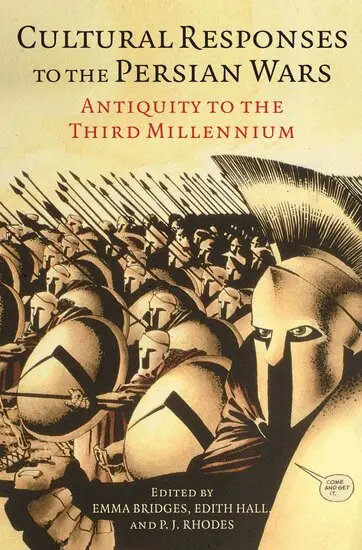
Cultural Responses to the Persian Wars
Antiquity to the Third Millennium
Av P. J. Rhodes, Edith Hall m. fl.
E-bok, 2007
1898 kr
Lägg i varukorg
Cultural Responses to the Persian Wars addresses the huge impact on subsequent culture made by the wars fought between ancient Persia and Greece in the early fifth century BC. It brings together sixteen interdisciplinary essays, mostly by classical scholars, on individual trends within the …
A Commentary on the Aristotelian Athenaion Politeia
Av P. J. Rhodes
Häftad, 1993
3101 kr
Lägg i varukorg
Since this commentary was first published in 1981, there have been important publications on many of the topics covered in the Athenaion Politeia, and in 1991 the centenary of the work's rediscovery was celebrated. In this new paperback version of the commentary, a section of addenda surveying …
The Decrees of the Greek States
Av P. J. Rhodes, David M. Lewis
Inbunden, 1997
7236 kr
Lägg i varukorg
The many states of the ancient greek world were governed by small councils and assemblies of adult male citizens. The decisions of these bodies took the form of decrees. This book collects the evidence for decrees, many of which were inscribed on stone or metal, or appear in literary texts - either …
Greek Historical Inscriptions, 404-323 BC
Av RHODES, P. J. Rhodes m. fl.
Inbunden, 2004
2517 kr
Lägg i varukorg
This volume is a successor to the second volume of M. N. Tod's Selection of Greek Historical Inscriptions (OUP, 1948). It provides an up-to-date selection - with introduction, Greek texts, English translations, and commentaries which cater for the needs of today's students - of inscriptions which …
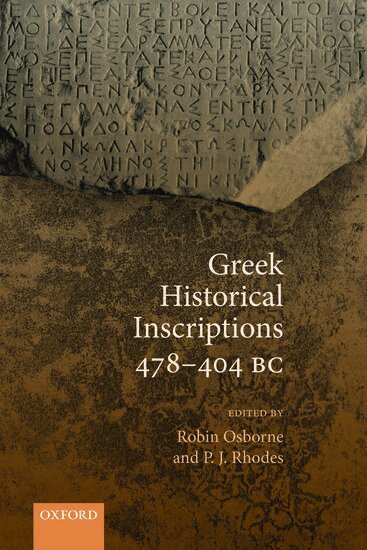
Greek Historical Inscriptions 478-404 BC
Av Robin Osborne, P. J. Rhodes
Häftad, 2020
870 kr
Lägg i varukorg
This volume is both a companion to the editors' Greek Historical Inscriptions, 404-323 BC, and a successor to the later part of the Selection of Greek Historical Inscriptions to the End of the Fifth Century BC, edited by Russell Meiggs and David M. Lewis and published in 1969. As with the editors' …
Greek Historical Inscriptions, 404-323 BC
Av P. J. Rhodes, Robin Osborne
Häftad, 2007
1534 kr
Lägg i varukorg
This volume is a successor to the second volume of M. N. Tod's Selection of Greek Historical Inscriptions (OUP, 1948). It provides an up-to-date selection - with introduction, Greek texts, English translations, and commentaries which cater for the needs of today's students - of inscriptions which …
Cultural Responses to the Persian Wars
Antiquity to the Third Millennium
Av BRIDGES, Emma Bridges m. fl.
Inbunden, 2007
3443 kr
Lägg i varukorg
Cultural Responses to the Persian Wars addresses the huge impact on subsequent culture made by the wars fought between ancient Persia and Greece in the early fifth century BC. It brings together sixteen interdisciplinary essays, mostly by classical scholars, on individual trends within the …
Greek Historical Inscriptions 478-404 BC
Av Robin Osborne, P. J. Rhodes
Inbunden, 2017
3896 kr
Lägg i varukorg
This volume is both a companion to the editors' Greek Historical Inscriptions, 404-323 BC, and a successor to the later part of the Selection of Greek Historical Inscriptions to the End of the Fifth Century BC, edited by Russell Meiggs and David M. Lewis and published in 1969. As with the editors' …
Selected Papers in Greek and Near Eastern History
Av David M. Lewis, P. J. Rhodes m. fl.
Inbunden, 1997
1861 kr
Lägg i varukorg
David M. Lewis (1928-1994) was one of the foremost historians of the ancient world, and was uniquely expert in both Greek and Near Eastern history. His name appears on the spine of numerous important books, but much of his most original and influential work was published in article form. The papers …
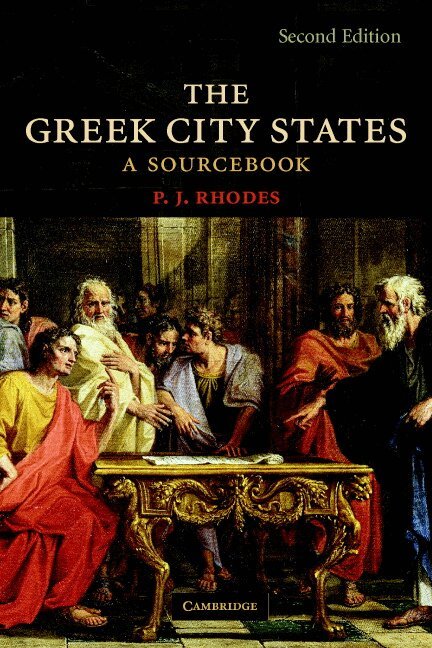
The Greek City States
A Source Book
Av P. J. Rhodes
Häftad, 2007
552 kr
Lägg i varukorg
Political activity and political thinking began in the cities and other states of ancient Greece, and terms such as tyranny, aristocracy, oligarchy, democracy and politics itself are Greek words for concepts first discussed in Greece. Rhodes presents in translation a selection of texts illustrating …
The Greek City States
A Source Book
Av P. J. Rhodes
Inbunden, 2007
1391 kr
Lägg i varukorg
Political activity and political thinking began in the cities and other states of ancient Greece, and terms such as tyranny, aristocracy, oligarchy, democracy and politics itself are Greek words for concepts first discussed in Greece. Rhodes presents in translation a selection of texts illustrating …
Ancient Democracy and Modern Ideology
Av P. J. Rhodes, Thomas Harrison
Häftad, 2003
346 kr
Lägg i varukorg
How should we study the democracy of classical Athens? How, if at all, is it relevant to our own world with its different forms of democracy? Attitudes to Athenian democracy have always been affectd by the circumstances of those studying it; but, after a period in which scholars professed …
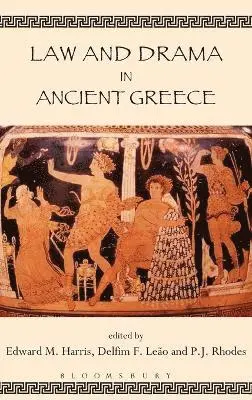
Law and Drama in Ancient Greece
Av Edward M. Harris, D. Leao m. fl.
Inbunden, 2010
2281 kr
Lägg i varukorg
The relationship between law and literature is rich and complex. In the past three and half decades, the topic has received much attention from literary critics and legal scholars studying modern literature. Despite the prominence of law and justice in Ancient Greek literature, there has been …
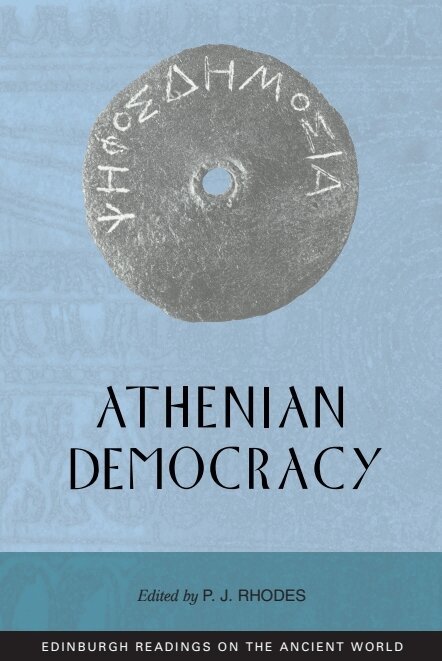
Athenian Democracy
Av P. J. Rhodes
Inbunden, 2004
1780 kr
Lägg i varukorg
Athens’ democracy developed during the sixth and fifth centuries and continued into the fourth; Athens’ defeat by Macedon in 322 began a series of alternations between democracy and oligarchy. The democracy was inseparably bound up with the ideals of liberty and equality, the rule of law, and the …
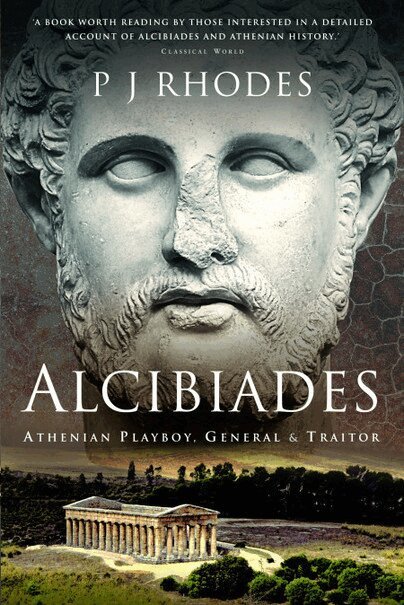
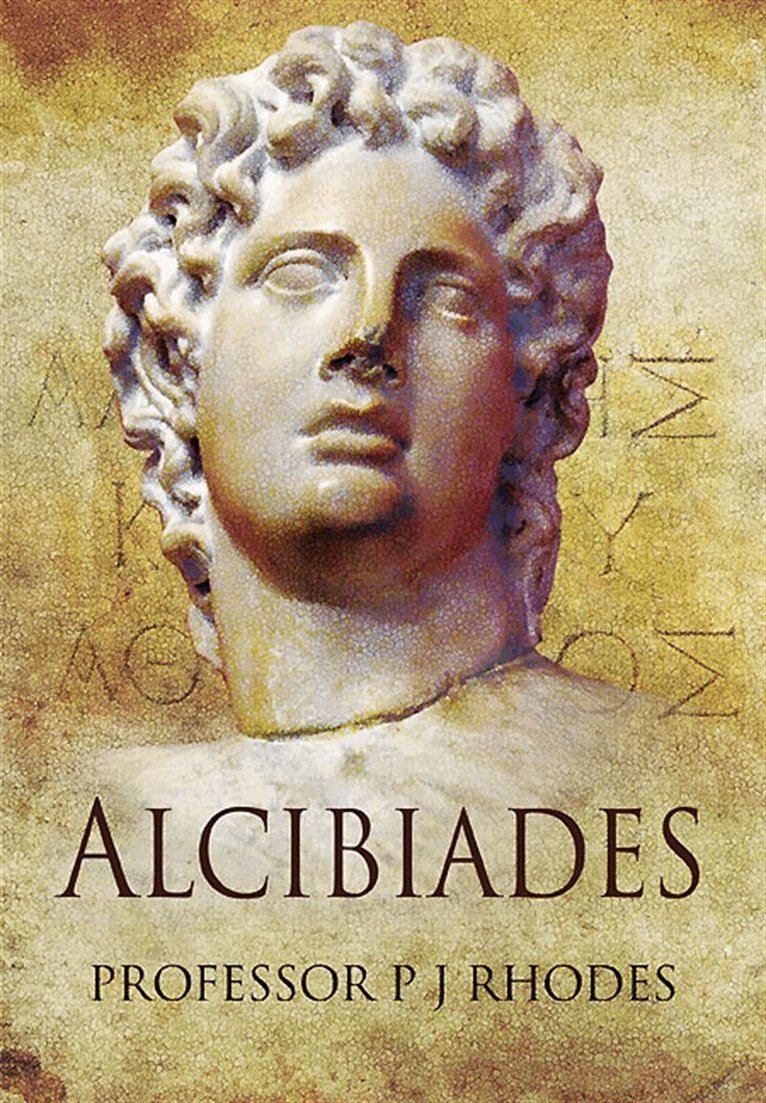
Alcibiades
Athenian Playboy, General and Traitor
Av P J Rhodes
Häftad, 2021
157 kr
Lägg i varukorg
Alcibiades is one of the most famous (or infamous) characters of Classical Greece. A young Athenian aristocrat, he came to prominence during the Peloponnesian War (429-404 BC) between Sparta and Athens. Flamboyant, charismatic (and wealthy), this close associate of Socrates persuaded the Athenians …
History of the Classical Greek World, 478 - 323 BC
Av P. J. Rhodes
E-bok, 2011
584 kr
Lägg i varukorg
This book gives an accessible account of classical Greek history, from the aftermath of the Persian Wars in 478 bc to the death of Alexander the Great in 323 bc. Covers political and military events, including: the flourishing of democracy in Athens; the Peloponnesian war, which involved the whole …
History of the Classical Greek World
478 - 323 BC
Av P. J. Rhodes
Häftad, 2010
525 kr
Lägg i varukorg
Thoroughly updated and revised, the second edition of this successful and widely praised textbook offers an account of the ‘classical’ period of Greek history, from the aftermath of the Persian Wars in 478 BC to the death of Alexander the Great in 323 BC. Two important new chapters have been added, …
History of the Classical Greek World
478 - 323 BC
Av P. J. Rhodes
E-bok, 2009
604 kr
Lägg i varukorg
Thoroughly updated and revised, the second edition of this successful and widely praised textbook offers an account of the ‘classical’ period of Greek history, from the aftermath of the Persian Wars in 478 BC to the death of Alexander the Great in 323 BC. Two important new chapters have been added, …
History of the Classical Greek World
478 - 323 BC
Av P. J. Rhodes
E-bok, 2011
604 kr
Lägg i varukorg
Thoroughly updated and revised, the second edition of this successful and widely praised textbook offers an account of the ‘classical’ period of Greek history, from the aftermath of the Persian Wars in 478 BC to the death of Alexander the Great in 323 BC. Two important new chapters have been added, …
Alcibiades
Av P J Rhodes
E-bok, 2021
130 kr
Lägg i varukorg
Alcibiades is one of the most famous (or infamous) characters of Classical Greece. A young Athenian aristocrat, he came to prominence during the Peloponnesian War (429-404 BC) between Sparta and Athens. Flamboyant, charismatic (and wealthy), this close associate of Socrates persuaded the Athenians …