Elements in Politics and Society from Central Europe to Central Asia – serie
Visar alla böcker i serien Elements in Politics and Society from Central Europe to Central Asia. Handla med fri frakt och snabb leverans.
4 produkter
4 produkter
748 kr
Skickas inom 7-10 vardagar
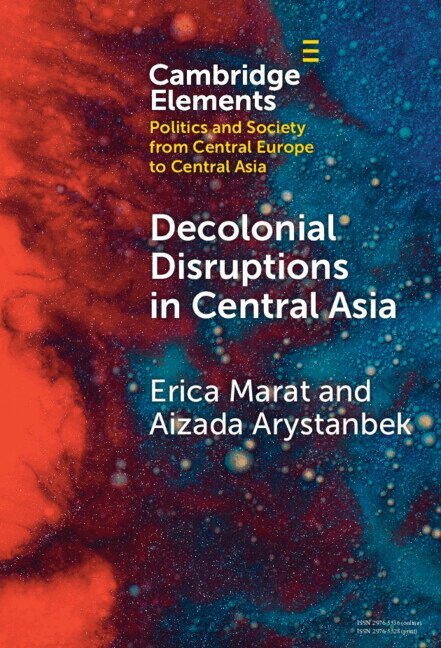
A consequential shift is taking place in Central Asian studies today. What started as a slow rejection of the idea that the region benefited from Soviet control has turned into a decentralized, collective effort to revise the region's relationship to its colonial identity and to search for indigenous interpretations of the self. This Element explores the current decolonial disruptions in Central Asia-how the region is being redefined by its inhabitants, both in discourse and in practice. It captures the main areas of activism in memory studies, language activism, art installations, and transnational solidarity networks. Decolonial discussions are gaining traction, challenging political elites' hegemony over national identity formation. Such changes harbour the potential to profoundly alter Russia's influence in the areas it once controlled. Decolonial disruptions are reshaping how Central Asians think about their past and imagine their future.
232 kr
Skickas inom 7-10 vardagar
A consequential shift is taking place in Central Asian studies today. What started as a slow rejection of the idea that the region benefited from Soviet control has turned into a decentralized, collective effort to revise the region's relationship to its colonial identity and to search for indigenous interpretations of the self. This Element explores the current decolonial disruptions in Central Asia-how the region is being redefined by its inhabitants, both in discourse and in practice. It captures the main areas of activism in memory studies, language activism, art installations, and transnational solidarity networks. Decolonial discussions are gaining traction, challenging political elites' hegemony over national identity formation. Such changes harbour the potential to profoundly alter Russia's influence in the areas it once controlled. Decolonial disruptions are reshaping how Central Asians think about their past and imagine their future.
748 kr
Kommande
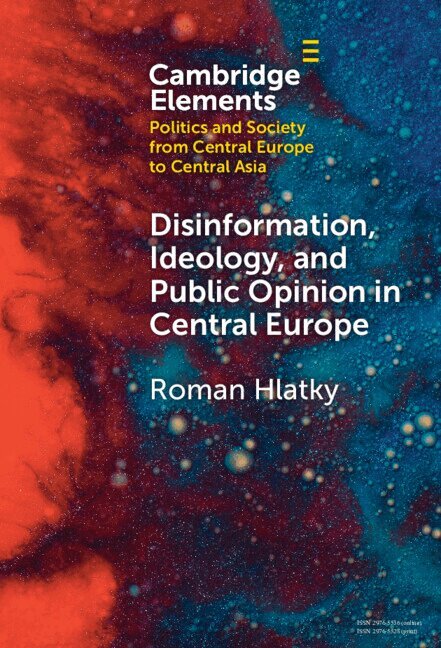
In Central and Eastern Europe, disinformation threatens democratic stability, inflames ideological divides, and weakens Western geopolitical commitments. Drawing on cross-national analyses, as well as in-depth studies of the Czech Republic and Slovakia, this Element analyzes: the relationship between ideological polarization and disinformation supply; the challenges of building anti-disinformation efforts; individual-level demand for disinformation; and the effects of disinformation on public opinion. Ideological polarization over sociocultural issues predicts disinformation supply, and sociocultural conservatives with anti-Western views constitute a disinformation-susceptible audience that struggles to distinguish between false and true narratives. Elite-level divisions over the threat posed by disinformation exacerbate these dynamics, hampering efforts to build disinformation resilience. However, disinformation largely fails to persuade. Amongst most individuals, attitudinal backlash is more common. Disinformation does not win over hearts and minds; rather, its appeal reflects the salience of contentious issues that have emerged as a result of wider political realignments.
232 kr
Kommande
In Central and Eastern Europe, disinformation threatens democratic stability, inflames ideological divides, and weakens Western geopolitical commitments. Drawing on cross-national analyses, as well as in-depth studies of the Czech Republic and Slovakia, this Element analyzes: the relationship between ideological polarization and disinformation supply; the challenges of building anti-disinformation efforts; individual-level demand for disinformation; and the effects of disinformation on public opinion. Ideological polarization over sociocultural issues predicts disinformation supply, and sociocultural conservatives with anti-Western views constitute a disinformation-susceptible audience that struggles to distinguish between false and true narratives. Elite-level divisions over the threat posed by disinformation exacerbate these dynamics, hampering efforts to build disinformation resilience. However, disinformation largely fails to persuade. Amongst most individuals, attitudinal backlash is more common. Disinformation does not win over hearts and minds; rather, its appeal reflects the salience of contentious issues that have emerged as a result of wider political realignments.