Elgar International Economic Law series – serie
Visar alla böcker i serien Elgar International Economic Law series. Handla med fri frakt och snabb leverans.
14 produkter
14 produkter
Häftad, Engelska, 2023
362 kr
Skickas inom 5-8 vardagar
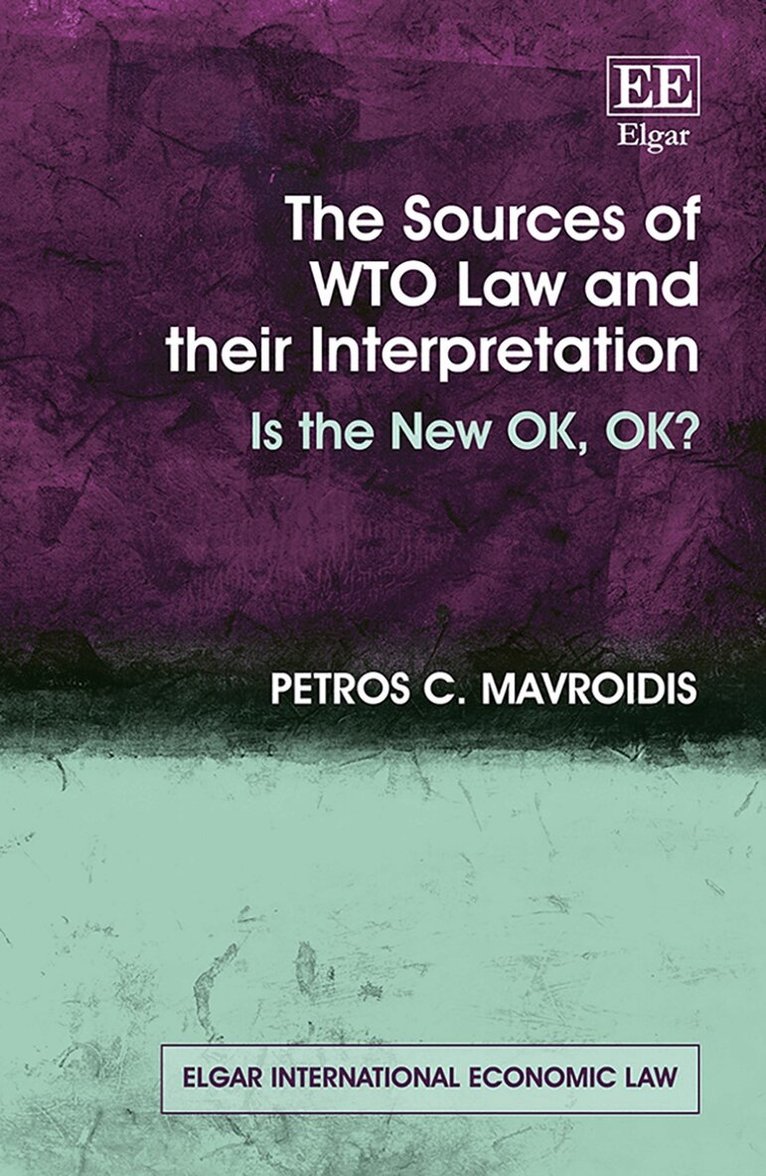
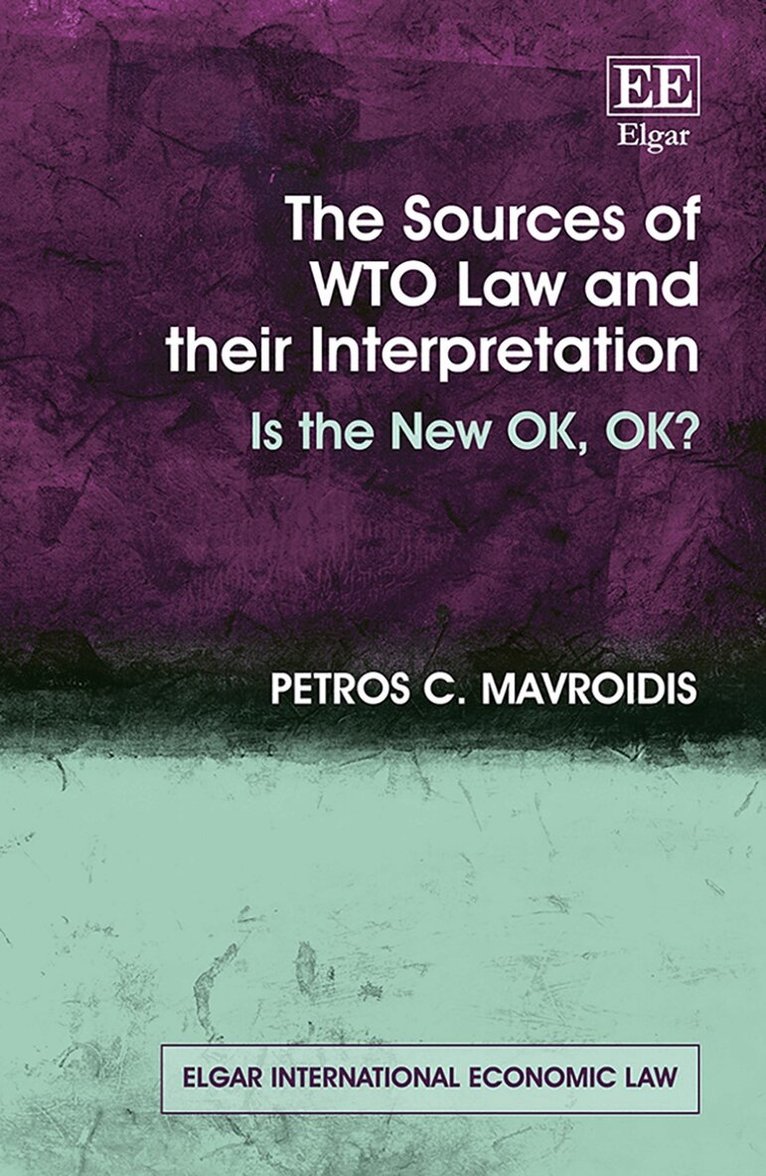
In this incisive book, Petros C. Mavroidis examines the complex practice of interpreting the various sources of World Trade Organization (WTO) law. Written by a leading expert in WTO scholarship, the book serves as a broad grounding in the legal theory of the WTO contract and its sources, as well as its application in practice. Delving into the workings of the Vienna Convention of the Law of Treaties (VCLT) and its use within the WTO courts, the author provides a critical assessment of the interpretation of the WTO contract and illuminates the role of WTO adjudicators and the Secretariat in clarifying obligations. Mavroidis then explores the uncertainty and distortion that emerge as a result of the discretion from adjudicators invited by the VCLT, explaining why this matters and offering steps towards resolving these issues. Providing an expansive analysis of the interpretation of WTO treaties, this book will be an invaluable resource for scholars and students in the field of WTO law, as well as international trade and economic law more broadly. Its discussion of the possible future of dispute settlement, particularly its proposal for a re-evaluation of the judicial selection process, will also prove insightful to practitioners in this area.
Inbunden, Engelska, 2025
1 591 kr
Skickas inom 5-8 vardagar
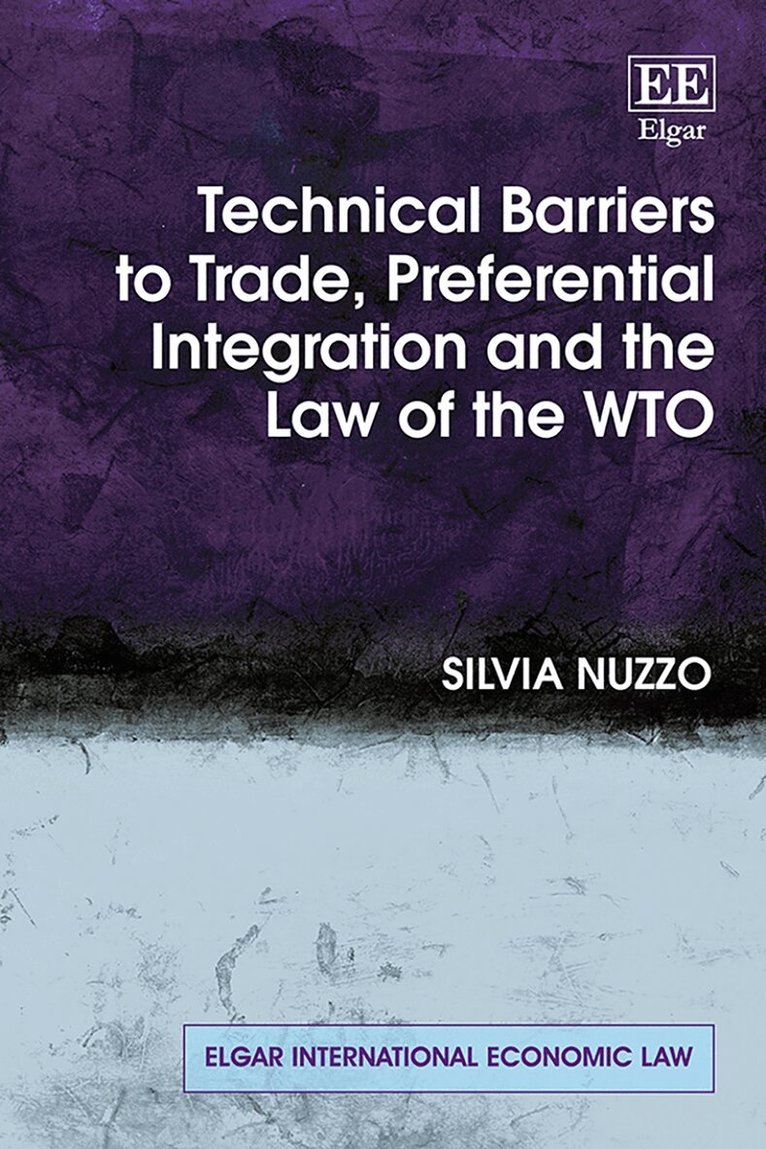
Against the backdrop of geopolitical uncertainty, and a departure from multilateralism, the WTO’s role in global trade is diminishing. In this insightful book, Silvia Nuzzo examines the increase in preferential trade agreements (PTAs) and more specifically, how these agreements regulate technical barriers to trade (TBTs). Nuzzo explores the extent to which these agreements uphold WTO obligations and what this may mean for the future of multilateral trade.Adopting a multi-faceted methodology, the book analyzes over 80 PTAs, including both Free Trade Agreements and Mutual Recognition Agreements. It covers a range of WTO members, from major trade actors such as the EU, the US, and China to developing countries, providing a comprehensive overview of trends in international trade across diverse economies. Nuzzo highlights the strategic value of TBTs such as regulating production standards, environmental protection, and security concerns, as well as their impact on international trade. Ultimately, the book sheds light on how the future of international trade will differ from its multilateral past, and demonstrates how the WTO, if reformed, can still play a crucial role in facilitating trade.Featuring data-driven analyses, this book is a vital read for scholars and students in international economic law, trade law, public international law, and international relations. It is also useful for lawyers advising governments, businesses, and trade associations, as well as policymakers and experts working with standardizing bodies.
Inbunden, Engelska, 2018
1 969 kr
Skickas inom 5-8 vardagar
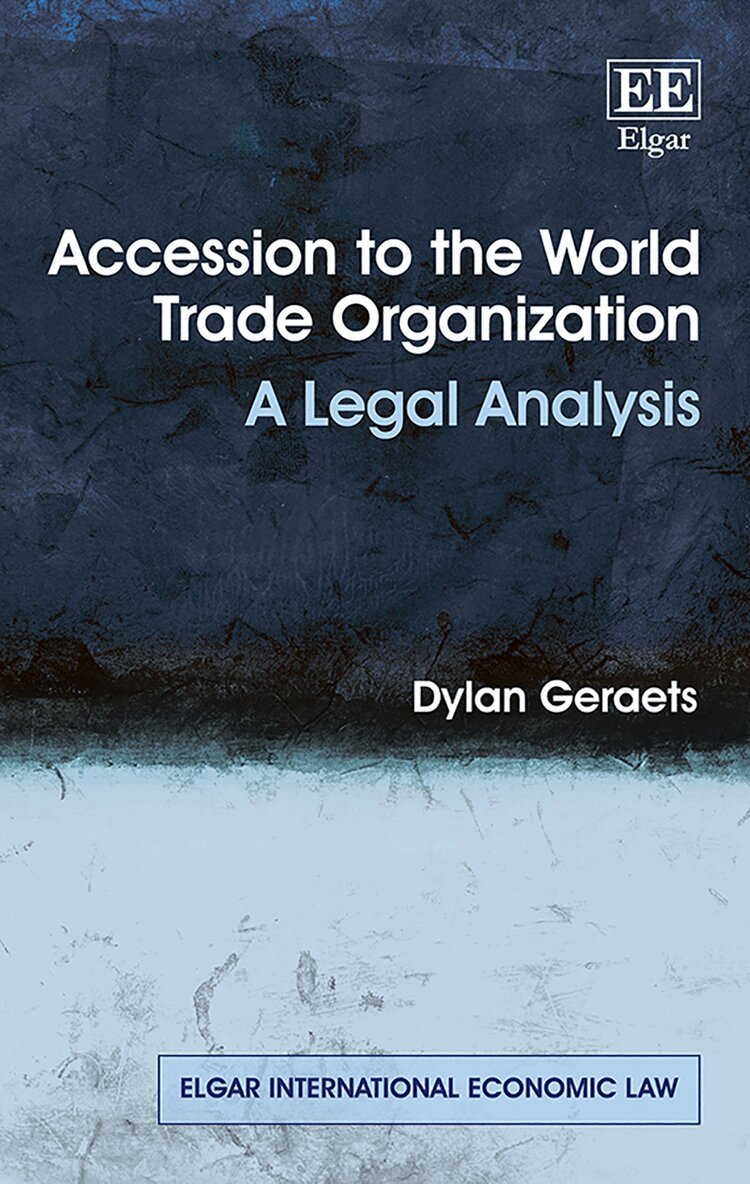
This detailed and perceptive book examines the extent and scope of how rules for accession to the WTO may vary between countries, approaching the concerns that some countries enter with a better deal than others. Dylan Geraets critiques these additional ‘rules’ and aims to answer the question of whether new Members of the WTO are under stricter rules than the original Members, whilst analysing the accession process to the multilateral trading system.Taking an integrated approach, the author combines the results of a Mapping Exercise of all 36 Protocols of accession with a legal analysis of the decisions by the WTO Dispute Settlement Body involving Protocols of Accession. In doing so, this book provides the first comprehensive analysis of the issue of Member-specific ‘WTO-Plus’ commitments in Protocols of Accession. Whilst addressing the institutional and historical aspects of the WTO accession process, it provides a vital update to the existing scholarship on WTO accession, offering coverage of all accessions including those of Afghanistan, Kazakhstan and Liberia.Accession to the World Trade Organization will be invaluable reading for academics interested in WTO accession practice, as well as lawyers, practitioners and government officials in the field of WTO accession.
Inbunden, Engelska, 2020
1 305 kr
Skickas inom 5-8 vardagar
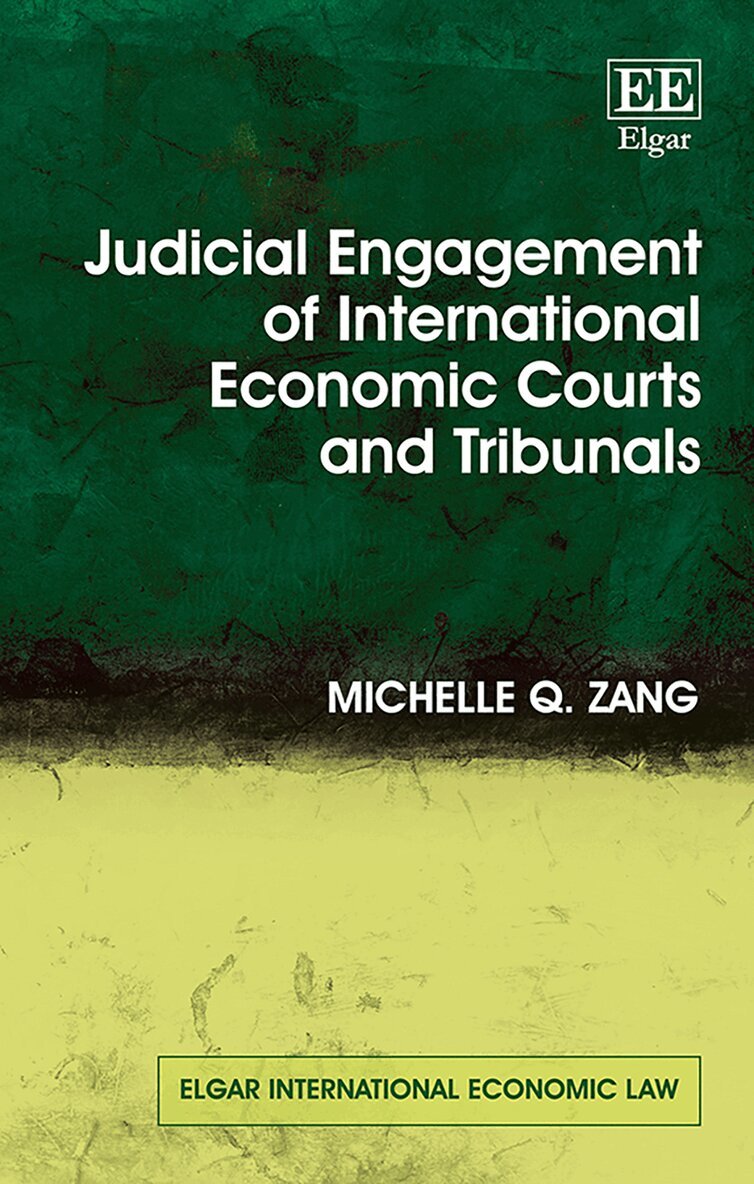
In this thought-provoking book, Michelle Q. Zang critically examines the practices and outcomes of international economic adjudication through an exploration of a selected group of specialized judicial actors. She draws on an in-depth review of decisions delivered by bilateral, regional and multilateral judiciaries in order to respond to questions surrounding the proliferation and fragmentation of international adjudication, including the concerns and challenges this raises.By disentangling and analysing the relationships between the various economic regimes involved, Zang reveals their substantial influence on the manner of engagement between specific adjudicators embedded in these regimes. The book also provides critical discussion about the development of international economic judiciaries, and explores the role of judicial bodies as regime coordinators within specialized and regional regimes under international law. It demonstrates that despite criticisms of plurality as the dominant phenomenon in international economic adjudication, it is not the sole root of the issues examined.Scholars and students of international law, in particular those interested in international adjudication and international economic law, will find this book to be crucial reading. It will also prove useful for practitioners specializing in international economic dispute settlement.
Inbunden, Engelska, 2021
1 863 kr
Skickas inom 5-8 vardagar
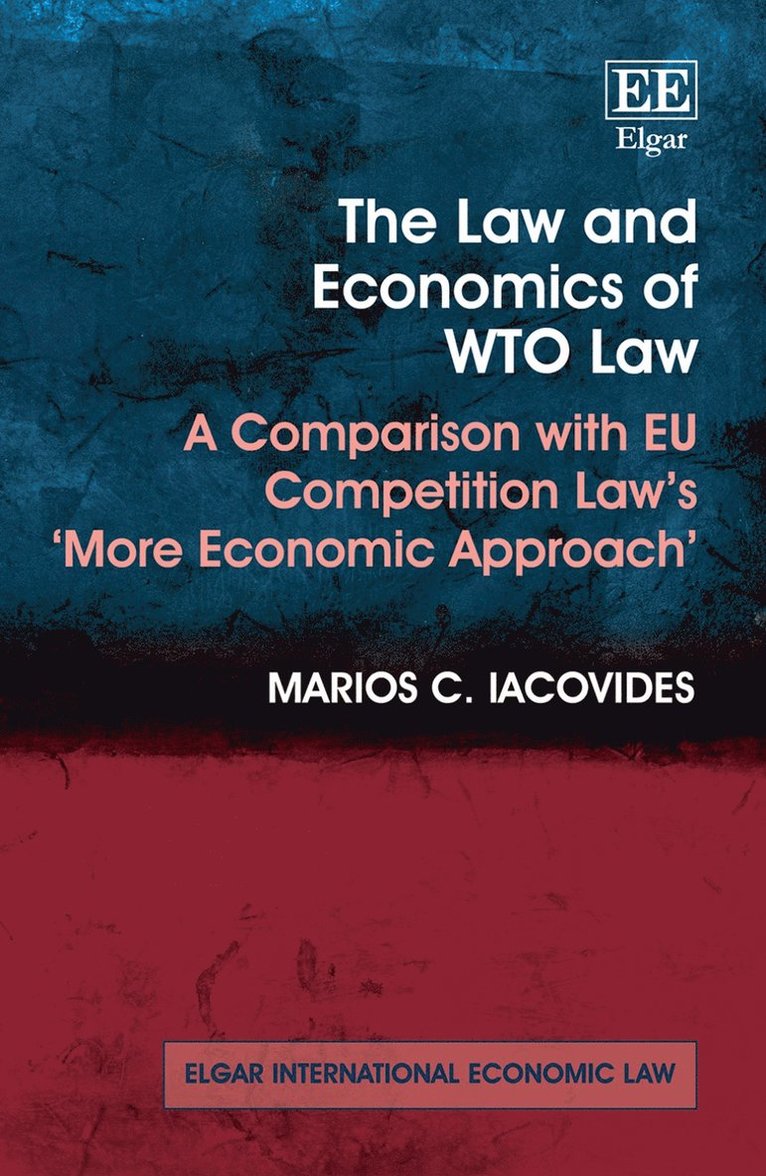
This insightful book proposes taking inspiration from EU competition law structures to inform and implement a more economic approach in WTO law. The book provides a detailed account of the two legal systems regarding likeness, harm, and remedies, in order to draw comparisons. Taking a unique approach in synthesizing law and economics with comparative law methods, it considers WTO law holistically to propose a legal transplant from EU competition law to WTO law.Drawing from EU competition law, the book generates comparative ideas that can improve the understanding of fundamental WTO concepts such as likeness, less favourable treatment, discrimination, trade harm, trade effects, and the level of permissible countermeasures. Based on this analysis, the author offers normative suggestions to improve the efficiency of WTO law through correct implementation of a more economic approach. As part of this approach, the author recommends an increased capacity for all key actors involved in WTO dispute settlement. Exploring key WTO concepts and employing law and economics benchmarks to make comparisons, this thought-provoking book will be of benefit to scholars and students of law and economics, global transnational law and WTO law in particular. It will also prove valuable for practitioners and policy makers involved in international trade law and dispute settlement.
Inbunden, Engelska, 2022
1 259 kr
Skickas inom 5-8 vardagar
In this incisive book, Petros C. Mavroidis examines the complex practice of interpreting the various sources of World Trade Organization (WTO) law. Written by a leading expert in WTO scholarship, the book serves as a broad grounding in the legal theory of the WTO contract and its sources, as well as its application in practice. Delving into the workings of the Vienna Convention of the Law of Treaties (VCLT) and its use within the WTO courts, the author provides a critical assessment of the interpretation of the WTO contract and illuminates the role of WTO adjudicators and the Secretariat in clarifying obligations. Mavroidis then explores the uncertainty and distortion that emerge as a result of the discretion from adjudicators invited by the VCLT, explaining why this matters and offering steps towards resolving these issues. Providing an expansive analysis of the interpretation of WTO treaties, this book will be an invaluable resource for scholars and students in the field of WTO law, as well as international trade and economic law more broadly. Its discussion of the possible future of dispute settlement, particularly its proposal for a re-evaluation of the judicial selection process, will also prove insightful to practitioners in this area.
Inbunden, Engelska, 2022
1 335 kr
Skickas inom 5-8 vardagar
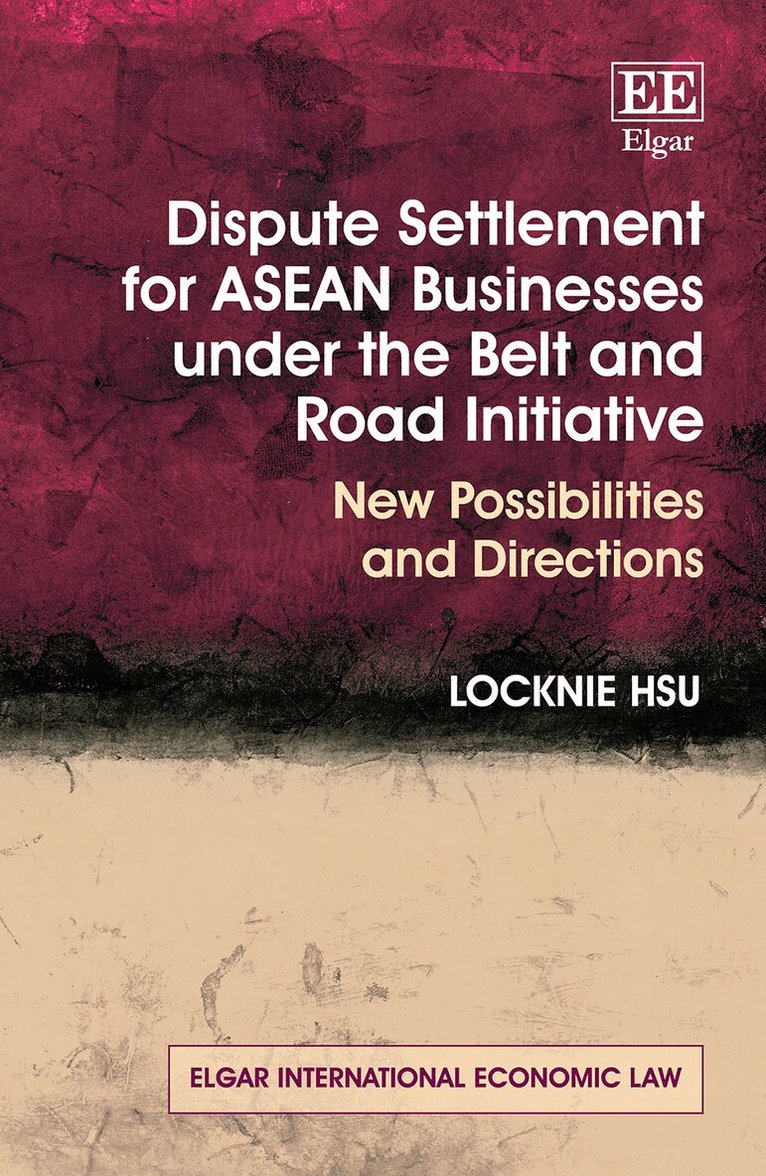
This forward-looking book examines dispute resolution issues in the context of Belt and Road Initiative dealings between parties in ASEAN Member States, China and other trade partners. It discusses a range of commercial dispute issues and economic agreements including free trade agreements and investment agreements, both bilateral and regional.Locknie Hsu presents research on dispute settlement options and emerging issues for ASEAN businesses relating to projects and transactions undertaken in relation to the Belt and Road Initiative. She translates these options and issues into opportunities in economic treaty negotiations, utilization of national and regional dispute settlement institutions and better handling of emerging issues (such as environment-related claims and technology applications in dispute resolution) and in legal capacity-building in ASEAN. The book explores findings from academic research, empirical information, selected Case Studies (on environmental and other claims in ASEAN and beyond) and salient legal and technological developments, to provide insights and lessons that make this original book a rich and useful legal and research resource.This book’s recommendations will provide food for thought for policy-makers and treaty negotiators who are considering new possibilities and directions to make dispute settlement a better and more fruitful experience in ASEAN. It will also be of interest to practitioners, scholars and students of commercial law, international trade law and dispute resolution, particularly in an Asian context.
Inbunden, Engelska, 2007
2 225 kr
Skickas inom 5-8 vardagar
This path-breaking book focuses on the WTO, e-commerce and information communications technologies. It sheds light on how international economic law can be used as a tool in the application of technological processes to facilitate development in developing countries.Rohan Kariyawasam begins by looking predominantly at the rise of international digital networks. He offers an introduction to the networks used in the delivery of electronic products and network-based transactions, and the application of WTO law to the sector. He then suggests how developing countries can use economic law and technology to tap digital markets in the developed world. The book also argues that the advance of basic living standards in some developing countries can be achieved through technological processes, but that this cannot happen without such states paying greater attention to the enforcement of economic, social and cultural rights at home. Picking up the property rights debate (including through bilateral trade), the author argues that ensuring beneficial technology transfer will require balancing foreign investor rights to protect intellectual property. It will also involve restrictions imposed by competition law and WTO surveillance to check the possible misuse of market power by multinational companies. The proposed mixture of measures should, he argues, provide incentives for Foreign Direct Investment.Providing a thorough review of the application of WTO law to the telecommunications sector and the regulation of international digital networks, this book will be of great interest to postgraduate students in international economic law and international development law, as well as those interested in human rights law and technology. It will also appeal to government regulators, NGOs and technologists interested in ICTs and development.
Inbunden, Engelska, 2009
1 531 kr
Skickas inom 5-8 vardagar
International agricultural trade regulation remains problematic despite the creation of the WTO and a specific Agreement on Agriculture in 1995. Fiona Smith challenges this orthodoxy and presents a new conceptual method by which the problem of international agricultural trade in the WTO can be understood. Attempts to revise the rules in the Doha Development Round of multilateral trade talks have repeatedly stalled as negotiators grapple with what is perceived to be the problem of international agricultural trade. Issues such as how best to address the contemporary challenges to market liberalisation whilst preserving the environment, difficulties of biofuels, development, human rights and the demands of the changing nature of global governance are all examined in this timely book. Challenging convention and introducing new concepts, Agriculture and the WTO will strongly appeal to academics working in the fields of international agricultural trade, international relations, international economic law, agriculture law and policy. It will also be warmly welcomed by policymakers and graduate students with a special interest in international agricultural trade.
Inbunden, Engelska, 2008
3 471 kr
Skickas inom 5-8 vardagar
In this important book, three of the leading authors in the field of international economic law discuss the law and economics of the three most frequently used contingent protection instruments: anti-dumping, countervailing measures, and safeguards. When discussing countervailing measures, the authors also discuss legal challenges against prohibited and/or actionable subsidies. The authors' choice is mandated by the fact that the effects of a subsidy cannot always be confined to the market of the WTO Member wishing to react against it. Assuming there are effects outside its market, an injured WTO Member can challenge the scheme as such before a WTO Panel. Taking the three agreements for granted as a starting point, the book provides comprehensive discussion of both the original contracts, and the case law that has substantially contributed to the understanding of these agreements.The agreements discussed by the authors provide generally worded disciplines on Members and leave a lot of discretion to the investigating authorities of such Members. A great number of the many questions that arise in the course of a domestic trade remedies investigation are not explicitly addressed in these agreements. In such a situation, the authors highlight the important role that the judge has to play. Much like domestic investigating authorities adopt a line which is either more liberal or more protectionist in the application of trade remedies, the WTO adjudicator on numerous occasions was faced with similar policy problems in applying the general rules to the facts of the case before them. The authors point out that the adjudicating bodies have insisted on the unfair character of dumping in order to substantiate their relatively deferential standard of review. In the anti-dumping / countervailing duties context, case law has generally emphasized the limited character of the obligations on investigating authorities. This implies that domestic investigating authorities, following the evolution of case law, are now facing a deferential standard of review when imposing anti-dumping and countervailing duties.The book offers a contrasting view of the Agreement on Safeguards, an instrument the use of which, according to the authors, could, in principle, be defensible: WTO Members will have extra incentives to make commitments within a flexible contract. Moreover, safeguards can, in their view, help ease the pressures from domestic lobbies by facilitating (sometimes necessary) adjustment costs. However, the case law is described by the authors as having adopted a rather inflexible stance, the end result of which is that no imposition of safeguards has survived the test of consistency with WTO law. They identify the apparent rationale for the case law as an over-insistence on what they label the highly uninformative fair/unfair trade distinction.The economic analysis employed by the authors would suggest that - in the light of the unsatisfactory nature of anti-dumping measures, contrasted with the positive incentives inherent in safeguards - ultimately one could envisage merging the three instruments of contingent protection into one new safeguards instrument. Equally, they argue, this economic approach, combined with legal doctrine, offers great insight into the current provisions, allowing them to be interpreted in a more coherent and meaningful manner.
Inbunden, Engelska, 2008
2 044 kr
Skickas inom 5-8 vardagar
This book examines and critiques the WTO's Agreement on the Application of Sanitary and Phytosanitary Measures (SPS Agreement), asking whether it strikes an appropriate balance between conflicting domestic health protection and trade liberalization objectives. It pays particular attention to situations likely to occur but not yet fully examined either in the literature or in WTO law; most importantly, where public opinion demands regulation in the face of scientific uncertainty as to the existence or otherwise of a health risk. Tracey Epps concludes that the SPS Agreement's science-based framework is capable of dealing with the differing objectives of health and trade, and that it provides countries with more flexibility to respond to scientific uncertainties and public sentiment than many critics contend. This conclusion is strongly influenced by a positive analysis of domestic regulatory decision-making, which finds potential for regulatory capture by domestic protectionist interests and thus emphasizes the importance of ensuring that decisions are made on a sound and principled basis. Including a historical overview of disputes over trade and health since the 1800s, this book provides a comprehensive analysis of and new perspective on an important area of intersection between international trade law and domestic policy. It will be of interest to a wide-ranging audience including legal and non-legal academics, policy makers and analysts in the field of risk regulation, trade law practitioners in governments, and lawyers and analysts in international institutions.
Inbunden, Engelska, 2012
2 029 kr
Skickas inom 5-8 vardagar
The 2007 - 2010 global financial crisis re-opened the debate on the reform of the international monetary and financial system. This well-argued book demonstrates the strategic role of international economic law (IEL) in ensuring international monetary stability and global financial stability. After discussing the current allocation of powers among IEL institutions, Annamaria Viterbo focuses on monetary measures: exchange restrictions, capital controls and exchange rate manipulations. These three fundamental topics are then examined through the lens of a multi-layered methodology, adopting perspectives from international monetary law, trade law and investment law. The author evaluates how the horizontal sectors in which IEL is traditionally divided interact and how conflicts between norms are avoided or solved. Particular attention is also devoted to the outcomes of trade and investment disputes that deal with monetary measures. International Economic Law and Monetary Measures will appeal to international trade law and international financial law scholars as well as law and business students. Legal practitioners and officials working in the field of international economic law will find it a useful reference, as will legal counsel in banks and financial institutions, international investors and multinational corporations. Contents: Introduction 1. International Monetary Stability and Global Financial Stability as Global Public Goods and the Role of International Economic Law 2. The Bretton Woods Institutions and their Role in the Provision of Global Public Goods: Focusing on International Monetary Stability 3. The Global Financial Architecture: Towards a Strengthened Institutional Framework for Global Financial Stability? 4. Exchange Restrictions and Capital Controls under the IMF Legal Framework 5. Exchange Restrictions and Capital Controls under the WTO Legal Framework 6. Exchange Restrictions and Capital Controls in International Investment Law 7. Exchange Rate Manipulation in International Economic Law Index
Inbunden, Engelska, 2010
1 861 kr
Skickas inom 5-8 vardagar
This timely book addresses the interaction between policies addressing climate change and the rules of the WTO. The authors expertly examine the law and economics behind the application of trade rules in the area of climate, including the implications of WTO rules for domestic climate measures, the unilateral use of trade measures to attempt to force other countries to take climate action, and the role of trade measures in multilateral climate agreements. The book argues that while there is a possibility of conflict between international trade rules and progress on climate change, it need not be the case. Thus the major focus is on the ways in which trade measures can aid in addressing climate change.
Häftad, Engelska, 2010
938 kr
Skickas inom 5-8 vardagar
In this important book, three of the leading authors in the field of international economic law discuss the law and economics of the three most frequently used contingent protection instruments: anti-dumping, countervailing measures, and safeguards. When discussing countervailing measures, the authors also discuss legal challenges against prohibited and/or actionable subsidies. The authors' choice is mandated by the fact that the effects of a subsidy cannot always be confined to the market of the WTO Member wishing to react against it. Assuming there are effects outside its market, an injured WTO Member can challenge the scheme as such before a WTO Panel. Taking the three agreements for granted as a starting point, the book provides comprehensive discussion of both the original contracts, and the case law that has substantially contributed to the understanding of these agreements.The agreements discussed by the authors provide generally worded disciplines on Members and leave a lot of discretion to the investigating authorities of such Members. A great number of the many questions that arise in the course of a domestic trade remedies investigation are not explicitly addressed in these agreements. In such a situation, the authors highlight the important role that the judge has to play. Much like domestic investigating authorities adopt a line which is either more liberal or more protectionist in the application of trade remedies, the WTO adjudicator on numerous occasions was faced with similar policy problems in applying the general rules to the facts of the case before them. The authors point out that the adjudicating bodies have insisted on the unfair character of dumping in order to substantiate their relatively deferential standard of review. In the anti-dumping / countervailing duties context, case law has generally emphasized the limited character of the obligations on investigating authorities. This implies that domestic investigating authorities, following the evolution of case law, are now facing a deferential standard of review when imposing anti-dumping and countervailing duties.The book offers a contrasting view of the Agreement on Safeguards, an instrument the use of which, according to the authors, could, in principle, be defensible: WTO Members will have extra incentives to make commitments within a flexible contract. Moreover, safeguards can, in their view, help ease the pressures from domestic lobbies by facilitating (sometimes necessary) adjustment costs. However, the case law is described by the authors as having adopted a rather inflexible stance, the end result of which is that no imposition of safeguards has survived the test of consistency with WTO law. They identify the apparent rationale for the case law as an over-insistence on what they label the highly uninformative fair/unfair trade distinction.The economic analysis employed by the authors would suggest that - in the light of the unsatisfactory nature of anti-dumping measures, contrasted with the positive incentives inherent in safeguards - ultimately one could envisage merging the three instruments of contingent protection into one new safeguards instrument. Equally, they argue, this economic approach, combined with legal doctrine, offers great insight into the current provisions, allowing them to be interpreted in a more coherent and meaningful manner.