Emerging Trends in Biomedical Technologies and Health informatics - Böcker
Visar alla böcker i serien Emerging Trends in Biomedical Technologies and Health informatics. Handla med fri frakt och snabb leverans.
15 produkter
15 produkter
1 705 kr
Skickas inom 10-15 vardagar
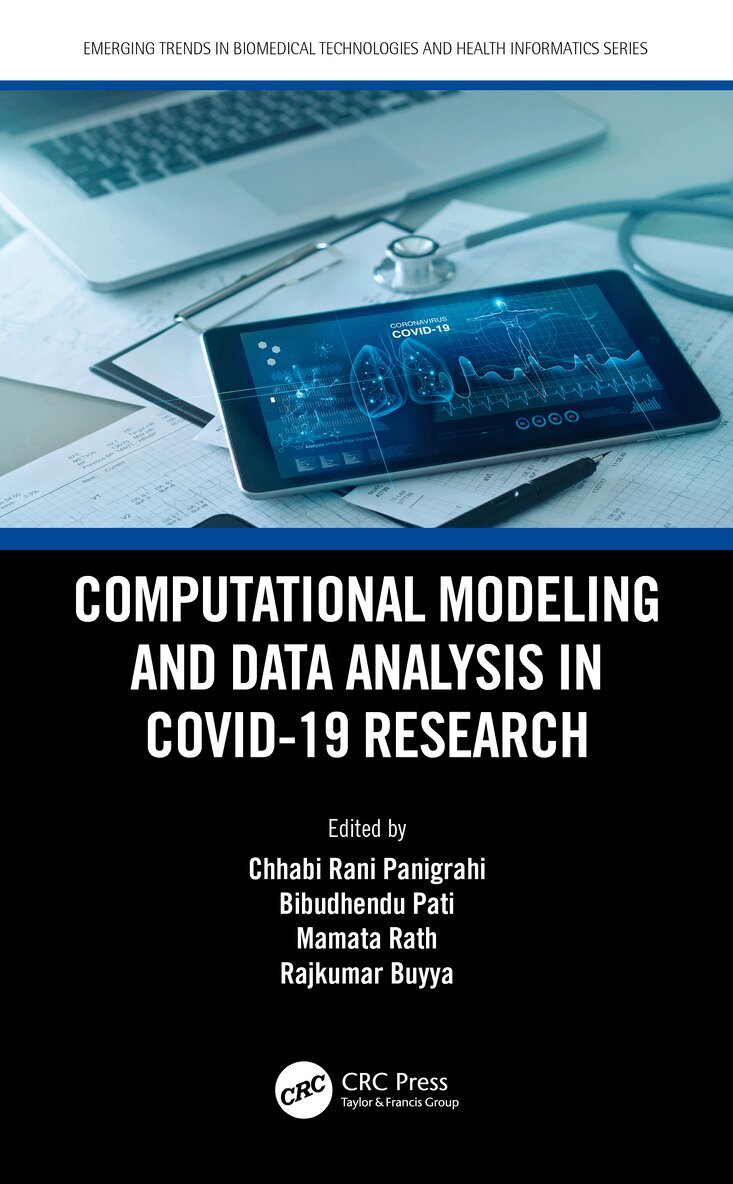
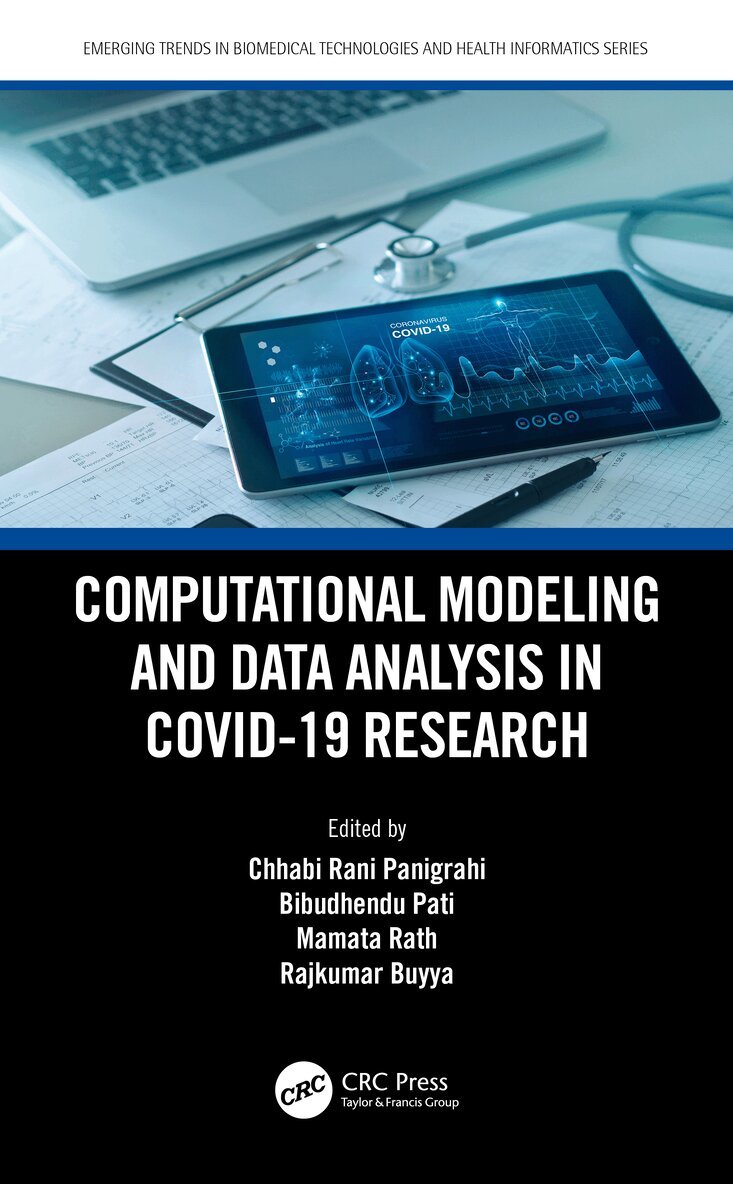
This book covers recent research on the COVID-19 pandemic. It includes the analysis, implementation, usage, and proposed ideas and models with architecture to handle the COVID-19 outbreak. Using advanced technologies such as artificial intelligence (AI) and machine learning (ML), techniques for data analysis, this book will be helpful to mitigate exposure and ensure public health. We know prevention is better than cure, so by using several ML techniques, researchers can try to predict the disease in its early stage and develop more effective medications and treatments. Computational technologies in areas like AI, ML, Internet of Things (IoT), and drone technologies underlie a range of applications that can be developed and utilized for this purpose. Because in most cases there is no one solution to stop the spreading of pandemic diseases, and the integration of several tools and tactics are needed. Many successful applications of AI, ML, IoT, and drone technologies already exist, including systems that analyze past data to predict and conclude some useful information for controlling the spread of COVID-19 infections using minimum resources. The AI and ML approach can be helpful to design different models to give a predictive solution for mitigating infection and preventing larger outbreaks. This book: Examines the use of artificial intelligence (AI), machine learning (ML), Internet of Things (IoT), and drone technologies as a helpful predictive solution for controlling infection of COVID-19 Covers recent research related to the COVID-19 pandemic and includes the analysis, implementation, usage, and proposed ideas and models with architecture to handle a pandemic outbreak Examines the performance, implementation, architecture, and techniques of different analytical and statistical models related to COVID-19 Includes different case studies on COVID-19Dr. Chhabi Rani Panigrahi is Assistant Professor in the Department of Computer Science at Rama Devi Women’s University, Bhubaneswar, India. Dr. Bibudhendu Pati is Associate Professor and Head of the Department of Computer Science at Rama Devi Women’s University, Bhubaneswar, India.Dr. Mamata Rath is Assistant Professor in the School of Management (Information Technology) at Birla Global University, Bhubaneswar, India. Prof. Rajkumar Buyya is a Redmond Barry Distinguished Professor and Director of the Cloud Computing and Distributed Systems (CLOUDS) Laboratory at the University of Melbourne, Australia.
727 kr
Skickas inom 10-15 vardagar
This book covers recent research on the COVID-19 pandemic. It includes the analysis, implementation, usage, and proposed ideas and models with architecture to handle the COVID-19 outbreak. Using advanced technologies such as artificial intelligence (AI) and machine learning (ML), techniques for data analysis, this book will be helpful to mitigate exposure and ensure public health. We know prevention is better than cure, so by using several ML techniques, researchers can try to predict the disease in its early stage and develop more effective medications and treatments. Computational technologies in areas like AI, ML, Internet of Things (IoT), and drone technologies underlie a range of applications that can be developed and utilized for this purpose. Because in most cases there is no one solution to stop the spreading of pandemic diseases, and the integration of several tools and tactics are needed. Many successful applications of AI, ML, IoT, and drone technologies already exist, including systems that analyze past data to predict and conclude some useful information for controlling the spread of COVID-19 infections using minimum resources. The AI and ML approach can be helpful to design different models to give a predictive solution for mitigating infection and preventing larger outbreaks. This book: Examines the use of artificial intelligence (AI), machine learning (ML), Internet of Things (IoT), and drone technologies as a helpful predictive solution for controlling infection of COVID-19 Covers recent research related to the COVID-19 pandemic and includes the analysis, implementation, usage, and proposed ideas and models with architecture to handle a pandemic outbreak Examines the performance, implementation, architecture, and techniques of different analytical and statistical models related to COVID-19 Includes different case studies on COVID-19Dr. Chhabi Rani Panigrahi is Assistant Professor in the Department of Computer Science at Rama Devi Women’s University, Bhubaneswar, India. Dr. Bibudhendu Pati is Associate Professor and Head of the Department of Computer Science at Rama Devi Women’s University, Bhubaneswar, India.Dr. Mamata Rath is Assistant Professor in the School of Management (Information Technology) at Birla Global University, Bhubaneswar, India. Prof. Rajkumar Buyya is a Redmond Barry Distinguished Professor and Director of the Cloud Computing and Distributed Systems (CLOUDS) Laboratory at the University of Melbourne, Australia.
1 966 kr
Skickas inom 10-15 vardagar
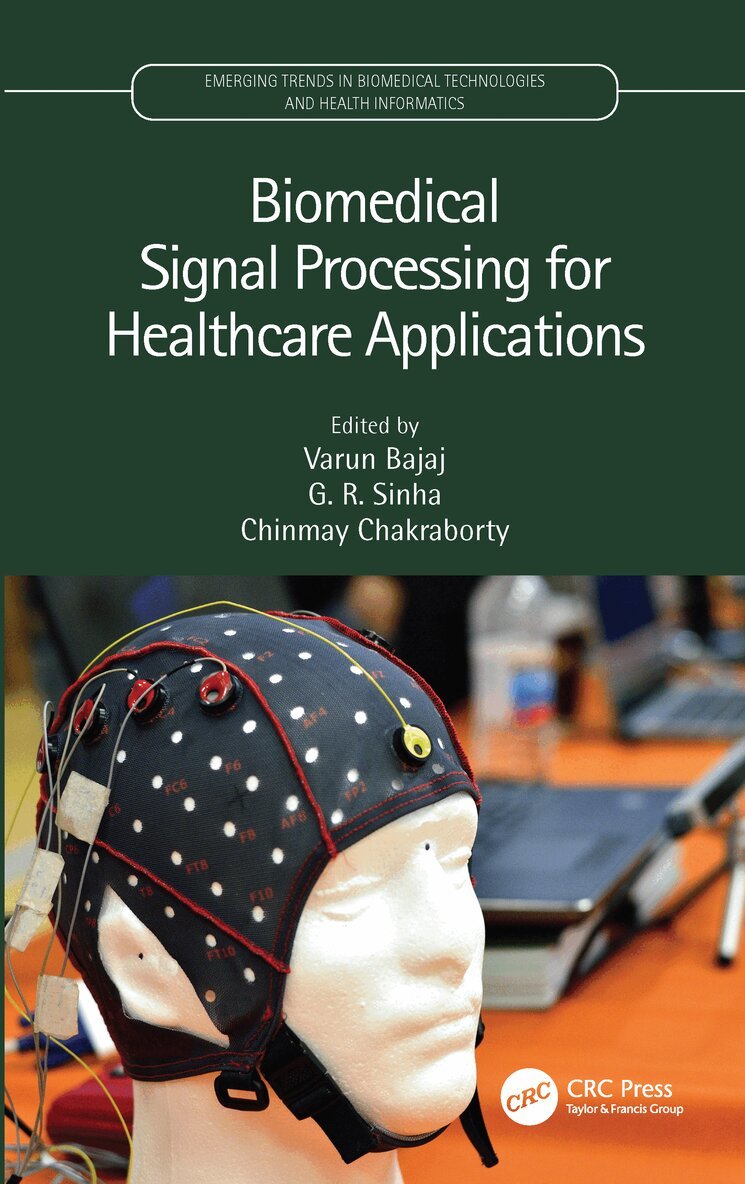
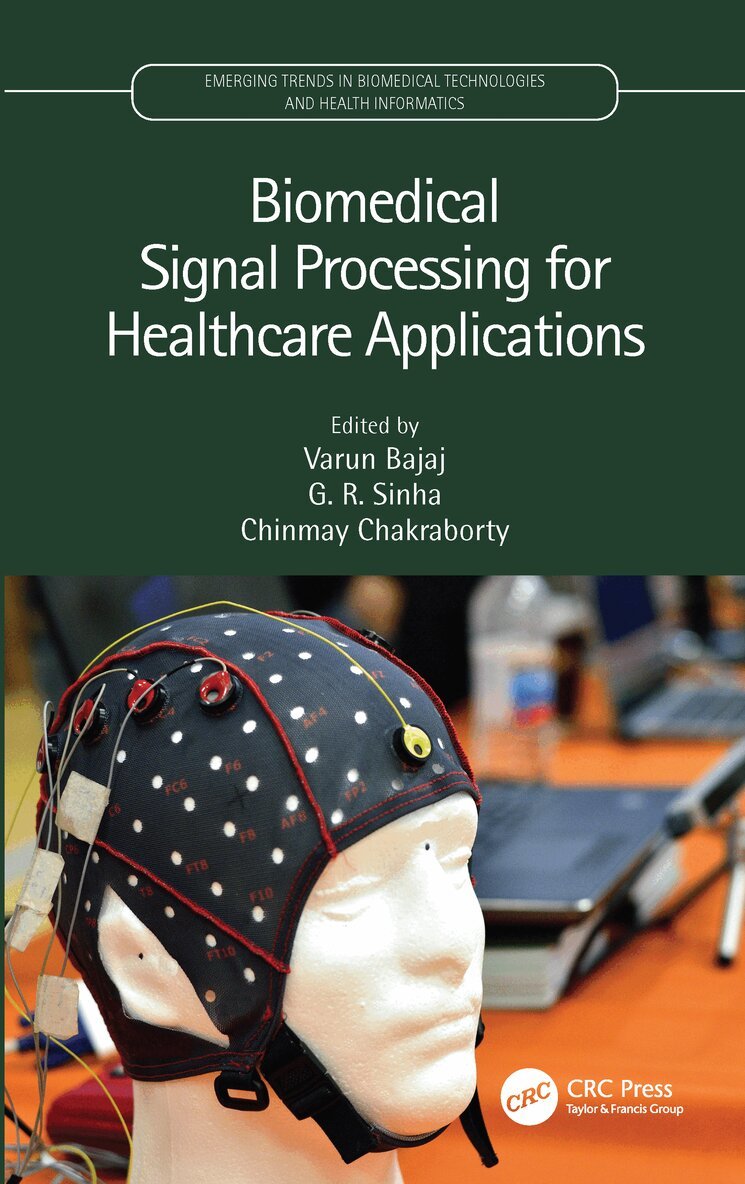
This book examines the use of biomedical signal processing—EEG, EMG, and ECG—in analyzing and diagnosing various medical conditions, particularly diseases related to the heart and brain. In combination with machine learning tools and other optimization methods, the analysis of biomedical signals greatly benefits the healthcare sector by improving patient outcomes through early, reliable detection. The discussion of these modalities promotes better understanding, analysis, and application of biomedical signal processing for specific diseases.The major highlights of Biomedical Signal Processing for Healthcare Applications include biomedical signals, acquisition of signals, pre-processing and analysis, post-processing and classification of the signals, and application of analysis and classification for the diagnosis of brain- and heart-related diseases. Emphasis is given to brain and heart signals because incomplete interpretations are made by physicians of these aspects in several situations, and these partial interpretations lead to major complications.FEATURES Examines modeling and acquisition of biomedical signals of different disorders Discusses CAD-based analysis of diagnosis useful for healthcare Includes all important modalities of biomedical signals, such as EEG, EMG, MEG, ECG, and PCG Includes case studies and research directions, including novel approaches used in advanced healthcare systemsThis book can be used by a wide range of users, including students, research scholars, faculty, and practitioners in the field of biomedical engineering and medical image analysis and diagnosis.
749 kr
Skickas inom 10-15 vardagar
This book examines the use of biomedical signal processing—EEG, EMG, and ECG—in analyzing and diagnosing various medical conditions, particularly diseases related to the heart and brain. In combination with machine learning tools and other optimization methods, the analysis of biomedical signals greatly benefits the healthcare sector by improving patient outcomes through early, reliable detection. The discussion of these modalities promotes better understanding, analysis, and application of biomedical signal processing for specific diseases.The major highlights of Biomedical Signal Processing for Healthcare Applications include biomedical signals, acquisition of signals, pre-processing and analysis, post-processing and classification of the signals, and application of analysis and classification for the diagnosis of brain- and heart-related diseases. Emphasis is given to brain and heart signals because incomplete interpretations are made by physicians of these aspects in several situations, and these partial interpretations lead to major complications.FEATURES Examines modeling and acquisition of biomedical signals of different disorders Discusses CAD-based analysis of diagnosis useful for healthcare Includes all important modalities of biomedical signals, such as EEG, EMG, MEG, ECG, and PCG Includes case studies and research directions, including novel approaches used in advanced healthcare systemsThis book can be used by a wide range of users, including students, research scholars, faculty, and practitioners in the field of biomedical engineering and medical image analysis and diagnosis.
Deep Learning in Biomedical and Health Informatics
Current Applications and Possibilities
Inbunden, Engelska, 2021
1 756 kr
Skickas inom 10-15 vardagar
This book provides a proficient guide on the relationship between Artificial Intelligence (AI) and healthcare and how AI is changing all aspects of the healthcare industry. It also covers how deep learning will help in diagnosis and the prediction of disease spread. The editors present a comprehensive review of research applying deep learning in health informatics in the fields of medical imaging, electronic health records, genomics, and sensing, and highlights various challenges in applying deep learning in health care. This book also includes applications and case studies across all areas of AI in healthcare data. The editors also aim to provide new theories, techniques, developments, and applications of deep learning, and to solve emerging problems in healthcare and other domains. This book is intended for computer scientists, biomedical engineers, and healthcare professionals researching and developing deep learning techniques.In short, the volume : Discusses the relationship between AI and healthcare, and how AI is changing the health care industry. Considers uses of deep learning in diagnosis and prediction of disease spread. Presents a comprehensive review of research applying deep learning in health informatics across multiple fields. Highlights challenges in applying deep learning in the field. Promotes research in ddeep llearning application in understanding the biomedical process.Dr.. M.A. Jabbar is a professor and Head of the Department AI&ML, Vardhaman College of Engineering, Hyderabad, Telangana, India. Prof. (Dr.) Ajith Abraham is the Director of Machine Intelligence Research Labs (MIR Labs), Auburn, Washington, USA.Dr.. Onur Dogan is an assistant professor at İzmir Bakırçay University, Turkey.Prof. Dr. Ana Madureira is the Director of The Interdisciplinary Studies Research Center at Instituto Superior de Engenharia do Porto (ISEP), Portugal.Dr.. Sanju Tiwari is a senior researcher at Universidad Autonoma de Tamaulipas, Mexico.
Deep Learning in Biomedical and Health Informatics
Current Applications and Possibilities
Häftad, Engelska, 2023
749 kr
Skickas inom 10-15 vardagar
This book provides a proficient guide on the relationship between Artificial Intelligence (AI) and healthcare and how AI is changing all aspects of the healthcare industry. It also covers how deep learning will help in diagnosis and the prediction of disease spread. The editors present a comprehensive review of research applying deep learning in health informatics in the fields of medical imaging, electronic health records, genomics, and sensing, and highlights various challenges in applying deep learning in health care. This book also includes applications and case studies across all areas of AI in healthcare data. The editors also aim to provide new theories, techniques, developments, and applications of deep learning, and to solve emerging problems in healthcare and other domains. This book is intended for computer scientists, biomedical engineers, and healthcare professionals researching and developing deep learning techniques.In short, the volume : Discusses the relationship between AI and healthcare, and how AI is changing the health care industry. Considers uses of deep learning in diagnosis and prediction of disease spread. Presents a comprehensive review of research applying deep learning in health informatics across multiple fields. Highlights challenges in applying deep learning in the field. Promotes research in ddeep llearning application in understanding the biomedical process.Dr.. M.A. Jabbar is a professor and Head of the Department AI&ML, Vardhaman College of Engineering, Hyderabad, Telangana, India. Prof. (Dr.) Ajith Abraham is the Director of Machine Intelligence Research Labs (MIR Labs), Auburn, Washington, USA.Dr.. Onur Dogan is an assistant professor at İzmir Bakırçay University, Turkey.Prof. Dr. Ana Madureira is the Director of The Interdisciplinary Studies Research Center at Instituto Superior de Engenharia do Porto (ISEP), Portugal.Dr.. Sanju Tiwari is a senior researcher at Universidad Autonoma de Tamaulipas, Mexico.
Machine Learning and Deep Learning in Efficacy Improvement of Healthcare Systems
Inbunden, Engelska, 2022
1 756 kr
Skickas inom 10-15 vardagar
The goal of medical informatics is to improve life expectancy, disease diagnosis and quality of life. Medical devices have revolutionized healthcare and have led to the modern age of machine learning, deep learning and Internet of Medical Things (IoMT) with their proliferation, mobility and agility. This book exposes different dimensions of applications for computational intelligence and explains its use in solving various biomedical and healthcare problems in the real world. This book describes the fundamental concepts of machine learning and deep learning techniques in a healthcare system. The aim of this book is to describe how deep learning methods are used to ensure high-quality data processing, medical image and signal analysis and improved healthcare applications. This book also explores different dimensions of computational intelligence applications and illustrates its use in the solution of assorted real-world biomedical and healthcare problems. Furthermore, it provides the healthcare sector with innovative advances in theory, analytical approaches, numerical simulation, statistical analysis, modelling, advanced deployment, case studies, analytical results, computational structuring and significant progress in the field of machine learning and deep learning in healthcare applications.FEATURES Explores different dimensions of computational intelligence applications and illustrates its use in the solution of assorted real-world biomedical and healthcare problems Provides guidance in developing intelligence-based diagnostic systems, efficient models and cost-effective machines Provides the latest research findings, solutions to the concerning issues and relevant theoretical frameworks in the area of machine learning and deep learning for healthcare systems Describes experiences and findings relating to protocol design, prototyping, experimental evaluation, real testbeds and empirical characterization of security and privacy interoperability issues in healthcare applications Explores and illustrates the current and future impacts of pandemics and mitigates risk in healthcare with advanced analyticsThis book is intended for students, researchers, professionals and policy makers working in the fields of public health and in the healthcare sector. Scientists and IT specialists will also find this book beneficial for research exposure and new ideas in the field of machine learning and deep learning.
Machine Learning and Deep Learning in Efficacy Improvement of Healthcare Systems
Häftad, Engelska, 2024
735 kr
Skickas inom 10-15 vardagar
The goal of medical informatics is to improve life expectancy, disease diagnosis and quality of life. Medical devices have revolutionized healthcare and have led to the modern age of machine learning, deep learning and Internet of Medical Things (IoMT) with their proliferation, mobility and agility. This book exposes different dimensions of applications for computational intelligence and explains its use in solving various biomedical and healthcare problems in the real world. This book describes the fundamental concepts of machine learning and deep learning techniques in a healthcare system. The aim of this book is to describe how deep learning methods are used to ensure high-quality data processing, medical image and signal analysis and improved healthcare applications. This book also explores different dimensions of computational intelligence applications and illustrates its use in the solution of assorted real-world biomedical and healthcare problems. Furthermore, it provides the healthcare sector with innovative advances in theory, analytical approaches, numerical simulation, statistical analysis, modelling, advanced deployment, case studies, analytical results, computational structuring and significant progress in the field of machine learning and deep learning in healthcare applications.FEATURES Explores different dimensions of computational intelligence applications and illustrates its use in the solution of assorted real-world biomedical and healthcare problems Provides guidance in developing intelligence-based diagnostic systems, efficient models and cost-effective machines Provides the latest research findings, solutions to the concerning issues and relevant theoretical frameworks in the area of machine learning and deep learning for healthcare systems Describes experiences and findings relating to protocol design, prototyping, experimental evaluation, real testbeds and empirical characterization of security and privacy interoperability issues in healthcare applications Explores and illustrates the current and future impacts of pandemics and mitigates risk in healthcare with advanced analyticsThis book is intended for students, researchers, professionals and policy makers working in the fields of public health and in the healthcare sector. Scientists and IT specialists will also find this book beneficial for research exposure and new ideas in the field of machine learning and deep learning.
2 316 kr
Skickas inom 10-15 vardagar
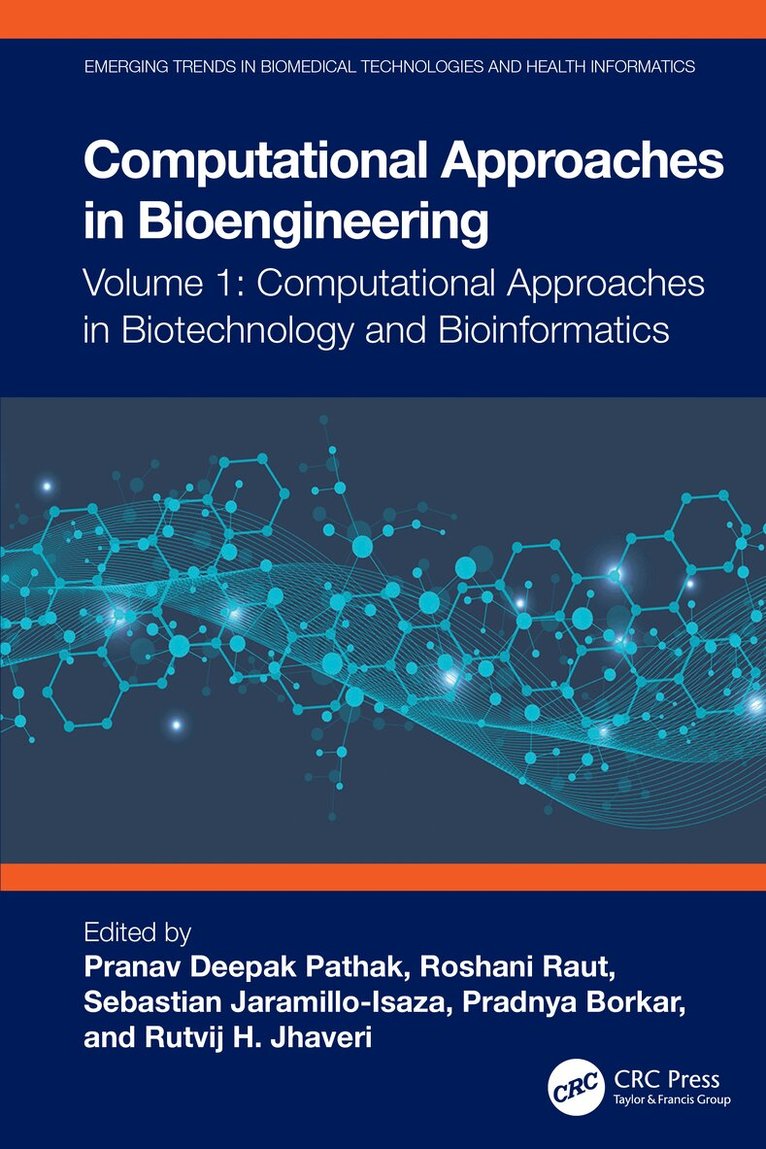
Volume 1 of Computational Approaches in Bioengineering—Computational Approaches in Biotechnology and Bioinformatics—explores many significant topics of biomedical engineering and bioinformatics in an easily understandable format. It explores recent developments and applications in bioinformatics, biomechanics, artificial intelligence (AI), signal processing, wearable sensors, biomaterials, cell biology, synthetic biology, biostatistics, prosthetics, big data, and algorithms. From applications of biomaterials in advanced drug delivery systems to the role of big data, AI, and machine learning in disease diagnosis and treatment, the book will help readers understand how these technologies are being applied across the areas of biomedical engineering, bioinformatics, and healthcare. The chapters also include case studies on the role of medical robots in surgery and the determination of protein structure using genetic algorithms. The contributors are all leading experts across multiple disciplines and provide chapters that truly represent a complete view of these state-of-the-art technologies.FEATURESCovers a wide range of subjects from biomedical engineering like wearable devices, biomaterials, synthetic biology, phytochemical extraction, and prostheticsExplores AI, machine learning, big data analysis, and algorithms in biomedical engineering and bioinformatics in an easily understandable formatIncludes case studies on the role of medical robots in surgery and the determination of protein structure using genetic algorithmsDiscusses genetic diagnosis, classification, and risk prediction in cancer using next-generation sequencing in oncologyThis book is ideally designed for biomedical professionals, biomedical engineers, healthcare professionals, data engineers, clinicians, physicians, medical students, hospital directors, clinical researchers, and others who work in the field of artificial intelligence, bioinformatics, and computational biology.
800 kr
Kommande
Volume 1 of Computational Approaches in Bioengineering—Computational Approaches in Biotechnology and Bioinformatics—explores many significant topics of biomedical engineering and bioinformatics in an easily understandable format. It explores recent developments and applications in bioinformatics, biomechanics, artificial intelligence (AI), signal processing, wearable sensors, biomaterials, cell biology, synthetic biology, biostatistics, prosthetics, big data, and algorithms. From applications of biomaterials in advanced drug delivery systems to the role of big data, AI, and machine learning in disease diagnosis and treatment, the book will help readers understand how these technologies are being applied across the areas of biomedical engineering, bioinformatics, and healthcare. The chapters also include case studies on the role of medical robots in surgery and the determination of protein structure using genetic algorithms. The contributors are all leading experts across multiple disciplines and provide chapters that truly represent a complete view of these state-of-the-art technologies.FEATURESCovers a wide range of subjects from biomedical engineering like wearable devices, biomaterials, synthetic biology, phytochemical extraction, and prostheticsExplores AI, machine learning, big data analysis, and algorithms in biomedical engineering and bioinformatics in an easily understandable formatIncludes case studies on the role of medical robots in surgery and the determination of protein structure using genetic algorithmsDiscusses genetic diagnosis, classification, and risk prediction in cancer using next-generation sequencing in oncologyThis book is ideally designed for biomedical professionals, biomedical engineers, healthcare professionals, data engineers, clinicians, physicians, medical students, hospital directors, clinical researchers, and others who work in the field of artificial intelligence, bioinformatics, and computational biology.
1 686 kr
Skickas inom 10-15 vardagar
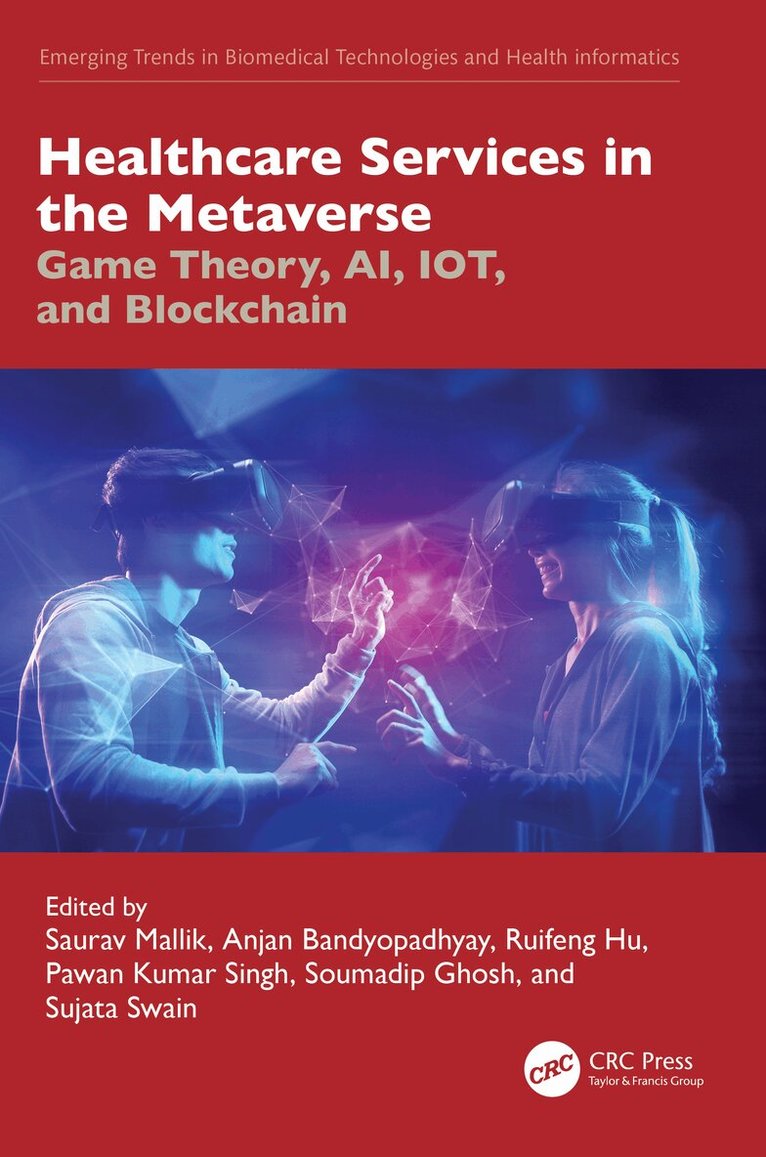
This book focuses on game theory approaches utilized on various domains viz., IoT, blockchain and their applications to biomedical and healthcare services. The book bridges the gap between radiologists and Artificial Intelligence (AI)-driven automated systems by investigating various techniques such as game theoretic approach, blockchain technology basically utilized for security, and IoT applied on metaverse.Healthcare Services in the Metaverse: Game Theory, AI, IoT, and Blockchain, identifies the potential areas where game theory and block chain techniques can be harnessed in the metaverse. The book discusses the integration of virtual reality (VR) with augmented reality to identify the new emerging techniques in healthcare to metaverse, where doctors and/or patients can see any kind of operation in the VR metaverse. The authors use game theoretical and blockchain approaches to understand healthcare issues, with the aim of utilizing different technologies of metaverse platform for health informatics.This book is written to help healthcare practitioners and individuals across academia and research, as well as for those who work in biomedical, Internet of Things (IoT), Artificial Intelligence (AI), metaverse, VR, blockchain, and related technologies.
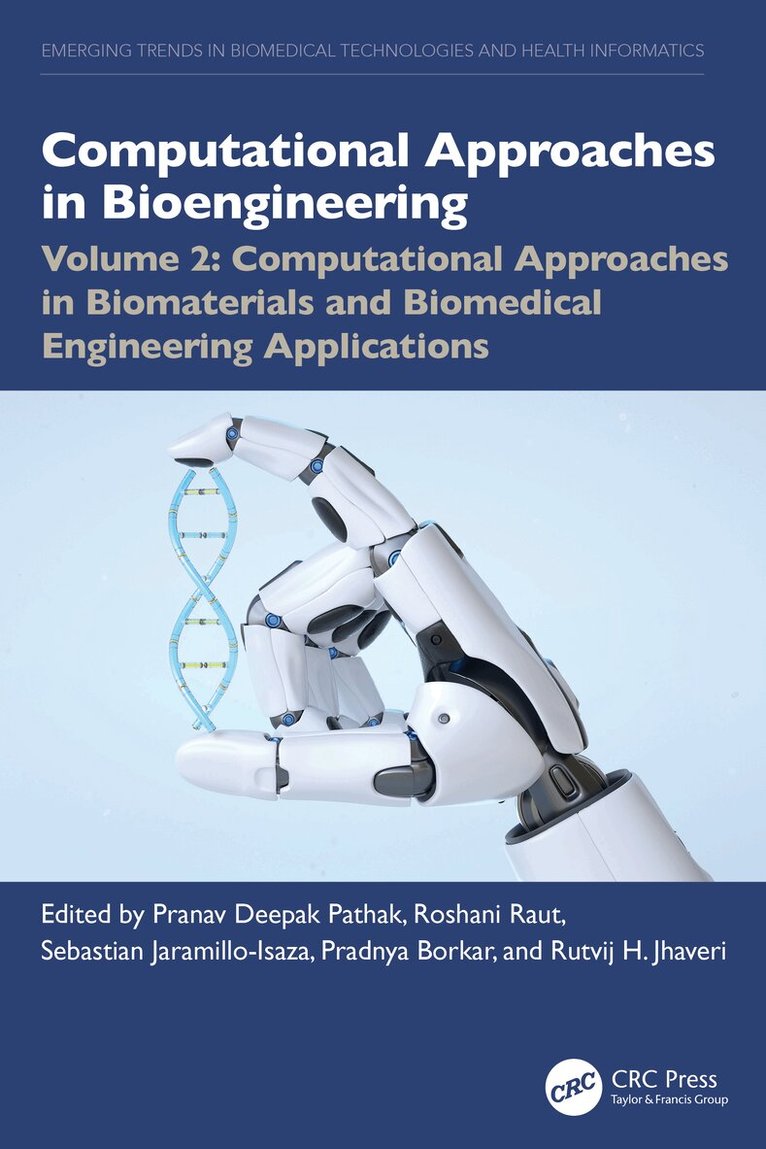
Computational Approaches in Biomaterials and Biomedical Engineering Applications
Inbunden, Engelska, 2024
1 826 kr
Skickas inom 10-15 vardagar
Computational Approaches in Bioengineering, Volume 2—Computational Approaches in Biomaterials and Biomedical Engineering Applications is a comprehensive and up-to-date resource that provides a broad overview of the use of computational methods in the fields of biomaterials and biomedical engineering. Written by a team of experts in the field of biomaterials and biomedical engineering, it provides a wealth of information on the use of computational methods in these fields. Furthermore, it explores emerging trends and discusses future directions and associated limitations in the field. Through thorough exploration and explanation, it showcases the latest research and advancements, offering valuable insights into how computational methods are utilized to design and optimize biomaterials, simulate biological processes, and develop innovative medical devices.FEATURESProvides practical guidance and real-world examples to help readers apply computational approaches effectively in their workExplores the diverse computational approaches employed in biomaterials and biomedical engineering applications, offering a comprehensive view of the fieldIntroduces emerging topics and cutting-edge techniques, keeping wide range of readers at the forefront of advancements in computational bioengineeringDiscusses the integration of computational methods in biomaterials and biomedical engineering, fostering a deeper understanding of their synergistic potentialProvides a valuable resource for researchers, practitioners, and students alike, serving as a comprehensive guide to computational approaches in biomaterials and biomedical engineering applicationsThe book is well-organized and easy to read. The chapters are written in a clear and concise style, and they provide a comprehensive overview of the topics covered. The book is also well-illustrated with figures and tables that help to explain the concepts discussed in the text. With its comprehensive coverage, practical examples, and expert insights, this book serves as a valuable resource for researchers, students, and professionals in the fields of biomaterials and biomedical engineering.
Computational Approaches in Biomaterials and Biomedical Engineering Applications
Häftad, Engelska, 2026
800 kr
Kommande
Computational Approaches in Bioengineering, Volume 2—Computational Approaches in Biomaterials and Biomedical Engineering Applications is a comprehensive and up-to-date resource that provides a broad overview of the use of computational methods in the fields of biomaterials and biomedical engineering. Written by a team of experts in the field of biomaterials and biomedical engineering, it provides a wealth of information on the use of computational methods in these fields. Furthermore, it explores emerging trends and discusses future directions and associated limitations in the field. Through thorough exploration and explanation, it showcases the latest research and advancements, offering valuable insights into how computational methods are utilized to design and optimize biomaterials, simulate biological processes, and develop innovative medical devices.FEATURESProvides practical guidance and real-world examples to help readers apply computational approaches effectively in their workExplores the diverse computational approaches employed in biomaterials and biomedical engineering applications, offering a comprehensive view of the fieldIntroduces emerging topics and cutting-edge techniques, keeping wide range of readers at the forefront of advancements in computational bioengineeringDiscusses the integration of computational methods in biomaterials and biomedical engineering, fostering a deeper understanding of their synergistic potentialProvides a valuable resource for researchers, practitioners, and students alike, serving as a comprehensive guide to computational approaches in biomaterials and biomedical engineering applicationsThe book is well-organized and easy to read. The chapters are written in a clear and concise style, and they provide a comprehensive overview of the topics covered. The book is also well-illustrated with figures and tables that help to explain the concepts discussed in the text. With its comprehensive coverage, practical examples, and expert insights, this book serves as a valuable resource for researchers, students, and professionals in the fields of biomaterials and biomedical engineering.
4 876 kr
Skickas inom 10-15 vardagar
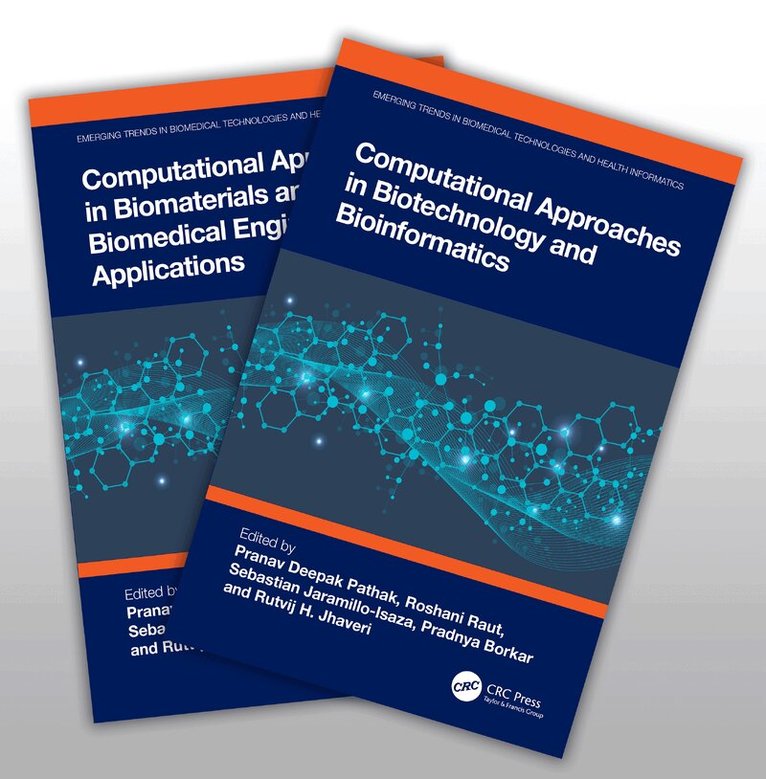
Computational Approaches in Biomedical Engineering is a two-volume set that explores many significant topics of biomedical engineering and bioinformatics in an easily understandable format. It explores the recent developments and applications in bioinformatics, biomechanics, AI, signal processing, wearable sensors, biomaterials, cell biology, synthetic biology, biostatistics, prosthetics, big data, and algorithms.This book is divided into two volumes, Volume 1: Computational Approaches in Biotechnology and Bioinformatics; Volume 2: Computational Approaches in Biomaterials and Biomedical Engineering Applications. From applications of biomaterials in advanced drug delivery systems to the role of big data, AI, and machine learning in the decision for disease diagnosis and treatment, this set will help readers get an insight into understanding how these technologies are being applied across areas of biomedical engineering, bioinformatics, and healthcare. The chapters also include case studies on the role of medical robots in surgery, and the determination of protein structure using genetic algorithms. The contributors are all leading experts across multiple disciplines and provide chapters that truly represent a complete view of these state-of-the-art technologies.This set is ideally designed for biomedical professionals, biomedical engineers, healthcare professionals, data engineers, clinicians, physicians, medical students, hospital directors, clinical researchers, and those who work in the fields of artificial intelligence, bioinformatics, and computational biology.
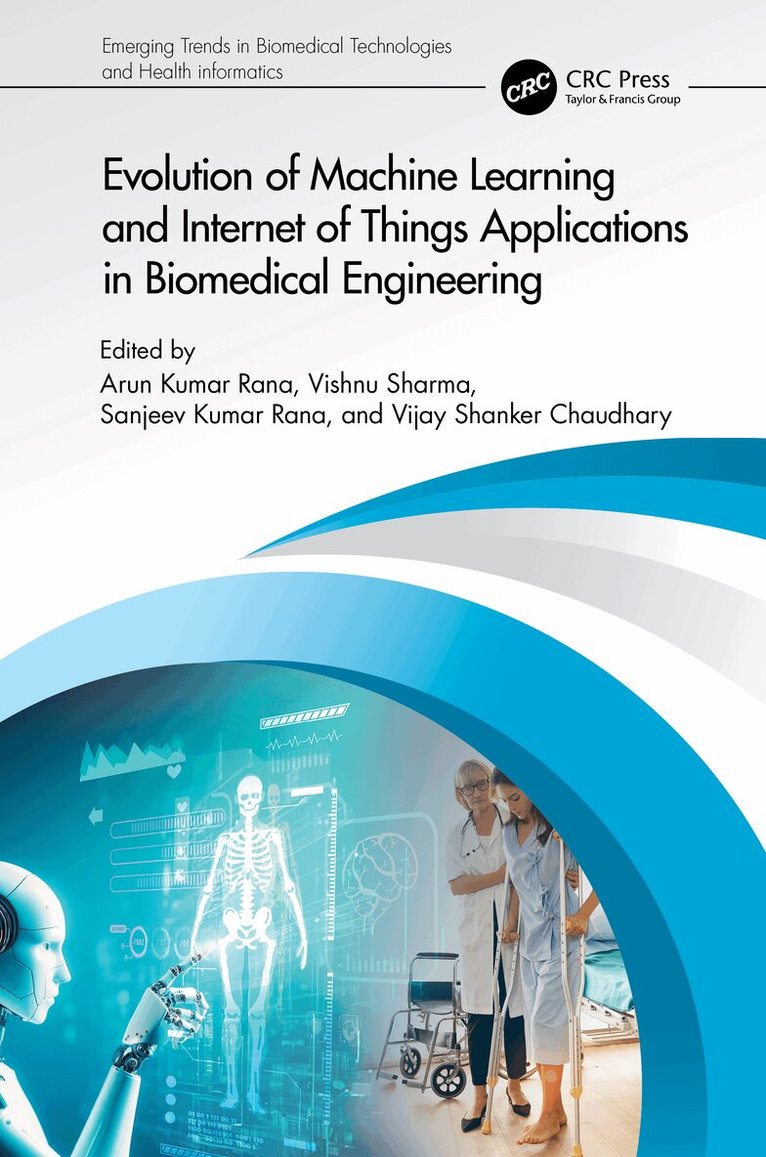
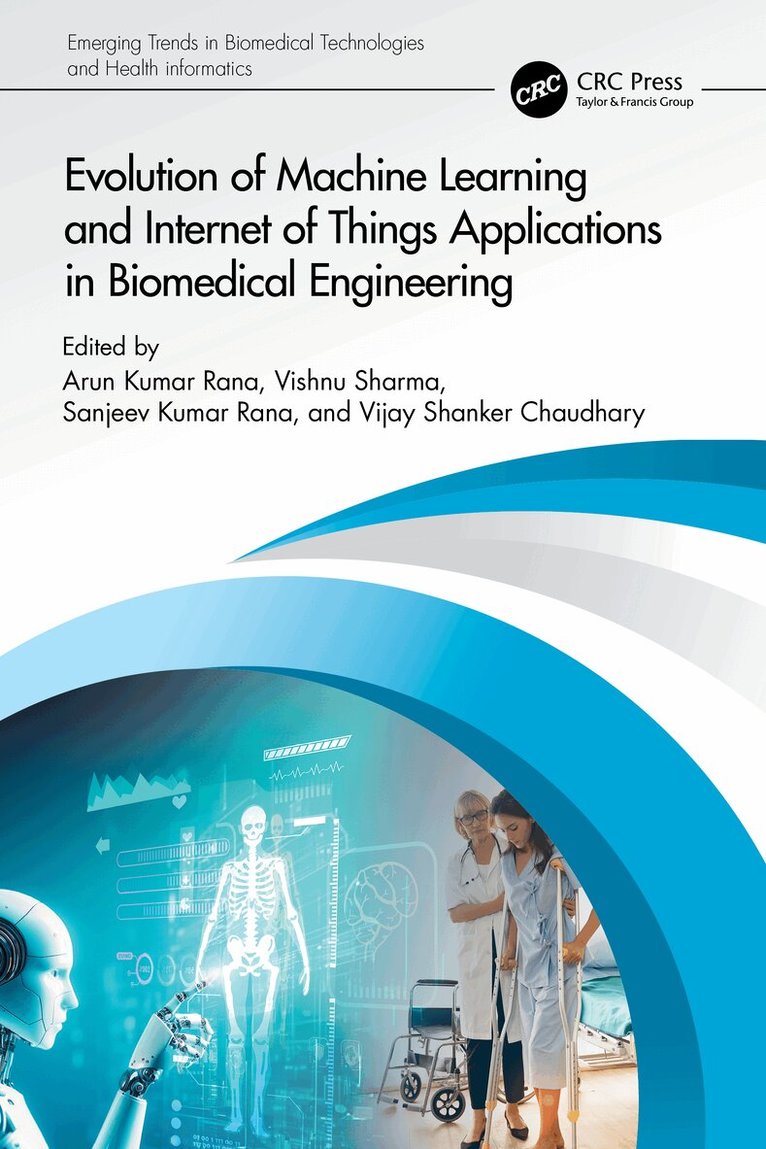
Evolution of Machine Learning and Internet of Things Applications in Biomedical Engineering
Inbunden, Engelska, 2024
1 756 kr
Skickas inom 10-15 vardagar
This book provides a platform for presenting machine learning (ML)-enabled healthcare techniques and offers a mathematical and conceptual background of the latest technology. It describes ML techniques along with the emerging platform of the Internet of Medical Things used by practitioners and researchers around the world.Evolution of Machine Learning and Internet of Things Applications in Biomedical Engineering discusses the Internet of Things (IoT) and ML devices that are deployed for enabling patient health tracking, various emergency issues, and the smart administration of patients. It looks at the problems of cardiac analysis in e-healthcare, explores the employment of smart devices aimed at different patient issues, and examines the usage of Arduino kits where the data can be transferred to the cloud for Internet-based uses. The book includes deep feedforward networks, regularization, optimization algorithms, convolutional networks, sequence modeling, and practical methodology. The authors also examine the role of IoT and ML in electroencephalography and magnetic resonance imaging, which play significant roles in biomedical applications. This book also incorporates the use of IoT and ML applications for smart wheelchairs, telemedicine, GPS positioning of heart patients, and smart administration with drug tracking. Finally, the book also presents the application of these technologies in the development of advanced healthcare frameworks.This book will be beneficial for new researchers and practitioners working in the biomedical and healthcare fields. It will also be suitable for a wide range of readers who may not be scientists but who are also interested in the practices of medical image retrieval and brain image segmentation.