Energy and Environmental Policy Series - Böcker
Visar alla böcker i serien Energy and Environmental Policy Series. Handla med fri frakt och snabb leverans.
12 produkter
12 produkter
644 kr
Skickas inom 10-15 vardagar
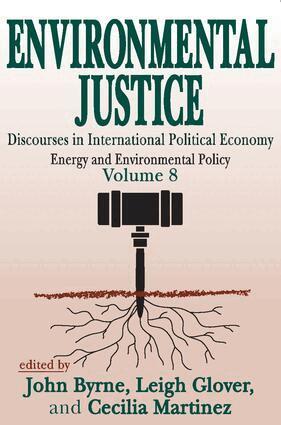
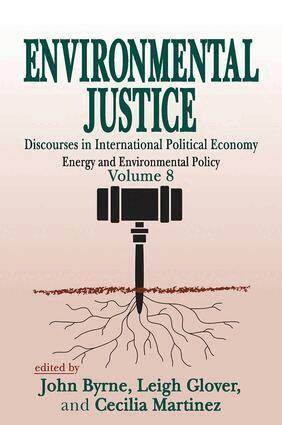
Environmental justice is one of the most controversial and important issues in contemporary social science. Volume 8 of the Energy and Environmental Policy series challenges our understanding of environmental justice in a global context. It includes theoretical investigations and case studies by leading authors in the field.Global forces of technology and the development of global markets are transforming social life and the natural order. These changes require a critical examination of nature-society relations. Increasingly, modernization assigns the risks of modernity to those with the least power and greatest vulnerability to environmental harm. Conventional environmentalism, which focuses on critique of the effects of humanity against nature, is inadequate to the challenges of globalization. In particular, it fails to explain sources of persistent patterns of social injustice that accompany escalating environmental exploitation. As the capacity for environmental destruction expands, broader concerns about environmental injustice have come to the fore, including awareness of threats to whole cultures, ways of life, and entire ecologies. The volume's authors consider the links between expanded patterns of environmental injustice and the structures and forces underlying and shaping the international political economy.Environmental injustice is examined across a variety of cultures in the developed and developing world. Through case studies of climate colonialism, revolutionary ecology, and environmental commodification, the global and local dimensions of the problem are presented.The latest volume in this important series demonstrates that environmental justice cannot be reduced to simple parables of indifference, prejudice, or appropriation. It forges understanding of environmental injustice as a development of international political economy itself. Likewise, initiatives on behalf of environmental justice are seen as elements of broader movements to secure self-determination in a globalizing world. This book will be of interest to policymakers, energy and environmental experts, and all those interested in the environment and environmental law. It provides new perspectives on the place of environmental justice in international political and economic conflict.
469 kr
Skickas inom 10-15 vardagar
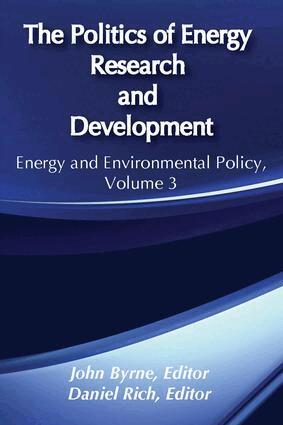
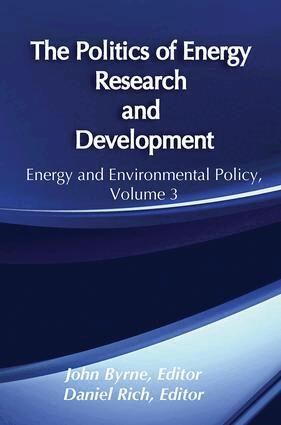
The Politics of Energy Research and Development examines and evaluates U.S. research and development policies to promote nuclear, solar, conservation, and other technology options. This volume is the third in the series Energy Policy Studies, which explores fundamental, long-term social, political, and economic dimensions of energy technology, resources, and use. Contributions represent a wide range of theoretical and policy perspectives, including sociology, economics, political science, urban and regional studies, environmental analysis, and history and philosophy of technology.Contents: Richard L. Ottinger, "Introduction: The Tragedy of U.S. Energy R&D Policy"; Amor^ B. Lovins, "The Origins of the Nuclear Power Fiasco"; Richard T. Sylves, "Nuclear Exotica: Peaceful Use of Nuclear Explosives"; Eugene Frankel, "Technology, Politics and Ideology: The Vicissitudes of Federal Solar Energy Policy, 1974-1983"; Maxine Savitz, "The Federal Role in Conservation Research and Development"; J. David Roessner, "Commercialization Issues in Energy Technology Policy"; John Byrne and Daniel Rich, "In Search of the Abundant Energy Machine"; and Grant P. Thompson, "Energy Policy in the Interim: Waiting for the Next Shoe to Drop."
469 kr
Skickas inom 10-15 vardagar
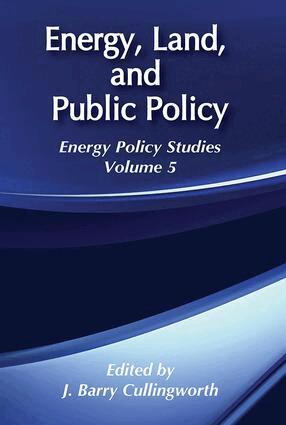
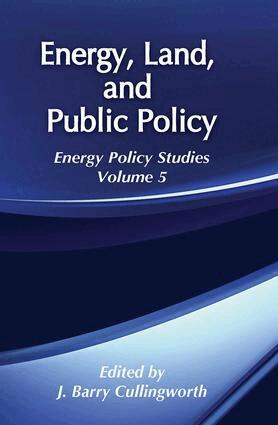
The development of alternative forms of energy supply since the mid-1970s has brought with it a range of new issues and concerns, ranging from nuclear waste disposal to land use planning for energy efficiency. This latest volume in the acclaimed Energy Policy Studies series brings together an interdisciplinary group of researchers to examine the relationship between energy and planning policy, with emphasis on urban and regional impacts.Like other volumes in the series, the articles included focus on the social, political, and economic dimensions of energy technology, resources, and use. The emphasis on issues of technological scale, resource allocation, environmental impact and quality, and urban and regional studies makes this a unique contribution to the literature.Contents: "Creating Land-Energy Transitions," by Andrew F. Huston, U.S. Department of Housing and Urban Development; "Land Use Planning for Energy Efficiency," by Susan E. Owens, Cambridge University; "Nuclear Waste Landscapes," by Barry Solomon, U.S. Energy Information Administration; "Economic Development, Growth and Land Use Planning in Oil and Gas Producing Regions," by Robert L. Mansell, University of Calgary; "The Land Use Focus of Energy Impacts," by M. J. Pasqualetti, Arizona State University; "Energy Use and Land Use," by Stephen Lonergan, McMaster University; and a concluding essay by J. Barry Cullingworth, University of Delaware.
1 325 kr
Skickas inom 10-15 vardagar
The development of alternative forms of energy supply since the mid-1970s has brought with it a range of new issues and concerns, ranging from nuclear waste disposal to land use planning for energy efficiency. This latest volume in the acclaimed Energy Policy Studies series brings together an interdisciplinary group of researchers to examine the relationship between energy and planning policy, with emphasis on urban and regional impacts.Like other volumes in the series, the articles included focus on the social, political, and economic dimensions of energy technology, resources, and use. The emphasis on issues of technological scale, resource allocation, environmental impact and quality, and urban and regional studies makes this a unique contribution to the literature.Contents: "Creating Land-Energy Transitions," by Andrew F. Huston, U.S. Department of Housing and Urban Development; "Land Use Planning for Energy Efficiency," by Susan E. Owens, Cambridge University; "Nuclear Waste Landscapes," by Barry Solomon, U.S. Energy Information Administration; "Economic Development, Growth and Land Use Planning in Oil and Gas Producing Regions," by Robert L. Mansell, University of Calgary; "The Land Use Focus of Energy Impacts," by M. J. Pasqualetti, Arizona State University; "Energy Use and Land Use," by Stephen Lonergan, McMaster University; and a concluding essay by J. Barry Cullingworth, University of Delaware.
2 113 kr
Skickas inom 10-15 vardagar
Environmental justice is one of the most controversial and important issues in contemporary social science. Volume 8 of the Energy and Environmental Policy series challenges our understanding of environmental justice in a global context. It includes theoretical investigations and case studies by leading authors in the field.Global forces of technology and the development of global markets are transforming social life and the natural order. These changes require a critical examination of nature-society relations. Increasingly, modernization assigns the risks of modernity to those with the least power and greatest vulnerability to environmental harm. Conventional environmentalism, which focuses on critique of the effects of humanity against nature, is inadequate to the challenges of globalization. In particular, it fails to explain sources of persistent patterns of social injustice that accompany escalating environmental exploitation. As the capacity for environmental destruction expands, broader concerns about environmental injustice have come to the fore, including awareness of threats to whole cultures, ways of life, and entire ecologies. The volume's authors consider the links between expanded patterns of environmental injustice and the structures and forces underlying and shaping the international political economy.Environmental injustice is examined across a variety of cultures in the developed and developing world. Through case studies of climate colonialism, revolutionary ecology, and environmental commodification, the global and local dimensions of the problem are presented.The latest volume in this important series demonstrates that environmental justice cannot be reduced to simple parables of indifference, prejudice, or appropriation. It forges understanding of environmental injustice as a development of international political economy itself. Likewise, initiatives on behalf of environmental justice are seen as elements of broader movements to secure self-determination in a globalizing world. This book will be of interest to policymakers, energy and environmental experts, and all those interested in the environment and environmental law. It provides new perspectives on the place of environmental justice in international political and economic conflict.
1 637 kr
Skickas inom 10-15 vardagar
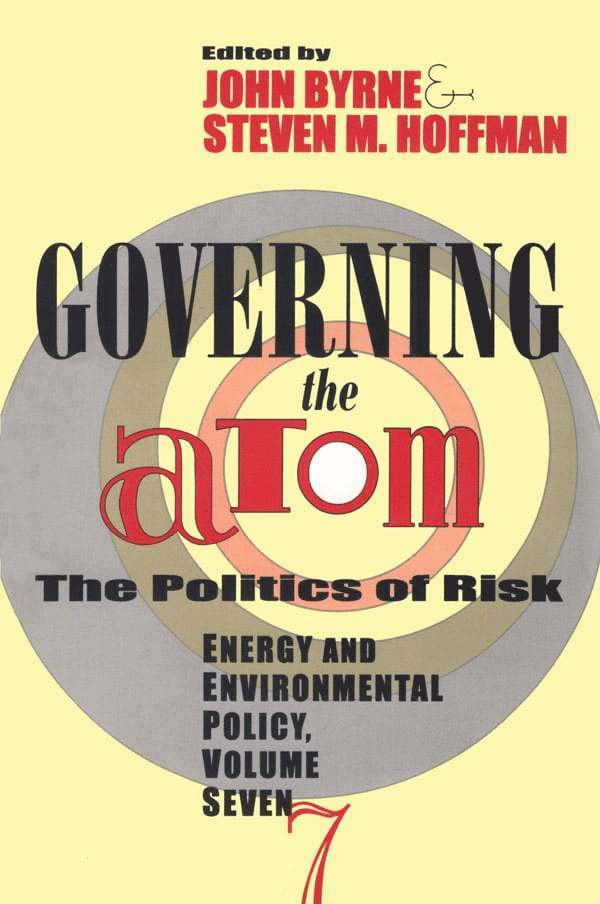
Promoted as a form of limitless, low-cost energy without the polluting effects of its fossil fuel counterparts, nuclear power has enjoyed unparalleled support in several countries. Despite the development of an extensive set of policy and institutional mechanisms to foster its use, nuclear technology has been troubled by a wide range of problems and continues to pose risks many believe are far greater than society should accept. The legacy of failure ranges from catastrophic accidents like that at Chernobyl to the declaration of bankruptcy by the Washington Public Power Supply System. 'Governing the Atom' explores why support for the technology remains substantial. The first part of this volume examines the social institutions that have accompanied the development of nuclear power. The second part details the numerous accommodations which have been required of society, beginning with the technology's impact on communities and geographic regions particularly affected by mining and milling. The technology's inherent tendency towards "normal accidents" and the conflict between expert and public opinion on the dangers involved is examined, as are the on-going problems of waste disposal and decommissioning. The volume concludes with an examination of nuclear power developments in France, Germany, Russia and the Commonwealth of Independent States, Eastern Europe, Korea, and Japan. The volume provides a needed vehicle for the timely consultation and dissemination of current research on important energy policy issues. 'Governing the Atom' provides insightful commentary regarding the initiation and development of nuclear technology. It will be of interest to policymakers, energy and environmental experts, sociologists and historians of technology, and all those interested in the problem of democracy in a technological society.
2 113 kr
Skickas inom 10-15 vardagar
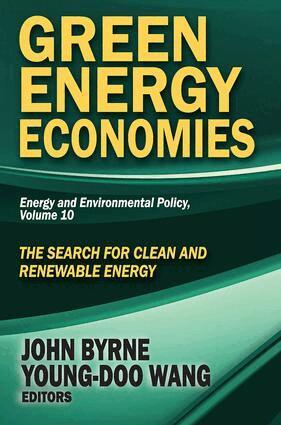
Green Energy Economies offers insight into the major drivers that are shaping a new future powered by clean energy sources. Assembling cutting-edge researchers as contributors, the book provides a comprehensive account of the shift underway, examining in detail the complexities and intricacies involved with such a transition.The book first details the promises and problems of a green energy transition. Next, it explores the economic benefits that a comprehensive strategy toward a green energy economy might create. Then it investigates how communities will be affected and explores the social, cultural, and other changes that are likely to result. Finally, it explores the shift toward new technologies in-depth. Green Energy Economies concludes with policy options that support a transition to a better energy, environmental, and economic future.The contributors argue that a green energy economy offers great promise, but its realization will require making hard choices, and soon. They argue for investments in renewable energy and economic systems that can deliver a sustainable and equitable future. This book makes a forceful case for a green future.
1 325 kr
Skickas inom 10-15 vardagar
The Politics of Energy Research and Development examines and evaluates U.S. research and development policies to promote nuclear, solar, conservation, and other technology options. This volume is the third in the series Energy Policy Studies, which explores fundamental, long-term social, political, and economic dimensions of energy technology, resources, and use. Contributions represent a wide range of theoretical and policy perspectives, including sociology, economics, political science, urban and regional studies, environmental analysis, and history and philosophy of technology.Contents: Richard L. Ottinger, "Introduction: The Tragedy of U.S. Energy R&D Policy"; Amor^ B. Lovins, "The Origins of the Nuclear Power Fiasco"; Richard T. Sylves, "Nuclear Exotica: Peaceful Use of Nuclear Explosives"; Eugene Frankel, "Technology, Politics and Ideology: The Vicissitudes of Federal Solar Energy Policy, 1974-1983"; Maxine Savitz, "The Federal Role in Conservation Research and Development"; J. David Roessner, "Commercialization Issues in Energy Technology Policy"; John Byrne and Daniel Rich, "In Search of the Abundant Energy Machine"; and Grant P. Thompson, "Energy Policy in the Interim: Waiting for the Next Shoe to Drop."
2 113 kr
Skickas inom 10-15 vardagar
In 1934, Lewis Mumford critiqued the industrial energy system as a key source of authoritarian economic and political tendencies in modern life. Recent debate continues to engage issues of energy authoritarianism, focusing on the contest between energy-driven globalization (the spread of energy deregulation and the simultaneous consolidation of the oil, coal, and gas industries) and the so-called "sustainable energy" strategy that celebrates the local and community scale characteristics of renewable energy. Including theoretical inquiries and case studies by distinguished writers, Transforming Power is divided into three parts: Energy, Environment, and Society; The Politics of Conventional Energy; and The Politics of Sustainable Energy. It interrogates current contemporary energy assumptions, exploring the reflexive relationship between energy, environment, and society, and examining energy as a social project. Some of these have promised a prosperous future founded upon technological advances that further modernize the modern energy system, such as "inherently safe" nuclear power, environmentally friendly coal gasification, and the advent of a wealthier, cleaner world powered by fuel cells; and the "green technologies," said by advocates to prefigure a revival of human scale development, local self-determination, and a commitment to ecological balance. br This volume offers a timely engagement of the social issues surrounding energy conflicts and contradictions. It will be of interest to policymakers, energy and environmental experts, sociologists, and historians of technology.
673 kr
Skickas inom 10-15 vardagar
In 1934, Lewis Mumford critiqued the industrial energy system as a key source of authoritarian economic and political tendencies in modern life. Recent debate continues to engage issues of energy authoritarianism, focusing on the contest between energy-driven globalization (the spread of energy deregulation and the simultaneous consolidation of the oil, coal, and gas industries) and the so-called "sustainable energy" strategy that celebrates the local and community scale characteristics of renewable energy. Including theoretical inquiries and case studies by distinguished writers, Transforming Power is divided into three parts: Energy, Environment, and Society; The Politics of Conventional Energy; and The Politics of Sustainable Energy. It interrogates current contemporary energy assumptions, exploring the reflexive relationship between energy, environment, and society, and examining energy as a social project. Some of these have promised a prosperous future founded upon technological advances that further modernize the modern energy system, such as "inherently safe" nuclear power, environmentally friendly coal gasification, and the advent of a wealthier, cleaner world powered by fuel cells; and the "green technologies," said by advocates to prefigure a revival of human scale development, local self-determination, and a commitment to ecological balance. br This volume offers a timely engagement of the social issues surrounding energy conflicts and contradictions. It will be of interest to policymakers, energy and environmental experts, sociologists, and historians of technology.
727 kr
Skickas inom 10-15 vardagar
Green Energy Economies offers insight into the major drivers that are shaping a new future powered by clean energy sources. Assembling cutting-edge researchers as contributors, the book provides a comprehensive account of the shift underway, examining in detail the complexities and intricacies involved with such a transition.The book first details the promises and problems of a green energy transition. Next, it explores the economic benefits that a comprehensive strategy toward a green energy economy might create. Then it investigates how communities will be affected and explores the social, cultural, and other changes that are likely to result. Finally, it explores the shift toward new technologies in-depth. Green Energy Economies concludes with policy options that support a transition to a better energy, environmental, and economic future.The contributors argue that a green energy economy offers great promise, but its realization will require making hard choices, and soon. They argue for investments in renewable energy and economic systems that can deliver a sustainable and equitable future. This book makes a forceful case for a green future.
428 kr
Skickas inom 10-15 vardagar
Promoted as a form of limitless, low-cost energy without the polluting effects of its fossil fuel counterparts, nuclear power has enjoyed unparalleled support in several countries. Despite the development of an extensive set of policy and institutional mechanisms to foster its use, nuclear technology has been troubled by a wide range of problems and continues to pose risks many believe are far greater than society should accept. The legacy of failure ranges from catastrophic accidents like that at Chernobyl to the declaration of bankruptcy by the Washington Public Power Supply System. 'Governing the Atom' explores why support for the technology remains substantial. The first part of this volume examines the social institutions that have accompanied the development of nuclear power. The second part details the numerous accommodations which have been required of society, beginning with the technology's impact on communities and geographic regions particularly affected by mining and milling. The technology's inherent tendency towards "normal accidents" and the conflict between expert and public opinion on the dangers involved is examined, as are the on-going problems of waste disposal and decommissioning. The volume concludes with an examination of nuclear power developments in France, Germany, Russia and the Commonwealth of Independent States, Eastern Europe, Korea, and Japan. The volume provides a needed vehicle for the timely consultation and dissemination of current research on important energy policy issues. 'Governing the Atom' provides insightful commentary regarding the initiation and development of nuclear technology. It will be of interest to policymakers, energy and environmental experts, sociologists and historians of technology, and all those interested in the problem of democracy in a technological society.