Luther H. Hodges Jr. and Luther H. Hodges Sr. Series on Business, Entrepreneurship and Public Policy – serie
Visar alla böcker i serien Luther H. Hodges Jr. and Luther H. Hodges Sr. Series on Business, Entrepreneurship and Public Policy. Handla med fri frakt och snabb leverans.
13 produkter
13 produkter
Häftad, Engelska, 2000
526 kr
Skickas inom 10-15 vardagar
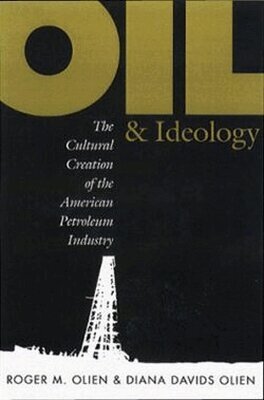
Traditional accounts of John D. Rockefeller and the Standard Oil Company, as well as more recent best-selling books on the subject, still accept without question charges of unethical and anti-competitive behaviour by the American oil industry. In this synthesis of cultural, business, gender and intellectual history, Roger and Diana Davids Olien explore how this negative image of the petroleum industry was created -and how this image in turn helped shape policy toward the industry in ways that were sometimes at odds with both the goals or reformers and the public interest. By turning a critical eye on sources that have often been accepted at face value and examining the self-interests of oil industry critics, the authors seek to produce a more balanced, complex picture of the industry. Their case study of the impact of technology offers an example of how business must be understood through its cultural context and offers an approach to understanding problems of regulation and reform.
Häftad, Engelska, 2001
470 kr
Skickas inom 10-15 vardagar
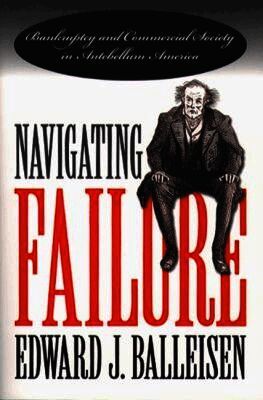
The culture of American capitalism and one of its most enduring features - bankruptcy The ""self-made"" man is a familiar figure in nineteenth-century American history. But the relentless expansion of market relations that facilitated such stories of commercial success also ensured that individual bankruptcy would become a prominent feature in the nation's economic landscape. In this ambitious foray into the shifting character of American capitalism, Edward Balleisen explores the economic roots and social meanings of bankruptcy, assessing the impact of widespread insolvency on the evolution of American law, business culture, and commercial society. Balleisen makes innovative use of the rich and previously overlooked court records generated by the 1841 Federal Bankruptcy Act, building his arguments on the commercial biographies of hundreds of failed business owners. He crafts a nuanced account of how responses to bankruptcy shaped two opposing elements of capitalist society in mid-nineteenth century America.
Häftad, Engelska, 2002
470 kr
Skickas inom 10-15 vardagar
The first work to draw on Nelson A. Rockefeller's newly available personal papers as well as research in Latin American archives, Missionary Capitalist details Rockefeller's efforts to promote economic development in Latin America, particularly Venezuela, from the late 1930s through the 1950s. Rockefeller's involvement in the region began in 1936 with his investment in Creole Petroleum, the Venezuelan subsidiary of Standard Oil. Almost immediately, he began trying to influence North Americans' individual, corporate, and government relationships with Latin Americans. Through his work developing technical assistance programs for the Roosevelt administration during World War II, his business ventures (primarily agricultural production and food retailing), and his postwar founding of the nonprofit American International Association, Rockefeller hoped to demonstrate how U.S. capitalists could nurture entrepreneurial spirit and work successfully with government agencies in Latin America to encourage economic development and improve U.S.-Latin American relations. Ultimately, however, he over-estimated the ability of the United States, through public or private endeavors, to promote Latin American economic, political, and social change. This objective account paints a portrait of Rockefeller not as the rapacious, exploitative figure of stereotype, but as a man fueled by idealism and humanitarian concern as well as ambition.
Häftad, Engelska, 2002
456 kr
Skickas inom 10-15 vardagar
The beginning of the twentieth century witnessed a remarkable growth of corporate welfare programs in American industry. By the mid-1920s, 80 percent of the nation's largest companies--firms including DuPont, International Harvester, and Metropolitan Life Insurance--engaged in some form of welfare work. Programs were implemented to achieve goals that ranged from improving basic workplace conditions, to providing educational, recreational, and social opportunities for workers and their families, to establishing savings and insurance plans. Employing the critical lens of gender analysis, Nikki Mandell offers an innovative perspective on the development of corporate welfare. She argues that its advocates sought to build a new relationship between labor and management by recasting the modern corporation as a Victorian family. Employers assumed the authoritative position of fathers, assigned their employees the subordinate role of children, and hired male and female welfare managers to act as ""corporate mothers"" charged with creating a harmonious household. But internal conflict and external pressures weakened the corporate welfare system, and it eventually gave way to a system of personnel management and employee representation. With the abandonment of the familial model, the form of corporate welfare changed; but, as Mandell demonstrates, its content left an enduring legacy for modern industrial relations. |Mandell examines the growth of corporate welfare programs around the turn of the 20th century. She argues that businessmen hoped such programs would transform conflict-ridden relations between management and labor into a harmonious partnership modeled after the Victorian family.
Häftad, Engelska, 2001
579 kr
Skickas inom 10-15 vardagar
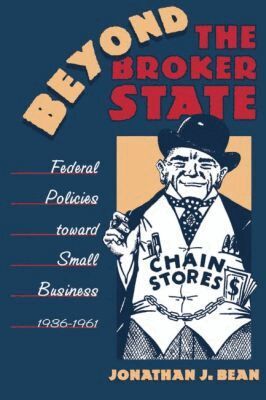
Thomas Jefferson and Abraham Lincoln both considered small business the backbone of American democracy and free enterprise. In Beyond the Broker State , Jonathan Bean considers the impact of this ideology on American politics from the Great Depression to the creation of the Small Business Administration during the Eisenhower administration. Bean's analysis of public policy toward small business during this period challenges the long-accepted definition of politics as the interplay of organized interest groups, mediated by a 'broker-state' government. Specifically, he highlights the unorganized nature of the small business community and the ideological appeal that small business held for key members of Congress. Bean focuses on anti-chain-store legislation beginning in the 1930s and on the establishment of federal small business agencies in the 1940s and 1950s. According to Bean, Congress, inspired by the rhetoric of crisis, often misinterpreted or misrepresented the threat posed to small business from large corporations, and as a result, protective legislation sometimes worked against the interests it was meant to serve. Despite this misguided aid, argues Bean, small business has proved to be a remarkably resilient, if still unorganized, force.
Häftad, Engelska, 2003
470 kr
Skickas inom 10-15 vardagar
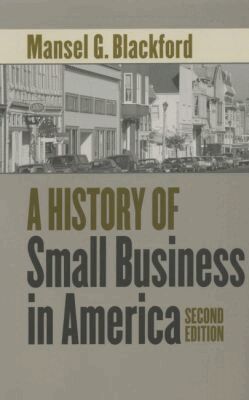
From the colonial era to the present day, small businesses have been an integral part of American life. First published in 1991 and now thoroughly updated, this study explores the central but ever-changing role played by small enterprises in the nation's economic, political and cultural development. Examining small businesses in manufacturing, sales, services and farming, Mansel Blackford argues that while small firms have always been important to the nation's development, their significance has varied considerably in different time periods and in different segments of the American economy. Throughout, he relates small business development to changes in America's overall business and economic systems and offers comparisons between the growth of small business in the United States to its development in other countries. He places special emphasis on the importance of small business development for women and minorities.
Häftad, Engelska, 2003
526 kr
Skickas inom 10-15 vardagar
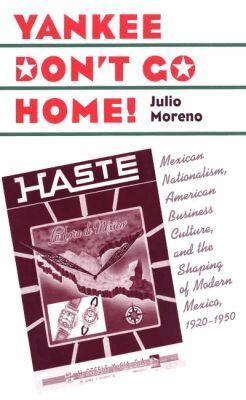
In the aftermath of the 1910 Mexican Revolution, Mexican and U.S. political leaders, business executives, and ordinary citizens shaped modern Mexico by making industrial capitalism the key to upward mobility into the middle class, material prosperity, and a new form of democracy--consumer democracy. Julio Moreno describes how Mexico's industrial capitalism between 1920 and 1950 shaped the country's national identity, contributed to Mexico's emergence as a modern nation-state, and transformed U.S.-Mexican relations. According to Moreno, government programs and incentives were central to legitimizing the postrevolutionary government as well as encouraging commercial growth. Moreover, Mexican nationalism and revolutionary rhetoric gave Mexicans the leverage to set the terms for U.S. businesses and diplomats anxious to court Mexico in the midst of the dual crises of the Great Depression and World War II. Diplomats like Nelson Rockefeller and corporations like Sears Roebuck achieved success by embracing Mexican culture in their marketing and diplomatic pitches, while those who disregarded Mexican traditions were slow to earn profits. Moreno also reveals how the rapid growth of industrial capitalism, urban economic displacement, and unease caused by World War II and its aftermath unleashed feelings of spiritual and moral decay among Mexicans that led to an antimodernist backlash by the end of the 1940s. |Moreno describes how Mexico's industrial capitalism between 1920 and 1950 shaped the country's national identity, contributed to Mexico's emergence as a modern nation-state, and transformed U.S.-Mexican relations. The study is as much of American diplomacy and U.S. corporate culture--and the encounter between American and Mexican values, beliefs, and practices--as it is of Mexican history.
Häftad, Engelska, 2006
442 kr
Skickas inom 10-15 vardagar
Late nineteenth-century San Francisco was an ethnically diverse but male-dominated society bustling from a rowdy gold rush, recovery from the earthquake, and explosive economic growth. Within this booming marketplace, some women stepped beyond their roles as wives, caregivers, and homemakers to start businesses that combined family concerns with money-making activities. Edith Sparks traces the experiences of these women entrepreneurs, exploring who they were, why they started businesses, how they attracted customers and managed finances, and how they dealt with failure. Using a unique sample of bankruptcy records, credit reports, advertisements, city directories, census reports, and other sources, Sparks argues that women were competitive, economic actors, strategizing how best to capitalize on their skills in the marketplace. Their boardinghouses, restaurants, saloons, beauty shops, laundries, and clothing stores dotted the city's landscape. By the early twentieth century, however, technological advances, new preferences for name-brand goods, and competition from large-scale retailers constricted opportunities for women entrepreneurs at the same time that new opportunities for women with families drew them into other occupations. Sparks's analysis demonstrates that these businesswomen were intimately tied to the fortunes of the city over its first seventy years.
Häftad, Engelska, 2009
540 kr
Skickas inom 10-15 vardagar
In the 1940s, the name Henry J. Kaiser was magic. Based on the success of his shipyards, Kaiser was hailed by the national media as the force behind a 'can-do' production miracle and credited by the American public with doing more to help President Roosevelt win World War II than any other civilian. Kaiser also built an empire in construction, cement, magnesium, steel, and aluminum--all based on government contracts, government loans, and changes in government regulations. In this book, Stephen Adams offers Kaiser's story as the first detailed case study of 'government entrepreneurship.' Taking a fresh look at the birth of modern business-government relations, he explores the symbiotic connection forged between FDR and Kaiser. Adams shows that while Kaiser capitalized on opportunities provided by the growth of the federal government, FDR found in Kaiser an industrial partner whose enterprises embodied New Deal goals. The result of a confluence of administration policy and entrepreneurial zeal, Kaiser's dramatic rise illustrates the important role of governmental relations in American entrepreneurial success.
Häftad, Engelska, 2013
442 kr
Skickas inom 10-15 vardagar
Praised for its ability to kill insects effectively and cheaply and reviled as an ecological hazard, DDT continues to engender passion across the political spectrum as one of the world's most controversial chemical pesticides. In DDT and the American Century , David Kinkela chronicles the use of DDT around the world from 1941 to the present with a particular focus on the United States, which has played a critical role in encouraging the global use of the pesticide. The banning of DDT in the United States in 1972 is generally regarded as a signal triumph for the American environmental movement. Yet DDT's function as a tool of U.S. foreign policy and its use in international development projects designed to solve problems of disease and famine made it an integral component of the so-called American Century. The varying ways in which scientists, philanthropic foundations, corporations, national governments, and transnational institutions assessed and adjudicated the balance of risks and benefits of DDT within and beyond America's borders, Kinkela argues, demonstrates the gap that existed between global and U.S. perspectives on DDT. DDT and the American Century offers a unique approach to understanding modern environmentalism in a global context. |Praised for its ability to kill insects effectively and cheaply and reviled as an ecological hazard, DDT continues to engender passion across the political spectrum as one of the world's most controversial chemical pesticides. Kinkela chronicles the use of DDT around the world from 1941 to the present with a particular focus on the United States, which has played a critical role in encouraging the global use of the pesticide.
Häftad, Engelska, 2014
498 kr
Skickas inom 10-15 vardagar
In this book, Aaron Forsberg presents an arresting account of Japan's postwar economic resurgence in a world polarized by the Cold War. His fresh interpretation highlights the many connections between Japan's economic revival and changes that occurred in the wider world during the 1950s. Drawing on a wealth of recently released American, British, and Japanese archival records, Forsberg demonstrates that American Cold War strategy and the U.S. commitment to liberal trade played a central role in promoting Japanese economic welfare and in forging the economic relationship between Japan and the United States. The price of economic opportunity and interdependence, however, was a strong undercurrent of mutual frustration, as patterns of conflict and compromise over trade, investment, and relations with China continued to characterize the postwar U.S.-Japanese relationship.Forsberg's emphasis on the dynamic interaction of Cold War strategy, the business environment, and Japanese development challenges ""revisionist"" interpretations of Japan's success. In exploring the complex origins of the U.S.-led international economy that has outlasted the Cold War, Forsberg refutes the claim that the U.S. government sacrificed American commercial interests in favor of its military partnership with Japan.
Häftad, Engelska, 2014
498 kr
Skickas inom 10-15 vardagar
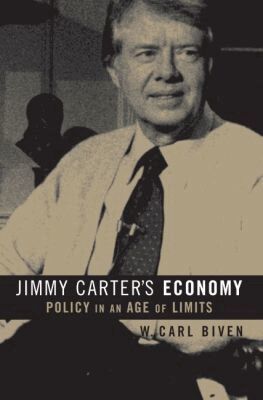
The massive inflation and oil crisis of the 1970s damaged Jimmy Carter's presidency. In Jimmy Carter's Economy, Carl Biven traces how the Carter administration developed and implemented economic policy amid multiple crises and explores how a combination of factors beyond the administration's control came to dictate a new paradigm of Democratic Party politics. Jimmy Carter inherited a deeply troubled economy. Inflation had been on the rise since the Johnson years, and the oil crisis Carter faced was the second oil price shock of the decade. In addition, a decline in worker productivity and a rise in competition from Germany and Japan compounded the nation's economic problems. The resulting anti-inflation policy that was forced on Carter included controlling public spending, limiting the expansion of the welfare state, and postponing popular tax cuts. Moreover, according to Biven, Carter argued that the ambitious policies of the Great Society were no longer possible in an age of limits and that the Democratic Party must by economic necessity become more centrist.
Häftad, Engelska, 2014
442 kr
Skickas inom 10-15 vardagar
Focusing on five Los Angeles environmental policy debates between 1920 and 1950, Sarah Elkind investigates how practices in American municipal government gave business groups political legitimacy at the local level as well as unanticipated influence over federal politics.Los Angeles's struggles with oil drilling, air pollution, flooding, and water and power supplies expose the clout business has had over government. Revealing the huge disparities between big business groups and individual community members in power, influence, and the ability to participate in policy debates, Elkind shows that business groups secured their political power by providing Los Angeles authorities with much-needed services, including studying emerging problems and framing public debates. As a result, government officials came to view business interests as the public interest. When federal agencies looked to local powerbrokers for project ideas and political support, local business interests influenced federal policy, too. Los Angeles, with its many environmental problems and its dependence upon the federal government, provides a distillation of national urban trends, Elkind argues, and is thus an ideal jumping-off point for understanding environmental politics and the power of business in the middle of the twentieth century.