
Etel Adnan Poetry Series – serie
Visar alla böcker i serien Etel Adnan Poetry Series. Handla med fri frakt och snabb leverans.
4 produkter
4 produkter
Häftad, Engelska, 2019
240 kr
Skickas inom 5-8 vardagar
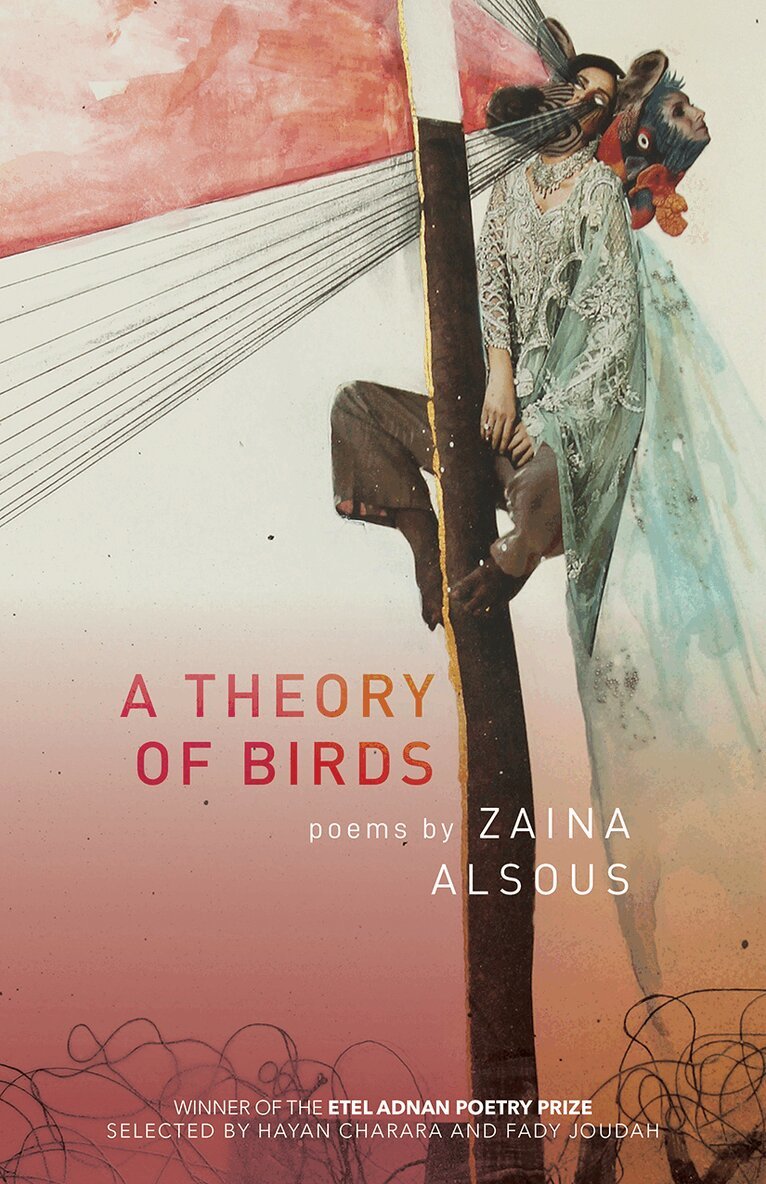
Winner of the 2019 Etel Adnan Poetry Prize.Inside the dodo bird is a forest, Inside the foresta peach analog, Inside the peach analog a woman, Insidethe woman a lake of funeralsThis layering of bird, woman, place, technology, and ceremony, which begins this first full-length collection by Zaina Alsous, mirrors the layering of insights that marks the collection as a whole. The poems in A Theory of Birds draw on inherited memory, historical record, critical theory, alternative geographies, and sharp observation. In them, birds-particularly extinct species-become metaphor for the violences perpetrated on othered bodies under the colonial gaze.Putting ecological preservation in conversation with Arab racial formation, state vernacular with the chatter of birds, Alsous explores how categorization can be a tool for detachment, domination, and erasure. Stretching their wings toward de-erasure, these poems-their subjects and their logics-refuse to stay put within a single category. This is poetry in support of a decolonized mind.
Häftad, Engelska, 2022
240 kr
Skickas inom 5-8 vardagar
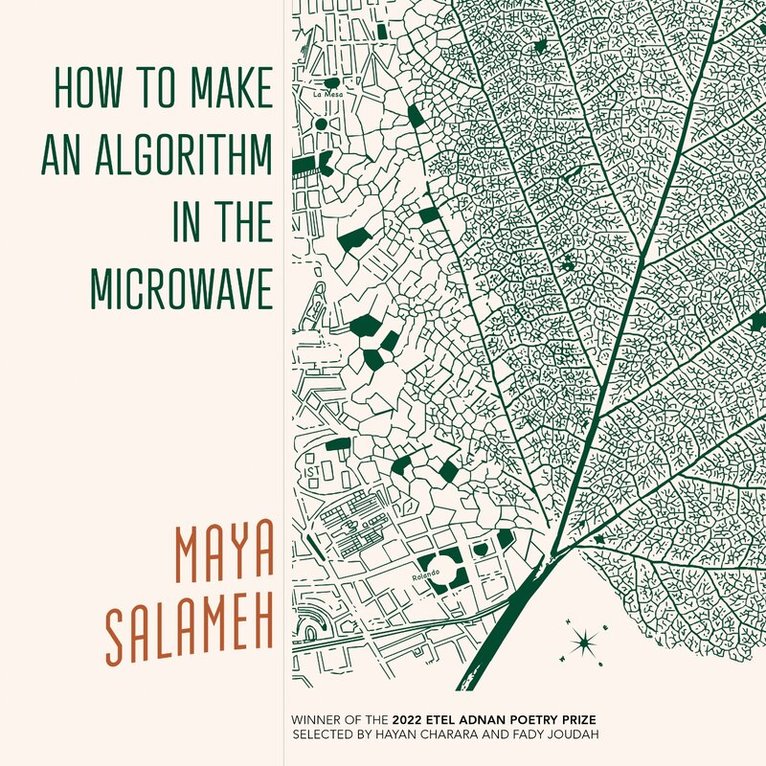
Winner, 2022 Etel Adnan Poetry PrizeThe divine and the digital achieve a distinct corporality in Maya Salameh’s How to Make an Algorithm in the Microwave, winner of the 2022 Etel Adnan Poetry Prize. Layering prayer with code, Salameh brings supposedly unassailable technological constructs like algorithm, recursion, and loop into conversation with the technologies of womanhood, whether liner, lipstick, or blood. Exploring the relationships we have with our devices, she speaks back to the algorithm (“a computer’s admission to blood”), which acts simultaneously as warden, confidant, and data thief.Here Salameh boldly examines how an Arab woman survives the digitization of her body—experimenting with form to create an intimate collage of personal and neocolonial histories, fearlessly insinuating herself into the scripts that would otherwise erase her (“a code & a homily are both instructions”), and giving voice to the full mess of ritual.
Häftad, Engelska, 2023
240 kr
Skickas inom 5-8 vardagar
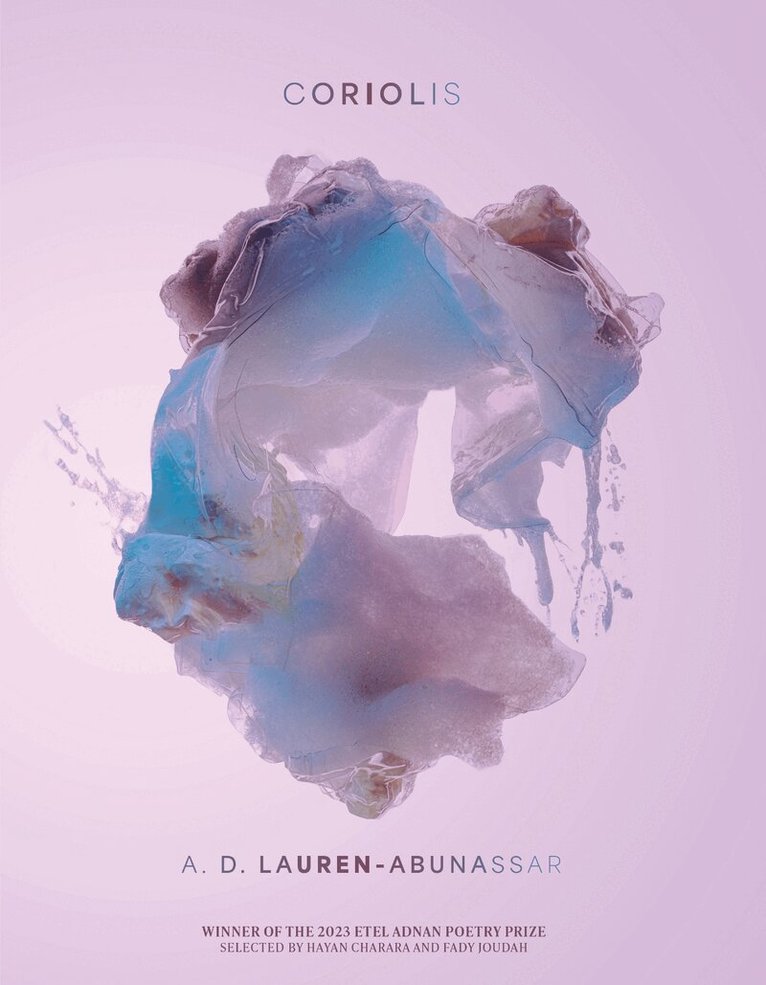
The Coriolis effect—from which A. D. Lauren-Abunassar’s hyperkinetic debut collection borrows its title—describes a force that deflects a mass off course. This concept is at play both formally and psychically in Coriolis, recognized in Leila Chatti's Foreword as “a book of wanting, of lack, absence, disintegration, opacity, and yearning. ‘If only I could cut out the part of me shaped like wanting,’ writes Lauren-Abunassar. At times, the thing wanted for is love. Other times: family, certainty, belonging, home, safety, wellness, wholeness, or simply for a thing to be clean. Always, these poems reveal the shape of the want by illuminating its outline.” Perhaps the speaker of these poems wants most of all to be seen, despite her reflex to deflect when she discloses a shame or trauma, often by depositing the self-revelation within rapid, teeming strings of thought. Yet as much as this speaker may be an introvert in life—“Every time someone says my name it surprises me”; “Because I am lonely, I am always shying away from the mirror”; “Today I woke up feeling / like an already said thing”—many of her utterances are exuberantly uninhibited. “Small trees live inside me,” Lauren-Abunassar admits passingly in one poem. And in another: “When I dream of myself, my mouth / blooms many hands. They reach in all / shapes and directions.”
Häftad, Engelska, 2024
240 kr
Skickas inom 5-8 vardagar
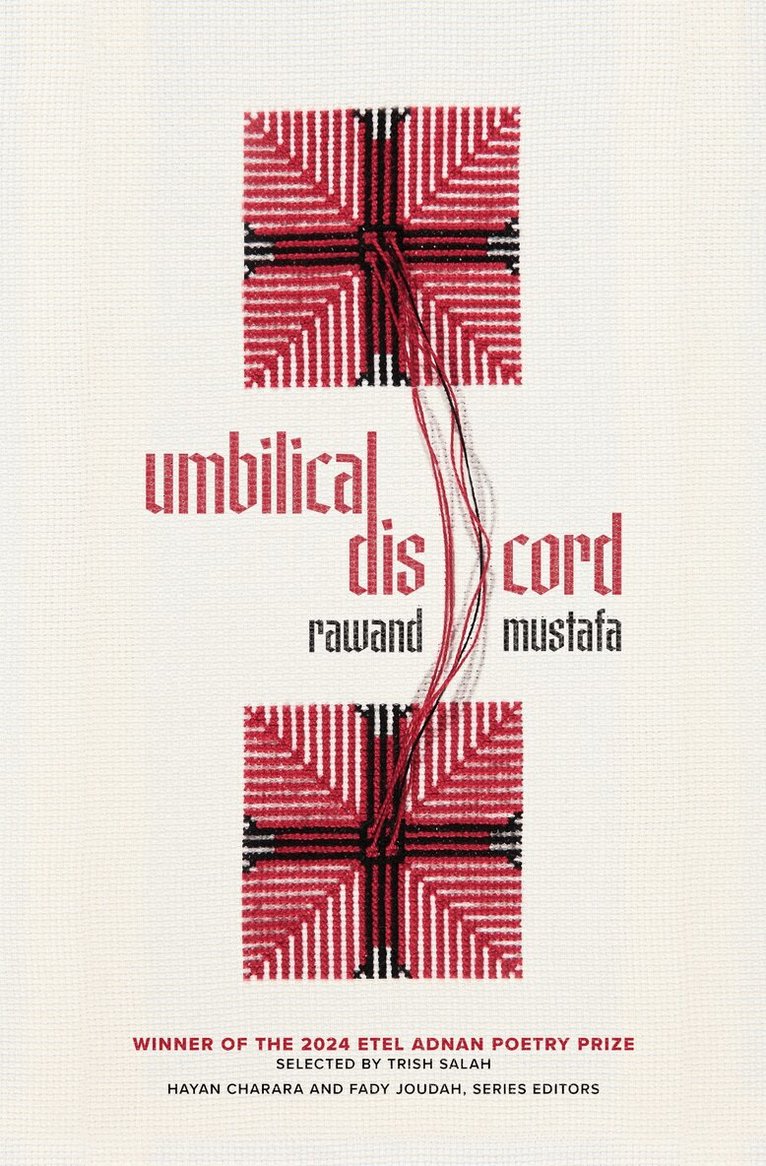
Winner, 2024 Etel Adnan Poetry PrizeAt its core, Rawand Mustafa’s Umbilical Discord is an impossible attempt. Ambitious in scope, it strives to trace the billion-branched reach of the Palestinian context within a fixed yet flowing form—columnar, helical, intertwining, tense, intense. Incorporating testimonies by elder Palestinian women who survived the Nakba, or Palestinian Catastrophe of 1948, Mustafa re-presents the ongoing shockwaves from this historical upheaval by interlacing witnesses’ stories with related recollections from her own family history. The overlapping accounts from Palestinian women that Mustafa has painstakingly translated or gathered from family members recall moments of supreme perseverance in the face of unimaginable violence, separation, and loss, while weaving together past and present, collective and individual, Arabic and English, memory and imagination, homeland and host country. As Trish Salah observes in the foreword for Umbilical Discord, “these are poems of yearning and of being, both in spite of and fractured by an impossible history. [. . .] Mustafa offers resistant traces of the geographies and names dis/re-membered in [. . .] efforts to erase the material architecture and cultural memory of Arab life in Palestine. What must be traversed in order to come to tell a history? As Mustafa writes in ‘dis cord,’ her opening poem, [. . .] ‘I attempt / my story / on a lost / foundation.’ ”