Ethics of Everyday Life - Böcker
Visar alla böcker i serien Ethics of Everyday Life. Handla med fri frakt och snabb leverans.
8 produkter
8 produkter
1 545 kr
Skickas inom 10-15 vardagar
Despite current concerns for "family values" and the dissolution of marriages, Amy A. and Leon R. Kass see very little attention being paid to what makes for marital success. They argue there are no longer socially prescribed forms of conduct that help guide young men and women in the direction of matrimony; the very concepts of "wooing" and "courting" seem archaic. Yet they see major discontent with the present situation and detect among their students certain longings—for friendship, for wholeness, for a life that is serious and deep, and for associations that are trustworthy and lasting—longings they do not realize could be largely satisfied by marrying well. Wing to Wing, Oar to Oar: Courting and Marrying is an anthology of source readings offered as a response to the contemporary cultural silence surrounding love that leads to marriage. It addresses important questions that emerge not from theory, but from practice: Why marry? Is this love? How can I find and win the right one to marry? What about sex? Why a wedding and the promises of marriage? What can married life be like? Using readings taken mainly from classic texts of Homer, Herodotus, Plato, Aquinas, Erasmus, Shakespeare, Rousseau, Austen, Tolstoy, C.S. Lewis, Miss Manners, and many others, this collection challenges our unexamined opinions, expands our sympathies, elevates our gaze. It offers a higher kind of sex education, one that prepares hearts and minds for romance leading to lasting marriage, and introduces us to possibilities open to human beings in everyday life that may be undreamt of in our current philosophizing. This unapologetically pro-marriage anthology is intended to help young people of marriageable age and their parents think about the meaning, purpose, and virtues of marriage and, especially, about finding the right person with whom to make a life.
423 kr
Skickas inom 10-15 vardagar
Despite current concerns for "family values" and the dissolution of marriages, Amy A. and Leon R. Kass see very little attention being paid to what makes for marital success. They argue there are no longer socially prescribed forms of conduct that help guide young men and women in the direction of matrimony; the very concepts of "wooing" and "courting" seem archaic. Yet they see major discontent with the present situation and detect among their students certain longings—for friendship, for wholeness, for a life that is serious and deep, and for associations that are trustworthy and lasting—longings they do not realize could be largely satisfied by marrying well. Wing to Wing, Oar to Oar: Courting and Marrying is an anthology of source readings offered as a response to the contemporary cultural silence surrounding love that leads to marriage. It addresses important questions that emerge not from theory, but from practice: Why marry? Is this love? How can I find and win the right one to marry? What about sex? Why a wedding and the promises of marriage? What can married life be like? Using readings taken mainly from classic texts of Homer, Herodotus, Plato, Aquinas, Erasmus, Shakespeare, Rousseau, Austen, Tolstoy, C.S. Lewis, Miss Manners, and many others, this collection challenges our unexamined opinions, expands our sympathies, elevates our gaze. It offers a higher kind of sex education, one that prepares hearts and minds for romance leading to lasting marriage, and introduces us to possibilities open to human beings in everyday life that may be undreamt of in our current philosophizing. This unapologetically pro-marriage anthology is intended to help young people of marriageable age and their parents think about the meaning, purpose, and virtues of marriage and, especially, about finding the right person with whom to make a life.
1 077 kr
Skickas inom 10-15 vardagar
The wide range of readings in Working: Its Meaning and Its Limits proposes different ways of thinking about something most of us do every day—work. As part of the Ethics of Everyday Life series, these readings are an invitation to reflection and conversation. They focus not on rules for the workplace or on dilemmas in business ethics but on one of the most fundamental aspects of human existence in every time and place.Gilbert C. Meilaender presents varied readings that explore many of the ways in which human beings have thought about the place of work in life—its meanings, its limits, and its relation to other obligations, to the life cycle, to play, and to rest. The readings in this volume range in time from the world of ancient Israel and the classical world of Greece and Rome to contemporary American society. They range in complexity from "The Little Red Hen" to philosophers such as Charles Taylor and Alasdair MacIntyre, and in genre from poetry by Kipling and George Herbert to essays by Dorothy Sayers and Roger Angell; from novels by Tolstoy and Twain to treatises by Marx, Aristotle, and Karl Barth—all placed in the context of an extended discussion of the meaning of work in human life by Meilaender's introduction.Working: Its Meaning and Its Limits enables any reader interested in understanding the moral and spiritual significance of work in our lives to enter into a conversation not only about what we do but who we are.
207 kr
Skickas inom 10-15 vardagar
The wide range of readings in Working: Its Meaning and Its Limits proposes different ways of thinking about something most of us do every day—work. As part of the Ethics of Everyday Life series, these readings are an invitation to reflection and conversation. They focus not on rules for the workplace or on dilemmas in business ethics but on one of the most fundamental aspects of human existence in every time and place.Gilbert C. Meilaender presents varied readings that explore many of the ways in which human beings have thought about the place of work in life—its meanings, its limits, and its relation to other obligations, to the life cycle, to play, and to rest. The readings in this volume range in time from the world of ancient Israel and the classical world of Greece and Rome to contemporary American society. They range in complexity from "The Little Red Hen" to philosophers such as Charles Taylor and Alasdair MacIntyre, and in genre from poetry by Kipling and George Herbert to essays by Dorothy Sayers and Roger Angell; from novels by Tolstoy and Twain to treatises by Marx, Aristotle, and Karl Barth—all placed in the context of an extended discussion of the meaning of work in human life by Meilaender's introduction.Working: Its Meaning and Its Limits enables any reader interested in understanding the moral and spiritual significance of work in our lives to enter into a conversation not only about what we do but who we are.
1 077 kr
Skickas inom 10-15 vardagar
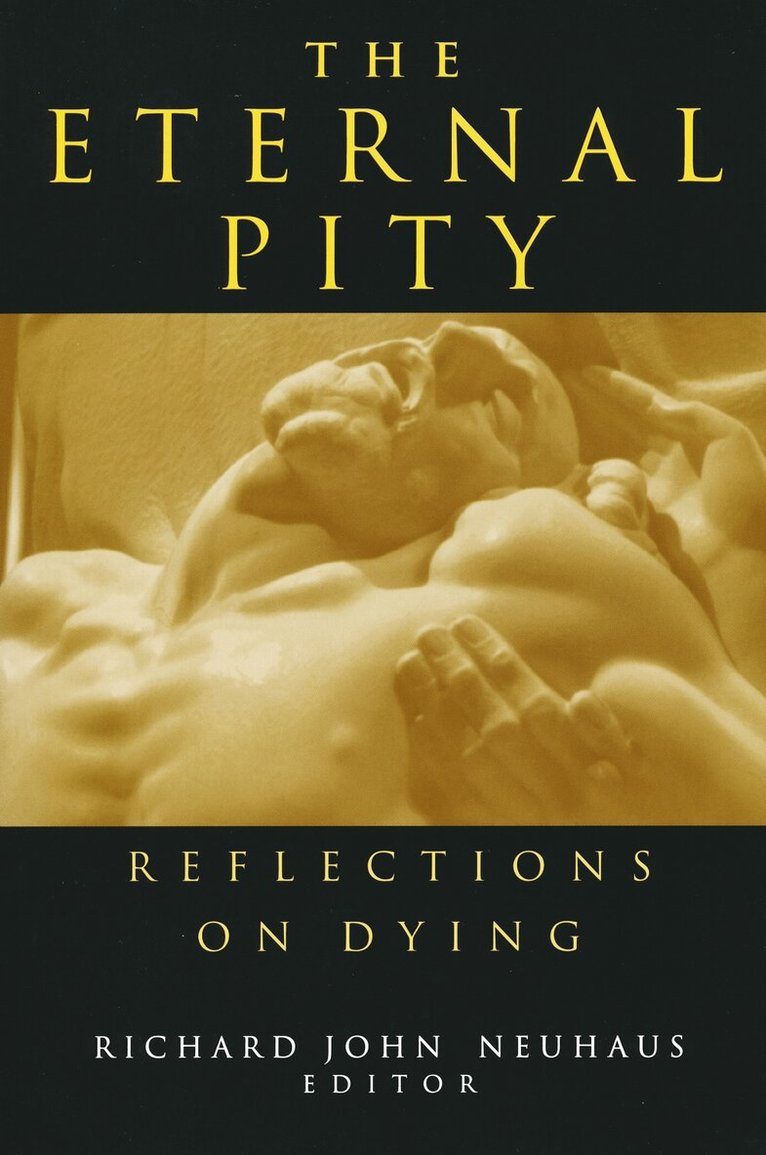
Drawing upon a vast range of human experience and reflection, The Eternal Pity: Reflections on Dying demonstrates how people try to cope with the inevitability of death. Different cultures, informed by religious beliefs and sometimes desperate hope, teach people to respond to their own death and the deaths of others in modes as various as defiance, stoic resignation, and unbridled grief. In addition to examples from literature, poetry, and religious texts, Father Richard John Neuhaus provides an intensely personal account of his encounter with death through emergency cancer surgery and reflects on how that encounter has changed the way he lives. While many writers have deplored the "denial of death" in our culture, The Eternal Pity shows how themes of death and dying are nevertheless perennial and pervasive. Society may be viewed as a disorganized march of multitudes waving little banners of meaning before the threat of nonbeing that is death. Some selections in this book depict people utterly surprised by their mortality; others highlight how the whole of one's life can be a preparation for what used to be called "a good death." For some, life is a relentless effort to hold death at bay; for others, death is, although not welcomed, reflectively anticipated. Nothing so universally defines the human condition as the fact that we shall die. The Eternal Pity helps us to understand how the prospect of death compels decisions about how we might live.
207 kr
Skickas inom 10-15 vardagar
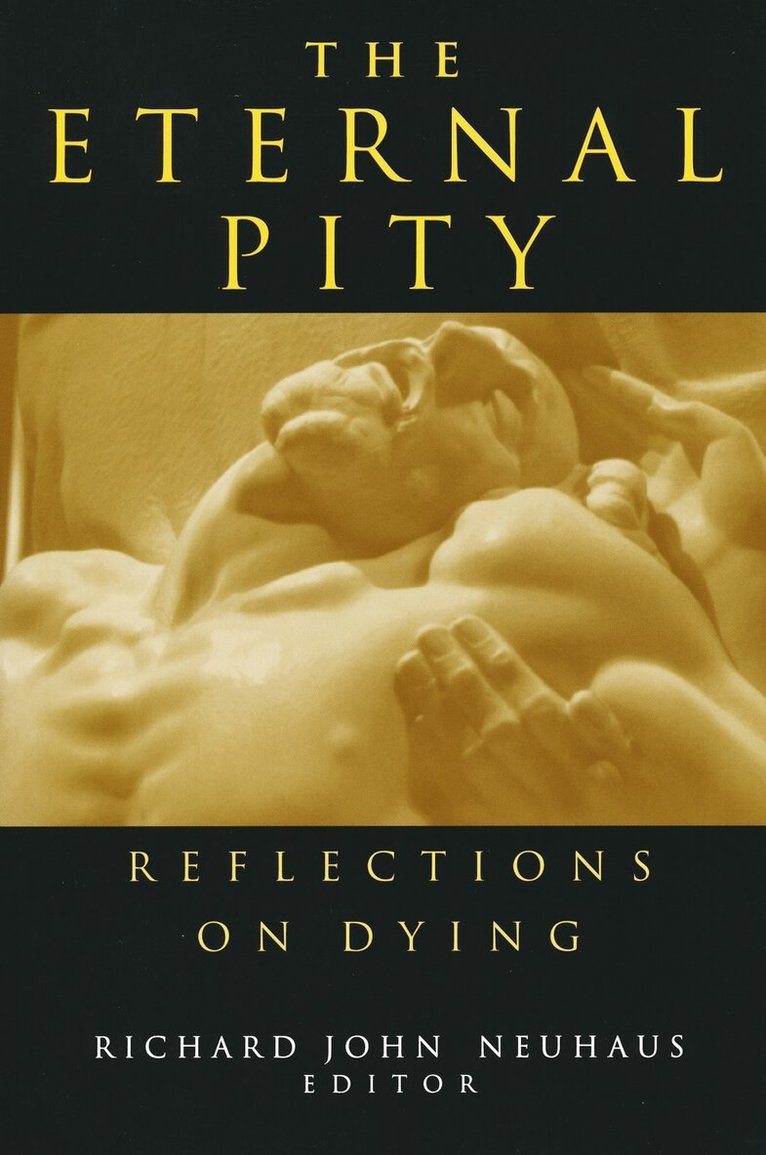
Drawing upon a vast range of human experience and reflection, The Eternal Pity: Reflections on Dying demonstrates how people try to cope with the inevitability of death. Different cultures, informed by religious beliefs and sometimes desperate hope, teach people to respond to their own death and the deaths of others in modes as various as defiance, stoic resignation, and unbridled grief. In addition to examples from literature, poetry, and religious texts, Father Richard John Neuhaus provides an intensely personal account of his encounter with death through emergency cancer surgery and reflects on how that encounter has changed the way he lives. While many writers have deplored the "denial of death" in our culture, The Eternal Pity shows how themes of death and dying are nevertheless perennial and pervasive. Society may be viewed as a disorganized march of multitudes waving little banners of meaning before the threat of nonbeing that is death. Some selections in this book depict people utterly surprised by their mortality; others highlight how the whole of one's life can be a preparation for what used to be called "a good death." For some, life is a relentless effort to hold death at bay; for others, death is, although not welcomed, reflectively anticipated. Nothing so universally defines the human condition as the fact that we shall die. The Eternal Pity helps us to understand how the prospect of death compels decisions about how we might live.
1 306 kr
Skickas inom 10-15 vardagar
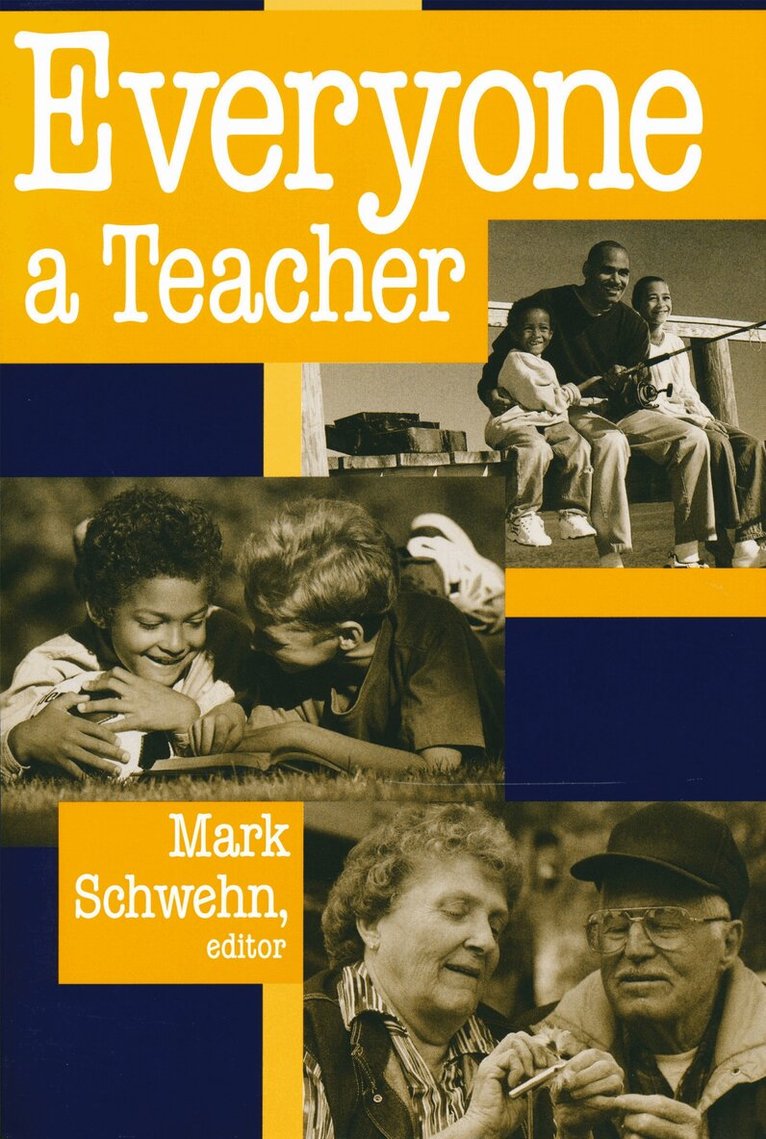
"All of us teach," begins Mark Schwehn's anthology of readings on teaching and learning. Teaching is woven into the fabric of our everyday lives. It includes training children, forming habits and characters, witnessing to a way of life, nurturing reflection and imagination, and imparting goals as well as facts and skills. Teachers are parents, grandparents, spouses, friends, neighbors, pastors, siblings, and co-workers, as well as professional educators. Most people know good teaching when they encounter it, Schwehn argues, and few would identify it with a list of techniques. Although good teaching often seems closer to an art than a skill, teaching is not an occult practice, but a public activity that can be improved by practice and questioning and demonstrated by good examples. Through Schwehn's choice of examples and deft introductions, Everyone a Teacher is an argument for a rich account of good teaching. It invites reflection yet avoids the abstractions of psychology and educational theory. From Socrates teaching a Greek slave boy geometry to Mark Twain's river-boat pilot on the Mississippi, from a real classroom of kindergarten children in Chicago to the parents who tenderly raise their child in Agee's A Death in the Family, the readings remind us of the historical and human importance of teaching and of the qualities of good teaching. These readings are intended to help us all think about the meaning of teaching and learning, for the sake of improving our teaching in everyday life.
254 kr
Skickas inom 10-15 vardagar
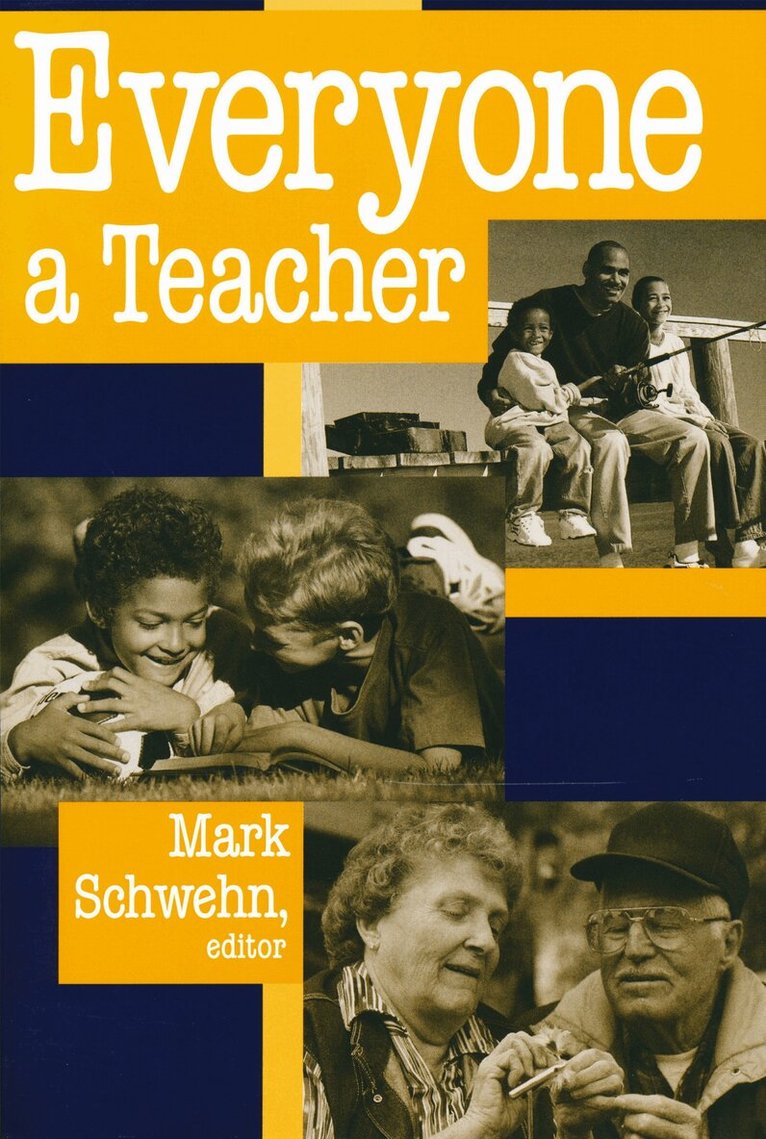
"All of us teach," begins Mark Schwehn's anthology of readings on teaching and learning. Teaching is woven into the fabric of our everyday lives. It includes training children, forming habits and characters, witnessing to a way of life, nurturing reflection and imagination, and imparting goals as well as facts and skills. Teachers are parents, grandparents, spouses, friends, neighbors, pastors, siblings, and co-workers, as well as professional educators. Most people know good teaching when they encounter it, Schwehn argues, and few would identify it with a list of techniques. Although good teaching often seems closer to an art than a skill, teaching is not an occult practice, but a public activity that can be improved by practice and questioning and demonstrated by good examples. Through Schwehn's choice of examples and deft introductions, Everyone a Teacher is an argument for a rich account of good teaching. It invites reflection yet avoids the abstractions of psychology and educational theory. From Socrates teaching a Greek slave boy geometry to Mark Twain's river-boat pilot on the Mississippi, from a real classroom of kindergarten children in Chicago to the parents who tenderly raise their child in Agee's A Death in the Family, the readings remind us of the historical and human importance of teaching and of the qualities of good teaching. These readings are intended to help us all think about the meaning of teaching and learning, for the sake of improving our teaching in everyday life.