Ethics Series - Böcker
Visar alla böcker i serien Ethics Series. Handla med fri frakt och snabb leverans.
6 produkter
6 produkter
725 kr
Skickas inom 10-15 vardagar
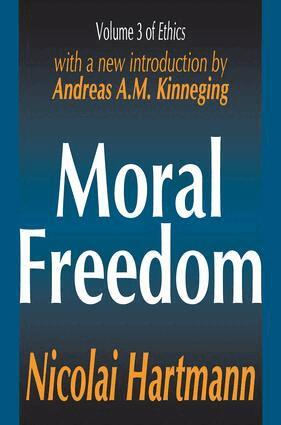
Ethics is Nicolai Hartmann's magnum opus on moral philosophy. Volume 1, Moral Phenomena, is concerned with the nature and structure of ethical phenomena. Volume 2, Moral Values, describes all values as forming a complex and imperfectly known system. The final volume, Moral Freedom, deals with one of the oldest puzzles in both philosophy and theology: the individual's freedom of the will.Freedom of the will is a necessary precondition of morality. Without it, there is no morality in the full sense of the word. In Moral Freedom Hartmann sets out to refute the determinist view that freedom of the will is impossible. Following Kant, while rejecting his transcendentalism, Hartmann first discusses the tension between causality and the freedom of the will.The tension between the determination by moral values and the freedom of the will is next examined, a crucial issue completely overlooked by Kant and virtually all other modern philosophers, but recognized by the scholastics. Why should we believe in the freedom of the will with regard to the moral values? Are there good reasons for thinking that it exists? If freedom of the will vis-a-vis the moral values does exist, how is it to be conceived? Moral Freedom concludes with the famous postscript on the antinomies between ethics and religion.Hartmann's Ethics may well be the most outstanding treatise on moral philosophy in the twentieth century. Andreas Kinneging's introduction sheds light on the volume's continuing relevance.
685 kr
Skickas inom 10-15 vardagar
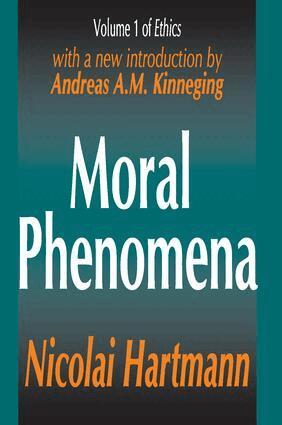
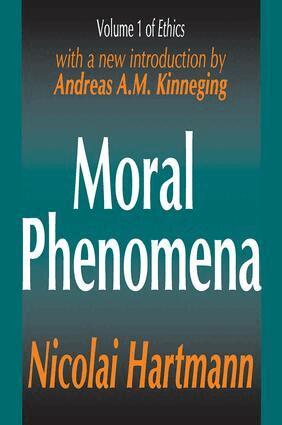
Since the nineteenth century, moral philosophy in the Western world has been dominated by utilitarianism, Kantianism, and relativism. Only a few philosophers have been able to escape from this Procrustean bed. Foremost among these few is Nicolai Hartmann (1882-1950). Together with Henri Bergson and Martin Heidegger, Hartmann was instrumental in restoring metaphysics. Hartmann's metaphysics differs markedly from that of both Bergson and Heidegger, in his indebtedness to Plato.In 1926, Hartmann published a massive treatise, Ethik, which was translated into English by Stanton Coit and published as Ethics in 1932. Ethics is probably the most outstanding treatise on moral philosophy in the twentieth century. The central concept of the book is "value." Drawing upon the pre-modern view of ethics, Hartmann maintains that values are objectively given, part and parcel of the order of being. We cannot invent values, we can merely discover them.The first part of Ethics is concerned with the structure of ethical phenomena and criticizes utilitarianism, Kantianism, and relativism as misleading approaches. After some introductory thoughts concerning the competence of practical philosophy, Hartmann discusses the essence of moral values, including their absoluteness and ideal being, and the essence of the "ought." Hartmann is both controversial and compelling. He provides a moral philosophy that rejects the subjectivism of the ruling approaches, without taking recourse to older theological notions on the foundation of the ethical. In sum: Hartmann's Ethics constitutes an impressive and preeminent contribution to moral philosophy.
685 kr
Skickas inom 10-15 vardagar
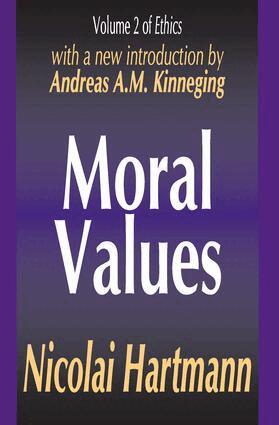
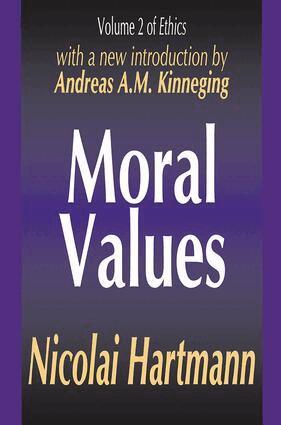
Nicolai Hartmann (1882-1950), along with Henri Bergson and Martin Heidegger, was instrumental in restoring metaphysics to the study of philosophy. Unlike his contemporaries, however, Hartmann was clearly influenced by Plato. His tour-de-force, Ethik, published in English in 1932 as Ethics, may be the most outstanding work on moral philosophy produced in the twentieth century.In the first part of Ethics (Moral Phenomena), Hartmann was concerned with the structure of ethical phenomena, and criticized utilitarianism, Kantianism, and relativism as misleading approaches. In the second part, Moral Values, the author describes all values as forming a complex and as yet imperfectly known system. The actualization of the non-moral and elementary moral values is a necessary condition for the actualization of the higher values. It is on this account that rudimentary values have a prior claim.Hartmann outlines the main features of the chief virtues, and shows that the moral disposition required in any exigency is always a specific synthesis of various and often conflicting values. Specifically describing fundamental moral values-such as goodness, nobility, and vitality-and special moral values-such as justice, wisdom, courage, self-control, trustworthiness, and modesty-Hartmann takes theoretical philosophy and brings it very much into the realm of the practical.A compelling and insightful volume, Moral Values remains an essential contribution to the moral and ethical literature of the twentieth century. Hartmann offers a self-contained system of ethics that yet offers a conservative outlook on social life.
2 098 kr
Skickas inom 10-15 vardagar
Ethics is Nicolai Hartmann's magnum opus on moral philosophy. Volume 1, Moral Phenomena, is concerned with the nature and structure of ethical phenomena. Volume 2, Moral Values, describes all values as forming a complex and imperfectly known system. The final volume, Moral Freedom, deals with one of the oldest puzzles in both philosophy and theology: the individual's freedom of the will.Freedom of the will is a necessary precondition of morality. Without it, there is no morality in the full sense of the word. In Moral Freedom Hartmann sets out to refute the determinist view that freedom of the will is impossible. Following Kant, while rejecting his transcendentalism, Hartmann first discusses the tension between causality and the freedom of the will.The tension between the determination by moral values and the freedom of the will is next examined, a crucial issue completely overlooked by Kant and virtually all other modern philosophers, but recognized by the scholastics. Why should we believe in the freedom of the will with regard to the moral values? Are there good reasons for thinking that it exists? If freedom of the will vis-a-vis the moral values does exist, how is it to be conceived? Moral Freedom concludes with the famous postscript on the antinomies between ethics and religion.Hartmann's Ethics may well be the most outstanding treatise on moral philosophy in the twentieth century. Andreas Kinneging's introduction sheds light on the volume's continuing relevance.
1 895 kr
Skickas inom 10-15 vardagar
Since the nineteenth century, moral philosophy in the Western world has been dominated by utilitarianism, Kantianism, and relativism. Only a few philosophers have been able to escape from this Procrustean bed. Foremost among these few is Nicolai Hartmann (1882-1950). Together with Henri Bergson and Martin Heidegger, Hartmann was instrumental in restoring metaphysics. Hartmann's metaphysics differs markedly from that of both Bergson and Heidegger, in his indebtedness to Plato.In 1926, Hartmann published a massive treatise, Ethik, which was translated into English by Stanton Coit and published as Ethics in 1932. Ethics is probably the most outstanding treatise on moral philosophy in the twentieth century. The central concept of the book is "value." Drawing upon the pre-modern view of ethics, Hartmann maintains that values are objectively given, part and parcel of the order of being. We cannot invent values, we can merely discover them.The first part of Ethics is concerned with the structure of ethical phenomena and criticizes utilitarianism, Kantianism, and relativism as misleading approaches. After some introductory thoughts concerning the competence of practical philosophy, Hartmann discusses the essence of moral values, including their absoluteness and ideal being, and the essence of the "ought." Hartmann is both controversial and compelling. He provides a moral philosophy that rejects the subjectivism of the ruling approaches, without taking recourse to older theological notions on the foundation of the ethical. In sum: Hartmann's Ethics constitutes an impressive and preeminent contribution to moral philosophy.
2 300 kr
Skickas inom 10-15 vardagar
Nicolai Hartmann (1882-1950), along with Henri Bergson and Martin Heidegger, was instrumental in restoring metaphysics to the study of philosophy. Unlike his contemporaries, however, Hartmann was clearly influenced by Plato. His tour-de-force, Ethik, published in English in 1932 as Ethics, may be the most outstanding work on moral philosophy produced in the twentieth century.In the first part of Ethics (Moral Phenomena), Hartmann was concerned with the structure of ethical phenomena, and criticized utilitarianism, Kantianism, and relativism as misleading approaches. In the second part, Moral Values, the author describes all values as forming a complex and as yet imperfectly known system. The actualization of the non-moral and elementary moral values is a necessary condition for the actualization of the higher values. It is on this account that rudimentary values have a prior claim.Hartmann outlines the main features of the chief virtues, and shows that the moral disposition required in any exigency is always a specific synthesis of various and often conflicting values. Specifically describing fundamental moral values-such as goodness, nobility, and vitality-and special moral values-such as justice, wisdom, courage, self-control, trustworthiness, and modesty-Hartmann takes theoretical philosophy and brings it very much into the realm of the practical.A compelling and insightful volume, Moral Values remains an essential contribution to the moral and ethical literature of the twentieth century. Hartmann offers a self-contained system of ethics that yet offers a conservative outlook on social life.