European Societies - Böcker
Visar alla böcker i serien European Societies. Handla med fri frakt och snabb leverans.
7 produkter
7 produkter
2 236 kr
Skickas inom 5-8 vardagar
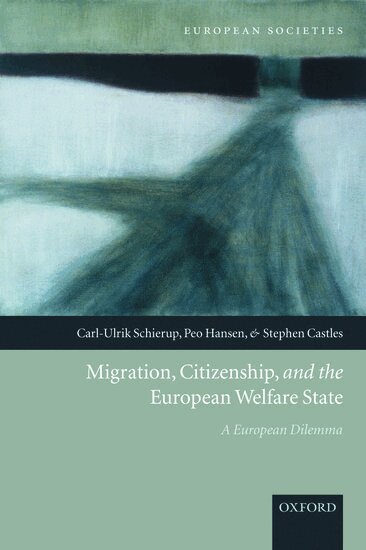
This book provides a major new examination of the current dilemmas of liberal anti-racist policies in European societies, linking two discourses that are normally quite separate in social science: immigration and ethnic relations research on the one hand, and the political economy of the welfare state on the other. The authors rephrase Gunnar Myrdal's questions in An American Dilemma with reference to Europe's current dual crisis - that of the established welfare state facing a declining capacity to maintain equity, and that of the nation state unable to accommodate incremental ethnic diversity. They compare developments across the European Union with the contemporary US experience of poverty, race, and class. They highlight the major moral-political dilemma emerging across the EU out of the discord between declared ideals of citizenship and actual exclusion from civil, political, and social rights. Pursuing this overall European predicament, the authors provide a critical scrutiny of the EU's growing policy involvement in the fields of international migration, integration, discrimination, and racism. They relate current policy issues to overall processes of economic integration and efforts to develop a European 'social dimension'. Drawing on case-study analysis of migration, the changing welfare state, and labour markets in the UK, Germany, Italy, and Sweden, the book charts the immense variety of Europe's social and political landscape. Trends of divergence and convergence between single countries are related to the European Union's emerging policies for diversity and social inclusion. It is, among other things, the plurality of national histories and contemporary trajectories that makes the European Union's predicament of migration, welfare, and citizenship different from the American experience. These reasons also account in part for why it is exceedingly difficult to advance concerted and consistent approaches to one of the most pressing policy issues of our time.Very few of the existing sociological texts which compare different European societies on specific topics are accessible to a broad range of scholars and students. The European Societies series will help to fill this gap in the literature, and attempt to answer questions such as: Is there really such a thing as a 'European model' of society? Do the economic and political integration processes of the European Union also imply convergence in more general aspects of social life, such a family or religious behaviour? What do the societies of Western Europe have in common with those further to the East?This series will cover the main social institutions, although not every author will cover the full range of European countries. As well as surveying existing knowledge in a manner useful to students, each book will also seek to contribute to our growing knowledge of what remains in many respects a sociologically unknown continent. The series editor is Colin Crouch.
1 801 kr
Skickas inom 5-8 vardagar
Religion in Modern Europe examines religion as a form of collective memory. This is a memory held in place by Europe's institutional churches, educational systems, and the mass media - all of which are themselves responding to rapid social and economic change. Europe's religious memory is approached in the following ways: as vicarious-a particularly European characteristic, as precarious-especially among young people, and as it is portrayed by the media. The memory may fragment, be disputed, and in extreme cases, disappear. Alternatives may emerge. The challenge for European societies is to affirm healthy mutations in religious memory and discourage others. The book also examines the increasing diversity of Europe's religious life. European Societies Series Series Editor: Colin Crouch Very few of the existing sociological texts which compare different European societies on specific topics are accessible to a broad range of scholars and students. The European Societies series will help fill this gap in the literature, and attempt to answer questions such as: Is there really such a thing as a 'European model' of society?Do the economic and political integration processes of the European Union also imply convergence in more general aspects of social life, like family or religious behaviour? What do the societies of Western Europe have in common with those further to the east? This series will cover the main social institutions, although not every author will cover the full range of European countries. As well as surveying existing knowledge in a way that will be useful to students, each book will also seek to contribute to our growing knowledge of what remains in many respects a sociologically unknown continent.
857 kr
Skickas inom 7-10 vardagar
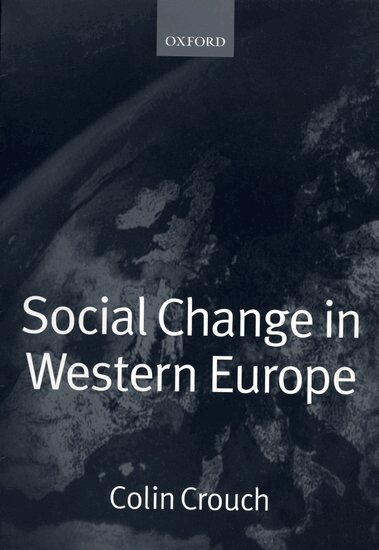
What do European societies look like, at the end of a turbulent millennium which saw western Europe slowly rise to global domination, and then rapidly decline to its present position, prosperous but clearly behind the USA in world influence? This is the only book by a single sociologist to make a systematic and up to date comparison of virtually all west European countries across a wide range of social institutions. These include: work and occupations, the structure of the economy, the family, education, religion, nationality and ethnicity, and the mechanism of citizenship in the welfare state. Particular emphasis is placed on the place of gender and social class. By including basic details on Japan and the United States throughout, the author is able to draw attention to any shared west European specificities. The book also develops a theory of change in contemporary societies. Starting from a model of a mid-century social compromise based on certain balances between industrialism, capitalism, traditional community institutions, and community it traces its subsequent destabilization and places particular importance on the resurgence of capitalism in shaping a new social order. This important new study of the social structure of western Europe will be essential reading for all students of comparative sociology and European sociology.
1 269 kr
Skickas inom 5-8 vardagar
Religion in Modern Europe examines religion as a form of collective memory. This is a memory held in place by Europe's institutional churches, educational systems, and the mass media - all of which are themselves responding to rapid social and economic change. Europe's religious memory is approached in the following ways: as vicarious-a particularly European characteristic, as precarious-especially among young people, and as it is portrayed by the media. The memory may fragment, be disputed, and in extreme cases, disappear. Alternatives may emerge. The challenge for European societies is to affirm healthy mutations in religious memory and discourage others. The book also examines the increasing diversity of Europe's religious life. European Societies SeriesSeries Editor: Colin CrouchVery few of the existing sociological texts which compare different European societies on specific topics are accessible to a broad range of scholars and students. The European Societies series will help fill this gap in the literature, and attempt to answer questions such as: Is there really such a thing as a 'European model' of society? Do the economic and political integration processes of the European Union also imply convergence in more general aspects of social life, like family or religious behaviour? What do the societies of Western Europe have in common with those further to the east? This series will cover the main social institutions, although not every author will cover the full range of European countries. As well as surveying existing knowledge in a way that will be useful to students, each book will also seek to contribute to our growing knowledge of what remains in many respects a sociologically unknown continent.
1 206 kr
Skickas inom 3-6 vardagar
European cities are on the rise, and are taking advantage of the opportunities of the European integration and globalization processes. But they also face economic changes, social inequalities, poverty and a new set of constraints. Taking examples through the European Union, European Cities explores the impact of the transformation of the nation states on cities and the change of local societies and local governments. It argues that new modes of urban governance are emerging, and that cities are becoming collective actors within European governance. European Cities shows why and how the bulk of European cities still appear to be original forms of compromise, aggregation, representation of diverse interests, and culture. Different modes of governance are gradually being structured in most middle size European cities despite processes of social exclusion segregation accompanied by the increased mobility of some citizens. Are Europeans going to invent a new form of institutionalized and territorialized capitalism, of which medium-sized European cities will be one of the pillars and one of the actors ? Failing that, the effects of changing scales could be expressed as profound transformations of the European urban model.European Societies SeriesSeries Editor: Colin CrouchVery few of the existing sociological texts which compare different European societies on specific topics are accessible to a broad range of scholars and students. The European Societies series will help fill this gap in the literature, and attempt to answer questions such as: Is there really such a thing as a 'European model' of society? Do the economic and political integration processes of the European Union also imply convergence in more general aspects of social life, like family or religious behaviour? What do the societies of Western Europe have in common with those further to the east? This series will cover the main social institutions, although not every author will cover the full range of European countries. As well as surveying existing knowledge in a way that will be useful to students, each book will also seek to contribute to our growing knowledge of what remains in many respects a sociologically unknown continent.
904 kr
Skickas inom 5-8 vardagar
European cities are on the rise, and are taking advantage of the opportunities of the European integration and globalization processes. But they also face economic changes, social inequalities, poverty and a new set of constraints. Taking examples through the European Union, European Cities explores the impact of the transformation of the nation states on cities and the change of local societies and local governments. It argues that new modes of urban governance are emerging, and that cities are becoming collective actors within European governance. European Cities shows why and how the bulk of European cities still appear to be original forms of compromise, aggregation, representation of diverse interests, and culture. Different modes of governance are gradually being structured in most middle size European cities despite processes of social exclusion segregation accompanied by the increased mobility of some citizens. Are Europeans going to invent a new form of institutionalized and territorialized capitalism, of which medium-sized European cities will be one of the pillars and one of the actors ? Failing that, the effects of changing scales could be expressed as profound transformations of the European urban model.
738 kr
Skickas inom 5-8 vardagar
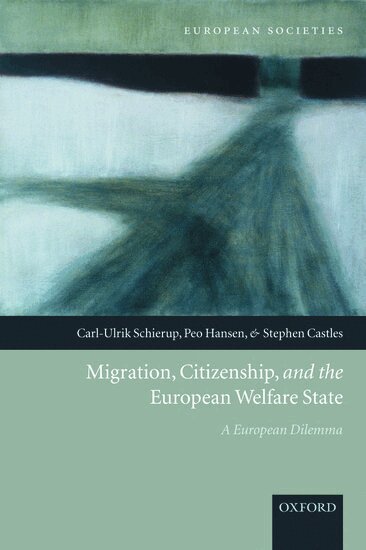
This book provides a major new examination of the current dilemmas of liberal anti-racist policies in European societies, linking two discourses that are normally quite separate in social science: immigration and ethnic relations research on the one hand, and the political economy of the welfare state on the other. The authors rephrase Gunnar Myrdal's questions in An American Dilemma with reference to Europe's current dual crisis - that of the established welfare state facing a declining capacity to maintain equity, and that of the nation state unable to accommodate incremental ethnic diversity. They compare developments across the European Union with the contemporary US experience of poverty, race, and class. They highlight the major moral-political dilemma emerging across the EU out of the discord between declared ideals of citizenship and actual exclusion from civil, political, and social rights. Pursuing this overall European predicament, the authors provide a critical scrutiny of the EU's growing policy involvement in the fields of international migration, integration, discrimination, and racism. They relate current policy issues to overall processes of economic integration and efforts to develop a European 'social dimension'. Drawing on case-study analysis of migration, the changing welfare state, and labour markets in the UK, Germany, Italy, and Sweden, the book charts the immense variety of Europe's social and political landscape. Trends of divergence and convergence between single countries are related to the European Union's emerging policies for diversity and social inclusion. It is, among other things, the plurality of national histories and contemporary trajectories that makes the European Union's predicament of migration, welfare, and citizenship different from the American experience. These reasons also account in part for why it is exceedingly difficult to advance concerted and consistent approaches to one of the most pressing policy issues of our time.Very few of the existing sociological texts which compare different European societies on specific topics are accessible to a broad range of scholars and students. The European Societies series will help to fill this gap in the literature, and attempt to answer questions such as: Is there really such a thing as a 'European model' of society? Do the economic and political integration processes of the European Union also imply convergence in more general aspects of social life, such a family or religious behaviour? What do the societies of Western Europe have in common with those further to the East? This series will cover the main social institutions, although not every author will cover the full range of European countries. As well as surveying existing knowledge in a manner useful to students, each book will also seek to contribute to our growing knowledge of what remains in many respects a sociologically unknown continent. The series editor is Colin Crouch.