Everyday Life in ... – Serie
Visar alla böcker i serien Everyday Life in .... Handla med fri frakt och snabb leverans.
5 produkter
5 produkter
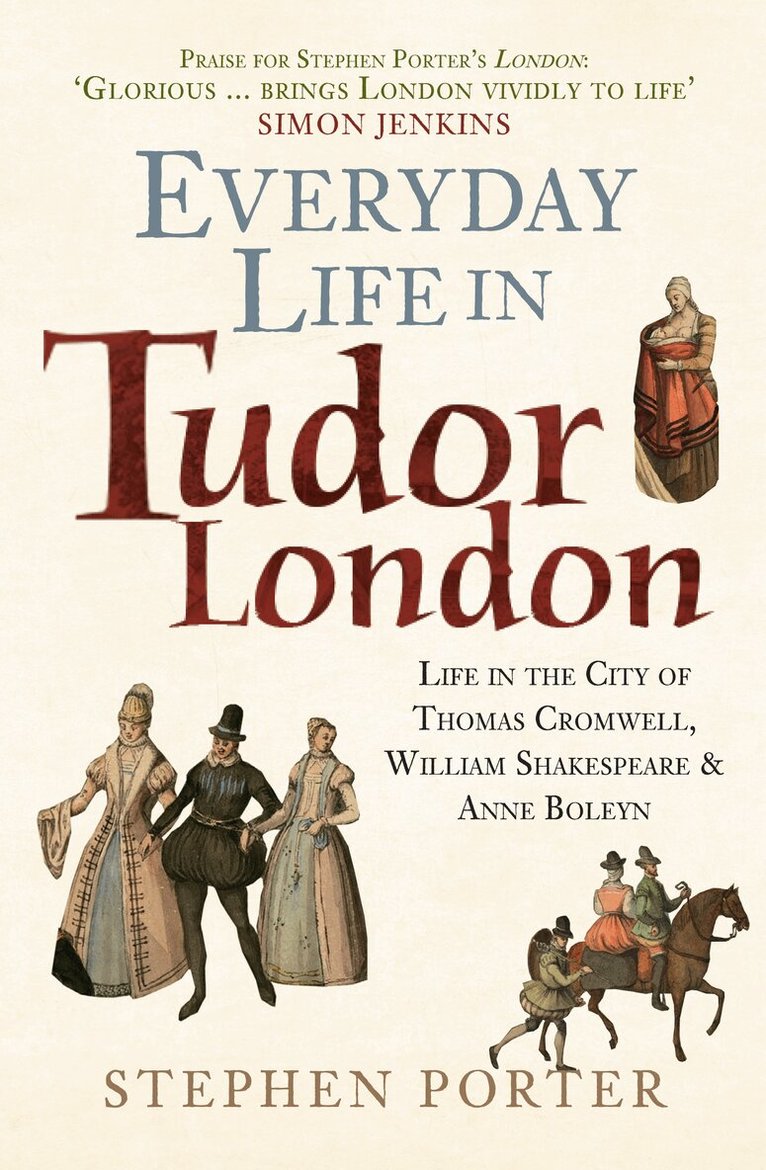
Everyday Life in Tudor London
Life in the City of Thomas Cromwell, William Shakespeare & Anne Boleyn
Häftad, Engelska, 2024
121 kr
Skickas
Tudor London was a vibrant capital city, the very hub of English cultural and political life. The thriving metropolis had a strong royal presence, at the long established Tower of London and Westminster, and later at the palaces of Whitehall, Bridewell and St James’s, built by Henry VIII to host his glittering court. Anne Boleyn was assigned a house in the Strand, with gardens running down to the river, while Elizabeth I stayed occasionally at Somerset House.The great and the good gravitated to the city too: Erasmus lodged with Sir Thomas More and his family in Bucklesbury, off Cheapside; Sir Walter Raleigh wrote poetry in his study in Durham House, overlooking the Thames and William Shakespeare lodged in Silver Street. Like today, streets and areas grew up with their own distinct personality: Bankside and Shoreditch were the first theatre and entertainment districts where the Globe Theatre was built to sit alongside the bear-baiting rings. Londoners themselves, and the many immigrants who flocked from the continent, created a lively, raucous society in the streets, markets and the hundreds of inns and ale-houses.Everyday Life in Tudor London vividly recreates this colourful city.
Everyday Life in Tudor London
Life in the City of Thomas Cromwell, William Shakespeare & Anne Boleyn
Inbunden, Engelska, 2016
214 kr
Skickas inom 11-20 vardagar
Tudor London was a vibrant capital city, the very hub of English cultural and political life. The thriving metropolis had a strong royal presence, at the long established Tower of London and Westminster, and later at the palaces of Whitehall, Bridewell and St James’s, built by Henry VIII to host his glittering court. Anne Boleyn was assigned a house in the Strand, with gardens running down to the river, while Elizabeth I stayed occasionally at Somerset House.The great and the good gravitated to the city too: Erasmus lodged with Sir Thomas More and his family in Bucklesbury, off Cheapside; Sir Walter Raleigh wrote poetry in his study in Durham House, overlooking the Thames and William Shakespeare lodged in Silver Street. Like today, streets and areas grew up with their own distinct personality: Bankside and Shoreditch were the first theatre and entertainment districts where the Globe Theatre was built to sit alongside the bear-baiting rings. Londoners themselves, and the many immigrants who flocked from the continent, created a lively, raucous society in the streets, markets and the hundreds of inns and ale-houses.Everyday Life in Tudor London vividly recreates this colourful city.
137 kr
Skickas
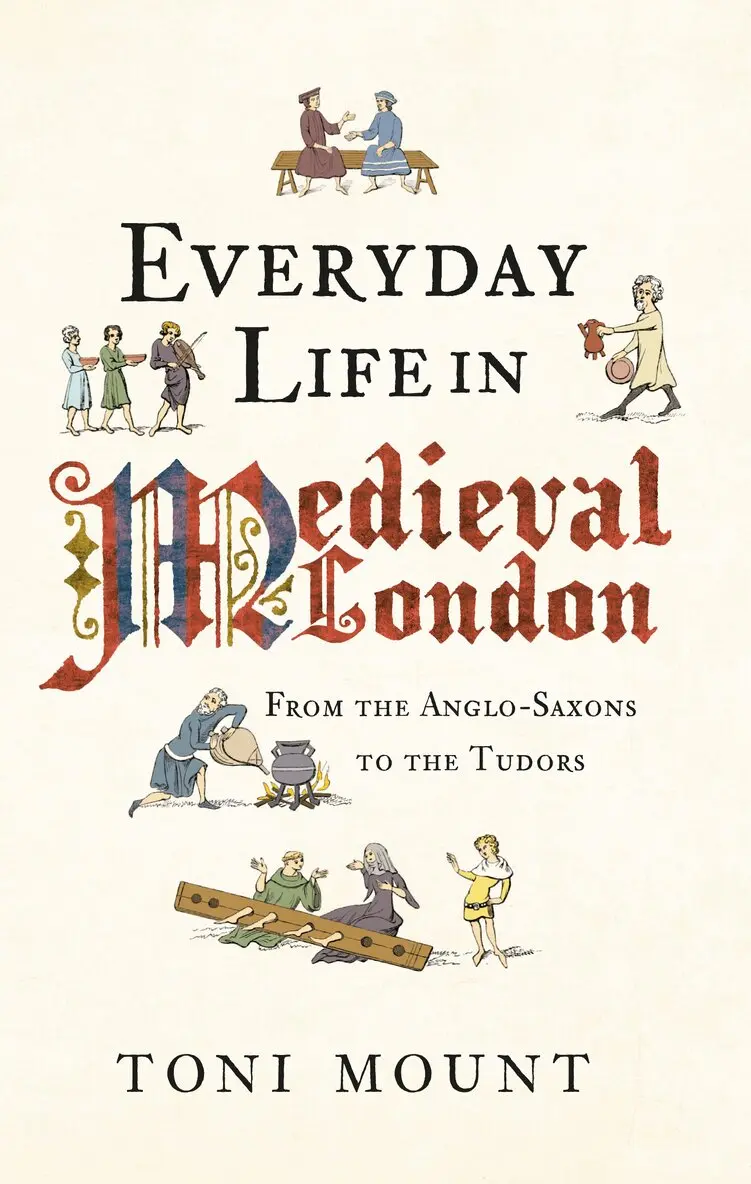
Our capital city has always been a thriving and colourful place, full of diverse and determined individuals developing trade and finance, exchanging gossip and doing business.Abandoned by the Romans, rebuilt by the Saxons, occupied by the Vikings and reconstructed by the Normans, London would become the largest trade and financial centre, dominating the world in later centuries. London has always been a brilliant, vibrant and eclectic place – Henry V was given a triumphal procession there after his return from Agincourt and the Lord Mayor’s river pageant was an annual medieval spectacular. William the Conqueror built the Tower, Thomas Becket was born in Cheapside, Wat Tyler led the peasants in revolt across London Bridge and Chaucer’s Canterbury Tales was the first book produced on Caxton’s new printing press in Westminster.But beneath the colour and pageantry lay dirt, discomfort and disease, the daily grind for ordinary folk. Like us, they had family problems, work worries, health concerns and wondered about the weather.
Everyday Life in Tudor London
Life in the City of Thomas Cromwell, William Shakespeare & Anne Boleyn
Häftad, Engelska, 2018
163 kr
Skickas
Tudor London was a vibrant capital city, the very hub of English cultural and political life. The thriving metropolis had a strong royal presence, at the long established Tower of London and Westminster, and later at the palaces of Whitehall, Bridewell and St James’s, built by Henry VIII to host his glittering court. Anne Boleyn was assigned a house in the Strand, with gardens running down to the river, while Elizabeth I stayed occasionally at Somerset House.The great and the good gravitated to the city too: Erasmus lodged with Sir Thomas More and his family in Bucklesbury, off Cheapside; Sir Walter Raleigh wrote poetry in his study in Durham House, overlooking the Thames and William Shakespeare lodged in Silver Street. Like today, streets and areas grew up with their own distinct personality: Bankside and Shoreditch were the first theatre and entertainment districts where the Globe Theatre was built to sit alongside the bear-baiting rings. Londoners themselves, and the many immigrants who flocked from the continent, created a lively, raucous society in the streets, markets and the hundreds of inns and ale-houses.Everyday Life in Tudor London vividly recreates this colourful city.
245 kr
Skickas
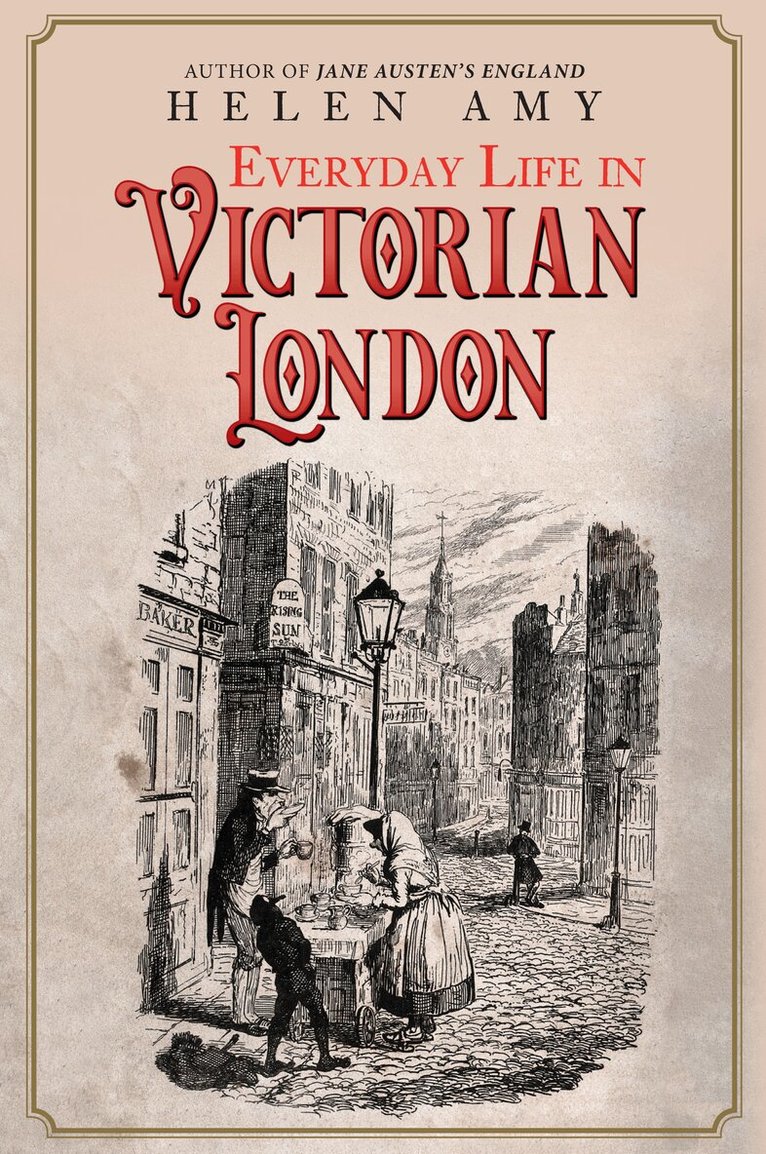
Everyday Life in Victorian London explores the daily lives of adults and children, aristocracy and middle classes, working poor and the ‘submerged tenth’ underclass. It shows the different faces of London, with its many extremes and contrasts – by day and by night; busy and peaceful; ugly and beautiful; safe and dangerous. It looks at the River Thames and its importance; the City, West and East Ends; at work, leisure, health, hospitals, education, food, clothes, housing, shops and markets, transport and infrastructure, public services, crime, the police and prisons, immigrant communities, and important events such as the Great Exhibition of 1851 and Queen Victoria’s golden and diamond jubilees.Daily life in the capital will be explored at three levels – above ground (views from hot air balloons), at ground level, and below ground (the sewage system, the underground railway and cemeteries). A central theme is the rapid growth in population throughout the century due to immigration from the countryside and abroad, and the resulting expansion into ‘The Monster City’. The final chapter describes London at the end of the century with improved transport, a newly embanked Thames, a sewage system, housing for the poor, public buildings, hospitals and prisons – a transformed capital of a great empire and the embryo of the London we know today.