Exploded Views - Böcker
Visar alla böcker i serien Exploded Views. Handla med fri frakt och snabb leverans.
9 produkter
9 produkter
129 kr
Tillfälligt slut
"Will was pretty much the perfect role model." -- Beth Ditto, The Gossip In the spring of 2010, Toronto lost one of its most important queer civic heroes when local artist, DJ, activist, impresario, promoter, party-thrower, cafe operator, community-builder and lover Will Munro died of brain cancer at the unfathomably young age of 35. Famed for his subversive, irreverent visual art, which co-opted rock 'n' roll imagery and raunchy gay iconography, and his legendary Vazaleen dance parties, which singlehandedly reinvented Toronto's queer nightlife culture, Will did more to revolutionize both his community and his city in a decade than most folks do in a lifetime. Weaving together a collage of stories from and about the people who knew and loved him, Army of Lovers is both a biography of Will Munro and a document of a galvanizing period in the history of Toronto, a moment when the city's various subcultures -- the queer community, the art scene, the independent music universe, the grassroots activist enclaves -- came of age and collided with one another.Selected by the Gay, Lesbian, Bisexual and Transgender Round Table (GLBTRT) of the American Library Association (ALA) for the 2014 Over the Rainbow Project book list
133 kr
Tillfälligt slut
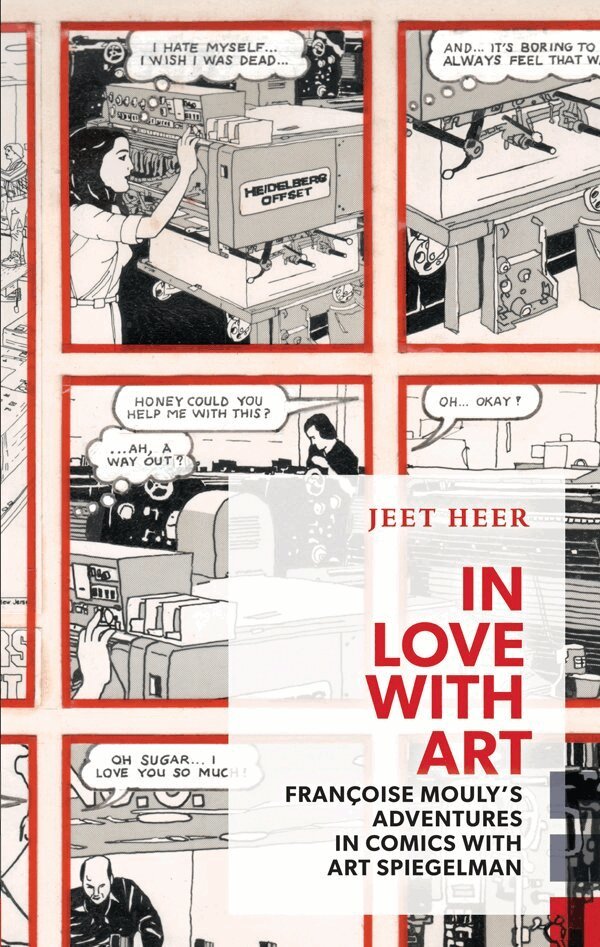
"Jeet Heer more thoroughly and widely understands comics history and the perplexing binomial life of the cartoonist better than anyone who's not one. As well-versed in literature as he is in comics, he always gets at the peculiar, poetical texture of his subject not only by what he writes, but how he writes it--clearly, mellifluously, and beautifully. Our humble discipline is singularly lucky to have him telling its story."--Chris Ware In a partnership spanning four decades, Francoise Mouly and Art Spiegelman have become the pre-eminent power couple of cutting-edge graphic art. Their landmark magazine Raw, which first published artists such as Ben Katchor, Chris Ware, and Charles Burns, brought an avant-garde sensibility to comics and, along with Spiegelman's legendary graphic novel Maus, completely revolutionized the form. As art editor of the New Yorker since 1993, Mouly has remade the face of that venerable magazine with covers that capture the political and social upheavals of the last two decades, such as the black-on-black cover after 9/11 and the infamous Barack Obama fist-bump cartoon.Based on exclusive interviews with Mouly, Spiegelman, and a pantheon of comics artists--including Dan Clowes, Barry Blitt, Anita Kunz, and Adrian Tomine--In Love with Art is both an intimate portrait of Mouly and a rare, behind-the-scenes look at some of today's most iconic images. Through the prism of an uncommonly successful relationship, the book tells the story of one of the most remarkable artistic transformations of our time. Jeet Heer's writing has appeared in the Guardian, Slate, Boston Globe, the American Prospect, and the Virginia Quarterly Review.
125 kr
Tillfälligt slut
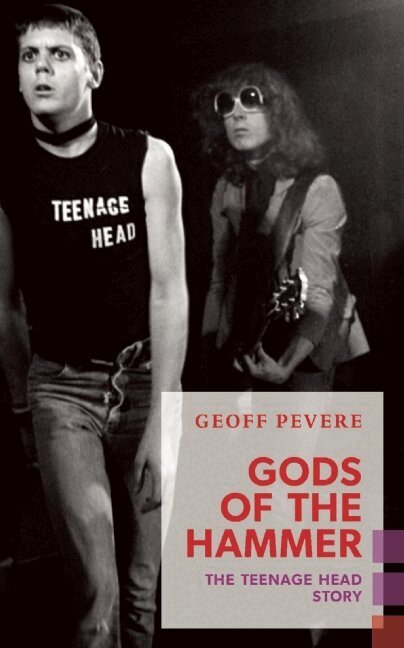
Teenage Head was a full-on, balls-to-the-wall, three-chord band that obliterated categories and labels with their sonic assault, and everywhere they played they converted the merely curious to the insanely devoted. And they almost became world famous. Almost. Told by film critic and pop-culture aficionado Geoff Pevere, this is their story.
121 kr
Tillfälligt slut
What do your Eggs Benedict say about your notions of class? Every weekend, in cities around the world, bleary-eyed diners wait in line to be served overpriced, increasingly outre food by hungover waitstaff. For some, the ritual we call brunch is a beloved pastime; for others, a bedeviling waste of time. But what does its popularity say about shifting attitudes towards social status and leisure? In some ways, brunch and other forms of conspicuous consumption have blinded us to ever-more-precarious employment conditions. For award-winning writer and urbanist Shawn Micallef, brunch is a way to look more closely at the nature of work itself and a catalyst for solidarity among the so-called creative class. Drawing on theories from Thorstein Veblen to Richard Florida, Micallef traces his own journey from the rust belt to a cosmopolitan city where the evolving middle class he joined was oblivious to its own instability and insularity. The Trouble with Brunch is a provocative analysis of foodie obsession and status anxiety, but it's also a call to reset our class consciousness.The real trouble with brunch isn't so much bad service and outsized portions of bacon, it's that brunch could be so much more.
112 kr
Tillfälligt slut
In 1787, British philosopher and social reformer Jeremy Bentham conceived of the panopticon, a ring of cells observed by a central watchtower, as a labor-saving device for those in authority. While Bentham's design was ostensibly for a prison, he believed that any number of places that require supervision-factories, poorhouses, hospitals, and schools-would benefit from such a design. The French philosopher Michel Foucault took Bentham at his word. In his groundbreaking 1975 study, Discipline and Punish, the panopticon became a metaphor to describe the creeping effects of personalized surveillance as a means for ever-finer mechanisms of control. Forty years later, the available tools of scrutiny, supervision, and discipline are far more capable and insidious than Foucault dreamed, and yet less effective than Bentham hoped. Shopping malls, container ports, terrorist holding cells, and social networks all bristle with cameras, sensors, and trackers. But, crucially, they are also rife with resistance and prime opportunities for revolution.The Inspection House is a tour through several of these sites-from Guantanamo Bay to the Occupy Oakland camp and the authors' own mobile devices-providing a stark, vivid portrait of our contemporary surveillance state and its opponents. Tim Maly is a regular contributor to Wired, the Atlantic, and Urban Omnivore and is a 2014 fellow at Harvard University's Metalab. Emily Horne is the designer and photographer of the webcomic A Softer World.
205 kr
Skickas inom 3-6 vardagar
Had I become disenchanted with the form I had once fallen so madly in love with as a pubescent, pimple-faced suburban homo with braces? Maybe theatre was like an all-consuming high school infatuation that now, ten years later, I saw as the closeted balding guy with a beer-gut he’d become. There were of course those rare moments of transcendence that kept me coming back. But why did they come so few and far between?A lot of plays are dull. And one dull play, it seems, can turn us off theatre for good. Playwright and theatre director Jordan Tannahill takes in the spectrum of English-language drama from the flashiest of Broadway spectacles to productions mounted in scrappy storefront theatres to consider where lifeless plays come from and why they persist. Having travelled the globe talking to theatre artists, critics, passionate patrons and the theatrically disillusioned, Tannahill addresses what he considers the culture of risk aversion’ paralyzing the form.Theatre of the Unimpressed is Tannahill’s wry and revelatory personal reckoning with the discipline he’s dedicated his life to, and a roadmap for a vital twenty-first-century theatre one that apprehends the value of liveness’ in our mediated age and the necessity for artistic risk and its attendant failures. In considering dramaturgy, programming and alternative models for producing, Tannahill aims to turn theatre from an obligation to a destination.[Tannahill is] the poster child of a new generation of (theatre? film? dance?) artists for whom interdisciplinary” is not a buzzword, but a way of life.’ J. Kelly Nestruck, The Globe and MailJordan is one of the most talented and exciting playwrights in the country, and he will be a force to be reckoned with for years to come.’ Nicolas Billon, Governor General's Awardwinning playwright (Fault Lines)Jordan Tannahill is a playwright, theatre director, and filmmaker. His plays and short films have been presented in theatres, festivals, and galleries across Canada and internationally. He received the 2014 Governor General’s Literary Award for Drama for his book Age of Minority: Three Solo Plays. In collaboration with William Ellis, Jordan runs the alternative art-space Videofag, out of a defunct barbershop in Toronto's Kensington Market.
173 kr
Skickas inom 3-6 vardagar
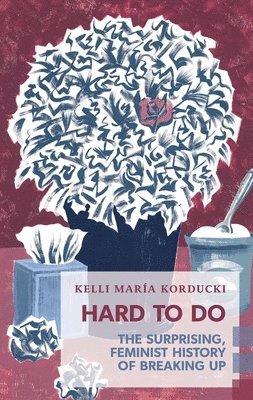
Whatever the underlying motivesbe they love, financial security, or mere masochismthe fact is that getting involved in a romantic partnership is emotionally, morally, and even politically fraught. In Hard To Do, Kelli Marìa Korducki turns a Marxist lens on the relatively short history of romantic love, tracing how the myth of economic equality between men and women has transformed the ways women conceive of domestic partnership. With perceptive, reported insights on the ways marriage and divorce are legislated, the rituals of twentieth-century courtship, and contemporary practices for calling it off, Korducki reveals that, for all women, choosing to end a relationship is a radical action with very limited cultural precedent.Kelli Marìa Korducki is a journalist and cultural critic. Her byline has appeared frequently in the Globe and Mail and National Post, as well as in the New Inquiry, NPR, the Walrus, Vice, and the Hairpin. She was nominated for a 2015 Canadian National Magazine Award for "Tiny Triumphs," a 10,000-word meditation on the humble hot dog for Little Brother Magazine. A former editor-in-chief of the popular daily news blog Torontoist, Korducki is based in Brooklyn and Toronto.
153 kr
Skickas inom 5-8 vardagar
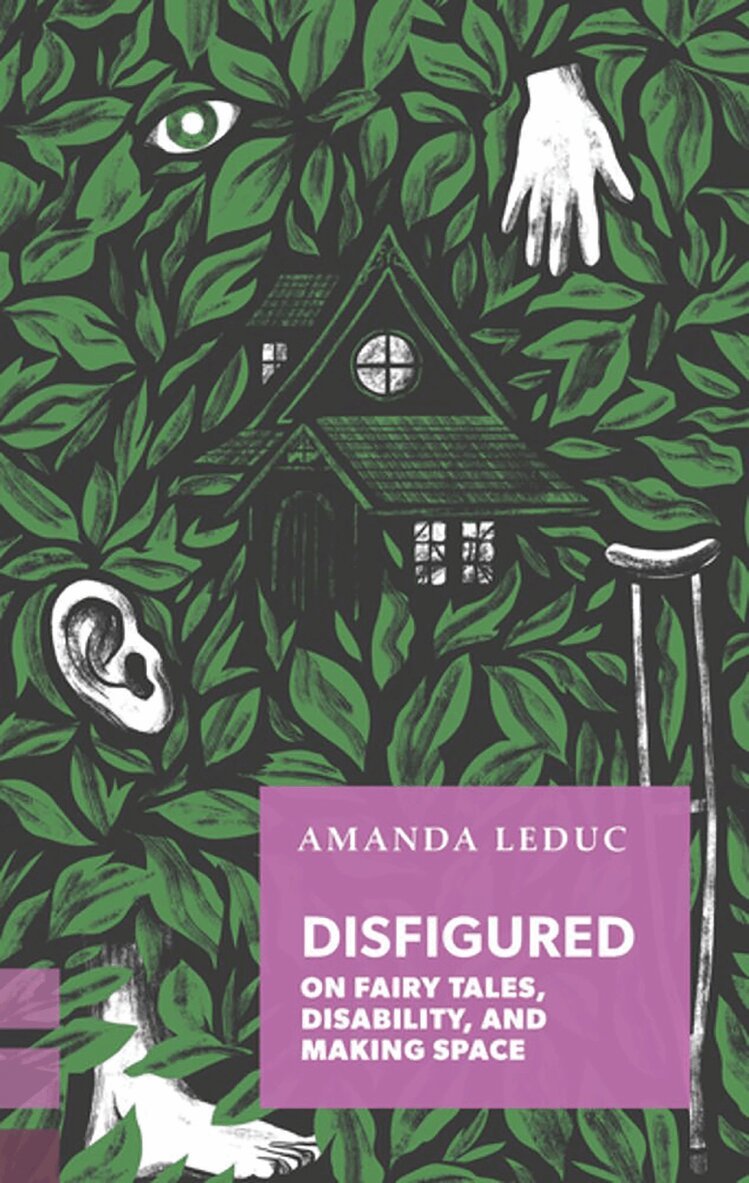
A CBC BOOKS BEST NONFICTION OF 2020AN ENTROPY MAGAZINE BEST NONFICTION 2020/21A NEW YORK PUBLIC LIBRARY BOOK OF THE DAY (07/23/2022)Fairy tales shape how we see the world, so what happens when you identify more with the Beast than Beauty?If every disabled character is mocked and mistreated, how does the Beast ever imagine a happily-ever-after? Amanda Leduc looks at fairy tales from the Brothers Grimm to Disney, showing us how they influence our expectations and behaviour and linking the quest for disability rights to new kinds of stories that celebrate difference."Historically we have associated the disabled body image and disabled life with an unhappy ending” – Sue Carter, Toronto Star"Leduc persuasively illustrates the power of stories to affect reality in this painstakingly researched and provocative study that invites us to consider our favorite folktales from another angle." – Sara Shreve, Library Journal"She [Leduc] argues that template is how society continues to treat the disabled: rather than making the world accessible for everyone, the disabled are often asked to adapt to inaccessible environments." – Ryan Porter, Quill & Quire"Read this smart, tenacious book." – The Washington Post"A brilliant young critic named Amanda Leduc explores this pernicious power of language in her new book, Disfigured … Leduc follows the bread crumbs back into her original experience with fairy tales – and then explores their residual effects … Read this smart, tenacious book." – The Washington Post"Leduc investigates the intersection between disability and her beloved fairy tales, questioning the constructs of these stories and where her place is, as a disabled woman, among those narratives." – The Globe and Mail"It gave me goosebumps as I read, to see so many of my unexpressed, half-formed thoughts in print. My highlighter got a good workout." – BookRiot"Disfigured is not just an eye-opener when it comes to the Disney princess crew and the Marvel universe – this thin volume provides the tools to change how readers engage with other kinds of popular media, from horror films to fashion magazines to outdated sitcom jokes." – Quill & Quire“It’s an essential read for anyone who loves fairy tales.” – Buzzfeed Books"Leduc makes one thing clear and beautifully so – fairy tales are fundamentally fantastic, but that doesn’t mean that they are beyond reproach in their depiction of real issues and identities." – Shrapnel Magazine"As Leduc takes us through these fairy tales and the space they occupy in the narratives that we construct, she slowly unfolds a call-to-action: the claiming of space for disability in storytelling." – The Globe and Mail"A provocative beginning to a thoughtful and wide-ranging book, one which explores some of the most primal stories readers have encountered and prompts them to ponder the subtext situated there all along." – LitHub"a poignant and informative account of how the stories we tell shape our collective understanding of one another.” – BookMarks "What happens when we allow disabled writers to tell stories of disability within fairytales and in magical and supernatural settings? It is a reimagining of the fairytale canon we need. Leduc dares to dream of a world that most stories envision is unattainable." – Bitch Media
152 kr
Tillfälligt slut
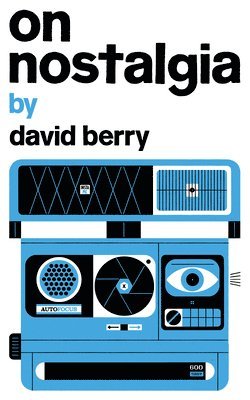
From Mad Men to MAGA: how nostalgia came to be and why we are so eager to indulge it.From movies to politics, social media posts to the targeted ads between them, nostalgia is one of the most potent forces of our era. On Nostalgia is a panoramic cultural history of nostalgia, exploring how a force that started as a psychological diagnosis of soldiers fighting far from home has come become a quintessentially modern condition. Drawing on everything from the modern science of memory to the romantic ideals of advertising, and traversing cultural movements from futurism to fascism to Facebook, cultural critic David Berry examines how the relentless search for self and overwhelming presence of mass media stokes the fires of nostalgia, making it as inescapable as it is hard to pin down. Holding fast against the pull of the past while trying to understand what makes the fundamental impossibility of return so appealing, On Nostalgia explores what it means to remember, how the universal yearning is used by us and against us, and it considers a future where the past is more readily available and easier to lose track of than ever before."If nostalgia was a disease in the Good Old Days, then David Berry's cogently argued, intelligent, and witty book should be prescribed reading for anyone wishing to understand what sometimes feels like a peculiarly virulent epidemic of our current times." —Travis Elborough"We're so lucky to have a writer as thoughtful, funny, smart, and cutting as David Berry. Nostalgia dictates so much of our world, and there isn't a better cataloger, critic, and guide through it than Berry." —Scaachi Koul