Figura Nova – serie
Visar alla böcker i serien Figura Nova. Handla med fri frakt och snabb leverans.
5 produkter
5 produkter
Del 37 - Figura Nova
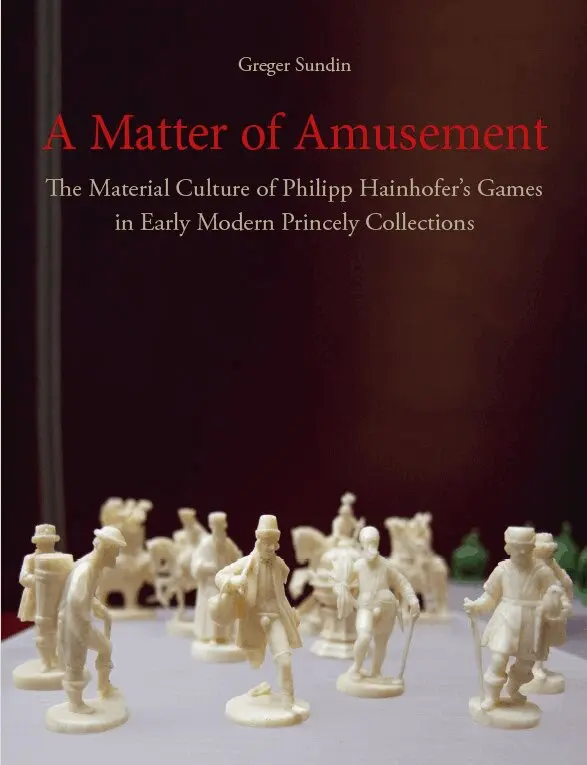
A Matter of Amusement: The Material Culture of Philipp Hainhofer's Games in Early Modern Princely Collections
Häftad, Engelska, 2020
326 kr
Skickas inom 5-8 vardagar
Games were important to the Augsburg art agent Philipp Hainhofer (1578-1647) and this ludic category was included in most of his art cabinets. It offered amusement as part of an overall ambition for the cabinets to be of both service and use. Board games, dice, packs of cards and games of both chance and skill represented many of the various game types of their day, while constituting a material taxonomy of games. The encyclopaedic ambition of a Kunstkammer is apparent, and games provide an insight into courtly practices of the early modern period. This thesis investigates Hainhofer’s relationship with games through the materiality of the extant games of his art cabinets – board games, playing cards, miscellaneous games and games paraphernalia. Via a material culture studies framework, it sets their design in a late Renaissance context while also examining how contemporary game practices influenced game design and use. Further, the games, their placements within the cabinets and other associated material traces are used to reconstruct original, now lost, games and how they would function in an art cabinet. It further explores the progression of Hainhofer attitudes towards games over a period of more than thirty years, and devises the hypothesis that he, to a certain degree, formed, rather than conformed to, the taste of his patrons and clients in terms of games. Games were evidently required by Hainhofer to be at the inventive and artistic forefront, just as important as technical, scientific, natural or colonial discoveries would be to any Kunstkammer owner.
Del 38 - Figura Nova
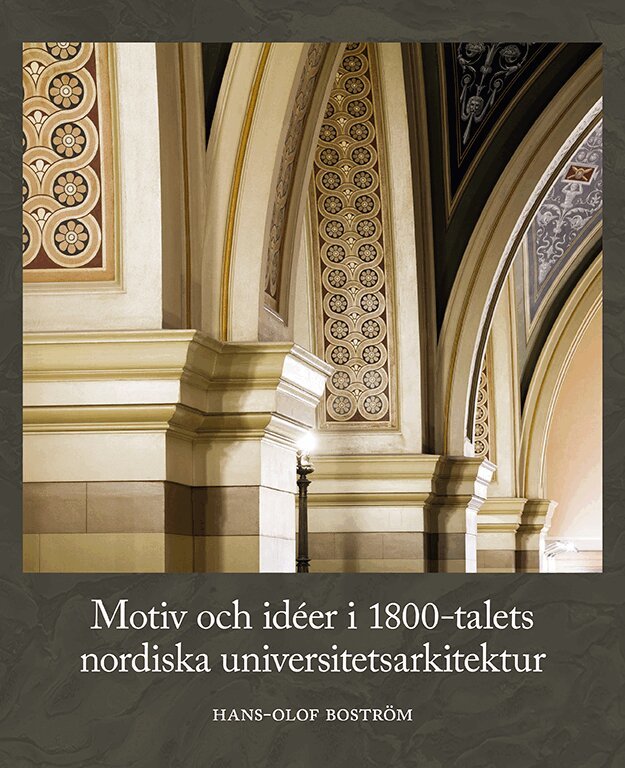
Motiv och idéer i 1800-talets nordiska universitetsarkitektur
Inbunden, Svenska, 2021
230 kr
Skickas inom 5-8 vardagar
1800-talet var universitetsbyggandets stora sekel. Gamla universitet fick nya huvudbyggnader, bibliotek och institutionsbyggnader. Nya universitet grundades runtom i Europa. I Norden stiftades ett nytt universitet i Oslo 1811, och 1828 fick Helsingfors sitt universitet i och med att den gamla Åbo akademi överflyttades till Finlands nya huvudstad. I Oslo och Helsingfors uppfördes naturligtvis nya universitetshus, men också de äldre universiteten fick nya huvudbyggnader: först Åbo akademi (grundad 1640), därefter Köpenhamns universitet (grundat 1479) och mot slutet av århundradet Lunds universitet (grundat 1666) och Uppsala universitet (grundat 1477). Universitetens ställning i samhället och deras pedagogiska och ideologiska roll förändrades under 1800-talet. Utgångspunkten var åtminstone delvis idéerna bakom universitetet i Berlin – grundat 1809/10 av Wilhelm von Humboldt – med deras förankring i den tyska nyhumanismen. Forskning och undervisning skulle gå hand i hand, och universiteten skulle inte enbart meddela utbildning utan också ge bildning. De förvandlades från isolerade utbildningsanstalter och lärdomscentra med obetydlig kontakt med omvärlden till ideologiska härdar av stor opinionsbildande betydelse. De blev medelpunkter för nationell väckelse eller utgångspunkter för mellanfolkliga rörelser. De idéer och ideologier som låg bakom 1800-talets universitet eller formades vid dem tog sig uttryck i deras fysiska gestaltning. Det gäller såväl planformer och valet av arkitektoniskt formspråk som arkitekturikonografi och bildkonst. I den här boken undersöks hur samtidens uppfattning av universitetens ideologiska roll ges uttryck i arkitektur och ikonografi, och bakgrunden i den humboldtska universitetsideologin och dess fysiska manifestationer i Tyskland belyses. Såväl universitetens huvudbyggnader som universitetsbiblioteken och separata institutionsbyggnader studeras, liksom deras förhållande till stadsbebyggelsen i dess helhet.
Del 39 - Figura Nova
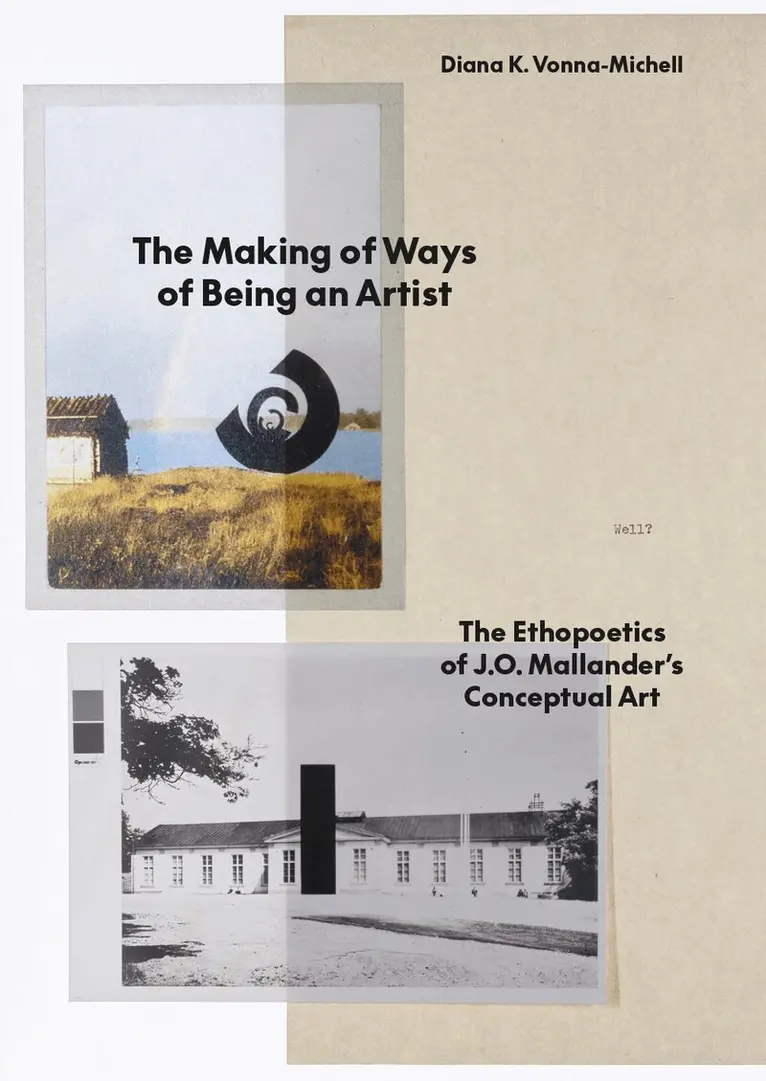
The making of ways of being an artist : the ethopoetics of J.O. Mallander’s conceptual art
Häftad, Engelska, 2024
326 kr
Skickas inom 5-8 vardagar
This thesis examines contemporary artistic practices, gauging the role played by Conceptual art in shaping artist subjectivity and manifesting it in discourse. This process is understood as the relationship between three parameters: the social context of contemporary art, creativity specific to an artist's practice, and the relationship an artist has to themselves. The theoretical framework is tailored to analyse how artists produce subjectivities and how their practices generate specific forms of knowledge, or Ethopoetics. By tracing these parameters, this study interprets the situated singularity of the Finland-Swedish artist J.O. Mallander (b. 1944). Introducing the term the Artist-Subjectivation Process, a concept modified from Michel Foucault’s later thinking, the aim is to study the emergence of subjectivity in art discourse and art making. The expanded theoretical, methodological, and contextual framework is the result of this investigation and, therefore, also forms part of the study’s outcome, making this dissertation a twofold endeavour. The study traces artistic practices, strategies, and attitudes that constitute the Artist-Subjectivation Process through close reading of previously unresearched Swedish and Finnish archival sources. Shedding light on a period, an art phenomenon and an exchange that has not yet been sufficiently researched, it concludes that Mallander, through his creative practice, forged ways of being an artist through art networking, art enabling, spiritual art exploration, and the archiving of materials and memories. By systematising and challenging an artist-centred view of art, this thesis explores a new way to understand the creative process in an artist’s life and the fundamental questions of becoming an artist.
409 kr
Skickas inom 5-8 vardagar
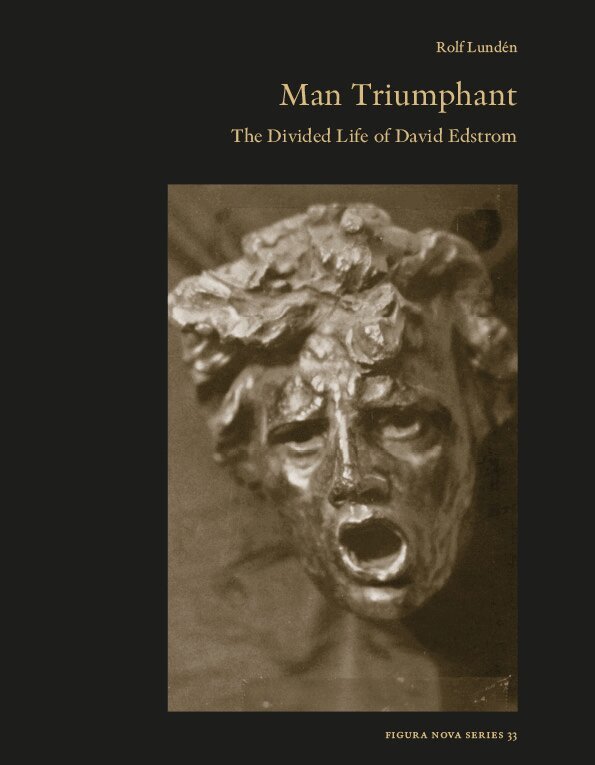
Man Triumphant – The Divided Life of David Edstrom tells the fascinating rags-to-riches-and-back-to-rags story of the young boy who grew up in Småland, Sweden, emigrated to Iowa, U.S.A. A hundred years ago regarded, together with Carl Milles, as the hope of Swedish sculpture, David Edstrom is today more or less forgotten. Man Triumphant – The Divided Life of David Edstrom tells the story of the young boy who grew up in Småland, Sweden, emigrated to Iowa, U.S.A., and hoboed his way back in 1894 to get his education at the Royal Academy of Fine Arts in Stockholm. After twenty-one years in Europe—in Stockholm, Florence, Paris, and Berlin—he returned to the United States and settled in Hollywood. As a person of two cultures he found himself betwixt and between, divided in his allegiance equally to his mother country and his adopted one. A stubborn, uncompromising man, Edstrom managed to produce sculpture qualitatively well above what the average artist of the time could accomplish. He received acclaim from the best of the contemporary critics of Italy, Great Britain, Germany, the Netherlands, France, and Sweden. And yet, gradually he was disregarded and finally ousted from the canon of art. Over the years he came to know a number of the key figures of the period—Giovanni Papini (and some of the Italian Futurists-to-be), Gertrude Stein, who wrote two portraits of him, and her brother Leo, Henri Matisse, Frederik van Eeden, Crown Prince Gustaf Adolf and his wife Margaret, Ellen Key, Ernest Thiel, Harry Chandler, Robert A. Millikan, Gloria Swanson, and Charlie Chaplin of Los Angeles. This book thus presents, from Edstrom’s point of view, the turbulent period of early modernism in Europe and the vibrancy of Southern California culture of the 1920s. Rolf Lundén is professor emeritus of American literature at Uppsala University, Sweden. He has written extensively on not only American literature but also other aspects of American Studies, such as the American influence in Sweden, literature and film, and business and religion in the United States.
Del 34 - Figura Nova
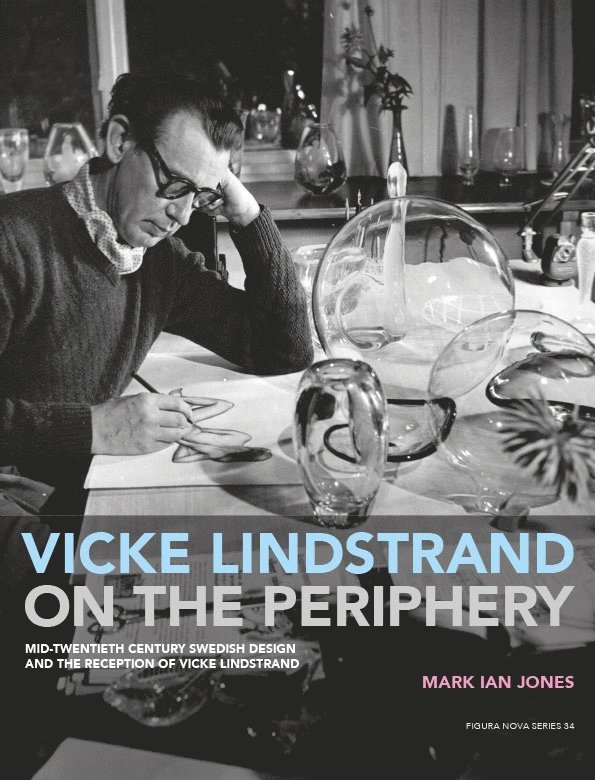
Vicke Lindstrand on the Periphery. Mid-Twentieth Century Swedish Design and the Reception of Vicke Lindstrand
Inbunden, Engelska, 2016
326 kr
Skickas inom 5-8 vardagar
Vicke Lindstrand On The Periphery is the first English language publication to examine the life and work of the Swedish artist and designer Vicke Lindstrand and his place in Swedish and Scandinavian design history. The richly illustrated text focusses on English language discourse on Swedish and Scandinavian Design during the 1950s and the reception and profile of Vicke Lindstrand. It reconstructs the context in which narratives and rhetoric emerged and analyses its effect on Lindstrand, between 1950–1970. Swedish and Scandinavian design are described in terms of a pared-down, clichéd aesthetic associated with 1950s ‘Scandinavian Design’, now held as a ‘construct’, continuously emphasising the same preeminent exemplars. Informed by extensive field study in Sweden, detailed archival research, informant interviews, object and text analysis, the book is divided into two parts. Part I investigates the disproportional impact of a small actor-network associated with twentieth century English language discourse on Swedish and Scandinavian design. The author argues that this demonstrates the pervasive influence of the construction of a national ideal (Swedish design) that was loosely translated to fit a regional ideal (Scandinavian Design) by the formation of an exclusive filter that determined the fit of what was included in the promotion of a cohesive identity. This filter emphasised an ideology that shaped perceptions and has influenced the subsequent reception and visibility of individual designers. Not all designers were treated equally. Nationalist, regionalist and internationalist influences had an impact upon the critical reception of their work further complicated by past associations. The actor-network operated at the level of selective solidarity, which was exclusive rather than inclusive. Part II examines the consequences of this fit through an analysis of the position and reception of Lindstrand. Preeminent exemplars, familial influences and the agency of an actor-network were profoundly influential in shaping perceptions and determining taste in 1950s Sweden, presenting a filtered view of design from the region. Lindstrand was strongly affected by the activities of this network. An interesting outcome of this study was the realisation that our understanding of Swedish design is incomplete, and that there is another more pluralist aesthetic concealed behind that officially promoted and exhibited during the 1950s. This investigation brings unique and unprecedented readings of a peripheral individual in the context of English language representation, and of the Scandinavian milieu.