First Nations and the Colonial Encounter – serie
Visar alla böcker i serien First Nations and the Colonial Encounter. Handla med fri frakt och snabb leverans.
11 produkter
11 produkter
Inbunden, Engelska, 2010
1 801 kr
Skickas inom 5-8 vardagar
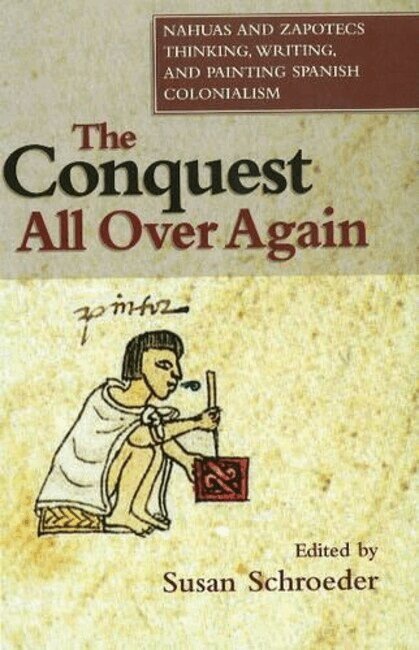
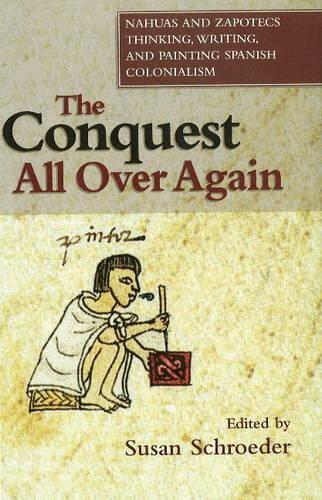
The Spaniards typically portrayed the conquest and fall of Mexico Tenochtitlan as Armageddon, while native peoples in colonial Mesoamerica continued to write and paint their histories and lives often without any mention of the foreigners in their midst. Their accounts took the form of annals, chronicles, religious treatises, tribute accounts, theatre pieces, and wills. Thousand of documents were produced, almost all of which served to preserve indigenous ways of doing things. But what provoked record keeping on such a grand scale? At what point did pre-contact sacred writing become utilitarian and quotidian? Were their texts documentaries, a form of boosterism, even ingenious intellectualism, or were they ultimately a literature of ruin? This volume seeks to address key aspects of indigenous perspectives of the conquest and Spanish colonialism by examining what they themselves recorded and why they did so.
Inbunden, Engelska, 2009
1 749 kr
Skickas inom 5-8 vardagar
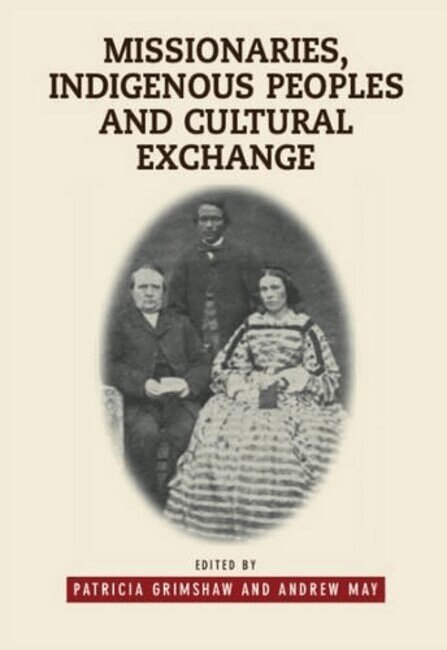
This book brings together fresh insights into the relationships between missions and indigenous peoples, and the outcomes of mission activities in the processes of imperial conquest and colonisation. Bringing together the work of leading international scholars of mission and empire, the focus is on missions across the British Empire (including India, Africa, Asia, the Pacific), within transnational and comparative perspectives. Themes throughout the contributions include collusion or opposition to colonial authorities, intercultural exchanges, the work of indigenous and local Christians in new churches, native evangelism and education, clashes between variant views of domesticity and parenting roles, and the place of gender in these transformations. Missionaries could be both implicated in the plot of colonial control, in ways seemingly contrary to Christian norms, or else play active roles as proponents of the social, economic and political rights of their native brethren. Indigenous Christians themselves often had a liminal status, negotiating as they did the needs and desires of the colonial state as well as those of their own peoples. In some mission zones where white missionaries were seen to be constrained by their particular views of race and respectability, black evangelical preachers had far greater success as agents of Christianity. This book contains contributions by historians from Australasia and North America who observe the fine grain of everyday life on mission stations, and present broader insights on questions of race, culture and religion. The volume makes a timely intervention into continuing debates about the relationship between mission and empire.
Inbunden, Engelska, 2010
2 425 kr
Skickas inom 3-6 vardagar
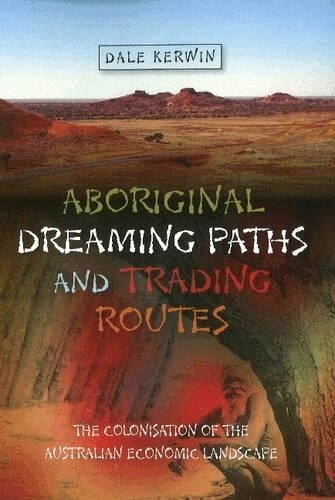
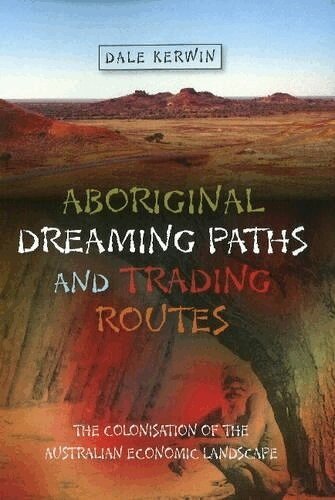
The dreaming paths of Aboriginal nations across Australia formed major ceremonial routes along which goods and knowledge flowed. These became the trade routes that criss-crossed Australia and transported religion and cultural values. This book highlights the valuable contribution Aboriginal people made in assisting European explorers, surveyors and stockmen to open the country for colonisation, and explores the interface between Aboriginal possession of the Australian continent and European colonisation and appropriation. Instead of positing a radical disjunction between cultural competencies, Dale Kerwin considers how European colonisation of Australia appropriated Aboriginal competence in terms of the landscape: by tapping into culinary and medicinal knowledge, water and resource knowledge, hunting, food collecting and path-finding. As a consequence of this assistance, Aboriginal dreaming paths and trading routes also became the routes and roads of colonisers. Indeed, the European colonisation of Australia owes much of its success to the deliberate process of Aboriginal land management practices. Dale Kerwin provides a social science context for the broader study of Aboriginal trading routes by setting out an historic interpretation of the Aboriginal/European contact period. His book scrutinises arguments about nomadic and primitive societies, as well as Romantic views of culture and affluence. These circumstances and outcomes are juxtaposed with evidence that indicates that Aboriginal societies are substantially sedentary and highly developed, capable of functional differentiation and foresight -- attributes previously only granted to the European settlers. The hunter-gatherer image of Aboriginal society is rejected by providing evidence of crop cultivation and land management, as well as social arrangements that made best use of a hostile environment. This book is essential reading for all those who seek to have a better knowledge of Australia and its first people: it inscribes Aboriginal people firmly in the body of Australian history.
Häftad, Engelska, 2010
1 166 kr
Skickas inom 5-8 vardagar
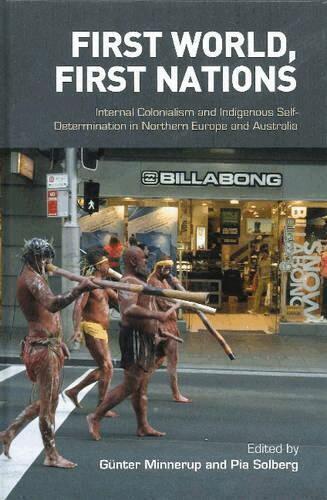
The Sami people of Northern Europe and Aboriginal Australians are literally a world apart in geographical terms, yet share a common fate as Indigenous minorities. Emerging from centuries of internal colonisation. Their ancient cultures and languages severely eroded by policies of forced assimilation, their traditional lifestyles and Economies damaged, and their political voices marginalised, recent decades have seen their struggles for collective survival rise to political prominence in national and international agendas, with the promise of Indigenous self-determination held out by national governments and the United Nations Declaration of Rights for Indigenous Peoples. Both the Sami and Indigenous Australians have won important new rights during these decades, yet the outcomes are very different. In this volume -- the only collection of essays specifically on the Indigenous peoples of Australia and Northern Europe -- the similarities and differences between the Indigenous experiences in the Nordic countries and Australia are explored by renowned experts in the field including Indigenous authors. Some of the contributions are explicitly comparative and based on research experience in both areas, and two essays on New Zealand and Canada provide external points of reference to the volume's focus on Northern Europe (Norway, Sweden, Finland, Russia) and Australia. As always in Indigenous Studies, issues of cultural identity and survival are prominent but there is a special emphasis in many of the chapters on issues of socio-economic development and political representation, and a substantial introduction by the editors sketches out a historical-theoretical framework for understanding Indigenous struggles in First World countries that is critical of some currently fashionable approaches.
Inbunden, Engelska, 2011
1 801 kr
Skickas inom 5-8 vardagar
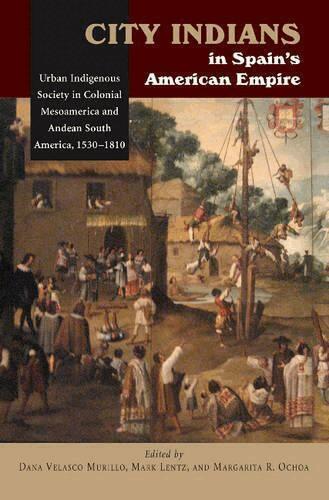
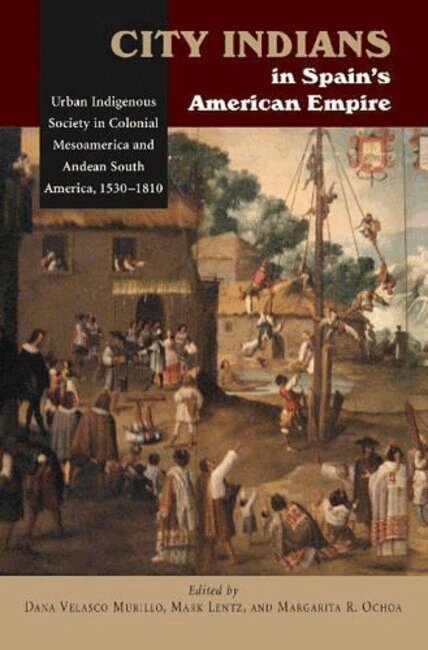
This volume, the first of its genre in English, brings together the pioneering work of scholars of urban Indians of colonial Latin America. An important, but understudied segment of colonial society, urban Indians composed a majority of the population of Spanish America's most important cities. The geographic range, chronological scope, and thematic content of urban native studies is addressed by examining such topics as the role of natives in settling frontier regions, interethnic relations, notaries and chroniclers, and the continuation of indigenous governance. In spanning the entirety of the colonial period, the persistence and the creation of urban Indian identities and their contributions to colonial society is brought to the fore. Scholarly contributions include chapters by Susan Schroeder, "Whither Tenochtitlan? Chimalpahin and Mexico City, 15931631" and David Cahill, "Urban Mosaic: Indigenous Ethnicities in Colonial Cuzco". The volume opens with commentary by John K. Chance, pioneer scholar of urban Indians in Latin America and author of the highly praised Race and Class in Colonial Oaxaca and is summed up in "Concluding Remarks" by Kevin Terraciano, author of the widely acclaimed The Mixtecs of Colonial Oaxaca: Nudzahui History. The diverse themes, time periods, and geographic regions discussed herein make this illustrated book essential reading for all those engaged in colonial and indigenous studies.
Häftad, Engelska, 2011
530 kr
Skickas inom 5-8 vardagar
The Spaniards typically portrayed the conquest and fall of Mexico Tenochtitlan as Armageddon, while native peoples in colonial Mesoamerica continued to write and paint their histories and lives often without any mention of the foreigners in their midst. Their accounts took the form of annals, chronicles, religious treatises, tribute accounts, theatre pieces, and wills. Thousand of documents were produced, almost all of which served to preserve indigenous ways of doing things. But what provoked record keeping on such a grand scale? At what point did pre-contact sacred writing become utilitarian and quotidian? Were their texts documentaries, a form of boosterism, even ingenious intellectualism, or were they ultimately a literature of ruin? This volume seeks to address key aspects of indigenous perspectives of the conquest and Spanish colonialism by examining what they themselves recorded and why they did so.
Häftad, Engelska, 2011
530 kr
Skickas inom 5-8 vardagar
The dreaming paths of Aboriginal nations across Australia formed major ceremonial routes along which goods and knowledge flowed. These became the trade routes that criss-crossed Australia and transported religion and cultural values. This book highlights the valuable contribution Aboriginal people made in assisting European explorers, surveyors and stockmen to open the country for colonisation, and explores the interface between Aboriginal possession of the Australian continent and European colonisation and appropriation. Instead of positing a radical disjunction between cultural competencies, Dale Kerwin considers how European colonisation of Australia appropriated Aboriginal competence in terms of the landscape: by tapping into culinary and medicinal knowledge, water and resource knowledge, hunting, food collecting and path-finding. As a consequence of this assistance, Aboriginal dreaming paths and trading routes also became the routes and roads of colonisers. Indeed, the European colonisation of Australia owes much of its success to the deliberate process of Aboriginal land management practices. Dale Kerwin provides a social science context for the broader study of Aboriginal trading routes by setting out an historic interpretation of the Aboriginal/European contact period. His book scrutinises arguments about nomadic and primitive societies, as well as Romantic views of culture and affluence. These circumstances and outcomes are juxtaposed with evidence that indicates that Aboriginal societies are substantially sedentary and highly developed, capable of functional differentiation and foresight -- attributes previously only granted to the European settlers. The hunter-gatherer image of Aboriginal society is rejected by providing evidence of crop cultivation and land management, as well as social arrangements that made best use of a hostile environment. This book is essential reading for all those who seek to have a better knowledge of Australia and its first people: it inscribes Aboriginal people firmly in the body of Australian history.
Häftad, Engelska, 2012
604 kr
Skickas inom 5-8 vardagar
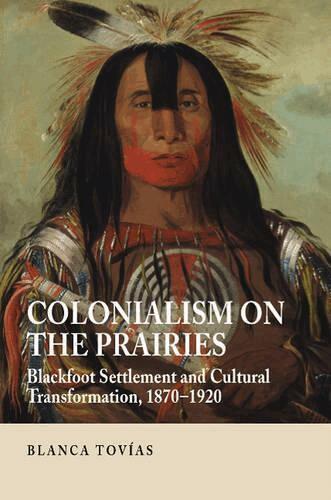
This book spans a century in the history of the Blackfoot First Nations of present-day Montana and Alberta. It maps out specific ways in which Blackfoot culture persisted amid the drastic transformations of colonisation, with its concomitant forced assimilation in both Canada and the United States. It portrays the strategies and tactics adopted by the Blackfoot in order to navigate political, cultural and social change during the hard transition from traditional life-ways to life on reserves and reservations. Cultural continuity is the thread that binds the four case studies presented, encompassing Blackfoot sacred beliefs and ritual; dress practices; the transmission of knowledge; and the relationship between oral stories and contemporary fiction. Blackfoot voices emerge forcefully from the extensive array of primary and secondary sources consulted, resulting in an inclusive history wherein Blackfoot and non-Blackfoot scholarship enter into dialogue. Blanca Tovias combines historical research with literary criticism, a strategy that is justified by the interrelationship between Blackfoot history and the stories from their oral tradition. Chapters devoted to examining cultural continuity discuss the ways in which oral stories continue to inspire contemporary Native American fiction. This interdisciplinary study is a celebration of Blackfoot culture and knowledge that seeks to revalourise the past by documenting Blackfoot resistance and persistence across a wide spectrum of cultural practice. The volume is essential reading for all scholars working in the fields of Native American studies, colonial and postcolonial history, ethnology and literature.
Inbunden, Engelska, 2014
1 801 kr
Skickas inom 5-8 vardagar
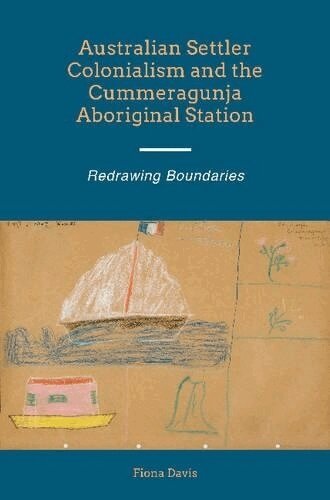
In 1938, the anthropologist Norman Tindale gave a classroom of young Aboriginal children a set of crayons and asked them to draw. The children, residents of the government-run Aboriginal station Cummeragunja, mostly drew pictures of aspects of white civilization boats, houses and flowers. What now to make of their artwork? Were the children encouraged or pressured to draw non-Aboriginal scenes, or did they draw freely, appropriating the white culture they now lived within? Did their Aboriginality change the meaning of their art, as they sketched out this ubiquitous colonial imagery? Australian Settler Colonialism and the Cummeragunja Aboriginal Station traces Cummeragunja's history from its establishment in the 1880s to its mass walk-off in 1939 and finally, to the 1960s, when its residents regained greater control over the land. Taking in oral history traditions, the author reveals the competing interests of settler governments, scientific and religious organizations, and nearby settler communities. The nature of these interests has broad and important implications for understanding settler colonial history. This history shows white people set boundaries on Aboriginal behaviour and movement, through direct legislation and the provision of opportunities and acceptance. But Aboriginal people had agency within and, at times, beyond these limits. Aboriginal people appropriated aspects of white culture including the houses, the flowers and the boats that their children drew for Tindale - reshaping them into new tools for Aboriginal society, tools with which to build lives and futures in a changed environment.
Häftad, Engelska, 2013
530 kr
Skickas inom 5-8 vardagar
This volume, the first of its genre in English, brings together the pioneering work of scholars of urban Indians of colonial Latin America. An important, but understudied segment of colonial society, urban Indians composed a majority of the population of Spanish America's most important cities. The geographic range, chronological scope, and thematic content of urban native studies is addressed by examining such topics as the role of natives in settling frontier regions, interethnic relations, notaries and chroniclers, and the continuation of indigenous governance. In spanning the entirety of the colonial period, the persistence and the creation of urban Indian identities and their contributions to colonial society is brought to the fore. Scholarly contributions include chapters by Susan Schroeder, "Whither Tenochtitlan? Chimalpahin and Mexico City, 15931631" and David Cahill, "Urban Mosaic: Indigenous Ethnicities in Colonial Cuzco". The volume opens with commentary by John K. Chance, pioneer scholar of urban Indians in Latin America and author of the highly praised Race and Class in Colonial Oaxaca and is summed up in "Concluding Remarks" by Kevin Terraciano, author of the widely acclaimed The Mixtecs of Colonial Oaxaca: Nudzahui History. The diverse themes, time periods, and geographic regions discussed herein make this illustrated book essential reading for all those engaged in colonial and indigenous studies.
Häftad, Engelska, 2014
530 kr
Skickas inom 5-8 vardagar
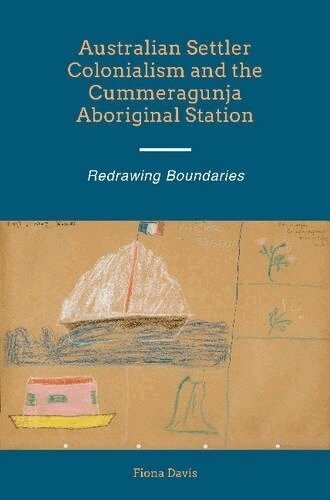
In 1938, the anthropologist Norman Tindale gave a classroom of young Aboriginal children a set of crayons and asked them to draw. The children, residents of the government-run Aboriginal station Cummeragunja, mostly drew pictures of aspects of white civilization boats, houses and flowers. What now to make of their artwork? Were the children encouraged or pressured to draw non-Aboriginal scenes, or did they draw freely, appropriating the white culture they now lived within? Did their Aboriginality change the meaning of their art, as they sketched out this ubiquitous colonial imagery? Australian Settler Colonialism and the Cummeragunja Aboriginal Station traces Cummeragunja's history from its establishment in the 1880s to its mass walk-off in 1939 and finally, to the 1960s, when its residents regained greater control over the land. Taking in oral history traditions, the author reveals the competing interests of settler governments, scientific and religious organizations, and nearby settler communities. The nature of these interests has broad and important implications for understanding settler colonial history. This history shows white people set boundaries on Aboriginal behaviour and movement, through direct legislation and the provision of opportunities and acceptance. But Aboriginal people had agency within and, at times, beyond these limits. Aboriginal people appropriated aspects of white culture including the houses, the flowers and the boats that their children drew for Tindale - reshaping them into new tools for Aboriginal society, tools with which to build lives and futures in a changed environment.