First Person Singular - Böcker
Visar alla böcker i serien First Person Singular. Handla med fri frakt och snabb leverans.
6 produkter
6 produkter
294 kr
Skickas inom 7-10 vardagar
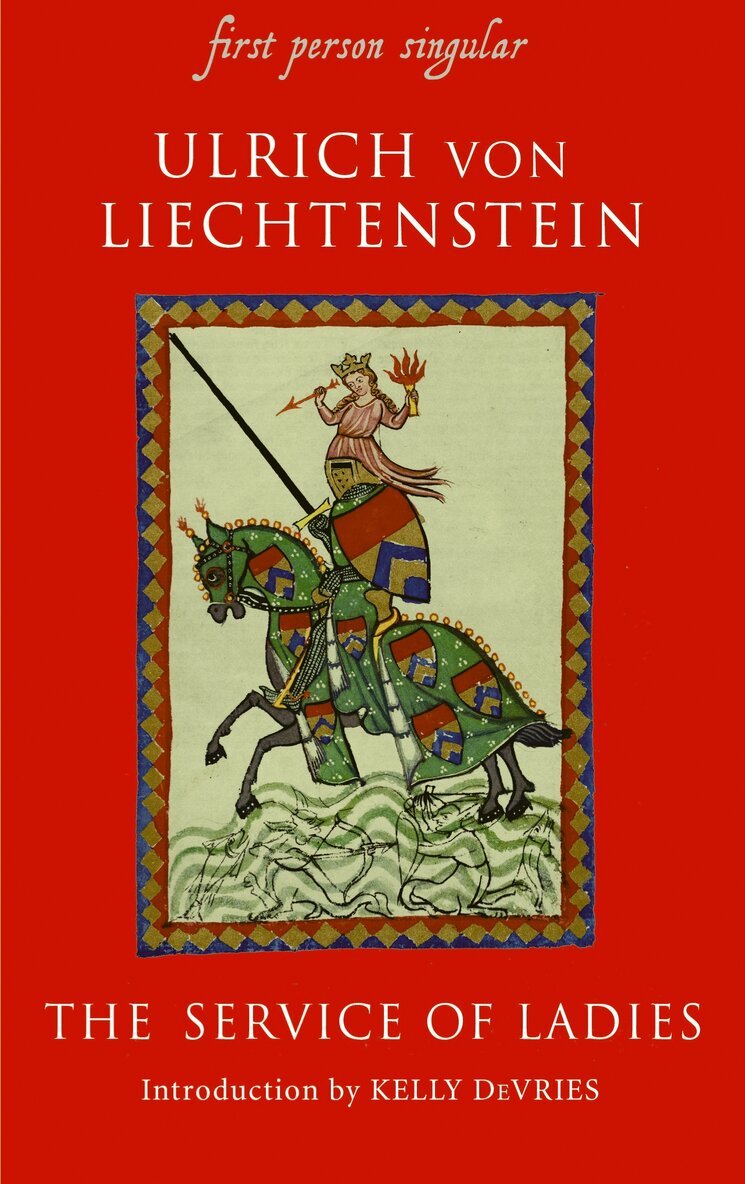
Ulrich von Liechtenstein's extraordinary account of his adventures as a knight-errant is one of the most vivid images of chivalric life.Ulrich von Liechtenstein's extraordinary account of his adventures as a knight-errant is one of the most vivid images of chivalric life to have come down to us. His knightly autobiography was written in the mid-thirteenth century,and gives an account of the "journey of Venus" which he undertook in 1226 in honour of his lady, in which he claimed to have broken 307 spears in jousts against all comers in the space of a month. Some of it is obviously quietlyexaggerated, written for his friends' entertainment many years later, and he is not above a sly dig at the conventions of courtly love, but he completely accepts its basic ideas. It is full of lively episodes and good stories, aswell as verses in honour of his lady; if the tale has been polished up for effect, it is nonetheless a thoroughly entertaining account of how a knight saw his ideal career in the jousting field.If the name is unexpectedly familiar to modern readers, it is because it was borrowed by the hero of the film A Knight's Tale; Ulrich would have certainly approved of his exploits. Introduction by KELLY DEVRIES.
262 kr
Tillfälligt slut
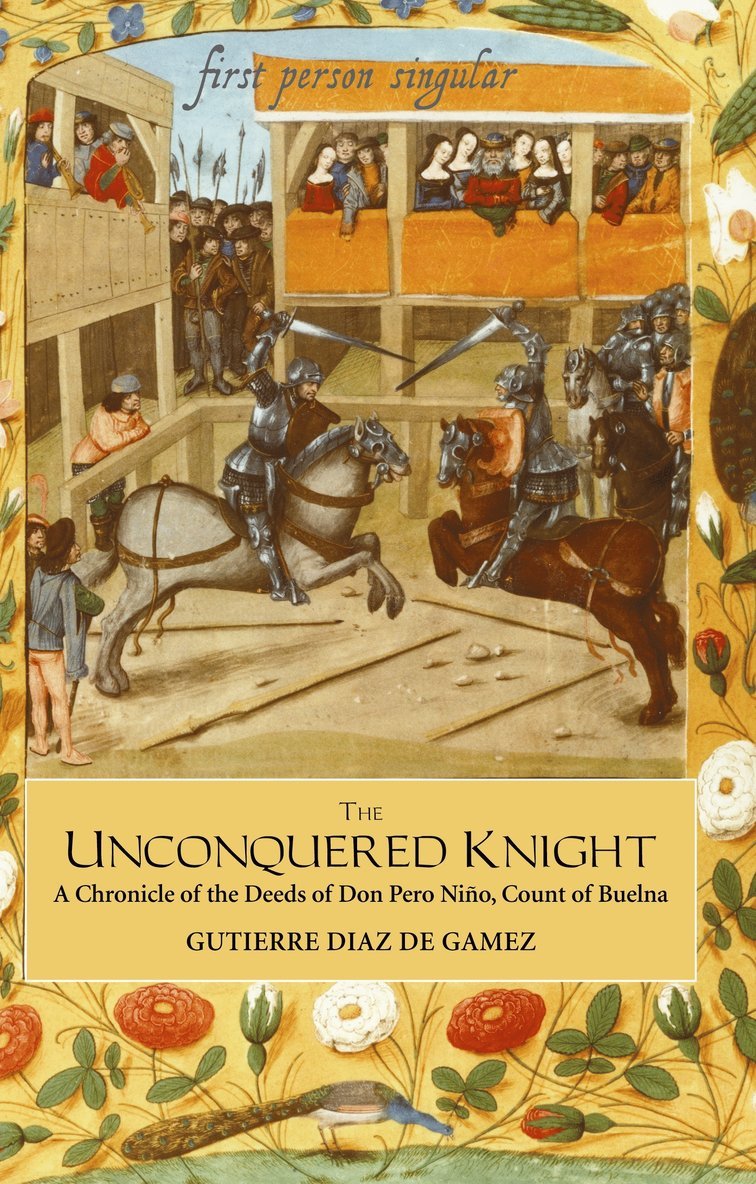
The heroic exploits of the 15th-century Count of Buelna, including tournament glories, knightly romance and the bitter hardships of life on campaign.Gutierre Diaz de Gamez entered the service of Pero Niño, count of Buelna, in 1402, when they were both about 23, and served as head of his military household for nearly fifty years. He began a chronicle of his master's deeds in about 1431, and it is this eyewitness account of the life of a knight, both in war and peace, which is translated here. It is written in praise of his master, but beneath the veneer of hero-worship a good deal of the reality of a knight's existence shows through: even in the prologue, Diaz de Gamez gives a bitter picture of the hardships of a military campaign: 'Knights who are at the wars eat their bread in sorrow; their ease in weariness and sweat... Mouldy bread or biscuit, meat cooked or uncooked, water from a pond or a butt, poor sleep with their armour still on their backs, the enemy an arrow-shot off...' On the other hand, he can evoke the glories of a tournament, in which hismaster excelled, and his triumphs as a military commander both by sea and land. It is a story full of colour, adventure and romance, and one which deserves its place in the chronicles of chivalry.
389 kr
Skickas inom 7-10 vardagar
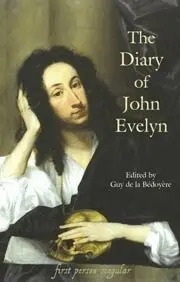
Evelyn was at the centre of English social and political life in the17c, friend of Charles II, member of Royal Society.The Diary of John Evelyn (1620-1706) is one of the principal literary sources for life and manners in the English seventeenth century. Evelyn was one of an influential group of men which included Wren, Pepys and Boyle; afounding member of the Royal Society, he was also a friend of Charles II, a Commissioner for sick seamen and prisoners of war during the Dutch Wars, a prime mover behind Chelsea and Greenwich Hospitals, and a prolific author who wrote about architecture, art, arboriculture, fashion, and pollution. In his Diary he recorded the events and experiences of his long and remarkable life; there are also extensive references to his family, including hispoignant recollections of the children who predeceased him.This edition has been based on the only comprehensive and accurate transcription, by E.S. de Beer, published by Oxford University Press in 1955, but the text hasbeen reworked into individual years and months while retaining the original spelling and grammar throughout.GUY DE LA BÉDOYERE holds degrees in history and archaeology from the Universities of Durham and London.
294 kr
Skickas inom 7-10 vardagar
Attractive selection conveys well their recurrent concerns with land, money, civil violence, flirtation, marriage, and the purchase of ginger and lace. MEDIUM AEVUMVivid first-hand accounts of life in England at the time ofthe Wars of the Roses, presented in their historical context. Essential reading on the English middle ages.Within three generations (1426 to 1485), and through the dark anddangerous years of the Wars of the Roses, the Pastons establishedthemselves as a family of consequence, both in their native Norfolk andwithin court circles. Ambitious and highly mobile - womenfolk as wellas men - they kept in touch by correspondence, usually but notinvariably through the medium of a clerk. These letters, a raresurvival, break upon us across the centuries with the urgency, andsometimes the violence, of their preoccupations: defending property,fighting court cases, making the right alliances, and, on the domesticside, managing their estates, conducting their courtships, stockingtheir cupboards. Selected and presented here with Richard Barber'sinvaluable linking narrative, they bring the middle ages triumphantlyto life.
355 kr
Skickas inom 7-10 vardagar
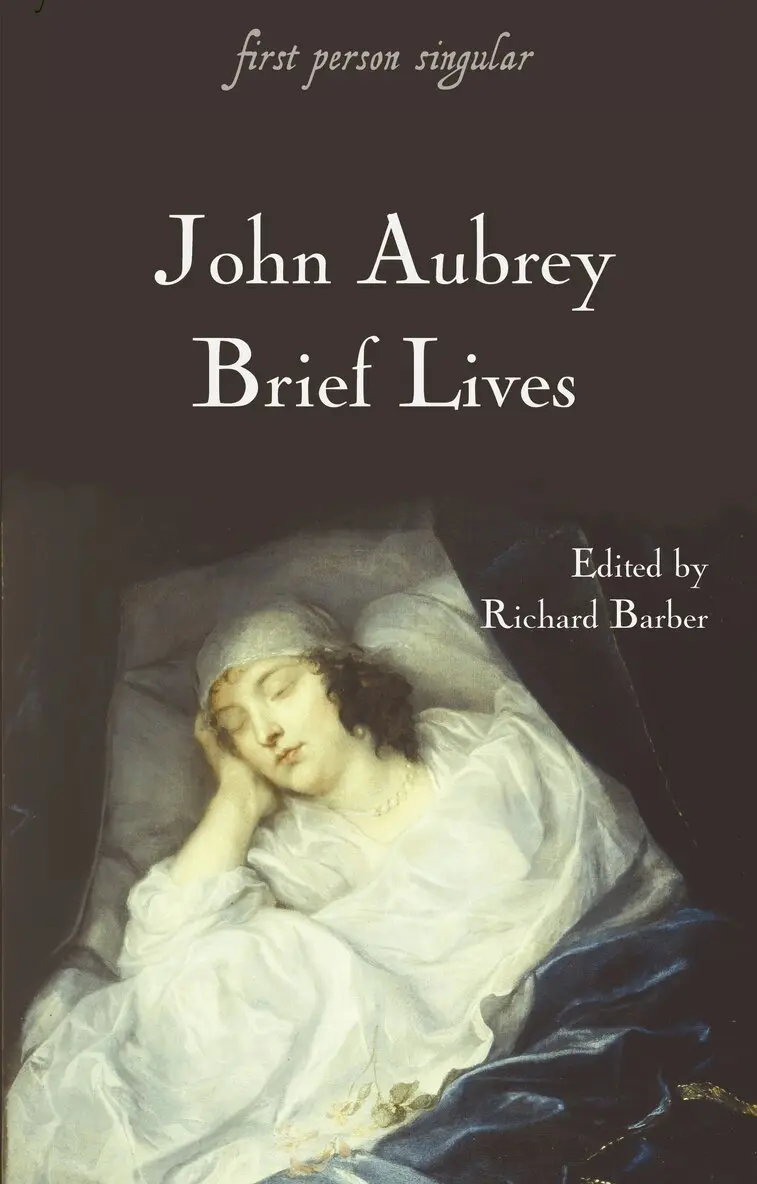
Full edition in modern spelling of Aubrey's racy portraits of greatfigures of 16-17c England, from Sir Walter Raleigh to John Milton.John Aubrey's racy portraits of the great figures of 17th-centuryEngland stand alongside Pepys's diary as a vivid evocation of the period. Aubrey was born in 1626, the son of a Wiltshire squire; at the age of 26 he inherited a family estate encumbered with debt, and finally went bankrupt in the 1670s. From then on he led a sociable, rootless existence at the houses of friends - from Oxford and the Middle Temple -pursuing the antiquarian studies which had always obsessed him. At his death in 1697 he left a mass of notes and manuscripts, among them the material for Brief Lives. He never managed to put even a single life into logical order; all we have are the raw materials, scribbled down -`tumultuously as they occurred to my thoughts'.With this full, modern English edition, which reproduces Aubrey's words as closely as possible, Richard Barber introduces us to Aubrey and his world, tells how the Lives came into being and enables many new readers to enjoy this eccentric masterpiece.
285 kr
Skickas inom 7-10 vardagar
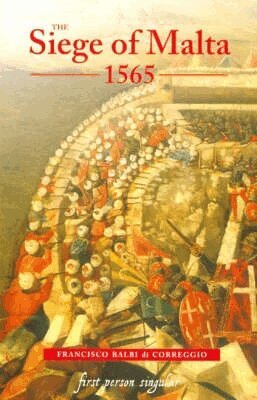
An eyewitness account of one of the greatest-ever battles as a few men under the Knights of St John took on a huge Turkish armada.This is the history of one of the great battles of the world, written by a private soldier who was an eye-witness. The siege of Malta was a crucial moment in the long struggle between Islam and Christendom for domination of the Mediterranean, fought out by unequal forces on the small island which commands the sea-routes at the centre of that sea. The Knights of St John were a survival from the medieval world, the largest of the surviving crusading orders,and they had been driven out of their base on Rhodes in the eastern Mediterranean after a great onslaught by the Turks in 1522. Now, forty-three years later, the Turkish ruler, Suleyman the Magnificent, who had been the victor atRhodes, was determined to finish them off. He sent out a huge armada, carrying the pick of his army, under two commanders. Against this powerful force, the Knights could only raise a handful of men and mercenaries, and had to depend on the fortifications they had raised in the thirty-five years since they first came to Malta, which bore no comparison to the massive walls and ditches on Rhodes. Francisco Balbi di Correggio was a humble soldier of fortune who enlisted under the charismatic command of the Grand Master of the Order, Jean de la Valette. The extraordinary drama that unfolded after the first appearance of the Turkish fleet in the summer of 1565 is told in his own words, giving equal credit to the courage and leadership of the Knights and the grim determination of the ordinary people of Malta.