Foundations of Neuropsychology – serie
Visar alla böcker i serien Foundations of Neuropsychology. Handla med fri frakt och snabb leverans.
8 produkter
8 produkter
3 266 kr
Skickas inom 10-15 vardagar
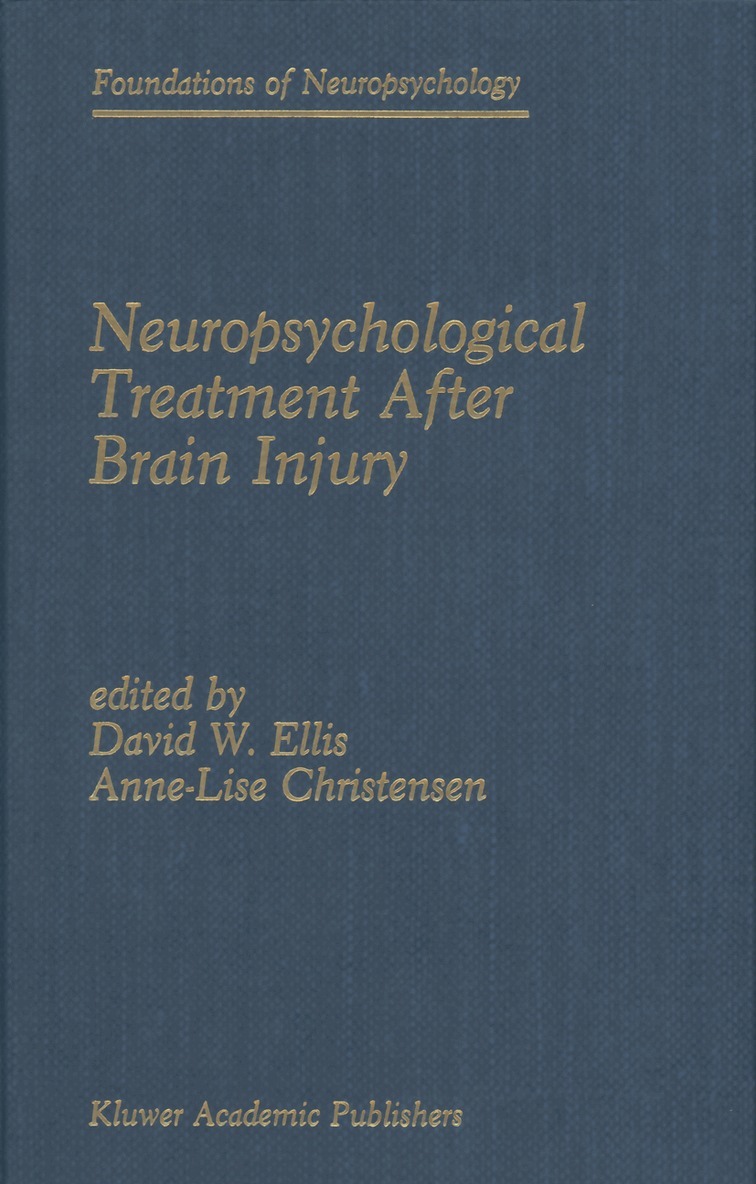
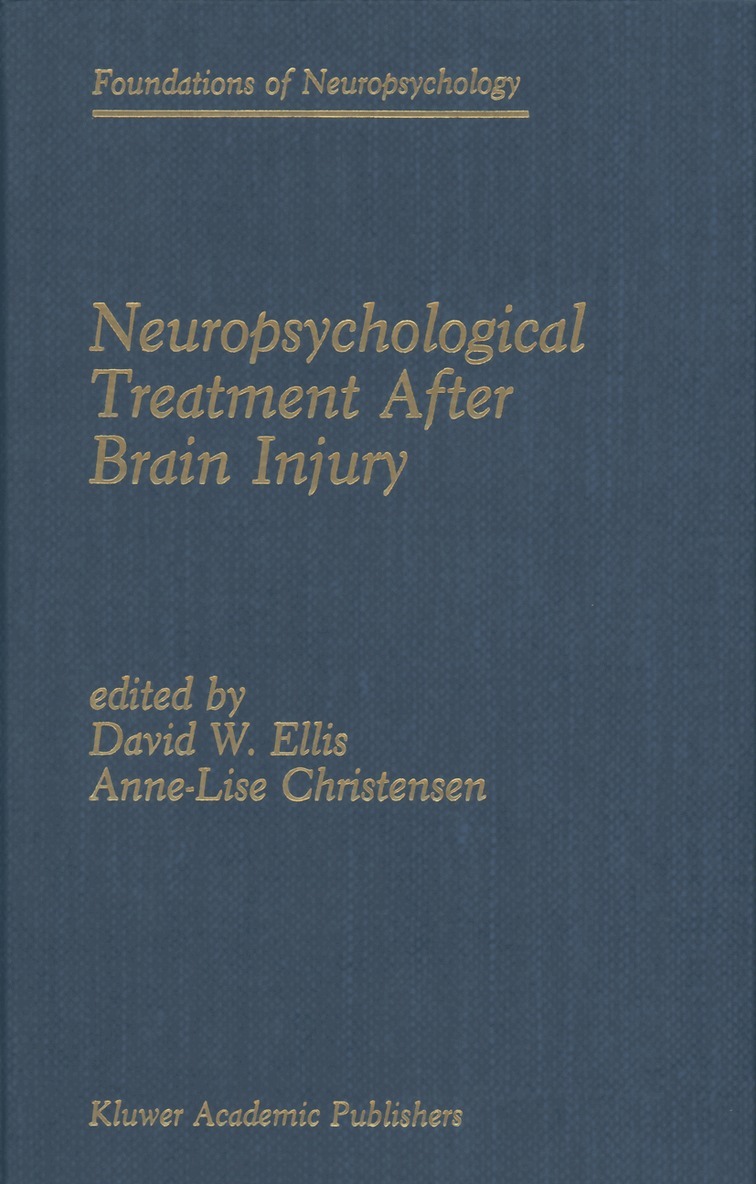
DAVID W. ELLIS AND ANNE-LISE CHRISTENSEN 1 A BRIEF OVERVIEW In the past, most people who sustained catastrophic brain injury died. However, over the past several decades, sophisticated medical diagnostic techniques such as computerized tomography (CT) and magnetic resonance imaging (MRI), along with advances in emergency trauma procedures and neurosurgical pro cedures (e. g., intracranial pressure monitoring), have dramatically increased the survival rates for people who have survived such trauma. At the same time, because of population growth, the number of victims of brain trauma (primarily automobile accidents) has also risen [1]. As a result of their injuries, many of these people have developed severe disabilities that affect their lives and the lives of everyone around them. For those who survive, and their families, mere survival is not enough. Attention must be paid to the quality of their lives after the traumatic event. During the past 15 years, there has been an increasing focus on the develop ment of treatment techniques for brain injuries. Although the principal focus of this text is on the neuropsychological (i. e., neurological and psychological) aspects of treatment-both theory and technique-the book is also directed towards the broad variety of issues that affect survivors, their families, health care professionals, and the social milieu.
2 180 kr
Skickas inom 10-15 vardagar
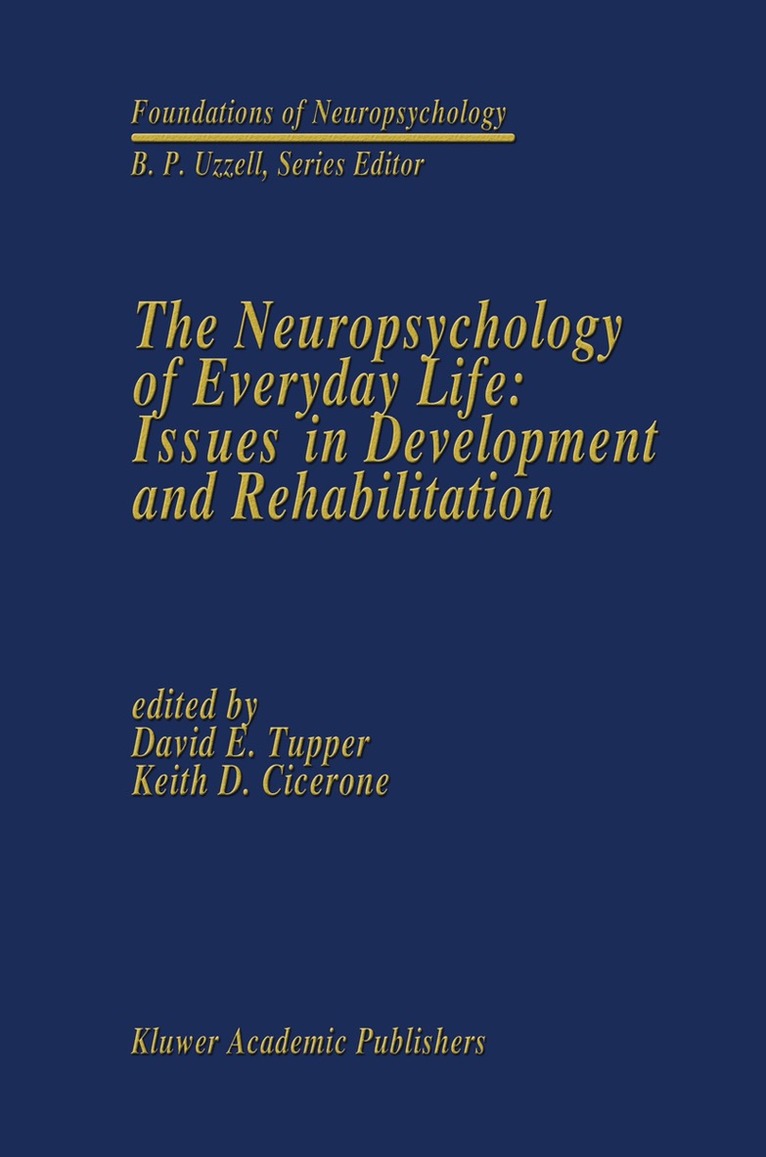
For a period of some fifteen years following completion of my internship training in clinical psychology (1950-1951) at the Washington University School of Medicine and my concurrent successful navigation through that school's neuroanatomy course, clinical work in neuropsychology for me and the psychologists of my generation consisted almost exclusively of trying to help our physician colleagues differentiate patients with neurologic from those with psychiatric disorders. In time, experience led all of us from the several disciplines involved in this enterprise to the conclusion that the crude diag nostic techniques available to us circa 1945-1965 had garnered us little valid information upon which to base such complex, differential diagnostic decisions. It now is gratifying to look back and review the remarkable progress that has occurred in the field of clinical neuropsychology in the four decades since I was a graduate student. In the late 1940s such pioneers as Ward Halstead, Alexander Luria, George Yacorzynski, Hans-Lukas Teuber, and Arthur Benton already were involved in clinical studies that, by the late 1960s, would markedly have improved the quality of clinical practice. However, the only psychological tests that the clinical psychologist of my immediate post-Second World War generation had as aids for the diagnosis of neurologically based conditions involving cognitive deficit were such old standbys as the Wechsler Bellevue, Rorschach, Draw A Person, Bender Gestalt, and Graham Kendall Memory for Designs Test.
2 180 kr
Skickas inom 10-15 vardagar
For a period of some fifteen years following completion of my internship training in clinical psychology (1950-1951) at the Washington University School of Medicine and my concurrent successful navigation through that school's neuroanatomy course, clinical work in neuropsychology for me and the psychologists of my generation consisted almost exclusively of our trying to help our physician colleagues differentiate patients with neurologic disorders from those with psychiatric disorders. In time, experience led all of us from the several disciplines involved in this enterprise to the conclusion that the crude diagnostic techniques available to us circa 1945-1965 had garnered little valid information on which to base such complex, differential diagnostic decisions. It now is gratifying to look back and review the remarkable progress that has occurred in the field of clinical neuropsychology in the four decades since I was a graduate student. In the late 1940s such pioneers as Ward Halstead, Alexander Luria, George Yacorzynski, Hans-Lukas Teuber, and Arthur Benton already were involved in clinical studies that, by the late 1960s, would markedly have improved the quality of clinical practice. However, the only psychological tests that the clinical psychologist of my immediate post Second Wodd War generation had as aids for the diagnosis of neurologically based conditions involving cognitive deficit were such old standbys as the Wechsler-Bellevue, Rorschach, Draw A Person, Bender Gestalt, and Graham Kendall Memory for Designs Test.
2 180 kr
Skickas inom 10-15 vardagar
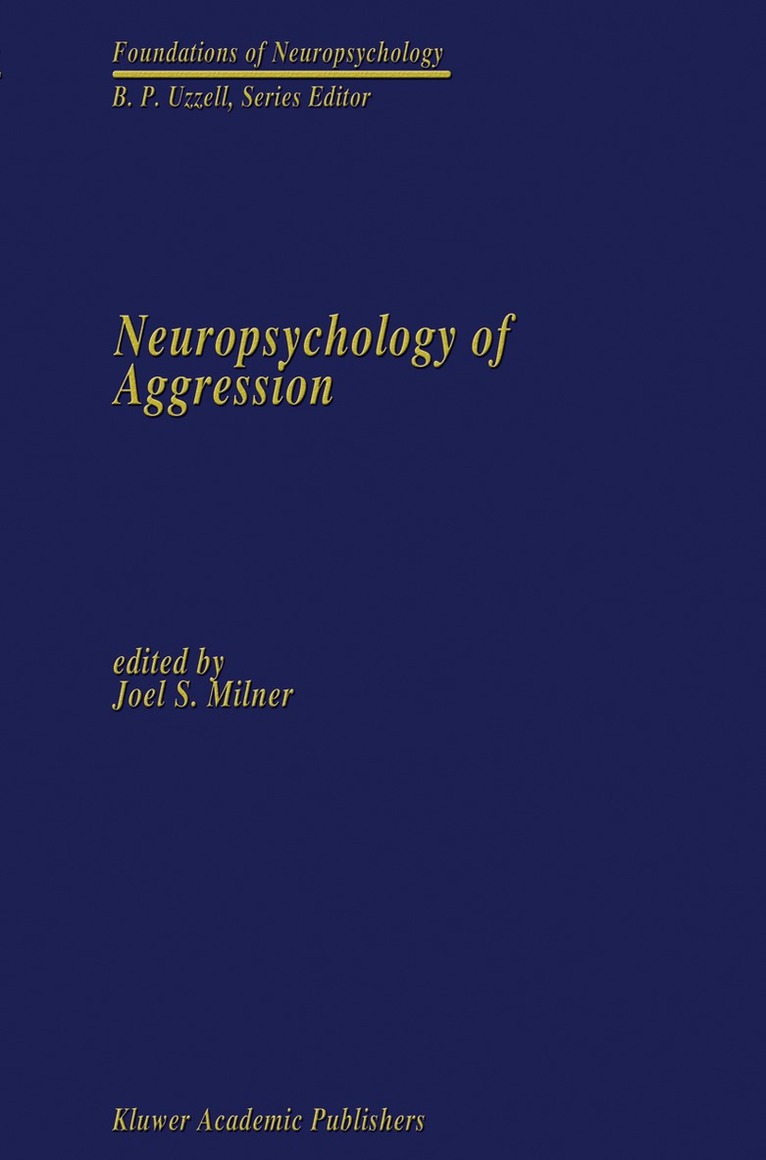
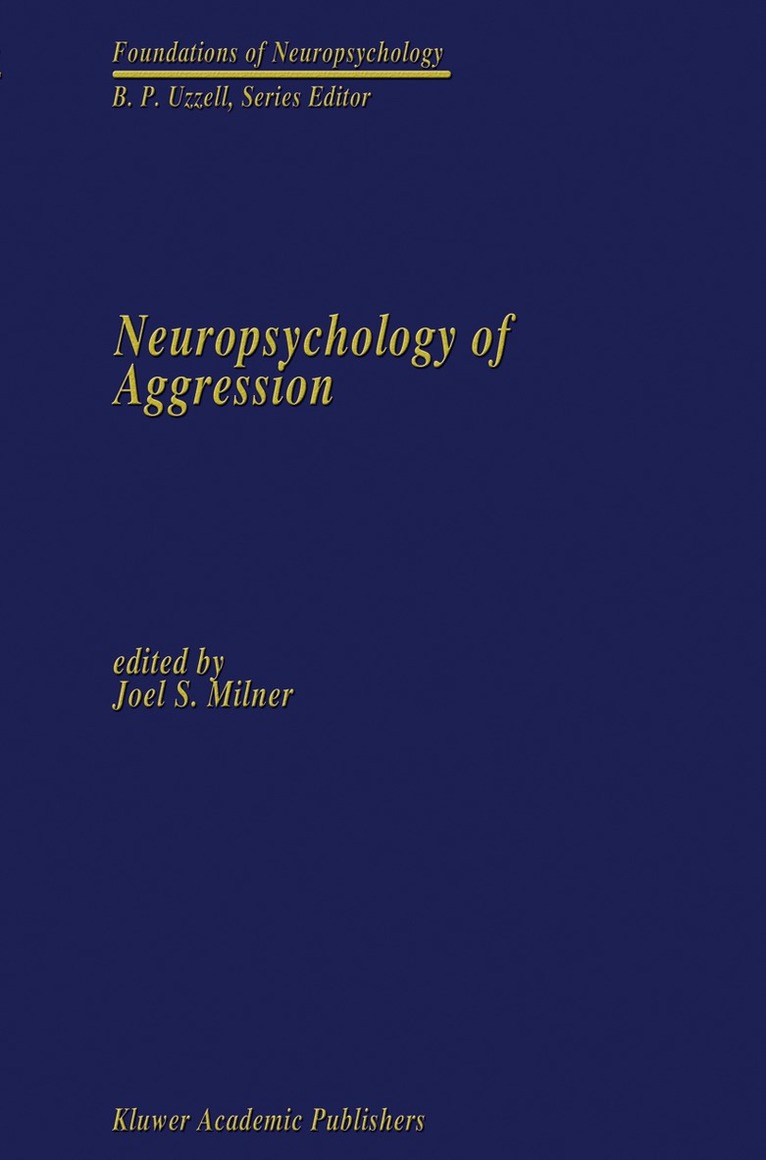
This book reviews putative neurological and neuropsychological factors in aggressive behavior. Discussions focus on explanatory models, brain sites, and cognitive functions that appear to be associated with aggressive behavior. Attention is given to measurement and design problems that are frequently encountered in the study of aggression. Further, it is emphasized that any relationship between neuropsychological factors and aggressive behavior will be complex. Neuropsychological factors must be considered in the context of mediating and moderating (precipitating and buffering) variables from other ecological levels (e. g. , family support). Even if perpetrator neuro psychological factors are found to be reliably associated with aggression, it will still be necessary to demonstrate the extent to which different neuro psychological factors are marker or are causal variables in aggressive behavior. Finally, since there has been a major societal and professional interest in the study of aggression within the family, several chapters focus on the possible neurological, neuropsychological, and physiological aspects of family violence. Chapter 1, entitled "Biological Theories of Violence," written by Adrian Raine and Angela Scerbo, provides a theoretical context for understanding the role of biological factors in aggression. This chapter begins with a discussion of conceptual issues and methodological problems that impede theory development and research in aggression. Following this discussion, the authors present theories that may lead to a better understanding of the ix x Preface neurological and cognitive components of aggression. The presentation of each theory is followed by a discussion of theory-related research.
2 180 kr
Skickas inom 10-15 vardagar
For a period of some fifteen years following completion of my internship training in clinical psychology (1950-1951) at the Washington University School of Medicine and my concurrent successful navigation through that school's neuroanatomy course, clinical work in neuropsychology for me and the psychologists of my generation consisted almost exclusively of trying to help our physician colleagues differentiate patients with neurologic from those with psychiatric disorders. In time, experience led all of us from the several disciplines involved in this enterprise to the conclusion that the crude diag nostic techniques available to us circa 1945-1965 had garnered us little valid information upon which to base such complex, differential diagnostic decisions. It now is gratifying to look back and review the remarkable progress that has occurred in the field of clinical neuropsychology in the four decades since I was a graduate student. In the late 1940s such pioneers as Ward Halstead, Alexander Luria, George Yacorzynski, Hans-Lukas Teuber, and Arthur Benton already were involved in clinical studies that, by the late 1960s, would markedly have improved the quality of clinical practice. However, the only psychological tests that the clinical psychologist of my immediate post-Second World War generation had as aids for the diagnosis of neurologically based conditions involving cognitive deficit were such old standbys as the Wechsler Bellevue, Rorschach, Draw A Person, Bender Gestalt, and Graham Kendall Memory for Designs Test.
2 180 kr
Skickas inom 10-15 vardagar
For a period of some fifteen years following completion of my internship training in clinical psychology (1950-1951) at the Washington University School of Medicine and my concurrent successful navigation through that school's neuroanatomy course, clinical work in neuropsychology for me and the psychologists of my generation consisted almost exclusively of our trying to help our physician colleagues differentiate patients with neurologic disorders from those with psychiatric disorders. In time, experience led all of us from the several disciplines involved in this enterprise to the conclusion that the crude diagnostic techniques available to us circa 1945-1965 had garnered little valid information on which to base such complex, differential diagnostic decisions. It now is gratifying to look back and review the remarkable progress that has occurred in the field of clinical neuropsychology in the four decades since I was a graduate student. In the late 1940s such pioneers as Ward Halstead, Alexander Luria, George Yacorzynski, Hans-Lukas Teuber, and Arthur Benton already were involved in clinical studies that, by the late 1960s, would markedly have improved the quality of clinical practice. However, the only psychological tests that the clinical psychologist of my immediate post Second Wodd War generation had as aids for the diagnosis of neurologically based conditions involving cognitive deficit were such old standbys as the Wechsler-Bellevue, Rorschach, Draw A Person, Bender Gestalt, and Graham Kendall Memory for Designs Test.
3 266 kr
Skickas inom 10-15 vardagar
DAVID W. ELLIS AND ANNE-LISE CHRISTENSEN 1 A BRIEF OVERVIEW In the past, most people who sustained catastrophic brain injury died. However, over the past several decades, sophisticated medical diagnostic techniques such as computerized tomography (CT) and magnetic resonance imaging (MRI), along with advances in emergency trauma procedures and neurosurgical pro cedures (e. g., intracranial pressure monitoring), have dramatically increased the survival rates for people who have survived such trauma. At the same time, because of population growth, the number of victims of brain trauma (primarily automobile accidents) has also risen [1]. As a result of their injuries, many of these people have developed severe disabilities that affect their lives and the lives of everyone around them. For those who survive, and their families, mere survival is not enough. Attention must be paid to the quality of their lives after the traumatic event. During the past 15 years, there has been an increasing focus on the develop ment of treatment techniques for brain injuries. Although the principal focus of this text is on the neuropsychological (i. e., neurological and psychological) aspects of treatment-both theory and technique-the book is also directed towards the broad variety of issues that affect survivors, their families, health care professionals, and the social milieu.
2 180 kr
Skickas inom 10-15 vardagar
Even if perpetrator neuro psychological factors are found to be reliably associated with aggression, it will still be necessary to demonstrate the extent to which different neuro psychological factors are marker or are causal variables in aggressive behavior.