Fundamental Materials Research - Böcker
Visar alla böcker i serien Fundamental Materials Research. Handla med fri frakt och snabb leverans.
17 produkter
17 produkter
1 578 kr
Skickas inom 10-15 vardagar
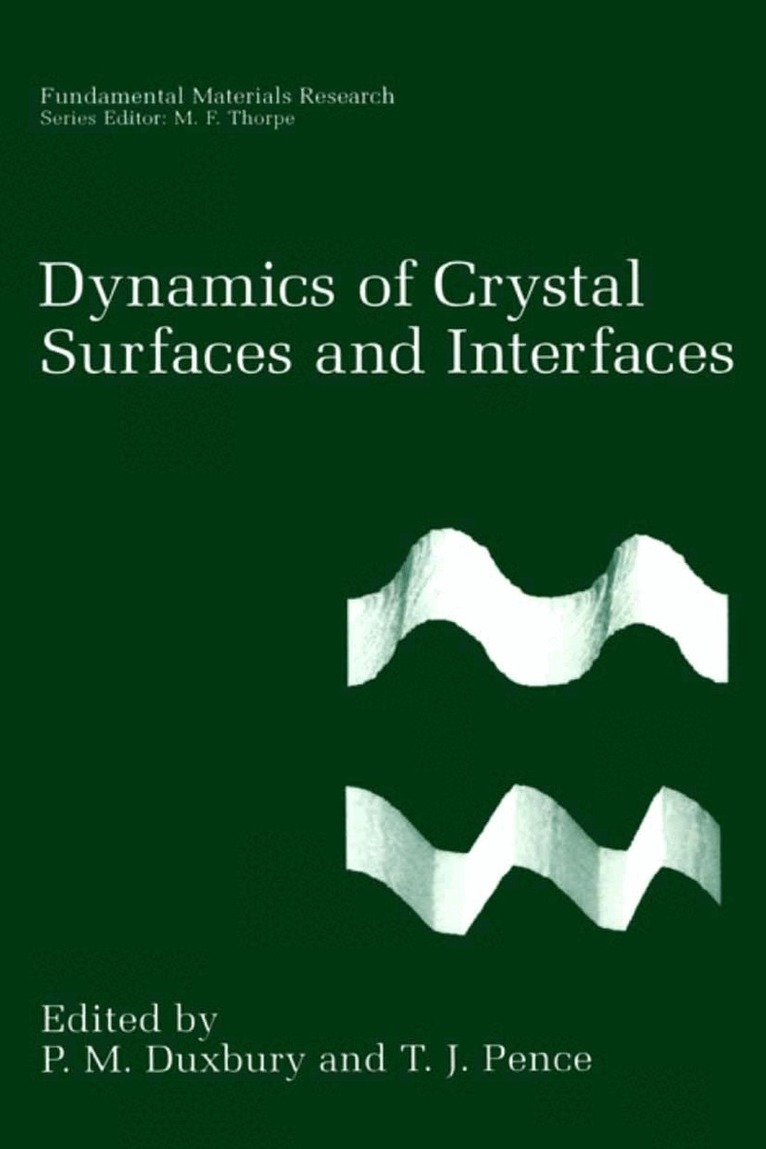
This series of books, which is published at the rate of about one per year, addresses fundamental problems in materials science. The contents cover a broad range of topics from small clusters of atoms to engineering materials and involve chemistry, physics, and engineering, with length scales ranging from Ångstroms up to millimeters. The emphasis is on basic science rather than on applications. Each book focuses on a single area of current interest and brings together leading experts to give an up-to-date discussion of their work and the work of others. Each article contains enough references that the interested reader can access the relevant literature. Thanks are given to the Center for Fundamental Materials Research at Michigan State University for supporting this series. M. F. Thorpe, Series Editor E-mail: thorpe@pa. msu. edu v PREFACE th th During the period 4 -8 August 1996, a conference with the same title as this book was held in Traverse City, Michigan. That conference was organized as a sequel to an interesting and successful WEM workshop in a similar area run by Profs. Hans Bonzel and Bill Mullins in May 1995. This book contains papers presented at the Traverse City conference. The book focuses on: atomic processes, step structure and dynamics; and their effect on surface and interface structures and on the relaxation kinetics of larger leng- scale nonequilibrium morphologies.
2 311 kr
Skickas inom 10-15 vardagar
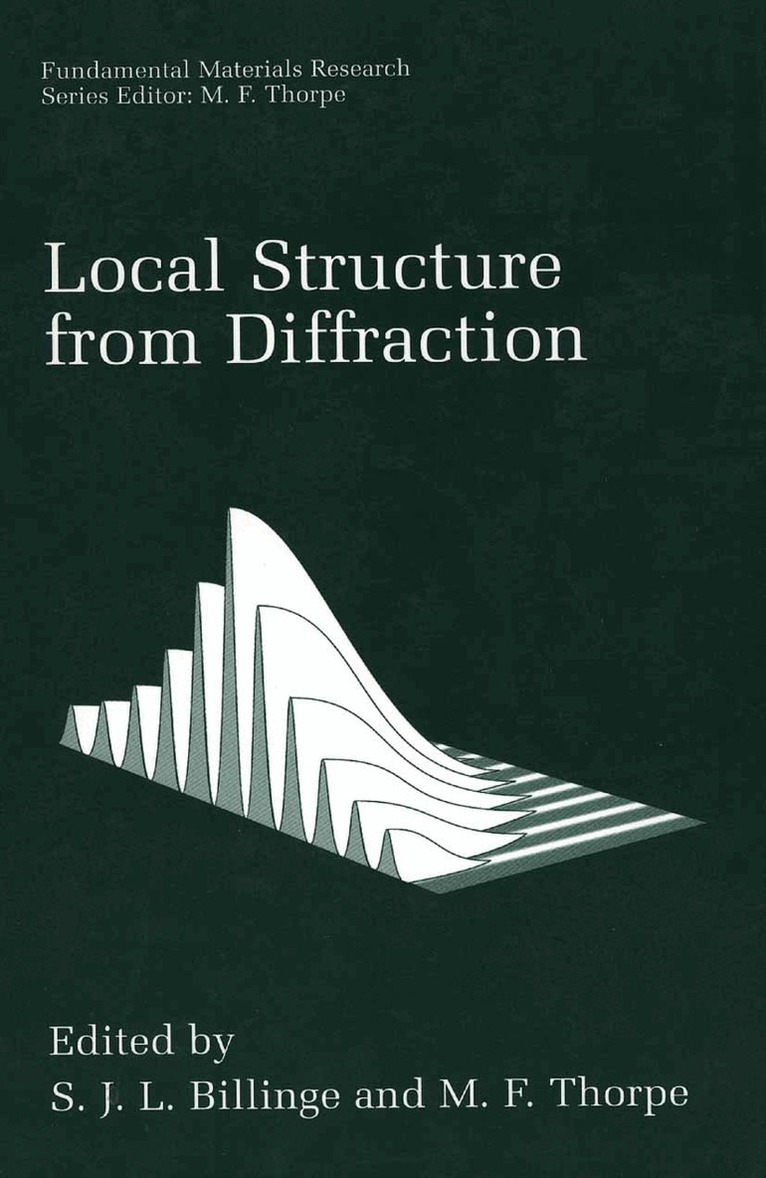
This series of books, which is published at the rate of about one per year, addresses fundamental problems in materials science. The contents cover a broad range of topics from small clusters of atoms to engineering materials and involve chemistry, physics, materials science and engineering, with length scales ranging from Ångstroms up to millimeters. The emphasis is on basic science rather than on applications. Each book focuses on a single area of current interest and brings together leading experts to give an up-to-date discussion of their work and the work of others. Each article contains enough references that the interested reader can access the relevant literature. Thanks are given to the Center for Fundamental Materials Research at Michigan State University for supporting this series. M.F. Thorpe, Series Editor E-mail: thorpe @ pa.msu.edu East Lansing, Michigan PREFACE One of the most challenging problems in the study of structure is to characterize the atomic short-range order in materials. Long-range order can be determined with a high degree of accuracy by analyzing Bragg peak positions and intensities in data from single crystals or powders. However, information about short-range order is contained in the diffuse scattering intensity. This is difficult to analyze because it is low in absolute intensity (though the integrated intensity may be significant) and widely spread in reciprocal space.
2 101 kr
Skickas inom 10-15 vardagar
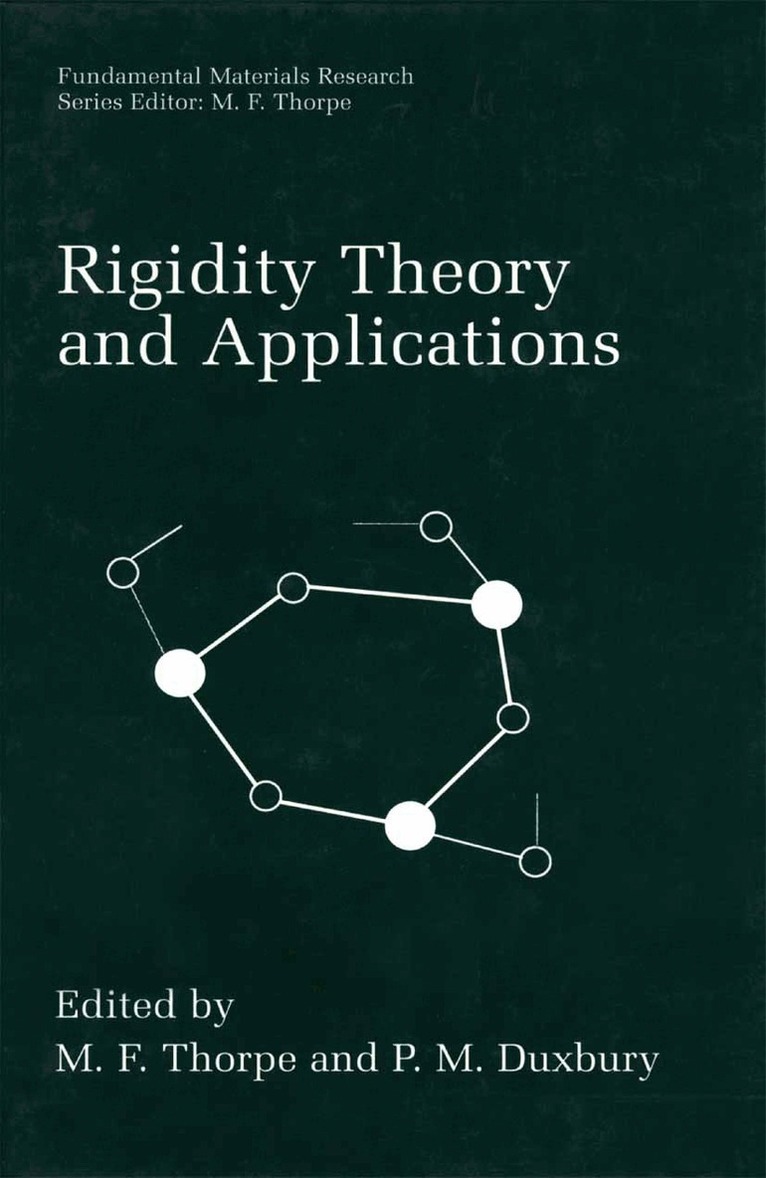
Although rigidity has been studied since the time of Lagrange (1788) and Maxwell (1864), it is only in the last 25 years that it has begun to find applications in the basic sciences. The modern era starts with Laman (1970), who made the subject rigorous in two dimensions, followed by the development of computer algorithms that can test over a million sites in seconds and find the rigid regions, and the associated pivots, leading to many applications. This workshop was organized to bring together leading researchers studying the underlying theory, and to explore the various areas of science where applications of these ideas are being implemented.
1 578 kr
Skickas inom 10-15 vardagar
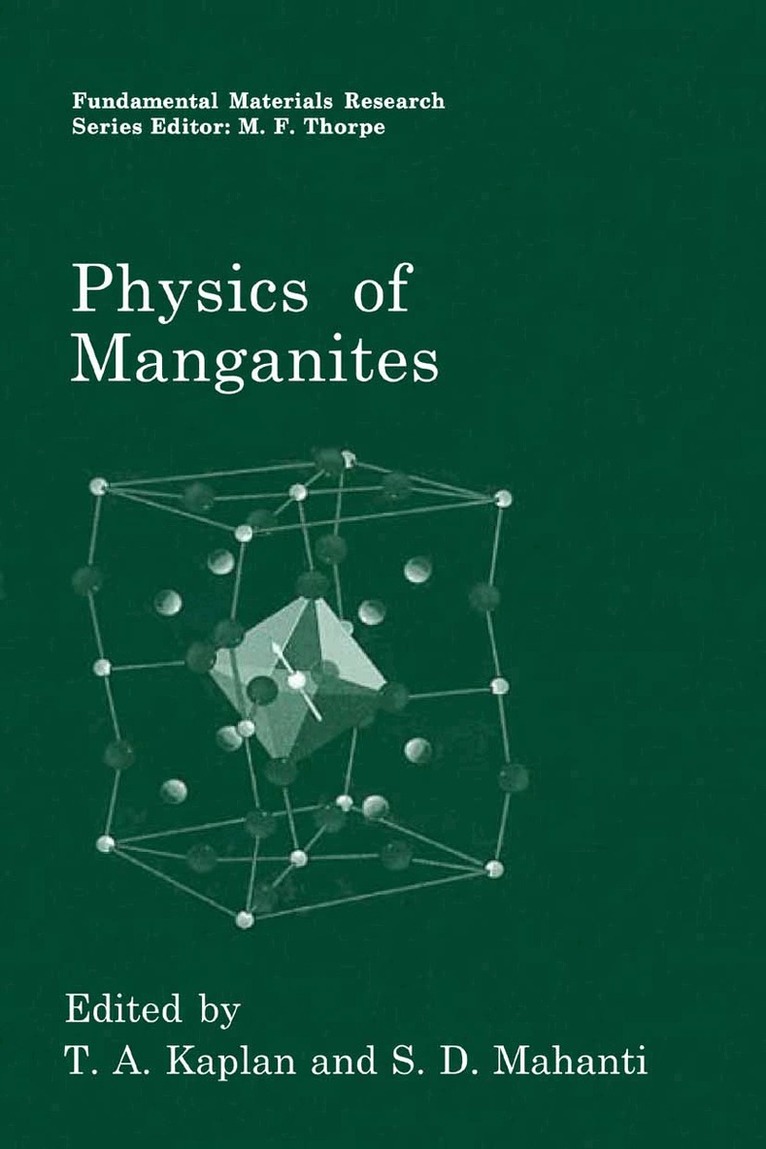
This text contains articles, both experimental and theoretical, by leading researchers on various aspects of doped manganites. They cover structural, optical, magnetic and transport properties. Doped manganites are not only important for potential applications because of their "colossal" magnetoresistance, but are fascinating systems to study because of strong coupling between charge, spin and orbital degrees of freedom associated with Mn ions.
Phase Transitions and Self-Organization in Electronic and Molecular Networks
Inbunden, Engelska, 2001
1 578 kr
Skickas inom 10-15 vardagar
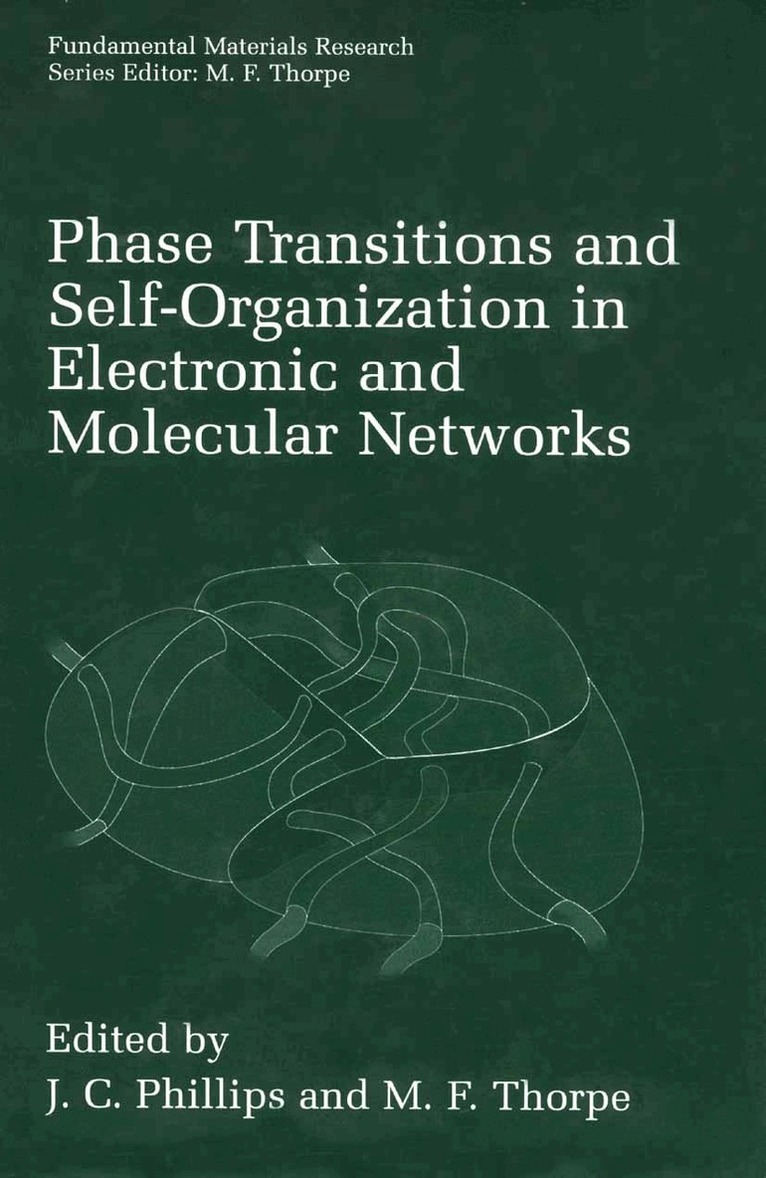
Advances in nanoscale science show that the properties of many materials are dominated by internal structures. In molecular cases, such as window glass and proteins, these internal structures obviously have a network character. However, in many partly disordered electronic materials, almost all attempts at understanding are based on traditional continuum models. This volume focuses first on the phase diagrams and phase transitions of materials known to be composed of molecular networks. These phase properties characteristically contain remarkable features, such as intermediate phases that lead to reversibility windows in glass transitions as functions of composition. These features arise as a result of self-organization of the internal structures of the intermediate phases. In the protein case, this self-organization is the basis for protein folding. The second focus is on partly disordered electronic materials whose phase properties exhibit the same remarkable features. In fact, the phenomenon of high temperature superconductivity, discovered by Bednorz and Mueller in 1986, and now the subject of 75,000 research papers, also arises from such an intermediate phase.More recently discovered electronic phenomena, such as giant magnetoresistance, also are made possible only by the existence of such special phases. This book gives an overview of the methods and results obtained so far by studying the characteristics and properties of nanoscale self-organized networks. It demonstrates the universality of the network approach over a range of disciplines, from protein folding to the newest electronic materials.
1 578 kr
Skickas inom 10-15 vardagar
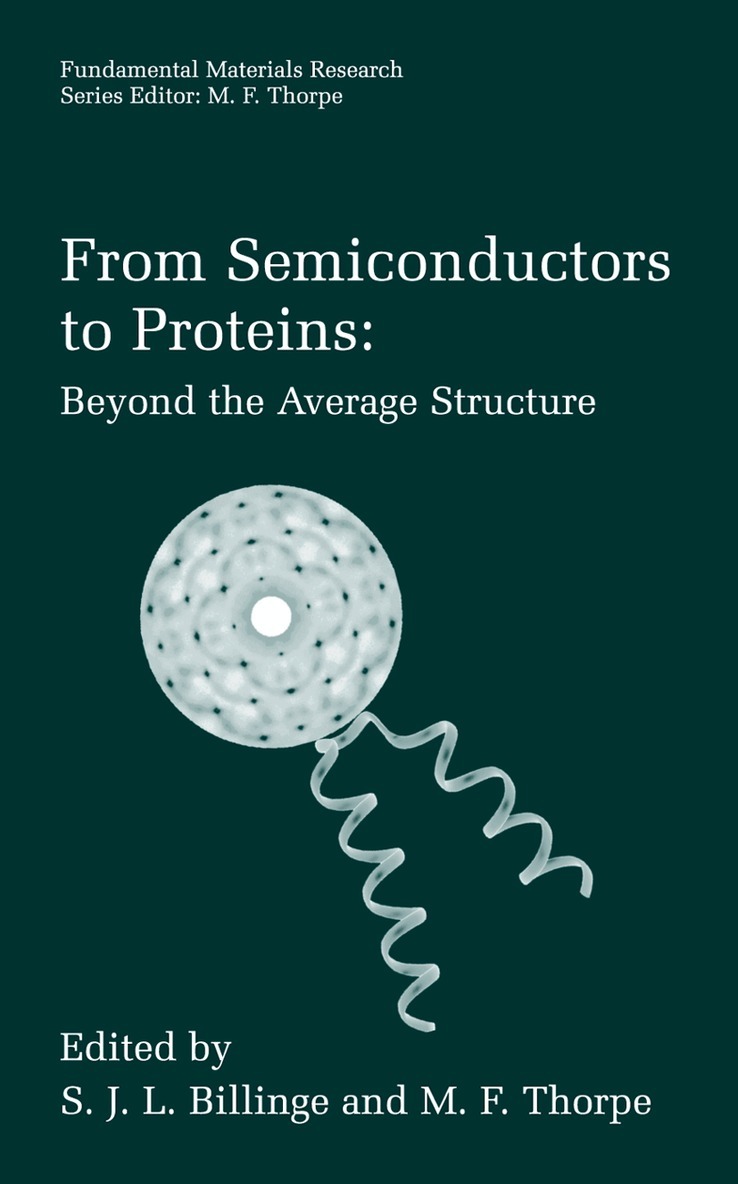
This workshop brought together researchers from materials science, physics, chemistry and biochemistry with interests in determining the structure of substances beyond their average crystal structure. Materials where this is important range from semiconductor alloys to proteins in solution. It featured pedagogical talks on the analysis of diffuse scattering from single crystals and powders, XAFS, NMR, small angle scattering and other techniques which reveal additional information about materials beyond that obtained by Bragg analysis. Theory plays a special role in such studies because of the difficulty of extracting and interpreting information from these techniques.
Chemistry, Physics, and Materials Science of Thermoelectric Materials
Beyond Bismuth Telluride
Inbunden, Engelska, 2003
1 578 kr
Skickas inom 10-15 vardagar
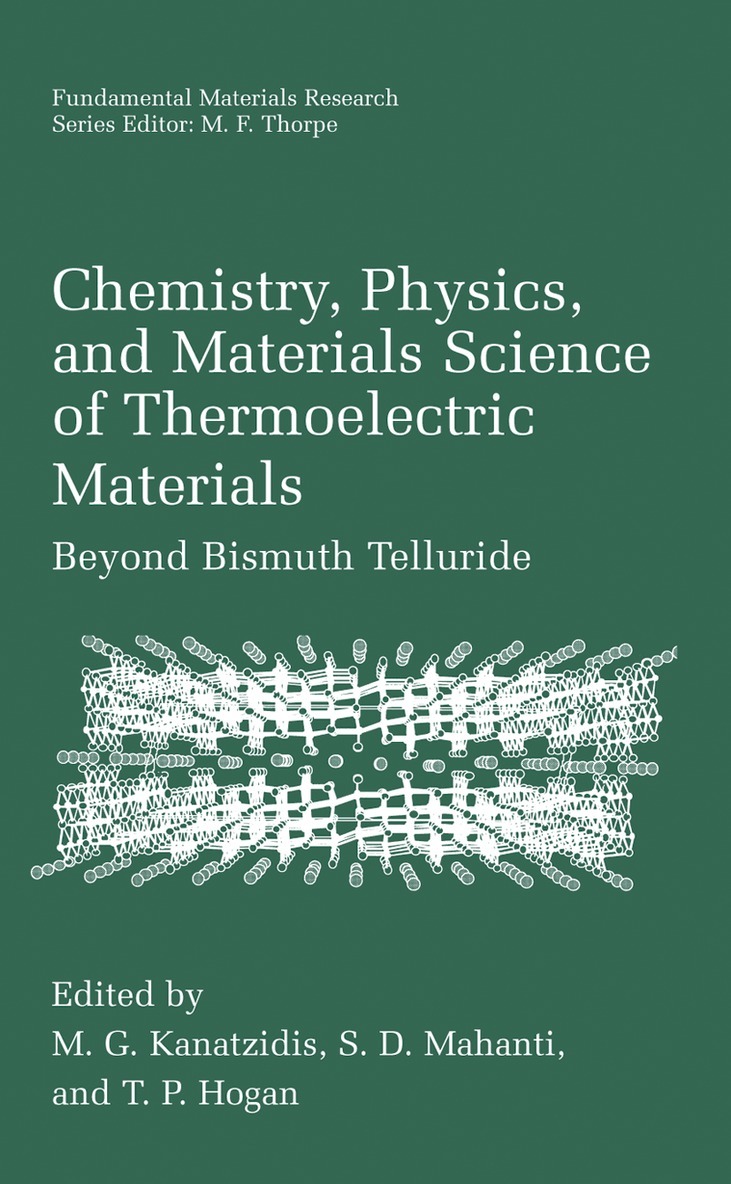
This seriesofbooks, which is publishedattherateofaboutoneper year, addresses fundamental problems in materialsscience.Thecontents coverabroadrangeoftopicsfromsmallclustersofatomstoengineering materials and involve chemistry, physics, materials science, and engineering,withlengthscalesrangingfromAngstromsuptomillimeters. Theemphasis is on basic scienceratherthan on applications. Each book focuses on a single areaofcurrent interest and brings together leading experts to give an up-to-date discussion oftheir work and the workof others. Each articlecontainsenough references thattheinterestedreader can access the relevant literature. Thanks are given to the Center for Fundamental Materials Research at Michigan State University for supportingthisseries. M.F.Thorpe,SeriesEditor E-mail:thorpe@pa.msu.edu EastLansing,Michigan,November2002 v PREFACE ThisvolumerecordsinvitedlecturesgivenattheNewThermoelectric(TE)Materials Workshopheld inTraverseCity,MichiganfromAugust17-21,2002.Thethemeofthe workshop was Chemistry, PhysicsandMaterials ScienceofThermoelectric Materials: Beyond Bismuth Telluride. The objective of this symposium was threefold.First, to examine and assess the ability of solid state chemistry to produce new generation materials for TE applications. Second, to rationalize and predict the charge and heat transportpropertiesofpotentialcandidatesandhypotheticalsystemsthroughsolidstate theoryandexperiment.Third,toidentifyandprioritizeresearchneededtoreachvarious levelsofrequirementsintermsofZTandtemperature.Theseobjectiveswereaddressed by a series of invited talks and discussions by leading experts from academia, governmentlaboratories,andindustry. Thereweretwenty-twoinvitedandeightposterpresentations inthe workshop.Out ofthese,sixteeninvitedpresentationsarerepresentedinthisvolume.Theycoverawide range of subjects, starting from synthesis (based on different strategies) and characterizationofnovel materials to acareful studyoftheir transport properties and electronicstructure.Topicsaddressingtheissueofmakingnew materialsare: synthetic search for new materials (di Salvo et aI.) and synthetic strategies based on phase homologies (Kanatzidis). The different classes of materials covered are: bismuth nanowires (Dresselhausetal.), unconventional high-temperaturethermoelectrics, boron carbides (Aselage et aI.), layered cobalt oxides (Fujii et aI.), early transition metal antimonides(KleinkeetaI.),skutterudites(Uher),andclathratethermoelectrics(Nolas).
2 311 kr
Skickas inom 10-15 vardagar
This series of books, which is published at the rate of about one per year, addresses fundamental problems in materials science. The contents cover a broad range of topics from small clusters of atoms to engineering materials and involve chemistry, physics, materials science and engineering, with length scales ranging from Ångstroms up to millimeters. The emphasis is on basic science rather than on applications. Each book focuses on a single area of current interest and brings together leading experts to give an up-to-date discussion of their work and the work of others. Each article contains enough references that the interested reader can access the relevant literature. Thanks are given to the Center for Fundamental Materials Research at Michigan State University for supporting this series. M.F. Thorpe, Series Editor E-mail: thorpe @ pa.msu.edu East Lansing, Michigan PREFACE One of the most challenging problems in the study of structure is to characterize the atomic short-range order in materials. Long-range order can be determined with a high degree of accuracy by analyzing Bragg peak positions and intensities in data from single crystals or powders. However, information about short-range order is contained in the diffuse scattering intensity. This is difficult to analyze because it is low in absolute intensity (though the integrated intensity may be significant) and widely spread in reciprocal space.
1 578 kr
Skickas inom 10-15 vardagar
This book contains articles, both experimental and theoretical, by leading researchers on various aspects of doped manganites. They cover structural, optical, magnetic, and transport properties. Doped manganites are not only important for potential applications because of their 'colossal' magnetoresistance, but are extremely fascinating systems to study because of strong coupling between charge, spin, and orbital degrees of freedom associated with Mn ions.
Chemistry, Physics, and Materials Science of Thermoelectric Materials
Beyond Bismuth Telluride
Häftad, Engelska, 2012
1 578 kr
Skickas inom 10-15 vardagar
This seriesofbooks, which is publishedattherateofaboutoneper year, addresses fundamental problems in materialsscience.Thecontents coverabroadrangeoftopicsfromsmallclustersofatomstoengineering materials and involve chemistry, physics, materials science, and engineering,withlengthscalesrangingfromAngstromsuptomillimeters. Theemphasis is on basic scienceratherthan on applications. Each book focuses on a single areaofcurrent interest and brings together leading experts to give an up-to-date discussion oftheir work and the workof others. Each articlecontainsenough references thattheinterestedreader can access the relevant literature. Thanks are given to the Center for Fundamental Materials Research at Michigan State University for supportingthisseries. M.F.Thorpe,SeriesEditor E-mail:thorpe@pa.msu.edu EastLansing,Michigan,November2002 v PREFACE ThisvolumerecordsinvitedlecturesgivenattheNewThermoelectric(TE)Materials Workshopheld inTraverseCity,MichiganfromAugust17-21,2002.Thethemeofthe workshop was Chemistry, PhysicsandMaterials ScienceofThermoelectric Materials: Beyond Bismuth Telluride. The objective of this symposium was threefold.First, to examine and assess the ability of solid state chemistry to produce new generation materials for TE applications. Second, to rationalize and predict the charge and heat transportpropertiesofpotentialcandidatesandhypotheticalsystemsthroughsolidstate theoryandexperiment.Third,toidentifyandprioritizeresearchneededtoreachvarious levelsofrequirementsintermsofZTandtemperature.Theseobjectiveswereaddressed by a series of invited talks and discussions by leading experts from academia, governmentlaboratories,andindustry. Thereweretwenty-twoinvitedandeightposterpresentations inthe workshop.Out ofthese,sixteeninvitedpresentationsarerepresentedinthisvolume.Theycoverawide range of subjects, starting from synthesis (based on different strategies) and characterizationofnovel materials to acareful studyoftheir transport properties and electronicstructure.Topicsaddressingtheissueofmakingnew materialsare: synthetic search for new materials (di Salvo et aI.) and synthetic strategies based on phase homologies (Kanatzidis). The different classes of materials covered are: bismuth nanowires (Dresselhausetal.), unconventional high-temperaturethermoelectrics, boron carbides (Aselage et aI.), layered cobalt oxides (Fujii et aI.), early transition metal antimonides(KleinkeetaI.),skutterudites(Uher),andclathratethermoelectrics(Nolas).
1 578 kr
Skickas inom 10-15 vardagar
This series of books, which is published at the rate of about one per year, addresses fundamental problems in materials science. The contents cover a broad range of topics from small clusters of atoms to engineering materials and involve chemistry, physics, materials science, and engineering, with length scales ranging from Angstroms up to millimeters. The emphasis is on basic science rather than on applications. Each book focuses on a single area of current interest and brings together leading experts to give an up-to-date discussion of their work and the work of others. Each article contains enough references that the interested reader can access the relevant literature. Thanks are given to the Center for Fundamental Materials Research at Michigan State University for supporting this series. M.F. Thorpe, Series Editor E-mail: thorpe@pa.msu.edu East Lansing, Michigan, November 200 I v PREFACE The study of the atomic structure of crystalline materials began at the beginning of the twentieth century with the discovery by Max von Laue and by W.H. and W.L. Bragg that crystals diffract x-rays. At that time, even the existence of atoms was controversial.
536 kr
Skickas inom 10-15 vardagar
Proceedings of a Summer School at Michigan State University held in East Lansing, Michigan, July 17-19, 1994
536 kr
Skickas inom 10-15 vardagar
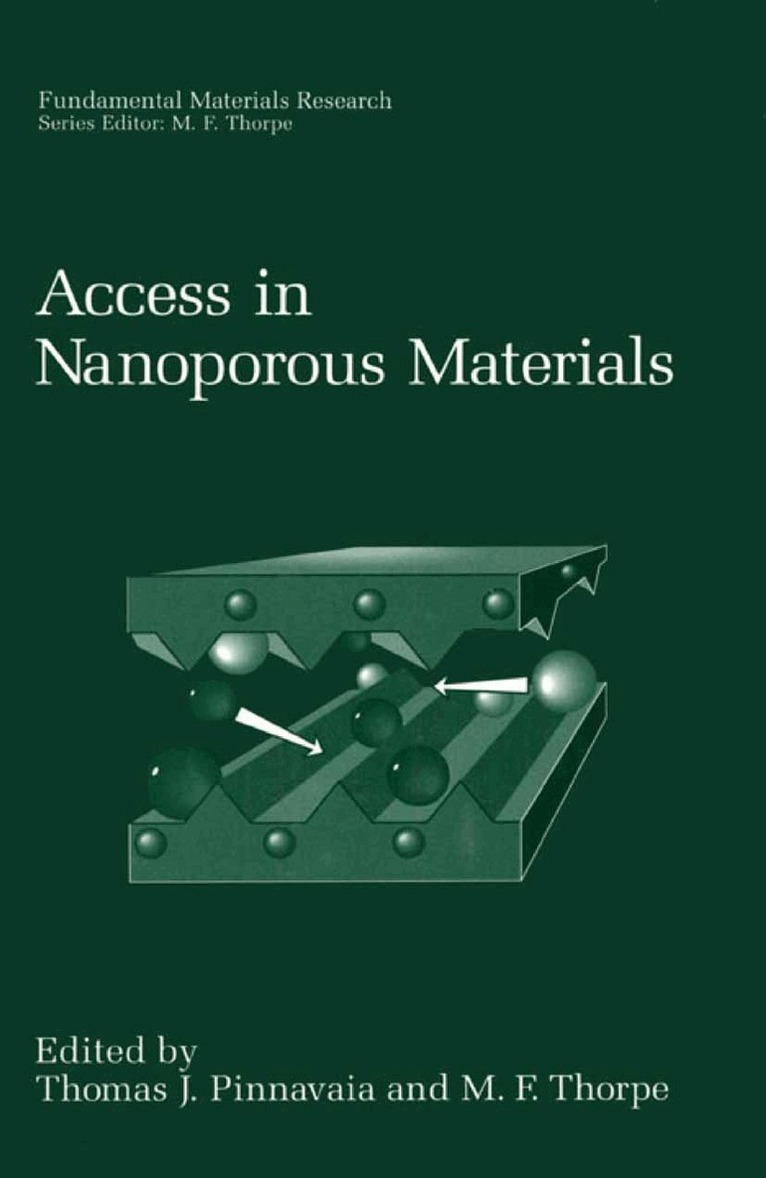
This series of books, which is published at the rate of about one per year, addresses fundamental problems in materials science. The contents cover a broad range of topics from small clusters of atoms to engineering materials and involve chemistry, physics, and engineering, with length scales ranging from Ångstromsup to millimeters. The emphasis is on basic science rather than on applications. Each book focuses on a single area ofcurrent interest and brings together leading experts to give an up-to-date discussion of their work and the work ofothers. Each article contains enough references that the interested reader can accesstherelevant literature. Thanks aregiven to the Center forFundamental Materials Research atMichigan State University forsupportingthis series. M.F. Thorpe, Series Editor E-mail: thorpe@pa.msu.edu EastLansing,Michigan, September, 1995 PREFACE This book records selected papers given at an interdisciplinary Symposium on Access in Nanoporous Materials held in Lansing, Michigan, on June 7-9, 1995. Broad interest in the synthesis of ordered materials with pore sizes in the 1.0-10 nm range was clearly manifested in the 64 invited and contributed papers presented by workers in the formal fields of chemistry, physics, and engineering. The intent of the symposium was to bring together a small number ofleading researchers within complementary disciplines to share in the diversity of approaches to nanoporous materials synthesis and characterization.
1 578 kr
Skickas inom 10-15 vardagar
This series of books, which is published at the rate of about one per year, addresses fundamental problems in materials science. The contents cover a broad range of topics from small clusters of atoms to engineering materials and involve chemistry, physics, and engineering, with length scales ranging from Ångstroms up to millimeters. The emphasis is on basic science rather than on applications. Each book focuses on a single area of current interest and brings together leading experts to give an up-to-date discussion of their work and the work of others. Each article contains enough references that the interested reader can access the relevant literature. Thanks are given to the Center for Fundamental Materials Research at Michigan State University for supporting this series. M. F. Thorpe, Series Editor E-mail: thorpe@pa. msu. edu v PREFACE th th During the period 4 -8 August 1996, a conference with the same title as this book was held in Traverse City, Michigan. That conference was organized as a sequel to an interesting and successful WEM workshop in a similar area run by Profs. Hans Bonzel and Bill Mullins in May 1995. This book contains papers presented at the Traverse City conference. The book focuses on: atomic processes, step structure and dynamics; and their effect on surface and interface structures and on the relaxation kinetics of larger leng- scale nonequilibrium morphologies.
2 311 kr
Skickas inom 10-15 vardagar
Although rigidity has been studied since the time of Lagrange (1788) and Maxwell (1864), it is only in the last twenty-five years that it has begun to find applications in the basic sciences. The modern era starts with Laman (1970), who made the subject rigorous in two dimensions, followed by the development of computer algorithms that can test over a million sites in seconds and find the rigid regions, and the associated pivots, leading to many applications. This workshop was organized to bring together leading researchers studying the underlying theory, and to explore the various areas of science where applications of these ideas are being implemented.
1 064 kr
Skickas inom 10-15 vardagar
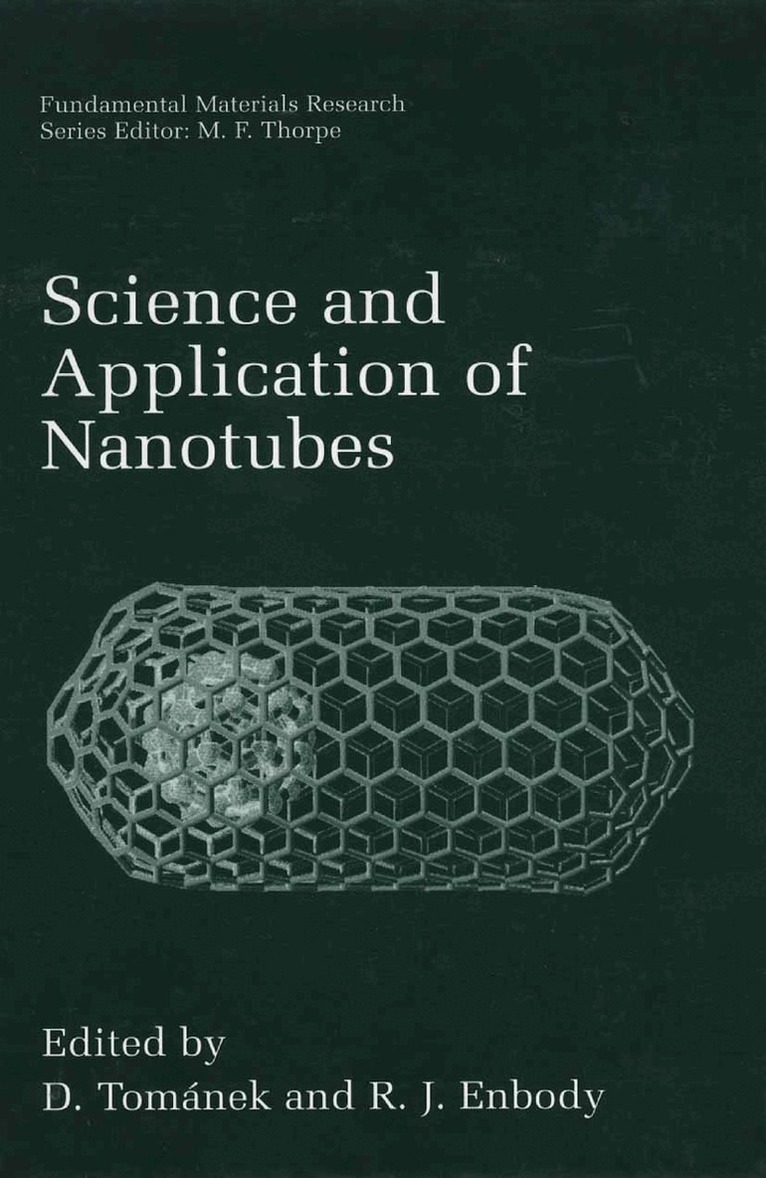
This series of books, which is published at the rate of about one per year, addresses fundamental problems in materials science. The contents cover a broad range of topics from small clusters of atoms to engineering materials and involve chemistry, physics, materials science, and engineering, with length scales ranging from Ångstroms up to millimeters. The emphasis is on basic science rather than on applications. Each book focuses on a single area of current interest and brings together leading experts to give an up-to-date discussion of their work and the work of others. Each article contains enough references that the interested reader can access the relevant literature. Thanks are given to the Center for Fundamental Materials Research at Michigan State University for supporting this series. M. F. Thorpe, Series Editor E-mail: thorpe@pa. msu. edu East Lansing, Michigan V PREFACE It is hard to believe that not quite ten years ago, namely in 1991, nanotubes of carbon were discovered by Sumio Iijima in deposits on the electrodes of the same carbon arc apparatus that was used to produce fullerenes such as the “buckyball”. Nanotubes of carbon or other materials, consisting ofhollow cylinders that are only a few nanometers in diameter, yet up to millimeters long, are amazing structures that self-assemble under extreme conditions. Their quasi-one-dimensional character and virtual absence of atomic defects give rise to a plethora of unusual phenomena.
1 578 kr
Skickas inom 10-15 vardagar
Advances in nanoscale science show that the properties of many materials are dominated by internal structures. In molecular cases, such as window glass and proteins, these internal structures obviously have a network character. However, in many partly disordered electronic materials, almost all attempts at understanding are based on traditional continuum models. This workshop focuses first on the phase diagrams and phase transitions of materials known to be composed of molecular networks. These phase properties characteristically contain remarkable features, such as intermediate phases that lead to reversibility windows in glass transitions as functions of composition. These features arise as a result of self-organization of the internal structures of the intermediate phases. In the protein case, this self-organization is the basis for protein folding. The second focus is on partly disordered electronic materials whose phase properties exhibit the same remarkable features. In fact, the phenomenon of High Temperature Superconductivity, discovered by Bednorz and Mueller in 1986, and now the subject of 75,000 research papers, also arises from such an intermediate phase. More recently discovered electronic phenomena, such as giant magnetoresistance, also are made possible only by the existence of such special phases. This book gives an overview of the methods and results obtained so far by studying the characteristics and properties of nanoscale self-organized networks. It demonstrates the universality of the network approach over a range of disciplines, from protein folding to the newest electronic materials.