Fundamentals of Project Management - Böcker
Visar alla böcker i serien Fundamentals of Project Management. Handla med fri frakt och snabb leverans.
9 produkter
9 produkter
2 176 kr
Skickas inom 10-15 vardagar
Managing Knowledge in Project Environments illustrates how knowledge management (KM) contributes to successful project work. KM is widely practised in project environments, but managers don’t always recognise the knowledge aspects of their work and tend to treat KM as a series of specific activities rather than a way of making project work produce better outcomes in different contexts. To overcome this challenge, the authors present KM as an integral part of project work and explain it using principles: KM fundamentals that apply anywhere. A series of context factors provides readers with a framework for understanding and thinking about what KM means for their context: their goals, their projects, their organisations and their working environments. Hidden KM is exposed, myths are debunked and practical guidance explains how to build KM into projects and portfolios. The approach is consistent with current guidance including the BS ISO management systems standard for KM and the seventh edition of APM’s ‘Body of knowledge’. The aim is to help project professionals, sponsors, PMO members and others who can make a difference manage knowledge more effectively in project environments. Managing Knowledge in Project Environments offers everyone involved in project work a definitive short guide to the subject.
511 kr
Skickas inom 10-15 vardagar
Without a governance structure, an organization runs the risk of conflicts and inconsistencies between the various means of achieving organizational goals, the processes and resources, causing costly inefficiencies that impact negatively on both smooth running and bottom line profitability. However, the frequency of projects failing to meet these corporate objectives has focused attention firmly on the process of project governance. In this book, Ralf Müller provides a well-researched framework to explain the different preferences organizations have in goal setting, along with the best-practices, roles and responsibilities related to governance tasks. This concise text is an important guide for project and programme managers, those managers concerned with corporate governance such as risk managers and internal auditors, project sponsors and project board members, as well as academics researching organizational and project performance. Project Governance is part of the Gower Fundamentals of Project Management Series. Practising professionals and project students will find in the fundamentals a definitive, shorthand guide to each of the main competencies associated with project management; a book that is authoritative, based on current research but immediately relevant and applicable.
509 kr
Tillfälligt slut
Projects are risky undertakings, and modern approaches to managing projects recognise the central need to manage the risk as an integral part of the project management discipline. Managing Risk in Projects places risk management in its proper context in the world of project management and beyond, and emphasises the central concepts that are essential in order to understand why and how risk management should be implemented on all projects of all types and sizes, in all industries and in all countries. The generic approach detailed by David Hillson is consistent with current international best practice and guidelines (including 'A Guide to the Project Management Body of Knowledge' (PMBoK) and the 'Project Risk Management Practice Standard' from PMI, the 'APM Body of Knowledge' and 'Project Risk Analysis & Management (PRAM) Guide' from APM, 'Management of Risk: Guidance for Practitioners' from OGC, and the forthcoming risk standard from ISO) but David also introduces key developments in the risk management field, ensuring readers are aware of recent thinking, focusing on their relevance to practical application. Throughout, the goal is to offer a concise description of current best practice in project risk management whilst introducing the latest relevant developments, to enable project managers, project sponsors and others responsible for managing risk in projects to do just that - effectively.
2 806 kr
Skickas inom 10-15 vardagar
Carrying out a project as planned is not a guarantee for success. Projects may fail because project management does not take the requirements, wishes and concerns of stakeholders sufficiently into account. Projects can only be successful through contributions from stakeholders. And it is the stakeholders that evaluate whether they find the project successful - an evaluation based on criteria that go beyond receiving the project deliverables. More often than not, the criteria are implicit and change during the project course. This is an enormous challenge for project managers. The route to better projects, say Pernille Eskerod and Anna Lund Jepsen, lies in finding ways to improve project stakeholder management. To manage stakeholders effectively, you need to know your stakeholders, their behaviours and attitudes towards the project. The authors give guidance on how to adopt an analytical and structured approach; how to document, store and retrieve your knowledge; how to plan your stakeholder interactions in advance; and how to make your plans explicit, at the very least internally. A well-conceived plan can prevent you from being carried away in theheat of the moment and help you spend your limited resources for stakeholder management in the best way. To make this plan, you need to agree on the objectives of your stakeholder strategy and ways to achieve them. Project Stakeholder Management offers tactics and tools founded on established marketing communications theory as well as strategic management for doing just that. This book is part of Gower‘s Fundamentals of Project Management Series.
2 046 kr
Tillfälligt slut
Projects are risky undertakings, and modern approaches to managing projects recognise the central need to manage the risk as an integral part of the project management discipline. Managing Risk in Projects places risk management in its proper context in the world of project management and beyond, and emphasises the central concepts that are essential in order to understand why and how risk management should be implemented on all projects of all types and sizes, in all industries and in all countries. The generic approach detailed by David Hillson is consistent with current international best practice and guidelines (including 'A Guide to the Project Management Body of Knowledge' (PMBoK) and the 'Project Risk Management Practice Standard' from PMI, the 'APM Body of Knowledge' and 'Project Risk Analysis & Management (PRAM) Guide' from APM, 'Management of Risk: Guidance for Practitioners' from OGC, and the forthcoming risk standard from ISO) but David also introduces key developments in the risk management field, ensuring readers are aware of recent thinking, focusing on their relevance to practical application. Throughout, the goal is to offer a concise description of current best practice in project risk management whilst introducing the latest relevant developments, to enable project managers, project sponsors and others responsible for managing risk in projects to do just that - effectively.
595 kr
Skickas inom 10-15 vardagar
Carrying out a project as planned is not a guarantee for success. Projects may fail because project management does not take the requirements, wishes and concerns of stakeholders sufficiently into account. Projects can only be successful through contributions from stakeholders. And it is the stakeholders that evaluate whether they find the project successful - an evaluation based on criteria that go beyond receiving the project deliverables. More often than not, the criteria are implicit and change during the project course. This is an enormous challenge for project managers. The route to better projects, say Pernille Eskerod and Anna Lund Jepsen, lies in finding ways to improve project stakeholder management. To manage stakeholders effectively, you need to know your stakeholders, their behaviours and attitudes towards the project. The authors give guidance on how to adopt an analytical and structured approach; how to document, store and retrieve your knowledge; how to plan your stakeholder interactions in advance; and how to make your plans explicit, at the very least internally. A well-conceived plan can prevent you from being carried away in the ’heat of the moment’ and help you spend your limited resources for stakeholder management in the best way. To make this plan, you need to agree on the objectives of your stakeholder strategy and ways to achieve them. Project Stakeholder Management offers tactics and tools founded on established marketing communications theory as well as strategic management for doing just that. This book is part of Gower’s Fundamentals of Project Management Series.
777 kr
Skickas inom 10-15 vardagar
Communication is a vital part of project management, and reports are one of the preferred vehicles for transmitting information to an intended internal or external audience. Reports are also part of the system of control and governance on projects, used to bring attention to issues and prompt action to improve project outcomes.There are countless ways of combining project information for consumption by stakeholders. This book discusses the purpose of project reports, and provides examples of the format, content, timing, and audience for various types. Using principles of stakeholders and risk management, it presents a rationale for communication plans, enabling appropriate reporting at the project, program, and portfolio level. The author also:Presents tangible experience and suggestions for developing project reports.Discusses project reports in context, as applicable to types of stakeholders and the project lifecycle.Identifies sources and types of data required for adequate reporting.Offers examples of report formats, graphics, and content.Reflects on typical challenges encountered with project reporting.It is essential reading for practitioners and students of project management, cost control, and accountancy.
721 kr
Skickas inom 10-15 vardagar
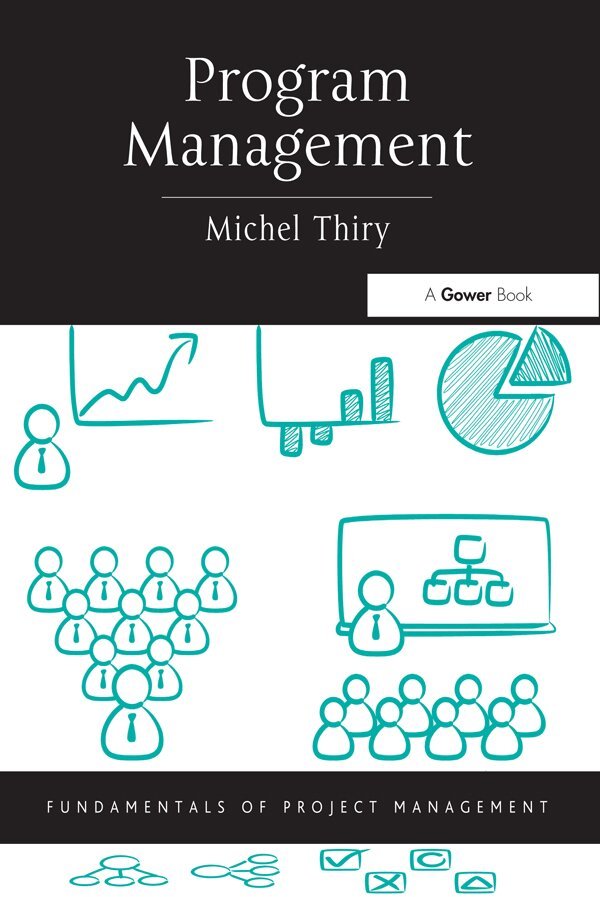
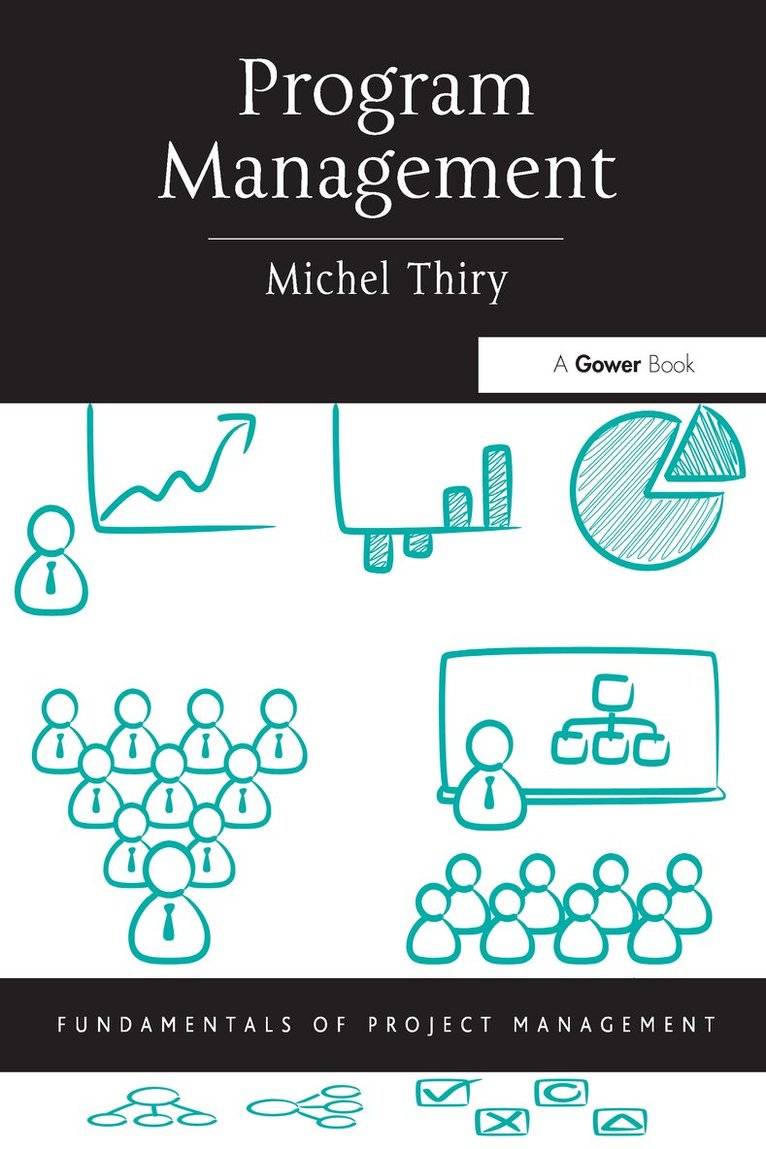
Program management (PgM) is fast developing as the essential link between strategy and projects and as a vehicle for organizational change. It offers the means to manage groups of projects with a common business purpose in an integrated and effective way. The Second Edition of Michel Thiry’s Program Management builds on the bestselling title first published in 2010. The heavily revised text reflects the latest program management guides and international standards and includes: a new section on agile management in programs; the author’s own program management maturity measure; a new section on change management, which is now integral to many programs. Michel has also reviewed and revised the program lifecycle to align with the more unified view of program management that has emerged since the book was first published. The result is an essential guide to program management that incorporates a robust theoretical framework, complemented by examples and advice from one of the world’s leading practitioners.
511 kr
Skickas inom 10-15 vardagar
Managing Knowledge in Project Environments illustrates how knowledge management (KM) contributes to successful project work. KM is widely practised in project environments, but managers don’t always recognise the knowledge aspects of their work and tend to treat KM as a series of specific activities rather than a way of making project work produce better outcomes in different contexts. To overcome this challenge, the authors present KM as an integral part of project work and explain it using principles: KM fundamentals that apply anywhere. A series of context factors provides readers with a framework for understanding and thinking about what KM means for their context: their goals, their projects, their organisations and their working environments. Hidden KM is exposed, myths are debunked and practical guidance explains how to build KM into projects and portfolios. The approach is consistent with current guidance including the BS ISO management systems standard for KM and the seventh edition of APM’s ‘Body of knowledge’. The aim is to help project professionals, sponsors, PMO members and others who can make a difference manage knowledge more effectively in project environments. Managing Knowledge in Project Environments offers everyone involved in project work a definitive short guide to the subject.