Gendering World History - Böcker
Visar alla böcker i serien Gendering World History. Handla med fri frakt och snabb leverans.
6 produkter
6 produkter
635 kr
Kommande
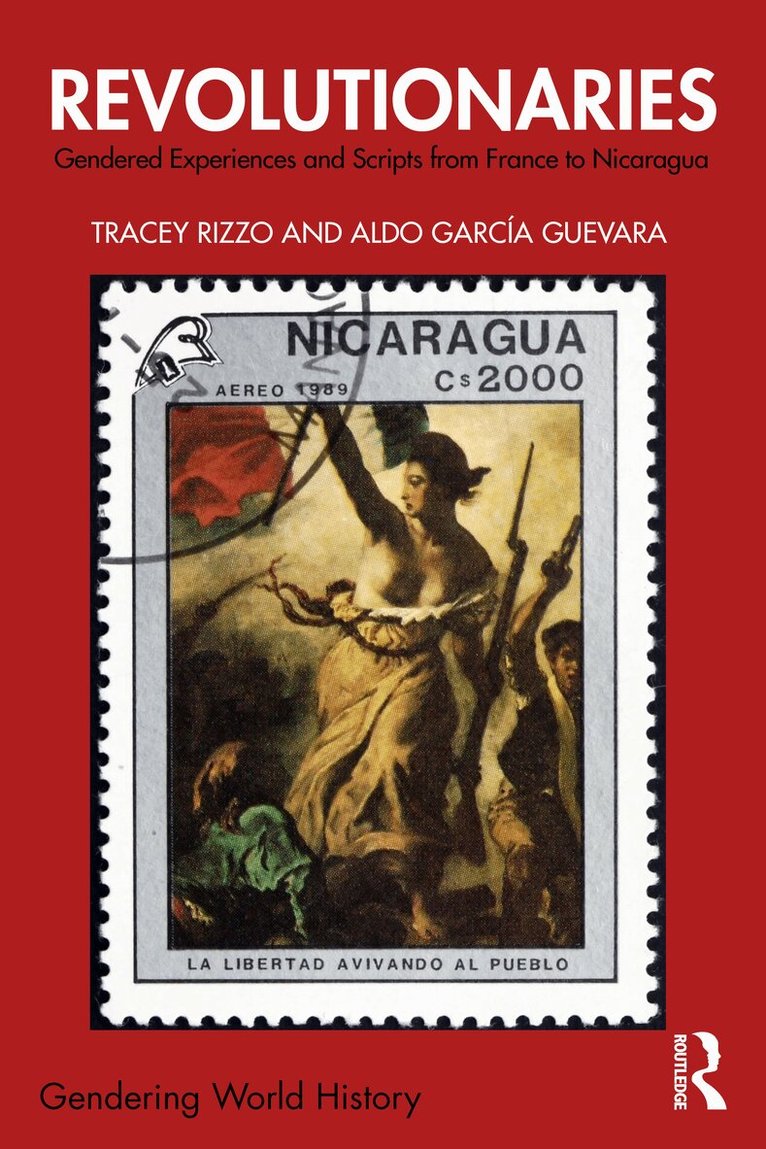
Revolutionaries traces the gendered experiences of revolution from the 18th century Atlantic Revolutions through the late 20th century.With an explanatory framework that focuses on the evolution of revolutionary ‘scripts,’ Revolutionaries synthesizes the latest micro-historical scholarship on gender and revolution into a survey of two centuries of world history. Because revolutionaries are the most self-aware of historical actors, they adapted the phrases, such as ‘all men are created equal’ and followed the phases – mobilization through victory and consolidation – across one revolution after another. For example, when Nicaraguans commemorated the bicentennial of the French Revolution in 1989--and their Revolution--by paying homage to “Liberty Leading the People” on a postage stamp, they precisely evoked this modern global revolutionary ‘script,’ one they had improved upon. While scholars have identified these phrases and stages, and compared revolutions across time and space, few have focused on gender. Although patriarchy was renovated over and over, when ‘great men’ consolidated power, revolutionaries also rose up again and again, with new tools, determined to widen political and economic rights for women and other excluded groups. Revolutionaries interrogates the great man script that leaves masculinity underexplored while sharing the stories of extraordinary and ordinary women and men and their gendered dreams.With vignettes, different global examples for each theme, and illustrations and photographs, this is the perfect guide for anyone wanting to find out about the gendered implications of revolutions.
2 325 kr
Kommande
Revolutionaries traces the gendered experiences of revolution from the 18th century Atlantic Revolutions through the late 20th century.With an explanatory framework that focuses on the evolution of revolutionary ‘scripts,’ Revolutionaries synthesizes the latest micro-historical scholarship on gender and revolution into a survey of two centuries of world history. Because revolutionaries are the most self-aware of historical actors, they adapted the phrases, such as ‘all men are created equal’ and followed the phases – mobilization through victory and consolidation – across one revolution after another. For example, when Nicaraguans commemorated the bicentennial of the French Revolution in 1989--and their Revolution--by paying homage to “Liberty Leading the People” on a postage stamp, they precisely evoked this modern global revolutionary ‘script,’ one they had improved upon. While scholars have identified these phrases and stages, and compared revolutions across time and space, few have focused on gender. Although patriarchy was renovated over and over, when ‘great men’ consolidated power, revolutionaries also rose up again and again, with new tools, determined to widen political and economic rights for women and other excluded groups. Revolutionaries interrogates the great man script that leaves masculinity underexplored while sharing the stories of extraordinary and ordinary women and men and their gendered dreams.With vignettes, different global examples for each theme, and illustrations and photographs, this is the perfect guide for anyone wanting to find out about the gendered implications of revolutions.
2 246 kr
Kommande
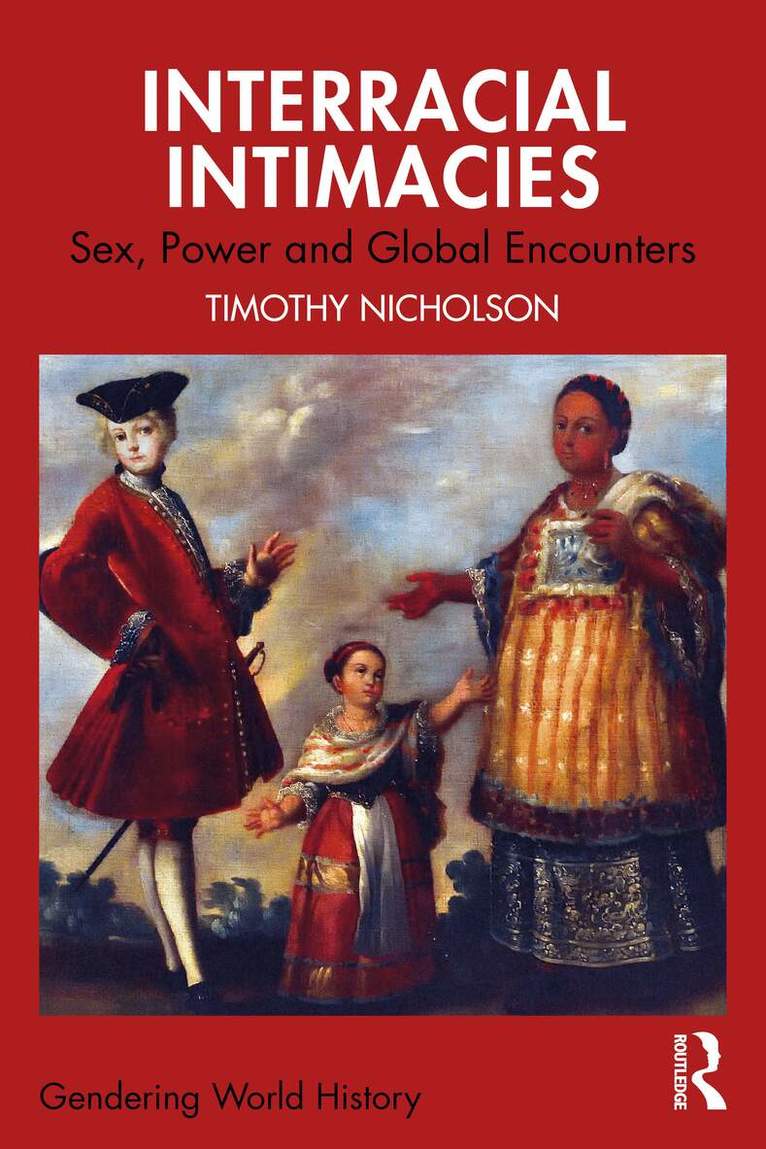
With a chronology that spans from 1500 to the present day, Interracial Intimacies centers relationships as a historical force in the making of the modern world, rethinking world history from the ground up, and illuminating how everyday relationships helped produce global hierarchies and how people shaped their own lives within them.The book moves from slave ships and battlefields to migrant neighbourhoods and courtrooms to show how relationships across racial, cultural, and imperial boundaries shaped systems of power, identity, and belonging. It highlights the intersection of social, political and cultural factors that worked to segregate people based on race and how the development of interracial sexual relationships worked to threaten this division. Through personal vignettes and vivid global case studies, the book shows that interracial relationships were never merely private affairs. They were sites where race, gender, sexuality, and empire were negotiated, enforced, and sometimes resisted, especially by women and marginalized peoples navigating deeply unequal worlds. The book argues that racial boundaries hardened alongside the rise of modern states, capitalism, and scientific racism in a global setting; as governments used marriage laws, segregation, and moral policing to regulate intimacy, interracial relationships became flashpoints for anxieties about national belonging.Written for advanced undergraduate students, Interracial Intimacies will be of interest to students of World History, Gender Studies, Race Studies, and Cultural Studies.
635 kr
Kommande
With a chronology that spans from 1500 to the present day, Interracial Intimacies centers relationships as a historical force in the making of the modern world, rethinking world history from the ground up, and illuminating how everyday relationships helped produce global hierarchies and how people shaped their own lives within them.The book moves from slave ships and battlefields to migrant neighbourhoods and courtrooms to show how relationships across racial, cultural, and imperial boundaries shaped systems of power, identity, and belonging. It highlights the intersection of social, political and cultural factors that worked to segregate people based on race and how the development of interracial sexual relationships worked to threaten this division. Through personal vignettes and vivid global case studies, the book shows that interracial relationships were never merely private affairs. They were sites where race, gender, sexuality, and empire were negotiated, enforced, and sometimes resisted, especially by women and marginalized peoples navigating deeply unequal worlds. The book argues that racial boundaries hardened alongside the rise of modern states, capitalism, and scientific racism in a global setting; as governments used marriage laws, segregation, and moral policing to regulate intimacy, interracial relationships became flashpoints for anxieties about national belonging.Written for advanced undergraduate students, Interracial Intimacies will be of interest to students of World History, Gender Studies, Race Studies, and Cultural Studies.
614 kr
Kommande
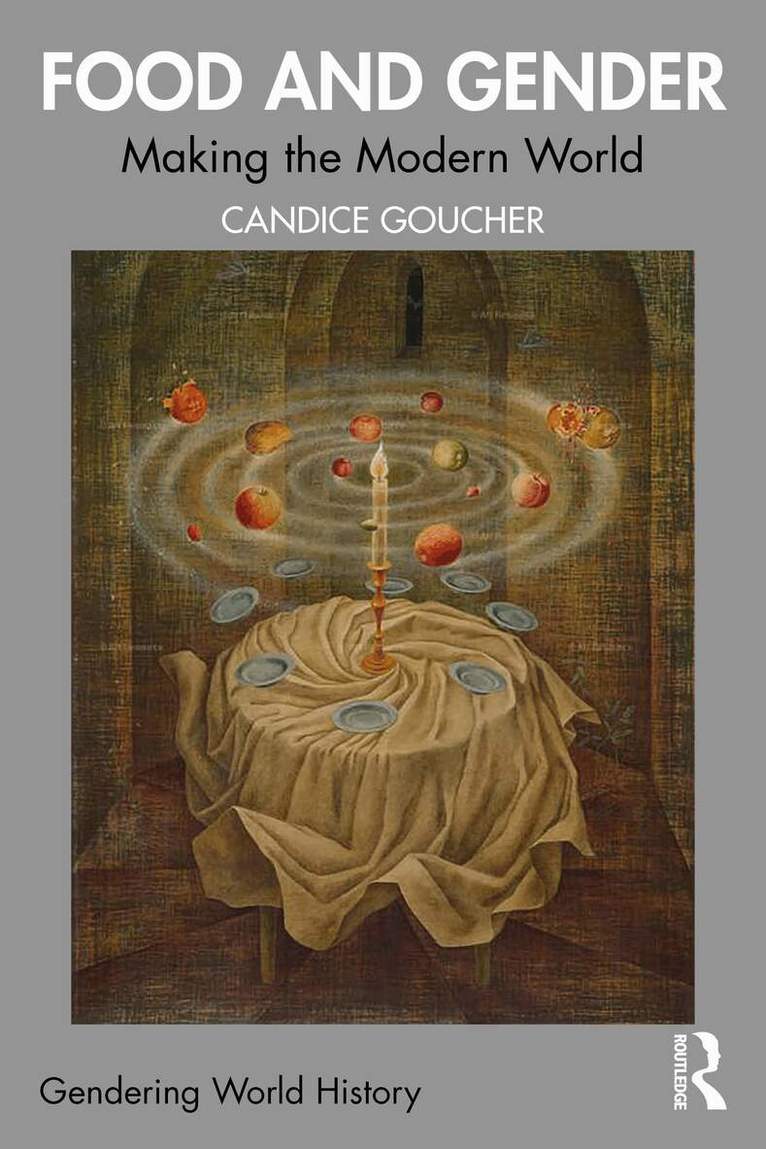
Food and Gender: Making the Modern World argues that food and gender sit at the center of human experience, and that using this lens shifts the markers of modernity away from traditional perspectives that emphasize war, political states, and the global economy, that exclude and marginalize women or that trivialize the study of foodways, to create a new periodization for modern world history.The volume emphasizes features that are usually sidelined, such as changes in household organization, home cooking, female labor, and the family, sexuality and childrearing as among the most powerful forces at the heart of modern history and centers the history of foodways within this. Taking a narrative that considers feminist perspectives as well as tracing the impact of "masculinities," the volume restores female agency to the "food in world history" story. Chapters trace themes that look at the embodied history of foodways, focusing on aspects such as the role of accumulation and exchange, desire and power, and revolution and conflict. They also address the impact of migration, technology, and "difference." Together these thematic explorations show how contemporary patterns of abundance and scarcity were created over time. Candice Goucher also shows how the relationships between gender and food have served as markers of cultural, racial, social, national, and sexual identities and thus reflect the differences and disparities that have shaped our common history. The book explores the major themes of world history and puts women, gender, and foodways at their center.With different global examples for each theme, and many illustrations and photographs, this is the perfect guide for anyone wanting to find out about the gendered implications of the history of food.
2 325 kr
Kommande
Food and Gender: Making the Modern World argues that food and gender sit at the center of human experience, and that using this lens shifts the markers of modernity away from traditional perspectives that emphasize war, political states, and the global economy, that exclude and marginalize women or that trivialize the study of foodways, to create a new periodization for modern world history.The volume emphasizes features that are usually sidelined, such as changes in household organization, home cooking, female labor, and the family, sexuality and childrearing as among the most powerful forces at the heart of modern history and centers the history of foodways within this. Taking a narrative that considers feminist perspectives as well as tracing the impact of "masculinities," the volume restores female agency to the "food in world history" story. Chapters trace themes that look at the embodied history of foodways, focusing on aspects such as the role of accumulation and exchange, desire and power, and revolution and conflict. They also address the impact of migration, technology, and "difference." Together these thematic explorations show how contemporary patterns of abundance and scarcity were created over time. Candice Goucher also shows how the relationships between gender and food have served as markers of cultural, racial, social, national, and sexual identities and thus reflect the differences and disparities that have shaped our common history. The book explores the major themes of world history and puts women, gender, and foodways at their center.With different global examples for each theme, and many illustrations and photographs, this is the perfect guide for anyone wanting to find out about the gendered implications of the history of food.