George H. Shriver Lecture Series in Religion in American History – serie
Visar alla böcker i serien George H. Shriver Lecture Series in Religion in American History. Handla med fri frakt och snabb leverans.
13 produkter
13 produkter
301 kr
Skickas inom 5-8 vardagar
For 350 years, Protestantism was the dominant religion in America—and its influence spilled over in many directions into the wider culture. Religious historian Martin E. Marty looks at the factors behind both the long period of Protestant ascendancy in America and the comparatively recent diffusion and diminution of its authority. Marty ranges across time, covering such things as the establishment of the Jamestown settlement in 1607, the 1955 publication of Will Herberg's landmark book Protestant-Catholic-Jew, and the current period of American ethnic and religious pluralism.For centuries, American Protestantism dominated in three main ways, says Marty: in the sheer numbers of its committed practitioners (spread across some two hundred denominations), in the Protestant leanings of nonadherents, and in the influence of the Protestant ethic in activities as diverse as business and art. To discover what is particularly “American” about Protestantism in this country, Marty looks at Protestant creencias, or beliefs, that complement or supplement pure doctrine. These include the notion of God as an agent of America’s destiny and the impact of the biblical credos of mission, stewardship, and vocation on innumerable nonreligious matters of daily life. Marty also discusses the vigencias, or binding (though unwritten) customs, of Protestantism. They include the tendencies to interpret matters of faith in market terms and to conflate biblical and enlightenment ideology into “civic faith.”Challenges to Protestant hegemony came and went over the centuries, says Marty, but never in such force and to such effect as in the twentieth century. Among other factors contributing to the rise of pluralism and to schisms between mainstreamers and Fundamentalists, Marty lists changes in immigration laws, U.S. Supreme Court decisions on school prayer, the women's movement, and Vatican II.Today, our Protean spirituality is the topic of everything from sermons to bumper stickers. All in all, this is good, reassures Marty, for to debate our spirituality is to sustain the life of a functioning, thinking, believing republic. Those who pine for some golden age of Protestantism are misled by nostalgia or resentment. The real work to be done by Protestants now is to serve, partner, and cooperate where they once managed, controlled, and directed.
332 kr
Skickas inom 5-8 vardagar
Few issues besides evolution have so strained Americans' professed tradition of tolerance. Few historians besides Pulitzer Prize winner Edward J. Larson have so perceptively chronicled evolution's divisive presence on the American scene. This slim volume reviews the key aspects, current and historical, of the creation-evolution debate in the United States.Larson discusses such topics as the transatlantic response to Darwinism, the American controversy over teaching evolution in public schools, and the religious views of American scientists. He recalls the theological qualms about evolution held by some leading scientists of Darwin's time. He looks at the 2006 Dover, Pennsylvania, court decision on teaching Intelligent Design and other cases leading back to the landmark 1925 Scopes trial. Drawing on surveys that Larson conducted, he discusses attitudes of American scientists toward the existence of God and the afterlife.By looking at the changing motivations and backgrounds of the stakeholders in the creation-evolution debate—clergy, scientists, lawmakers, educators, and others—Larson promotes a more nuanced view of the question than most of us have. This is no incidental benefit for Larson's readers; it is one of the book's driving purposes. If we cede the debate to those who would frame it simplistically rather than embrace its complexity, warns Larson, we will not advance beyond the naive regard of organized religion as the enemy of intellectual freedom or the equally myopic myth of the scientist as courageous loner willing to die for the truth.
Religion Enters the Academy
The Origins of the Scholarly Study of Religion in America
Inbunden, Engelska, 2011
518 kr
Skickas inom 5-8 vardagar
Religious studies—also known as comparative religion or history of religions—emerged as a field of study in colleges and universities on both sides of the Atlantic during the late nineteenth century. In Europe, as previous historians have demonstrated, the discipline grew from long-established traditions of university-based philological scholarship. But in the United States, James Turner argues, religious studies developed outside the academy.Until about 1820, Turner contends, even learned Americans showed little interest in non-European religions—a subject that had fascinated their counterparts in Europe since the end of the seventeenth century. Growing concerns about the status of Christianity generated American interest in comparing it to other great religions, and the resulting writings eventually produced the academic discipline of religious studies in U.S. universities. Fostered especially by learned Protestant ministers, this new discipline focused on canonical texts—the “bibles”—of other great world religions. This rather narrow approach provoked the philosopher and psychologist William James to challenge academic religious studies in 1902 with his celebrated and groundbreaking Varieties of Religious Experience.
Religion Enters the Academy
The Origins of the Scholarly Study of Religion in America
Häftad, Engelska, 2012
379 kr
Skickas inom 5-8 vardagar
Religious studies—also known as comparative religion or history of religions—emerged as a field of study in colleges and universities on both sides of the Atlantic during the late nineteenth century. In Europe, as previous historians have demonstrated, the discipline grew from long-established traditions of university-based philological scholarship. But in the United States, James Turner argues, religious studies developed outside the academy.Until about 1820, Turner contends, even learned Americans showed little interest in non-European religions—a subject that had fascinated their counterparts in Europe since the end of the seventeenth century. Growing concerns about the status of Christianity generated American interest in comparing it to other great religions, and the resulting writings eventually produced the academic discipline of religious studies in U.S. universities. Fostered especially by learned Protestant ministers, this new discipline focused on canonical texts—the “bibles”—of other great world religions. This rather narrow approach provoked the philosopher and psychologist William James to challenge academic religious studies in 1902 with his celebrated and groundbreaking Varieties of Religious Experience.
299 kr
Skickas inom 5-8 vardagar
The Faiths of the Founding Fathers, an acclaimed look at the spiritual beliefs of such iconic Americans as Franklin, Washington, and Jefferson, established David L. Holmes as a measured voice in the heated debate over the new nation’s religious underpinnings. With the same judicious approach, Holmes now looks at the role of faith in the lives of the twelve presidents who have served since the end of World War II.Holmes examines not only the beliefs professed by each president but also the variety of possible influences on their religious faith, such as their upbringing, education, and the faith of their spouse. In each profile close observers such as clergy, family members, friends, and advisors recall churchgoing habits, notable displays of faith (or lack of it), and the influence of their faiths on policies concerning abortion, the death penalty, Israel, and other controversial issues.Whether discussing John F. Kennedy’s philandering and secularity or Richard Nixon’s betrayal of Billy Graham’s naïve trust during Watergate, Holmes includes telling and often colorful details not widely known or long forgotten. We are reminded, for instance, how Dwight Eisenhower tried to conceal the background of his parents in the Jehovah’s Witnesses and how the Reverend Cotesworth Lewis’s sermonizing to Lyndon Johnson on the Vietnam War was actually not a left- but a right-wing critique.National interest in the faiths of our presidents is as strong as ever, as shown by the media frenzy engendered by George W. Bush’s claim that Jesus was his favorite political philosopher or Barack Obama’s parting with his minister, the Reverend Jeremiah Wright. Holmes’s work adds depth, insight, and color to this important national topic.
332 kr
Skickas inom 5-8 vardagar
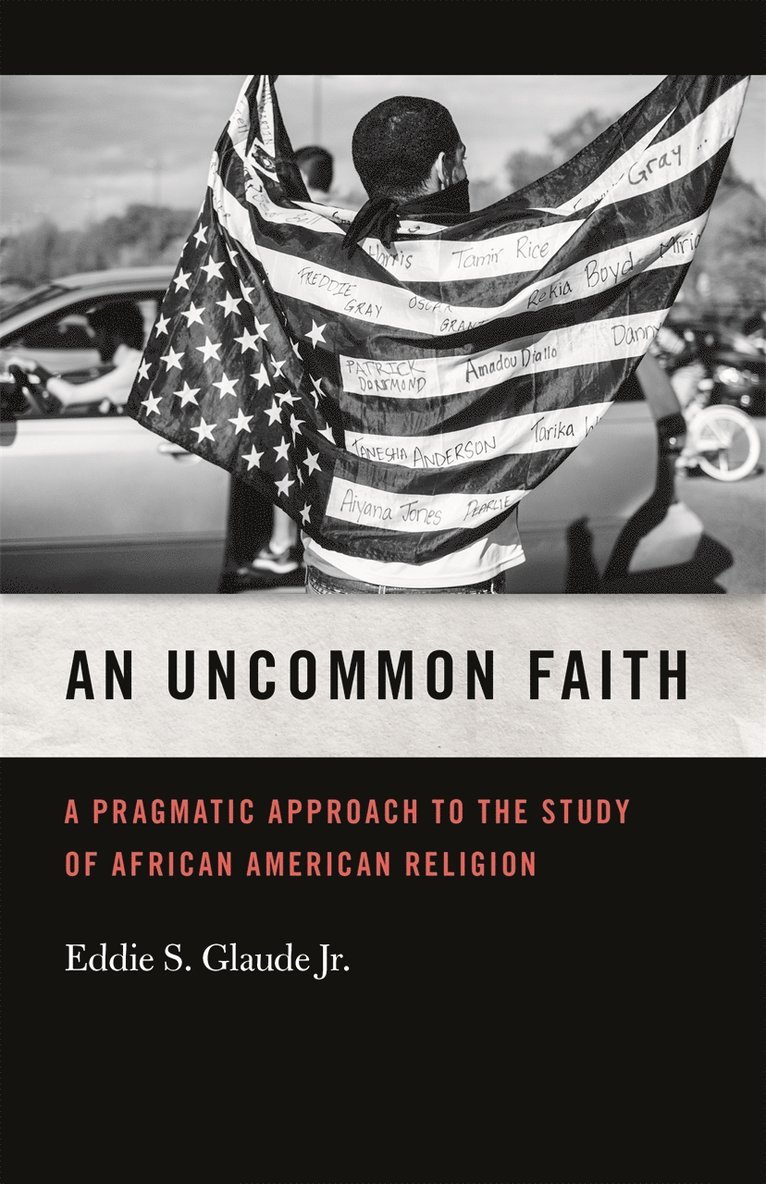
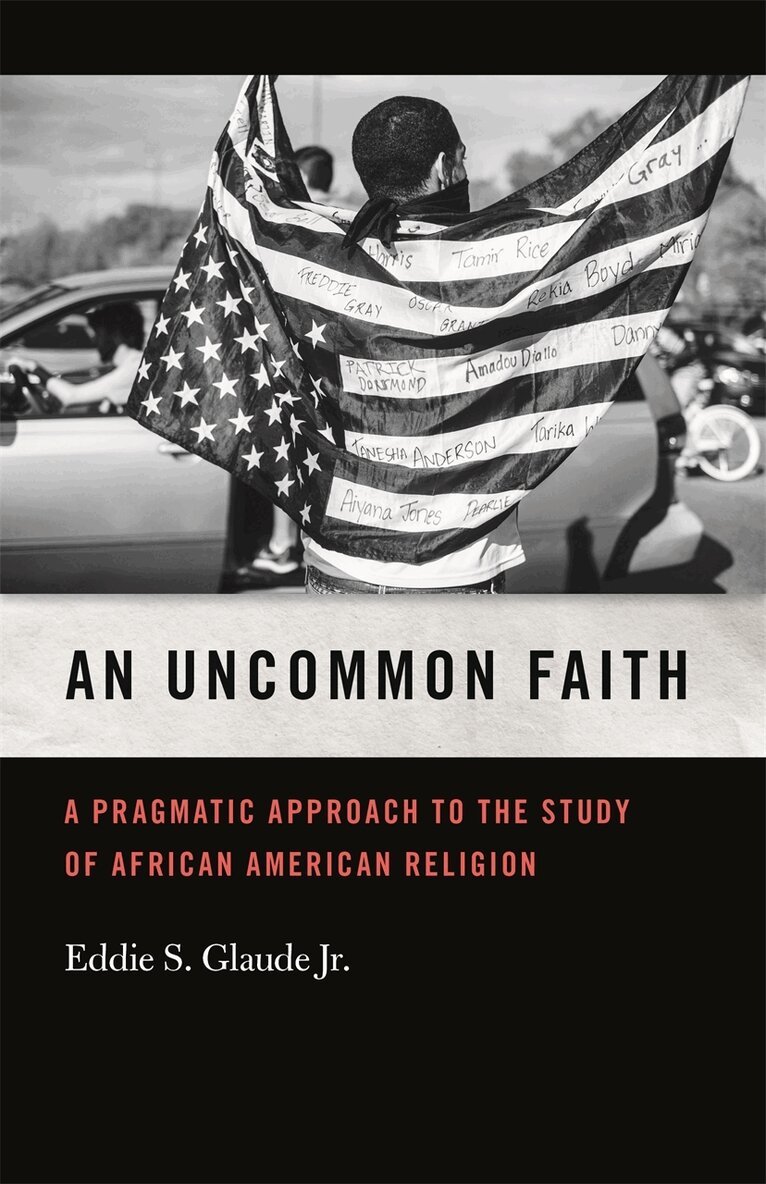
With An Uncommon Faith Eddie S. Glaude Jr. makes explicit his pragmatic approach to the study of African American religion. He insists that scholars take seriously what he calls black religious attitudes, that is, enduring and deep-seated dispositions tied to a transformative ideal that compel individuals to be otherwise—no matter the risk. This claim emerges as Glaude puts forward a rather idiosyncratic view of what the phrase “African American religion” offers within the context of a critically pragmatic approach to writing African American religious history.Ultimately, An Uncommon Faith reveals how pragmatism has shaped Glaude’s scholarship over the years, as well as his interpretation of black life in the United States. In the end, his analysis turns our attention to those “black souls” who engage in the arduous task of self-creation in a world that clings to the idea that white people matter more than others. It is a task, he argues, that requires an uncommon faith and deserves the close attention of scholars of African American religion.
Uncommon Faith
A Pragmatic Approach to the Study of African American Religion
Inbunden, Engelska, 2018
1 579 kr
Skickas inom 5-8 vardagar
With An Uncommon Faith Eddie S. Glaude Jr. makes explicit his pragmatic approach to the study of African American religion. He insists that scholars take seriously what he calls black religious attitudes, that is, enduring and deep-seated dispositions tied to a transformative ideal that compel individuals to be otherwise—no matter the risk. This claim emerges as Glaude puts forward a rather idiosyncratic view of what the phrase “African American religion” offers within the context of a critically pragmatic approach to writing African American religious history.Ultimately, An Uncommon Faith reveals how pragmatism has shaped Glaude’s scholarship over the years, as well as his interpretation of black life in the United States. In the end, his analysis turns our attention to those “black souls” who engage in the arduous task of self-creation in a world that clings to the idea that white people matter more than others. It is a task, he argues, that requires an uncommon faith and deserves the close attention of scholars of African American religion.
1 688 kr
Skickas inom 3-6 vardagar
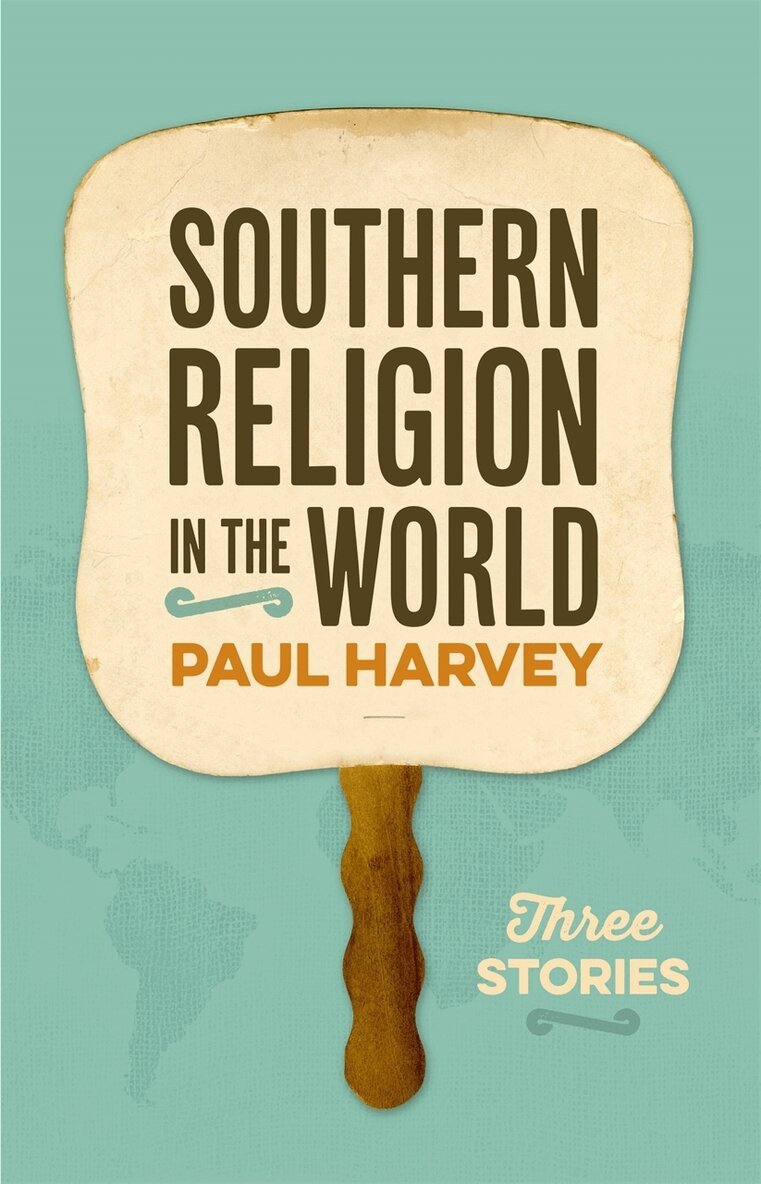
Religion in the American South emerged as part of a globalized, transnational movement of peoples from the seventeenth through the nineteenth centuries. Ironically, it then came to be seen as the most localized, provincial kind of religion in America, one famously hostile to outside ideas, influences, and agitators. Yet southern religious expressions, particularly in music, have exercised enormous intellectual and cultural influence. Despite southern religion’s provincialism during the era of evangelical dominance and racial proscriptions, the kinds of expressions coming from the American South have been influential across the globe.With this book Paul Harvey takes up the theme of southern religion in global contexts through a series of biographical vignettes that illustrate its outreach. In the first segment he focuses on Frank Price, the Presbyterian missionary to China and advisor to Chiang Kai-Shek. In the second he focuses on Howard Thurman, the mystic, cosmopolitan, preacher, intellectual, poet, hymnist, and mentor for the American civil rights movement. In the third he looks to the musical figures of Rosetta Tharpe, Johnny Cash, and Levon Helm, whose backbeat, harmonies, and religious enthusiasms contributed to much of the soundtrack of the world through the second half of the twentieth century.
369 kr
Skickas inom 3-6 vardagar
Religion in the American South emerged as part of a globalized, transnational movement of peoples from the seventeenth through the nineteenth centuries. Ironically, it then came to be seen as the most localized, provincial kind of religion in America, one famously hostile to outside ideas, influences, and agitators. Yet southern religious expressions, particularly in music, have exercised enormous intellectual and cultural influence. Despite southern religion’s provincialism during the era of evangelical dominance and racial proscriptions, the kinds of expressions coming from the American South have been influential across the globe.With this book Paul Harvey takes up the theme of southern religion in global contexts through a series of biographical vignettes that illustrate its outreach. In the first segment he focuses on Frank Price, the Presbyterian missionary to China and advisor to Chiang Kai-Shek. In the second he focuses on Howard Thurman, the mystic, cosmopolitan, preacher, intellectual, poet, hymnist, and mentor for the American civil rights movement. In the third he looks to the musical figures of Rosetta Tharpe, Johnny Cash, and Levon Helm, whose backbeat, harmonies, and religious enthusiasms contributed to much of the soundtrack of the world through the second half of the twentieth century.
1 980 kr
Skickas inom 3-6 vardagar
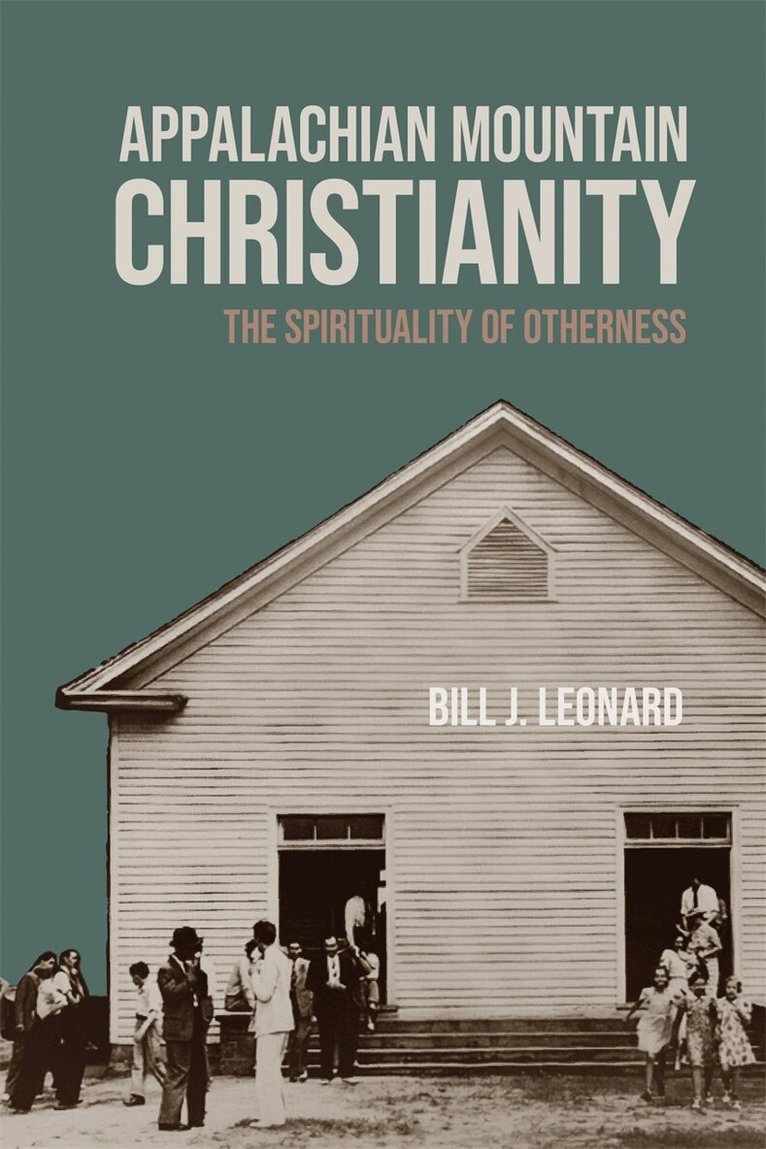
Appalachian Mountain Christianity examines the beliefs and practices of certain Protestant religious groups, primarily Baptists and Holiness Pentecostals, whose history is shaped in and by the Central Appalachian context. Particular attention is given to Primitive and Old Regular Baptists as well as certain denominationally connected or independent Pentecostal communions. Bill J. Leonard explores the ways in which Appalachian cultural and religious transitions and upheavals impact these traditional faith communities; the style and significance of their rituals including preaching, worship, baptism, foot washing, and glossolalia; their varied approaches to scripture and doctrine as evident in their views on salvation and women’s roles in church and home; and in the dramatic nonconformity of two specific Appalachian traditions, the Pentecostal Serpent Handlers and the Primitive Baptist Universalists. Through his examination, Leonard suggests that the ideas and actions of these Appalachian Christians reflect the spirituality of otherness. This is not the otherness of inferiority or ignorance by which Appalachians and their churches are often caricatured but the otherness of religious experiences that focus on encounters with the Divine and contribute to individual and collective spiritual insight and “inwardness.” Those traditions and the spirituality that centers them are worth exploring, even for those who do not join them.
369 kr
Skickas inom 3-6 vardagar
Appalachian Mountain Christianity examines the beliefs and practices of certain Protestant religious groups, primarily Baptists and Holiness Pentecostals, whose history is shaped in and by the Central Appalachian context. Particular attention is given to Primitive and Old Regular Baptists as well as certain denominationally connected or independent Pentecostal communions. Bill J. Leonard explores the ways in which Appalachian cultural and religious transitions and upheavals impact these traditional faith communities; the style and significance of their rituals including preaching, worship, baptism, foot washing, and glossolalia; their varied approaches to scripture and doctrine as evident in their views on salvation and women’s roles in church and home; and in the dramatic nonconformity of two specific Appalachian traditions, the Pentecostal Serpent Handlers and the Primitive Baptist Universalists. Through his examination, Leonard suggests that the ideas and actions of these Appalachian Christians reflect the spirituality of otherness. This is not the otherness of inferiority or ignorance by which Appalachians and their churches are often caricatured but the otherness of religious experiences that focus on encounters with the Divine and contribute to individual and collective spiritual insight and “inwardness.” Those traditions and the spirituality that centers them are worth exploring, even for those who do not join them.
1 980 kr
Kommande
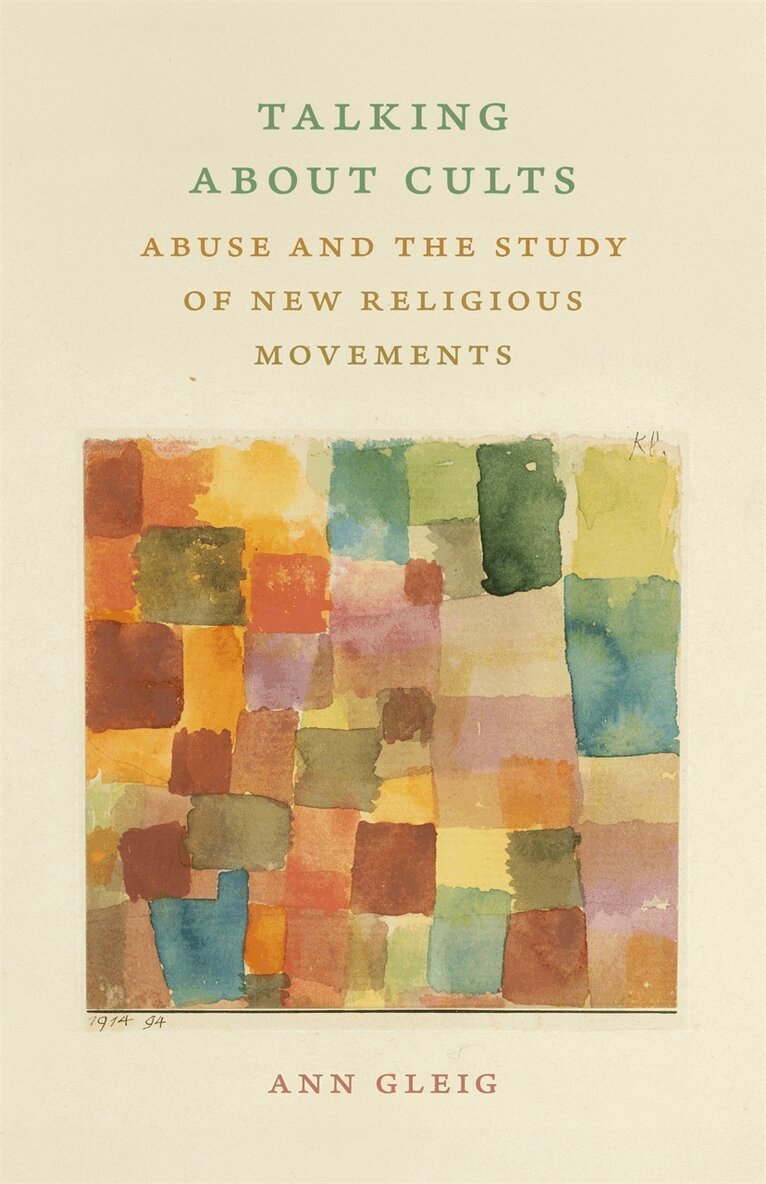
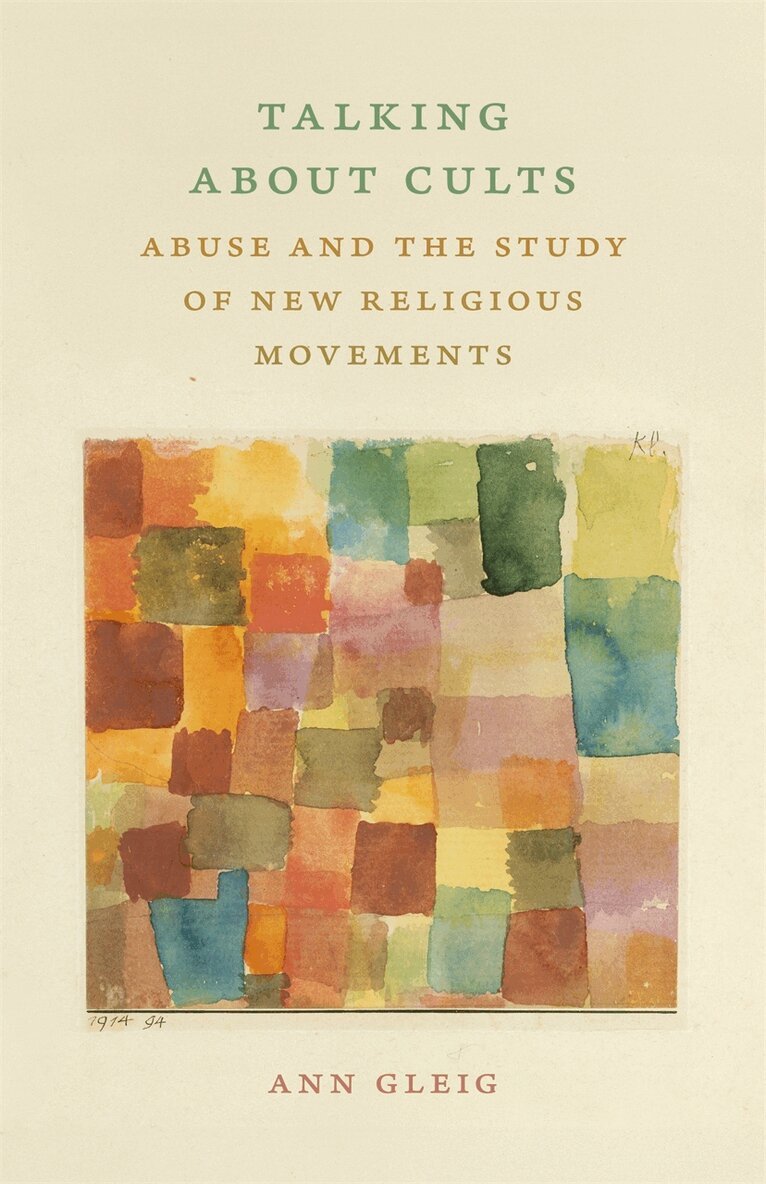
Talking About Cults explores a series of questions: Why have scholars of minority religion rejected the term cult and the wider field of cultic studies? How have they responded to allegations of abuse in minority religion? Why do so many survivors of abuse find cult discourse helpful? What new directions are emerging and should be encouraged in the study of abuse in NRMs that are more attuned to survivors’ experience?The academic subfield of new religious movements (NRMs) developed in reaction to cultic studies and the two fields became polarized in the “Cult Wars,” a charged intellectual and legal battle that has raged on since the 1970s. In this context, a disciplinary consensus formed in the study of NRMs that minimized allegations of abuse within NRMs and discredited the reliability of ex-members who made them. While feminist scholars of religion attempted to draw attention to gendered forms of abuse in these groups, they were largely ignored in consensus NRM scholarship. Inspired by a feminist survivor-centered approach, Ann Gleig argues that rather than automatically rejecting cult discourse, scholars need to ask what its function and value is for survivors of abuse. Through interviews with survivors of abuse in Buddhist contexts, she discovered that they drew on cult discourse selectively and critically to identify, understand, and heal from the dynamics that had caused them harm in their former communities as well as to prevent future abuse in Buddhist communities.
275 kr
Kommande
Talking About Cults explores a series of questions: Why have scholars of minority religion rejected the term cult and the wider field of cultic studies? How have they responded to allegations of abuse in minority religion? Why do so many survivors of abuse find cult discourse helpful? What new directions are emerging and should be encouraged in the study of abuse in NRMs that are more attuned to survivors’ experience?The academic subfield of new religious movements (NRMs) developed in reaction to cultic studies and the two fields became polarized in the “Cult Wars,” a charged intellectual and legal battle that has raged on since the 1970s. In this context, a disciplinary consensus formed in the study of NRMs that minimized allegations of abuse within NRMs and discredited the reliability of ex-members who made them. While feminist scholars of religion attempted to draw attention to gendered forms of abuse in these groups, they were largely ignored in consensus NRM scholarship. Inspired by a feminist survivor-centered approach, Ann Gleig argues that rather than automatically rejecting cult discourse, scholars need to ask what its function and value is for survivors of abuse. Through interviews with survivors of abuse in Buddhist contexts, she discovered that they drew on cult discourse selectively and critically to identify, understand, and heal from the dynamics that had caused them harm in their former communities as well as to prevent future abuse in Buddhist communities.