Global Histories Before Globalisation - Böcker
Visar alla böcker i serien Global Histories Before Globalisation. Handla med fri frakt och snabb leverans.
6 produkter
6 produkter
2 153 kr
Skickas inom 10-15 vardagar
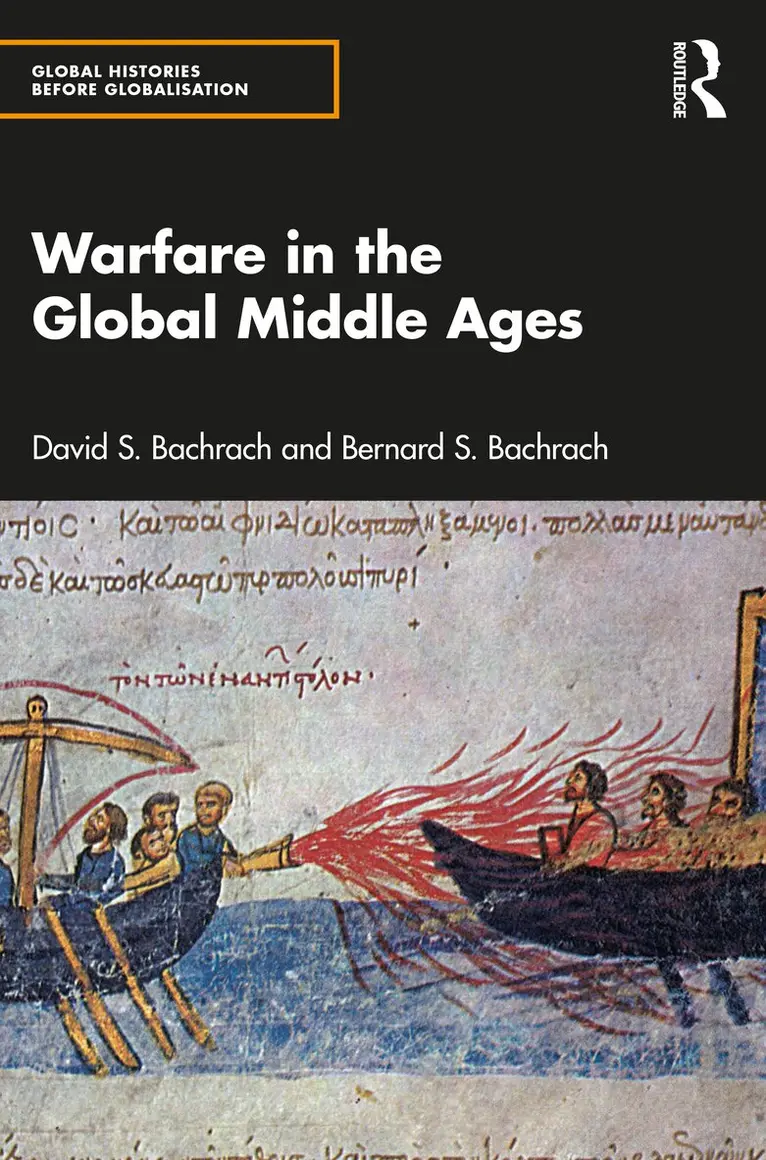
War, preparation for war, and dealing with war’s aftermath consumed the greater part of the surplus resources of societies around the globe throughout the pre-modern period. Military matters affected men, women, and children alike, as direct participants in organized violence, as the victims of conflicts, or through broad-based impositions on ostensibly civilian populations in cash, kind, and labor. Warfare in the Global Middle Ages illuminates the organization and conduct of war as well as the impact of warfare on societies in Europe, Asia, Africa, and the Americas across a long millennium spanning from the third century CE to the sixteenth century CE.The volume is organized in eight chapters, which address the current state of scholarship regarding warfare over this long period, the source materials available to scholars to investigate the myriad questions related to this broad field, and the institutions developed by societies to defend themselves and engage in wars of conquest, military technology, the logistics of war, the education and training of military leaders and individual combatants, as well as strategy, military intelligence, and diplomacy. The authors argue that an analysis of these topics illuminates broad similarities among polities across the globe, the transmission of ideas and technologies on a regional and global level, and also important differences in the ways that societies responded to similar challenges.This work is intended broadly both for specialists in the history of warfare across the globe, for an interested lay public, as well as for use in the classroom.
594 kr
Skickas inom 10-15 vardagar
War, preparation for war, and dealing with war’s aftermath consumed the greater part of the surplus resources of societies around the globe throughout the pre-modern period. Military matters affected men, women, and children alike, as direct participants in organized violence, as the victims of conflicts, or through broad-based impositions on ostensibly civilian populations in cash, kind, and labor. Warfare in the Global Middle Ages illuminates the organization and conduct of war as well as the impact of warfare on societies in Europe, Asia, Africa, and the Americas across a long millennium spanning from the third century CE to the sixteenth century CE.The volume is organized in eight chapters, which address the current state of scholarship regarding warfare over this long period, the source materials available to scholars to investigate the myriad questions related to this broad field, and the institutions developed by societies to defend themselves and engage in wars of conquest, military technology, the logistics of war, the education and training of military leaders and individual combatants, as well as strategy, military intelligence, and diplomacy. The authors argue that an analysis of these topics illuminates broad similarities among polities across the globe, the transmission of ideas and technologies on a regional and global level, and also important differences in the ways that societies responded to similar challenges.This work is intended broadly both for specialists in the history of warfare across the globe, for an interested lay public, as well as for use in the classroom.
2 015 kr
Skickas inom 10-15 vardagar
Joint winner of the Iran Heritage Foundation Prize 2024Offering a comprehensive study into the perceptions of ancient and medieval Iran in the Byzantine empire, this book explores the effects of Persian culture upon Byzantine intellectualism, society and culture.Byzantine Ideas of Persia, 650-1461 focusses on the enduring position of ancient Persia in Byzantine cultural memory, encompassing both in the 'religious' and the 'secular' significance. By analysing a wide range of historical sources – from church literature to belles-lettres – this book examines the intricate relationship between ancient Persia and Byzantine cultural memory, as well as the integration and function of Persian motifs in the Byzantine mentality. Additionally, the author uses these sources to analyse thoroughly the knowledge Byzantines had about contemporary Iranian culture, the presence of ethnic Iranians, and the circulation and usage of the Persian language in Byzantium. Finally, this book concludes with an insightful exploration of the importance and influence of Iranian science on Byzantine scholars.This book will appeal to scholars and studentsin the fields of Byzantine and Iranian History, particularly to those studying the cross-cultural and social influence between the two societies during the Middle Ages.The Open Access version of this book, available at http://www.taylorfrancis.com, has been made available under a Creative Commons Attribution-Non Commercial-No Derivatives (CC-BY-NC-ND) 4.0 license.
650 kr
Skickas inom 10-15 vardagar
Joint winner of the Iran Heritage Foundation Prize 2024Offering a comprehensive study into the perceptions of ancient and medieval Iran in the Byzantine empire, this book explores the effects of Persian culture upon Byzantine intellectualism, society and culture.Byzantine Ideas of Persia, 650-1461 focusses on the enduring position of ancient Persia in Byzantine cultural memory, encompassing both in the 'religious' and the 'secular' significance. By analysing a wide range of historical sources – from church literature to belles-lettres – this book examines the intricate relationship between ancient Persia and Byzantine cultural memory, as well as the integration and function of Persian motifs in the Byzantine mentality. Additionally, the author uses these sources to analyse thoroughly the knowledge Byzantines had about contemporary Iranian culture, the presence of ethnic Iranians, and the circulation and usage of the Persian language in Byzantium. Finally, this book concludes with an insightful exploration of the importance and influence of Iranian science on Byzantine scholars.This book will appeal to scholars and studentsin the fields of Byzantine and Iranian History, particularly to those studying the cross-cultural and social influence between the two societies during the Middle Ages.The Open Access version of this book, available at http://www.taylorfrancis.com, has been made available under a Creative Commons Attribution-Non Commercial-No Derivatives (CC-BY-NC-ND) 4.0 license.
2 015 kr
Skickas inom 10-15 vardagar
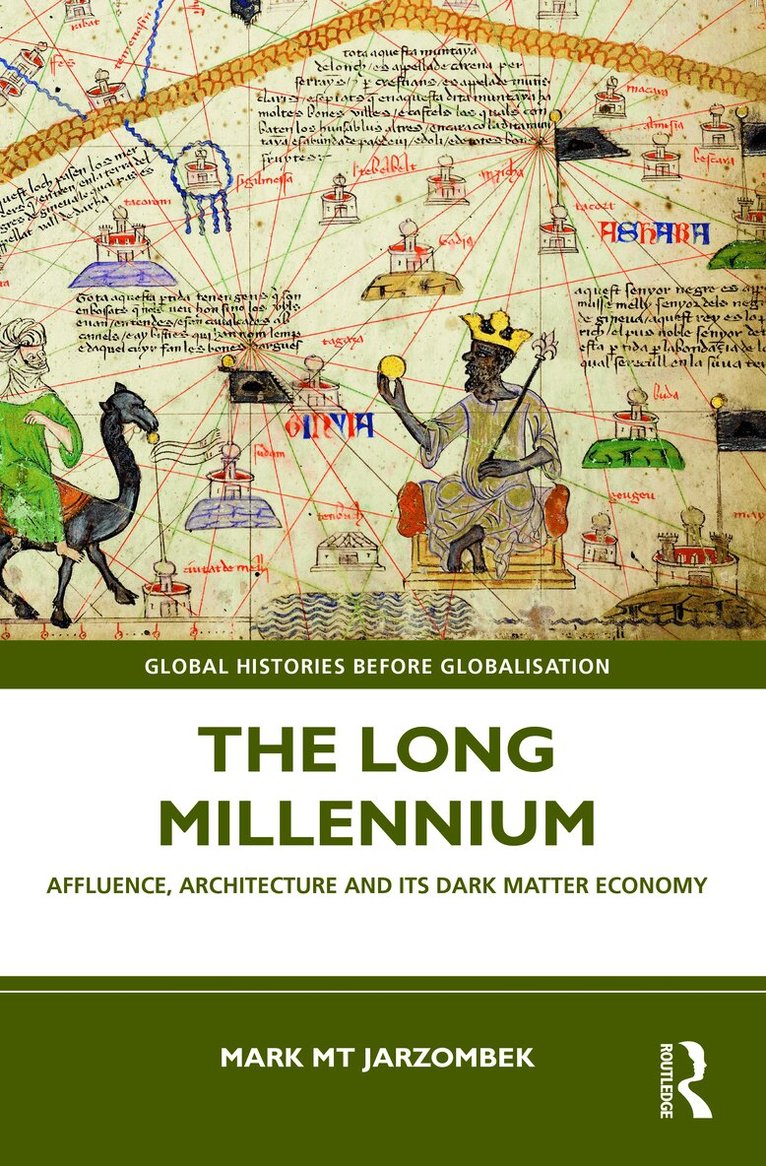
This book argues that long-distance trade in luxury items – such as diamonds, gold, cinnamon, scented woods, ivory and pearls, all of which require little overhead in their acquisition and were relatively easy to transport – played a foundational role in the creation of what we would call "global trade" in the first millennium CE. The book coins the term "dark matter economy" to better describe this complex – though mostly invisible – relationship to normative realities.The first full integration of dark matter economy with the emerging global flows took place in South India and Sri Lanka at the beginning of the millennium. The book then moves to other places in the world – "sweet spots" – where a particular type of affluence was generated through the trade in luxury goods. This upstream affluence manifested itself in the creation of shrines, palaces, temples and engineering works that all thickened the landscape of memory, control and extraction and also served as a defense mechanism against intrusions from afar. The book also explains the collapse of dark matter economy as a result of the cumulative energies of colonialism, modernization and nationalism that make it hard for us today to come to terms with this history.The Long Millennium will appeal to students and scholars alike studying the trade networks and economics of the early Middle Ages as well as anyone interested in the effect of trade on medieval society in the first millennium CE.
598 kr
Skickas inom 10-15 vardagar
This book argues that long-distance trade in luxury items – such as diamonds, gold, cinnamon, scented woods, ivory and pearls, all of which require little overhead in their acquisition and were relatively easy to transport – played a foundational role in the creation of what we would call "global trade" in the first millennium CE. The book coins the term "dark matter economy" to better describe this complex – though mostly invisible – relationship to normative realities.The first full integration of dark matter economy with the emerging global flows took place in South India and Sri Lanka at the beginning of the millennium. The book then moves to other places in the world – "sweet spots" – where a particular type of affluence was generated through the trade in luxury goods. This upstream affluence manifested itself in the creation of shrines, palaces, temples and engineering works that all thickened the landscape of memory, control and extraction and also served as a defense mechanism against intrusions from afar. The book also explains the collapse of dark matter economy as a result of the cumulative energies of colonialism, modernization and nationalism that make it hard for us today to come to terms with this history.The Long Millennium will appeal to students and scholars alike studying the trade networks and economics of the early Middle Ages as well as anyone interested in the effect of trade on medieval society in the first millennium CE.